Best Saltwater Aquarium Cleaning Crew (2026 Guide)
That frustrating brown film coating your rocks? Your 4-month-old tank screaming for algae control? A strategically built saltwater aquarium cleaning crew isn’t just helpful—it’s the only sustainable solution to stop diatoms in their tracks while preventing future outbreaks. Without the right invertebrate team, you’ll spend weekends scraping glass and battling nutrient spikes that threaten fish health. I’ve seen tanks transform from murky disasters to crystal-clear ecosystems simply by deploying the correct snails, crabs, and scavengers in the right sequence. In this guide, you’ll discover exactly which species eliminate your specific algae problems, how many to add for a 40–75 gallon tank, and the critical mistakes that turn cleaners into liabilities. Stop fighting your tank—start harnessing nature’s janitors.
Diatom Destroyers: Deploy These Snails Immediately
Diatoms (that gritty brown “snow” on rocks and glass) dominate new saltwater aquariums. Generic algae eaters fail here—only specialized grazers break this cycle. Your first move must target diatom biology: these silica-based pests thrive in immature systems with excess silicates and low competition.
Mexican Turbo Snails: Your Frontline Glass Attackers
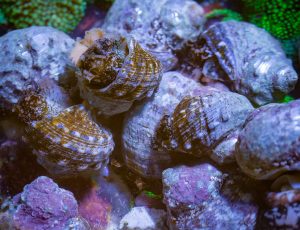
Forget manual scraping. A single 1.5-inch Mexican Turbo snail devours 30+ square inches of diatoms daily by power-scraping glass with its reinforced foot. For a standard 55-gallon tank, deploy 3–4 snails immediately. Watch for their telltale trails—clean, algae-free paths radiating from the tank bottom upward. If snails cluster motionless in corners after 48 hours, test for copper contamination (a common diatom trigger). Critical: Avoid undersized Turbos (<1 inch); their weaker shells crack against rockwork.
Astraea and Cerith Snails: The Rockwork Specialists
While Turbos tackle vertical surfaces, Astraea snails (1–1.5 inches) scale rock crevices where diatoms hide. Add 3–4 Astraeas to attack film algae on porous rock faces. Pair them with 2 Cerith snails—these sandbed ninjas burrow beneath the brown layer, consuming silicates at the source. If diatoms persist after 10 days, check your sand depth: Ceriths need 1–2 inches of fine substrate to access buried nutrients. Never buy Astraeas smaller than a quarter; tiny specimens detach and starve.
Sandbed Saviors: Stop Detritus Before It Becomes Algae
A dirty sandbed fuels diatom comebacks. Uneaten food decomposes into silicates and nitrates, creating a vicious cycle. Your crew must process waste beneath the surface—not just on top.
Nassarius Snails: The 5-Minute Emergency Response Team
These snails smell food sinking through the water column and erupt from the sand in seconds. For a 55-gallon tank, 2 Nassarius snails prevent nutrient spikes by consuming 90% of missed flakes before they decompose. Look for their signature “sand volcanoes”—tiny plumes signaling active detritus processing. If sandbeds develop foul-smelling bubbles (hydrogen sulfide), double your Nassarius count immediately. Pro Tip: Add them after lights out; their feeding frenzy is spectacular under moonlight LEDs.
Queen Conch: The Deep-Sand Revolution
For tanks with 3+ inches of sand, 1 Queen Conch (minimum 2 inches) is non-negotiable. Unlike snails, conchs plow the entire top layer, oxygenating anaerobic zones where toxins accumulate. They’re slow starters (expect 2 weeks to establish), but once active, they create visible “furrows” in the sand—proof of deep aeration. Warning: Avoid in nano tanks (<30 gallons); their size disturbs small rockscapes.
Hermit Crab Tactics: Avoid Snail Massacres
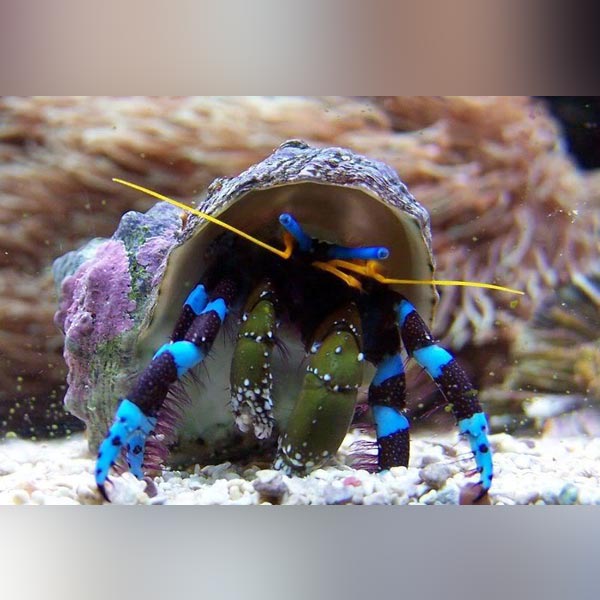
Hermit crabs clean where snails can’t reach—but choose wrong, and they’ll decimate your crew. Reef-safe species target algae only when properly provisioned.
Blue-Legged Hermit Crabs: The Algae Vacuum (With Shell Rules)
3–4 blue-legged hermits consume diatoms on rock overhangs and powerhead intakes. Their secret? Constant shell rotation. Critical: Place 5+ empty, oversized turbo shells (1.5x crab size) before adding crabs. Without options, hermits rip snails from shells within 72 hours. Check nightly: if crabs cluster near Astraeas, add shells immediately. Never use painted shells—they leach toxins.
Reef Tip Hermits: The Film Algae Assassins
For stubborn diatom layers on flat rock surfaces, 3–4 Reef Tip hermits outperform all snails. Their pointed claws lift algae sheets intact. But they starve faster—supplement with nori twice weekly even in “dirty” tanks. If crabs flip rocks, reduce feeding; they’re scavenging due to hunger, not mischief.
Brittle Stars and Shrimp: Night Shift Cleanup Experts
Daytime cleaners miss 60% of tank surfaces. Nocturnal specialists handle the rest while you sleep.
Ophiocoma Brittle Stars: The Crevice Commandos
These stars slip into holes too small for crabs, vacuuming detritus with tube feet. 1 brittle star per 50 gallons prevents “dead zones” behind rocks. They’re shy initially—look for movement during midnight water changes. Myth Buster: They never harm corals; their arms regenerate if nipped, making them reef-safe.
Cleaner Shrimp: The Glass Polishing Secret
1 cleaner shrimp (e.g., Lysmata amboinensis) doesn’t just eat algae—it buffs glass to optical clarity with its legs. Watch for “cleaning stations” near powerheads where they remove diatoms with surgical precision. They also eat fish parasites, doubling as health insurance. Key: Add after snails establish; hungry shrimp may nip slow-moving snails.
Copepods: The Invisible Foundation of Tank Stability
Bottled copepods seem insignificant—but they’re your crew’s immune system. Without them, detritus overwhelms larger cleaners.
Launching Your Micro-Cleaners in a 4-Month Tank
Dose 1 bottle of Tisbe copepods immediately (even with fish present). They colonize live rock within 48 hours, consuming detritus 10x faster than snails. Critical: Feed phytoplankton every other day—skip one dose, and populations crash in 72 hours. Within 2 weeks, you’ll see fish hunting copepods, signaling a thriving ecosystem. Pro Move: Add pods before new fish; they buffer stress during acclimation.
Starvation Prevention: The Supplement Protocol
Clean-up crews starve in “too clean” tanks—a top reason for crew collapse. Never assume algae = food.
When and How to Feed Your Cleaners
Supplement weekly even with visible algae:
– Clip a 2×2-inch nori sheet to rocks overnight for snails/crabs
– Soak sinking pellets in garlic extract (attracts cleaners)
– Target-feed brittle stars with thawed mysis using a turkey baster
Red Flag: If Turbos climb above waterline, they’re starving—add food within 24 hours or lose them.
Step-by-Step Stocking Schedule for a 4-Month Tank

Overstocking kills crews. Follow this exact sequence to avoid starvation and aggression:
Week 1: Foundation Phase
- Add 2 Cerith snails and 2 Nassarius snails (sandbed prep)
- Dose 1 bottle copepods + start phytoplankton feedings
- Why first? They process existing detritus without competition.
Week 3: Algae Assault Phase
- Add 3 Mexican Turbo snails and 3 Astraea snails
- Introduce 3 blue-legged hermits with 5+ empty shells
- Why delay? Lets copepods establish food chains for snails.
Week 6: Night Shift Activation
- Add 1 brittle star and 1 cleaner shrimp
- Introduce 1 Queen Conch (if sand >2 inches)
- Why last? Prevents predation on newly established cleaners.
3 Deadly Clean-Up Crew Mistakes (And How to Fix Them)
Mistake #1: Adding Sea Urchins to New Tanks
Diadema urchins seem ideal but starve in low-algae tanks, then eat corals. Solution: Never add urchins before 6 months maturity. Use Turbos instead for early algae control.
Mistake #2: Ignoring Lighting Stress
Zoas stretching for light = excess nutrients feeding diatoms. Solution: Raise rockwork immediately—no cleaner fixes poor placement.
Mistake #3: One-Time Stocking
Dumping 10 hermits at once causes cannibalism. Solution: Follow the 3-phase schedule above—your crew’s survival depends on it.
Maintenance Mode: Keep Your Crew Thriving Long-Term
A balanced crew works indefinitely with two habits:
1. Monthly shell refresh: Add 3 new turbo shells to prevent hermit wars
2. Biweekly nori feedings: Clip to rocks during evening hours
Within 8 weeks, diatoms vanish, glass stays spotless, and your tank’s nutrient levels stabilize naturally. The true sign of success? You’ll forget to scrape the viewing panel for months.
Final Note: Your saltwater aquarium cleaning crew succeeds only when matched to your tank’s age, size, and algae type. Start with Turbos and Ceriths for diatoms, add sand sifters next, and never skip copepods—they’re the invisible engine of your ecosystem. In 90 days, you’ll have a self-cleaning tank that runs on biology, not elbow grease. Ready for the next step? Research how water changes complement (not replace) your crew—because even nature’s janitors need backup.