How to Heat an Aquarium Without a Heater
When wildfires knocked out power in Boulder’s mountains, 57Donuts faced a chilling crisis: snow outside, a 50°F house, and a fish tank dropping dangerously cold. With no functional heater, he turned ziplock bags of hot water into life rafts for his fish. This exact scenario happens to thousands of aquarists during blackouts, storms, or heater failures. If you’re searching how to heat an aquarium without a heater, you need immediate, fish-safe solutions—not theory. In this guide, you’ll discover proven emergency techniques used by experienced fishkeepers during Texas freezes and Michigan blizzards. These methods stabilize temperatures using everyday household items while avoiding deadly mistakes that kill fish faster than cold exposure.
Why Cold Shock Kills Fish Faster Than Oxygen Loss
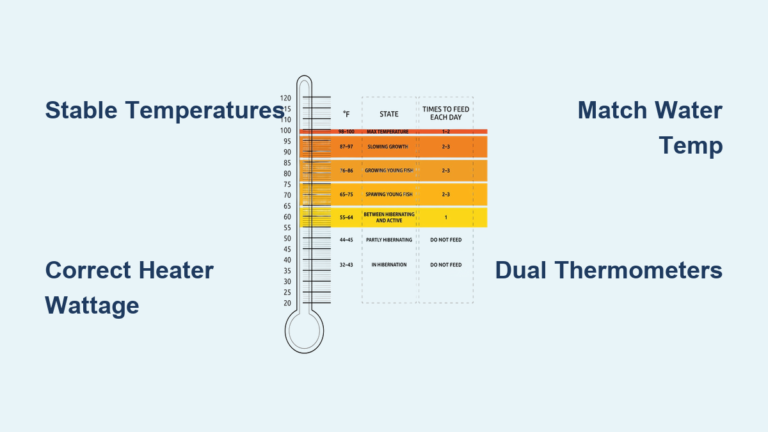
Fish metabolisms crash below 68°F, weakening immunity and triggering lethal stress. In northern climates like Michigan, temperature drops become critical within 4 hours—but in milder regions, oxygen depletion may strike first. When 57Donuts’ tank dropped during a 5-hour wildfire blackout, his priority was preventing thermal shock. Never assume one-size-fits-all solutions: monitor your tank’s specific conditions. If house temperatures stay above 60°F, focus on aeration first. Below 55°F, heat retention becomes urgent. Your thermometer is your lifeline—check it hourly during emergencies.
Emergency Insulation Protocol for Immediate Heat Retention
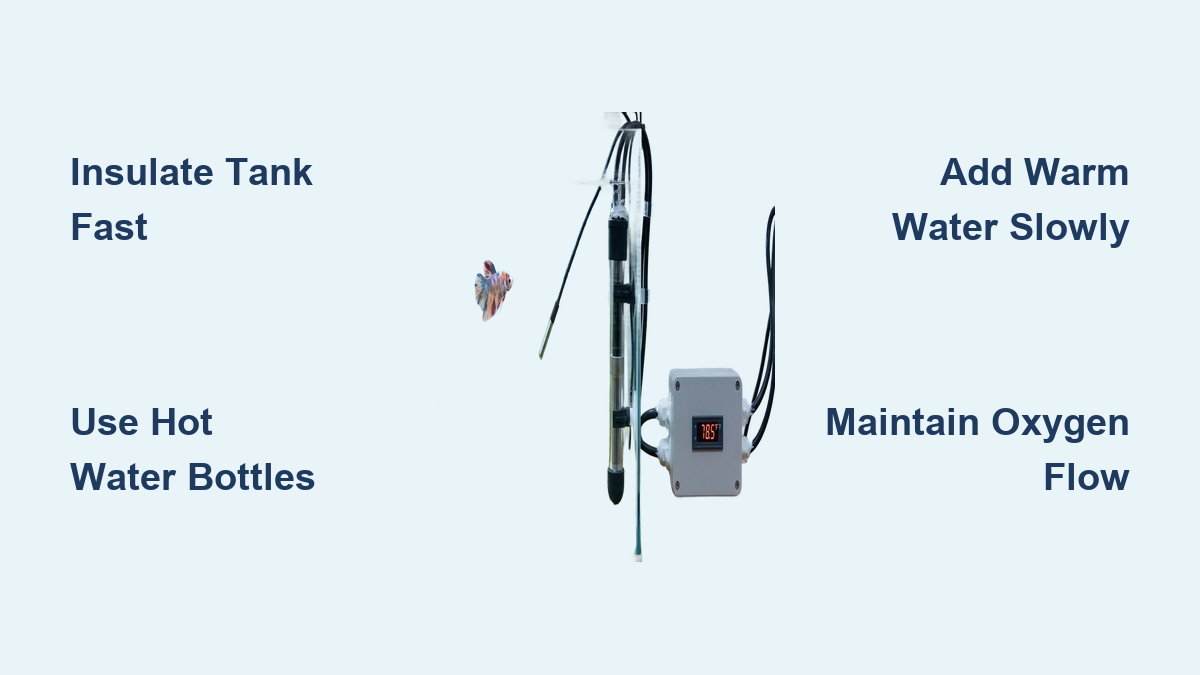
Wrap your tank within 10 minutes of power loss to slow heat escape. This isn’t about adding warmth—it’s about trapping existing thermal energy. Act fast with these steps:
How to Insulate Without Suffocating Your Fish
- Seal heat-leaking surfaces: Cover the back and sides with towels, moving blankets, or foam board. Leave the front clear for viewing and gas exchange.
- Create a vapor barrier: Cut foam board to fit the tank top, leaving 2-inch gaps around filters and air stones. This blocks evaporation—the #1 cause of rapid cooling.
- Critical mistake to avoid: Never drape fabric directly over the water surface. As TTVGuide warned forum users, “Covering the top blocks oxygen exchange—use rigid insulation with strategic cutouts.”
This method bought 57Donuts critical hours during his blackout. In 50°F rooms, proper insulation can maintain temperatures 5-8°F higher for 6+ hours.
Hot Water Bottle Method: Step-by-Step Temperature Rescue

This is the most reliable emergency technique, validated by aquarists from Texas to Colorado. When ziplock bags worked for 57Donuts, he used the same principle as professional fish transporters.
Floating Heat Containers Without Risk
- Fill a leak-tested plastic bottle (1-2 liter) with hot tap water (110-120°F—test on your wrist first). Never use boiling water.
- Secure the cap with electrical tape, then wrap in a thin towel to diffuse heat.
- Submerge the bottle fully in the tank. Floating containers lose heat 3x faster than submerged ones.
- Monitor with a thermometer: Replace when tank temperature drops 2°F below normal.
During Michigan’s 2021 freeze, aquarists replaced bottles every 45-90 minutes. For larger tanks, use multiple containers spaced evenly. As Not-dat-throwaway advised: “A lid on the tank doubles the effectiveness—heat rises and gets trapped.”
Strategic Warm Water Changes Without Shocking Fish
Use this only when temperatures plunge below species’ minimums. Adding warm water incorrectly causes fatal thermal shock—more deadly than gradual cooling.
Safe Temperature Adjustment Procedure
- Prepare dechlorinated water 2-3°F warmer than the tank in a separate container
- Add water slowly over 20+ minutes using a cup trickled down the tank wall
- Never exceed 50% of tank volume—57Donuts avoided this when he said: “Without the electric pump, that process would be tough”
- Stop immediately if fish dart or gasp
june52020’s forum warning applies here: “This won’t work fast enough for severe cold snaps—it’s for gradual recovery.” Reserve this for when other methods fail.
Battery Air Pumps: Why Oxygen Matters More Than Heat Sometimes

In heavily stocked tanks, oxygen depletion kills before cold during short outages. During Texas’ 2021 freeze, RedduckBlueduck saved fish by prioritizing aeration over heat.
Emergency Oxygen Protocol
- Use battery-powered air stones (like the Hygger Portable Pump recommended by robertintx)
- Place airstones near the substrate to circulate cold water
- Agitate the surface manually for 2-3 minutes hourly if pumps fail
- Critical insight: In 60°F+ rooms, oxygen becomes the priority. Below 55°F, heat retention takes precedence.
This is why 57Donuts worried about sleeping—he knew stagnant water could suffocate fish overnight. Always pair heat methods with aeration.
Critical Mistakes That Kill Fish During Power Outages
:strip_icc()/common-new-aquarium-mistakes-1380712_FINAL-e4b82ab20a254a5b8d7b9ca09a56d665.png)
Amateur attempts often backfire. When Virtual-Squirrel mentioned candle methods, they stressed: “Never place flames directly under glass—it cracks from uneven heating.” Avoid these lethal errors:
Deadly Heat Shortcuts to Never Try
- Chemical hand warmers: Maximum-Pea8207’s forum suggestion seems logical but risks toxic leaks. As m4ch1n157 warned: “Do not tape them to glass—rapid temperature shifts crack tanks.”
- Space heaters: Creates dangerous hot spots near glass. One Redditor’s melted acrylic tank proves this risk.
- Direct hot water pours: Boiling water contact causes instant thermal shock. LorraineSmith888’s candle-heated teapot method only works because she conditioned the water first.
- Complete tank covering: Blocks vital oxygen exchange—a silent killer during sleep.
The most dangerous myth? “Piss in the tank” (as one deleted comment suggested). Urine introduces ammonia and pathogens—never compromise water chemistry.
Proactive Backup Systems for Next Time
Don’t wait for emergencies. When salgat invested in solar batteries after Texas outages, he spent $300 to prevent $2,000 in fish losses. Implement these now:
Essential Emergency Kit Components
- Thermal reserve: Keep 2 leak-tested bottles and insulation materials (foam board, towels) prepped
- Power redundancy: A $150 Jackery power station runs heaters for 5+ hours (pacman552sd used his car inverter during a 75-gallon crisis)
- Oxygen insurance: Hygger battery pumps ($25) or D-cell air stones
- Temperature buffer: Heavily planted tanks stabilize temps 30% better—add hornwort or java moss
As Davy_Jones_Lover demonstrated: “I keep charged boat batteries and a solar panel ready. For $200, you buy years of peace of mind.”
When 57Donuts’ power returned after the Boulder wildfire blackout, his fish survived because he acted fast with hot water bags—not hope. The key takeaway? Insulate first, add heat second, and never sacrifice oxygen for warmth. In under 10 minutes, you can implement the bottle method and insulation protocol that works for 90% of emergency scenarios. For future outages, invest in a $25 battery air pump—it’s the single most reliable backup. Remember: fish tolerate gradual cooling better than sudden temperature swings. If you implement just one tip today, prep your emergency kit with pre-tested bottles and foam board. Your fish’s survival depends on what you do before the next blackout hits.