How to Raise Alkalinity in Saltwater Aquarium
Your stony corals look pale, growth has stalled, and test results show alkalinity stuck at 7.2 dKH while calcium and magnesium sit perfectly at 400 ppm and 1,300 ppm. You reach for your Tropic Marin All-for-Reef bottle—only to realize every dose risks pushing those hard-won calcium and magnesium levels into dangerous territory. This frustrating scenario plagues countless reef hobbyists: how to raise alkalinity in saltwater aquarium systems without destabilizing the delicate calcium-magnesium balance that corals depend on.
The solution isn’t about guessing or accepting parameter swings. Reef chemist Randy Holmes-Farley confirms that targeted alkalinity correction is both possible and practical when you understand ion chemistry. Unlike broad-spectrum supplements that flood your tank with multiple elements, selective alkalinity boosters deliver only carbonate and bicarbonate ions—precisely what your corals need for skeleton building without altering calcium or magnesium. In this guide, you’ll learn the exact methods to safely elevate alkalinity to 8-12 dKH while keeping other critical parameters locked in their ideal ranges.
Why Your Alkalinity Rises Trigger Calcium and Magnesium Spikes
Alkalinity (measured in dKH) acts as your reef tank’s pH stability buffer and primary building block for coral skeletons. When alkalinity falls below 8.0 dKH, corals struggle to calcify, leading to stunted growth and tissue recession. But here’s where most hobbyists get tripped up: common supplements like kalkwasser or two-part dosing systems deliver alkalinity alongside calcium or magnesium ions.
When you dose Tropic Marin All-for-Reef per standard instructions, you’re adding a balanced cocktail of all three “Big Three” elements. If your calcium and magnesium are already optimal—as they were for user “dnprall” with 379 ppm calcium and 1,310 ppm magnesium—this supplement becomes counterproductive. Each 1 mL of All-for-Reef raises alkalinity by just 0.1 dKH while pushing calcium up by 5 ppm. Dose aggressively to fix low alkalinity, and you’ll overshoot calcium into the 500+ ppm danger zone where precipitation occurs. The key insight? You need alkalinity-specific supplementation when calcium and magnesium are already stable.
How Calcium and Magnesium Testing Errors Mislead You
Before adjusting anything, rule out false readings. User “Icryhard” reported rising magnesium after baking soda dosing—a chemical impossibility since sodium bicarbonate contains zero magnesium. Reef chemist Randy Holmes-Farley identifies two culprits:
- Test kit inaccuracies: Magnesium tests are notoriously error-prone, especially with expired reagents. Always verify with a second test method.
- Salinity fluctuations: A 0.002 increase in specific gravity (e.g., 1.025 to 1.027) artificially inflates magnesium readings by 50+ ppm.
If your magnesium suddenly jumps after alkalinity dosing, test salinity first. If readings persist, repeat the test with fresh reagents before assuming supplementation caused the shift.
Precise Methods to Elevate Alkalinity Without Moving Calcium or Magnesium
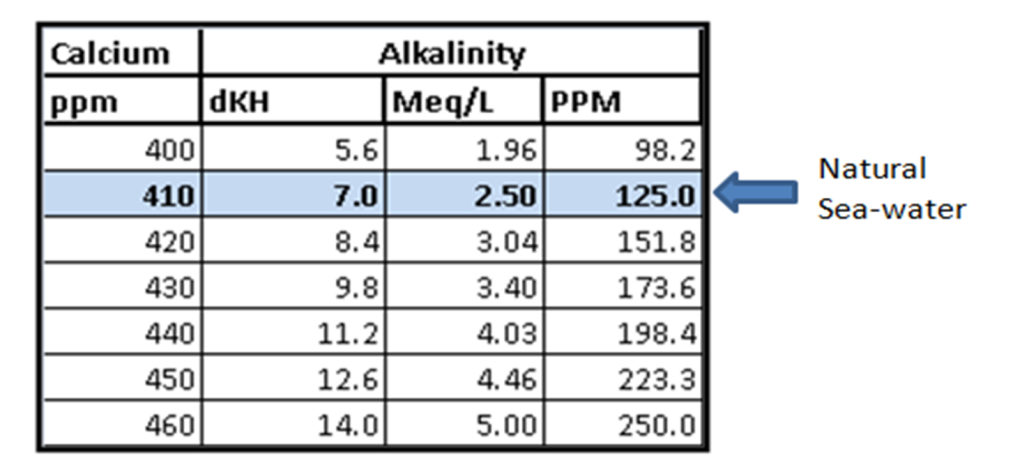
You can raise alkalinity independently by using supplements containing only carbonate or bicarbonate ions—no calcium, no magnesium. This approach works because alkalinity reflects carbonate (CO₃²⁻) and bicarbonate (HCO₃⁻) concentration, while calcium (Ca²⁺) and magnesium (Mg²⁺) exist as separate ions. Adding pure sodium bicarbonate introduces HCO₃⁻ ions that boost alkalinity without interacting with existing calcium or magnesium.
Choose the Right Alkalinity-Only Supplement

Sodium bicarbonate (baking soda) is the gold standard for targeted alkalinity correction. It’s 99% pure, inexpensive, and pH-neutral during dosing. Here’s how to implement it safely:
- Why baking soda beats commercial options:
- ✅ Zero calcium or magnesium content
- ✅ 100% predictable dosing (1 teaspoon raises 50 gallons by 1.4 dKH)
- ✅ Gentle pH impact compared to alternatives
- What to avoid:
- ❌ Kalkwasser (slaked lime): Adds calcium and alkalinity
- ❌ All-in-one supplements: Tropic Marin All-for-Reef raises all three parameters proportionally
- ❌ “Baked” baking soda (sodium carbonate): Causes sharp pH spikes above 8.5
User “Joe.D” successfully corrected his 7.2 dKH alkalinity in a 95-gallon system using 1 teaspoon of baking soda dissolved in RODI water—without moving his already-elevated calcium (550 ppm). For most tanks, standard baking soda provides the safest, most controllable results.
Calculate Your Exact Dose to Avoid Parameter Swings
Guessing doses causes dangerous spikes. Follow this three-step calculation:
- Test current alkalinity with a reliable kit (Hanna Checker recommended). Target 8.0-12.0 dKH for reef tanks.
- Determine total system volume (display + sump). User “Luky” failed to account for his 5-gallon sump, underdosing his 65-gallon display.
- Use a reef calculator: Input current alkalinity, target dKH, and volume. For a 50-gallon tank needing +1.0 dKH:
– Sodium bicarbonate required: 2.0 grams (≈½ teaspoon)
Critical dosing rule: Always dissolve powder completely in RODI water before adding to your sump. Dumping dry baking soda directly into the tank creates localized high-pH zones that can burn corals. User “dnprall” avoided this mistake by pre-dissolving in a separate container.
Optimize Dosing Timing and Frequency
How you dose matters as much as what you dose. Corals absorb alkalinity most actively during daylight hours for photosynthesis-driven calcification. Dosing at the wrong time causes rapid parameter shifts that stress livestock:
- Dose alkalinity in the evening (after lights out) when coral uptake slows. This prevents daytime dKH crashes and stabilizes overnight pH.
- Split doses into small increments: For a 10 mL daily requirement, dose 5 mL twice daily instead of 10 mL once. Large single doses cause 2-3 dKH swings that trigger coral polyp retraction.
- Start at 50% of calculated dose: User “Luky” increased his All-for-Reef to 20 mL/day but saw no alkalinity change—because he was dosing the full amount at once. Smaller, frequent doses improve uptake.
Wait 24 hours between doses to assess impact. If alkalinity rises less than 0.5 dKH after your first dose, increase subsequent doses by 25%.
Monitor for Hidden Risks and Adjust Proactively
Even perfect dosing requires vigilance. Track these critical indicators:
- pH stability: Baking soda keeps pH stable, but sodium carbonate (soda ash) can spike pH above 8.5. If pH jumps >0.2 units after dosing, switch to baking soda.
- Coral stress signs: Watch for sudden polyp retraction (especially in LPS corals) or tissue recession—immediate signals to halt dosing.
- Daily consumption rate: User “Joe.D” discovered his tank consumed 0.8 dKH daily by logging results. Track your usage for 1 week to refine dosing.
Pro tip: Test alkalinity at the same time daily—ideally 1 hour before lights on—to eliminate lighting-cycle variables. User “Luky” got false low readings (6.2 dKH) by testing at inconsistent times.
When to Use All-in-One Supplements Instead

If all three parameters are low—as when starting a new tank—Tropic Marin All-for-Reef becomes the ideal solution. User “dnprall” initially misdiagnosed his situation; his low alkalinity (7.4 dKH) with moderate calcium (379 ppm) and magnesium (1,310 ppm) actually indicated insufficient dosing, not a need for selective correction.
Use All-for-Reef when:
– Alkalinity < 7.0 dKH and calcium < 380 ppm and magnesium < 1,250 ppm
– You lack time for precise single-parameter dosing
– Your tank consumes all three elements rapidly (e.g., heavy SPS growth)
But if calcium and magnesium sit perfectly in range while alkalinity lags—as with “Luky’s” tank at 400 ppm Ca and 1,300 ppm Mg—All-for-Reef will cause imbalances. In this case, Randy Holmes-Farley’s blunt advice applies: “Low alk when using AFR simply means you are not using enough.” Either double your AFR dose (accepting gradual calcium rise) or switch to baking soda for immediate alkalinity correction.
Maintaining Stability After Correction
Once alkalinity hits 8.5+ dKH, prevention beats correction. Implement these habits:
- Weekly 10% water changes with quality salt mix to replenish all elements naturally
- Log all parameters in a shared spreadsheet—user “Luky” caught his alkalinity drop early through consistent logging
- Calibrate test kits monthly with standard solutions to avoid “Icryhard”-style false readings
Remember: A 20 ppm calcium increase is acceptable when correcting alkalinity (e.g., 400 → 420 ppm), but never let magnesium exceed 1,450 ppm. If baking soda dosing consistently fails to raise alkalinity, investigate underlying issues like excessive phosphate binding carbonate ions.
By targeting alkalinity with surgical precision, you’ll transform erratic parameter swings into rock-solid stability. Your corals will reward you with vibrant polyp extension and visible growth—proof that mastering this single adjustment unlocks your reef’s full potential. Start tonight with a precisely measured baking soda dose, and within 48 hours, you’ll see alkalinity rise while calcium and magnesium hold steady exactly where they belong.