How to Fix Velvet Aquarium Disease
Your yellow tang suddenly darts into the powerhead current, gasping at the surface while developing a strange golden haze. Within 48 hours, half your prized fish are gone. This isn’t ich—it’s velvet aquarium disease, the silent assassin of saltwater tanks. Caused by the dinoflagellate Amyloodinium ocellatum, marine velvet kills faster than any common aquarium parasite by suffocating fish through gill invasion before visible symptoms even appear. Unlike treatable diseases like ich, velvet’s microscopic attackers reproduce explosively—completing their life cycle in just 4 days with up to 15 days of infectivity. This guide delivers the exact action steps to identify velvet in its deadly early stages, execute life-saving treatments, and implement foolproof prevention that keeps your display tank velvet-free for good.
Spotting Velvet Before Your Fish Suffocate
Velvet’s first strike targets gills—not fins—making behavioral changes your only early warning. Recognizing these subtle signs within the first 24 hours determines whether you save your tank or face total loss.
Critical Early Warning Signs You Can’t Ignore
Velvet paralyzes gill function before visible spots appear. Act immediately if you observe:
* Powerhead surfing: Fish deliberately swimming against strong currents to force oxygen through damaged gills
* Surface gasping: Rapid gill movement while hovering near water surface, even in well-oxygenated tanks
* Clamped fins and lethargy: Sudden loss of appetite combined with resting on tank bottom
* Flash-darting: Brief, frantic scratching against rocks followed by exhaustion
Physical Symptoms: The Dusting That Means Doom
By the time visible signs emerge, fish are critically infected. Look for these progression stages:
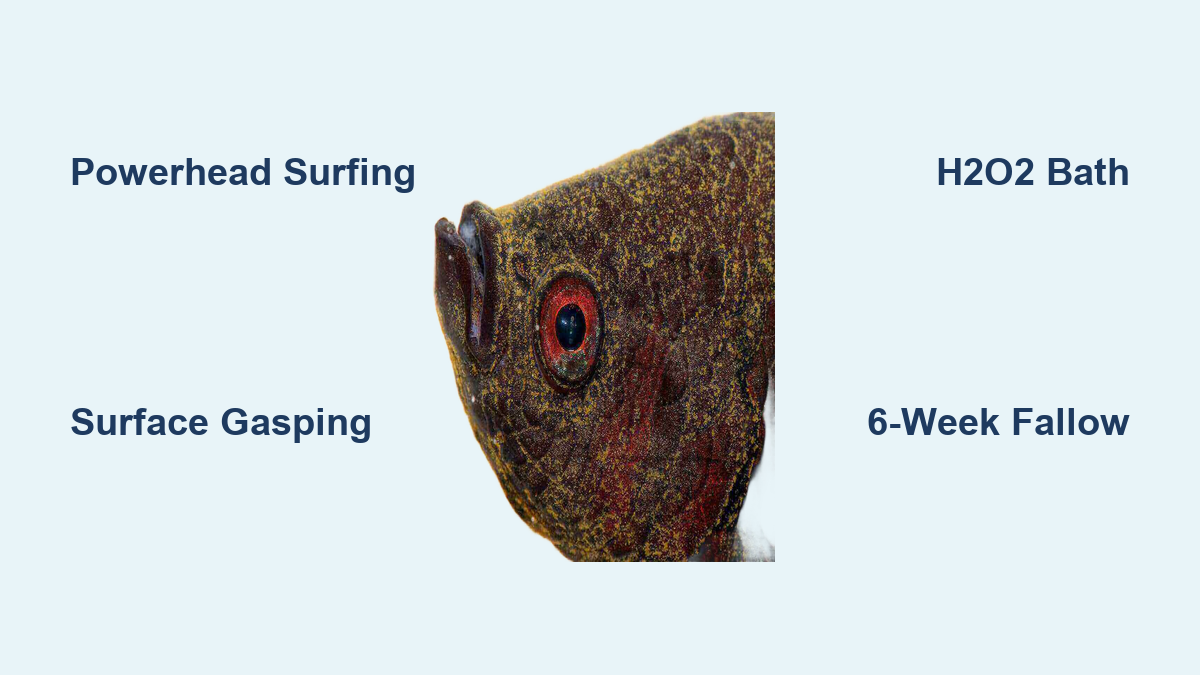
* Stage 1 (Early): Fine gold or rust-colored powder under blue lighting (resembles powdered sugar)
* Stage 2 (Advanced): Loss of slime coat causing cloudy eyes and frayed fins
* Stage 3 (Terminal): Severe respiratory distress with gaping mouth and rapid gill movement
Velvet vs. Ich: The Life-or-Death Distinction
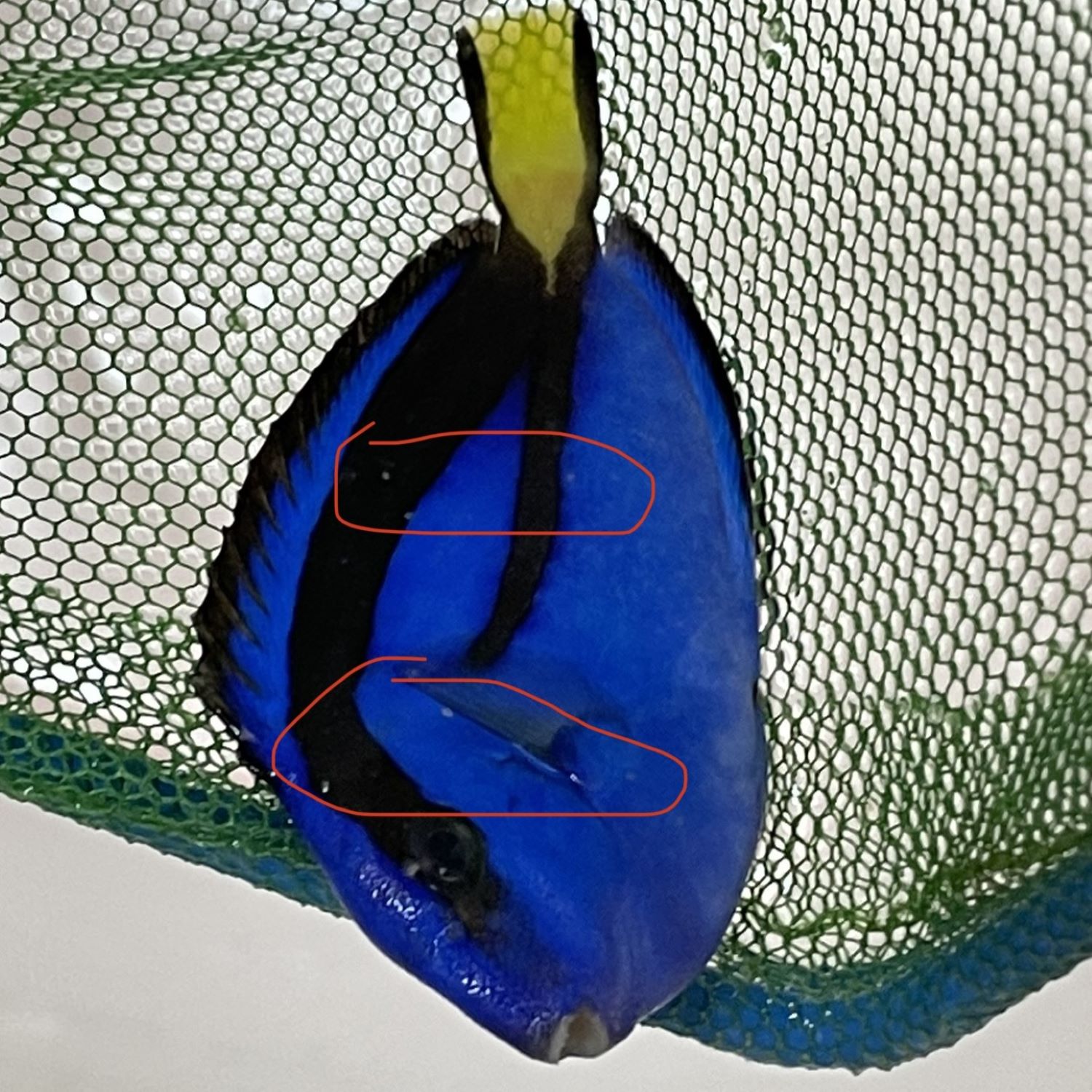
Mistaking velvet for ich guarantees treatment failure. Use this field test:
* The counting rule: If you can count individual white spots (like salt grains), it’s ich. Velvet’s spots are too numerous and fine to count—they create a uniform metallic sheen
* Spot size comparison: Velvet trophonts measure 10-80 micrometers (perfectly round). Ich spots range from 48 x 27 to 452 x 360 micrometers (oval-shaped)
* Progression speed: Velvet symptoms worsen dramatically within 12-24 hours versus ich’s slower 3-5 day progression
Emergency Treatment Protocol: Your 72-Hour Lifeline

Velvet requires immediate intervention—delaying treatment by even 12 hours drastically reduces survival chances. Execute this sequence without exception.
Step 1: Emergency Relief Baths (Choose ONE)
These critical first-aid measures buy survival time by reducing parasite load:
* Hydrogen Peroxide Bath (Most Effective): 150 ppm solution for 30 minutes—pro tip: Add air stone to prevent oxygen depletion during bath
* Formalin Bath: 45-60 minute dip at 25-50 ppm concentration—warning: Avoid with scaleless fish like clownfish
* Freshwater Dip: 5 minutes in pH/temperature-matched water—only use if H2O2 unavailable
Pro Tip: For fish showing secondary bacterial infection (red streaks, ulcers), follow with 10-minute Methylene Blue bath before quarantine transfer.
Step 2: Quarantine Tank Treatment (Choose ONE)
Move fish to bare-bottom hospital tank immediately after bath. Never treat display tanks—chemicals will kill corals and invertebrates.
* Chloroquine Phosphate (Gold Standard): Dose at 20 mg/L initially, then 10 mg/L every 48 hours—critical: Remove carbon filtration and monitor for 30 days minimum
* Copper Power (Alternative): Maintain 2.5-3.0 ppm for 30 days—warning: Test levels twice daily; copper crashes below 2.0 ppm render treatment useless
* Hybrid Tank Transfer Method: Transfer fish between sterile tanks every 4 days with H2O2 baths on days 4 and 10—only method safe for copper-sensitive species
Step 3: The Non-Negotiable 6-Week Fallow Period
This step eliminates 100% of velvet reinfection risk:
Remove ALL fish from your display tank and maintain it completely fishless for 6 weeks. Velvet dinospores starve within this timeframe—do not shorten this period. During fallow:
* Keep lights off to prevent algae blooms
* Maintain temperature at 80°F (27°C) to accelerate parasite die-off
* Run protein skimmer but remove chemical filtration
Critical Mistake Alert: Adding fish before 6 weeks guarantees reinfection. Track days visibly with a tank-side calendar.
Velvet Prevention System: Quarantine That Actually Works
Preventing velvet requires military-grade quarantine protocols—not the casual “hold fish for a week” approach that fails 90% of the time.
The 4-Week Quarantine Protocol That Stops Velvet
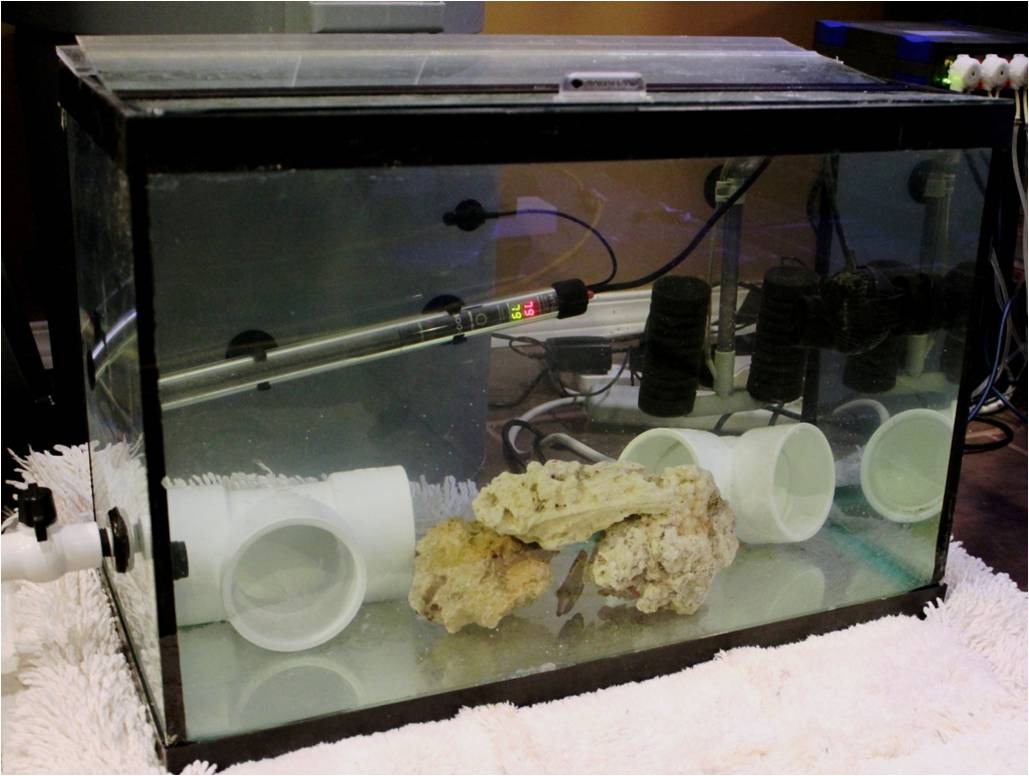
1. Setup: Dedicate 20-gallon tank with heater, sponge filter, and PVC hides (no substrate)
2. Observation: Maintain fish at 82°F (28°C) for 14 days—elevated temperature accelerates symptom onset
3. Stress Test: Introduce mild stressors after 14 days (e.g., brief net chasing)—this triggers hidden infections
4. Prophylactic Treatment: Dose Chloroquine phosphate (5 mg/L) for 10 days if no symptoms appear
Tank Management Tactics That Build Velvet Resistance
- Nutritional Shield: Feed garlic-soaked food + vitamin C supplements weekly—boosts slime coat production
- Water Stability: Maintain salinity at 1.026 SG—velvet thrives in fluctuating parameters
- Flow Optimization: Position powerheads to create varied current zones—prevents “dead spots” where dinospores accumulate
- UV Sterilization: Run UV at 30,000 microwatts/cm²—kills free-swimming dinospores within hours
Why Velvet Outbreaks Happen (And How to Avoid Them)
Most velvet cases trace back to three preventable mistakes. Fix these now to protect your tank:
The New Fish Gambit
Introducing non-quarantined fish causes 85% of outbreaks. Always treat new arrivals with a prophylactic H2O2 bath before quarantine. Species like mandarins and tangs arrive velvet-positive 40% of the time—never skip quarantine even with “healthy-looking” fish.
The False Security Trap
UV sterilizers and ozone generators reduce but don’t eliminate velvet risk. Critical flaw: These tools only kill free-swimming dinospores—they don’t affect trophonts attached to fish gills. Combine technology with quarantine for true protection.
The Fallow Period Failure
Ending fallow at 4 weeks instead of 6 guarantees reinfection. Velvet’s encysted stage survives 42 days—use a digital timer that sounds alarm when period ends. Many aquarists mistakenly follow ich’s 76-day rule, dooming their tanks.
When Velvet Strikes: Real Tank Recovery Timeline
- Hour 0: Spot powerhead surfing behavior—immediately isolate affected fish
- Hour 2: Administer H2O2 bath and transfer to hospital tank
- Day 1: Begin Chloroquine treatment; remove all fish from display
- Day 7: First visible improvement in breathing; continue treatment
- Day 30: Complete treatment cycle; maintain quarantine
- Week 6: Restart display tank with hardy cleanup crew (e.g., turbo snails)
- Week 8: Gradually reintroduce fish after confirming zero symptoms
Final Note: Velvet aquarium disease demands immediate, aggressive action—but it’s 100% preventable with proper protocols. The aquarists who survive outbreaks implement three non-negotiable rules: strict 4-week quarantine with prophylactic treatment, mandatory 6-week fallow periods after outbreaks, and hydrogen peroxide baths for every new fish. By treating velvet as a preventable operational failure rather than an unavoidable tragedy, you’ll maintain a vibrant, velvet-free tank for years. Remember: When you see that golden haze, every minute counts—your fish’s survival depends on acting before visible symptoms appear.