Oscar Fish Aquarium Setup Guide
That adorable Oscar fry you brought home from the pet store transforms into a 12-inch aquatic bulldozer within 18 months. These intelligent cichlids don’t just need water—they demand a fortress-sized habitat engineered for their digging habits, massive waste production, and territorial nature. A poorly planned Oscar fish aquarium setup leads to stunted growth, aggressive outbursts, and premature death. This guide reveals the exact specifications proven to create a thriving environment where your Oscar displays vibrant colors and engages with you for 10-15 years. Skip the trial-and-error that kills most Oscars within two years.
Why Your 55-Gallon Tank Will Destroy Your Oscar’s Health
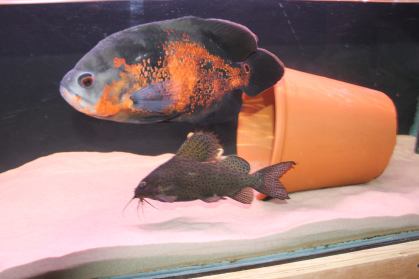
That 55-gallon tank gathering dust in your garage won’t cut it for an adult Oscar. These fish produce waste equivalent to five smaller cichlids, turning undersized tanks into toxic death traps within days. When confined to tanks under 75 gallons, Oscars experience chronic stress that suppresses their immune system—making them vulnerable to hole-in-the-head disease and fin rot. Their constant digging destabilizes water parameters, causing dangerous ammonia spikes even with daily water changes. Critical reality check: A single adult Oscar requires 100-125 gallons as the true minimum. Anything smaller permanently stunts growth and triggers destructive aggression. If you’ve already bought a juvenile Oscar, immediately secure a 100+ gallon tank—you have 6-8 months before it outgrows temporary housing.
How to Calculate Your Oscar’s Actual Space Needs
- Swimming zone requirement: Oscars need 4x their body length in open swimming space (minimum 4 feet for adults)
- Waste dilution factor: Each inch of adult Oscar requires 10+ gallons (not the mythical “1 inch per gallon”)
- Grow-out timeline: A 3-inch juvenile will need 75 gallons by 6 months and 125 gallons by 18 months
Sand Substrate: The Only Safe Choice for Digging Oscars
Oscars aren’t just swimmers—they’re underwater landscapers that rearrange their habitat daily. Coarse gravel causes life-threatening injuries when they root through substrate. Sharp edges slice delicate barbels (whisker-like sensory organs), creating infection entry points. Sand solves this while satisfying their natural behavior. Pro tip: Use pool filter sand—it’s affordable, inert, and fine enough to pass through their gills harmlessly during digging frenzies. Avoid colored or sharp-edged “aquarium gravel” at all costs—it’s the #1 cause of mouth injuries in captive Oscars.
What to Do If You Already Have Gravel
- Immediately remove large, sharp pieces during next water change
- Layer 2-3 inches of sand on top (don’t mix with existing gravel)
- Monitor for 72 hours—if Oscar shows labored breathing, perform emergency gravel removal
Building Unshakeable Decor: Stop Oscar Tank Destruction

Oscars treat unstable decor like bowling pins—they’ll knock over anything that isn’t bolted down. A single bump from their powerful tail can send heavy rocks crashing through glass. Yet bare tanks cause psychological damage—these intelligent fish need mental stimulation. The solution? Engineer immovable structures using these battle-tested methods:
Creating Escape-Proof Hiding Spots
- Terracotta pot technique: Bury 70% of a 6″ pot in sand, leaving only the entrance visible
- Driftwood anchoring: Drill holes through heavy bogwood, thread silicone-coated wire through, and anchor to tank bottom
- Cave construction: Stack slate pieces with aquarium-safe silicone, weighting base with 20+ lbs of river rock
Critical warning: Never use glued decorations—Oscars will dismantle them and ingest toxic residues. Smooth all driftwood edges with 220-grit sandpaper to prevent scale damage during collisions.
Plants That Survive Oscar Attacks (And How to Secure Them)
Most plants vanish within hours in an Oscar tank—but three species consistently endure. Anubias and Java fern survive because Oscars ignore their bitter-tasting leaves. Red tiger lotus bulbs regenerate even when uprooted. Success depends entirely on installation:
Oscar-Proof Planting Methods
- Weighted root systems: Anchor Anubias rhizomes to lava rock with fishing line
- Bulb burial: Plant tiger lotus 3″ deep in sand, covering only the base
- Barrier zones: Place plants behind strategically positioned slate walls
Pro insight: Juvenile Oscars (under 6″) often ignore plants, but adults treat them as toys. Never attempt Amazon swords—they’ll be shredded within 24 hours.
Filtration Overkill: Why 400 GPH Is Non-Negotiable
Oscars eat like vacuum cleaners and excrete like sewage trucks. Standard filters fail catastrophically within weeks. That “rated for 100 gallons” filter? Useless. You need triple the rated capacity to handle their bioload. Canister filters are mandatory—they provide the mechanical filtration to trap chunky waste and biological media for ammonia conversion that hang-on-back filters can’t match.
The Filtration Emergency Protocol
- Daily: Rinse filter sponges in tank water (never tap water)
- Weekly: Replace 30-50% of water before filter maintenance
- Monthly: Check impeller for hair-like Oscar waste strands
Critical mistake: Using chemical media like carbon. It removes medication during treatments—stick to pure mechanical/biological filtration.
Tank Mates: Why Your Oscar Ate the Tetras (And How to Avoid It)

That peaceful community tank dream ends with Oscar ownership. These fish view anything smaller than their mouth as food. Even “large” tank mates like angelfish become snacks. The only safe configurations:
– Solo housing (95% of successful setups)
– Oscar pairs in 150+ gallon tanks (requires introducing juveniles together)
– Armored catfish like plecos (but expect damaged fins)
Red flag behaviors signaling imminent attacks:
⚠️ Rapid gill flaring when other fish approach
⚠️ “Tail-slapping” water surface near tank mates
⚠️ Obsessive guarding of one tank quadrant
The 10-Point Oscar Tank Setup Checklist
Don’t trust pet store recommendations—use this verified list before adding water:
- Tank footprint: Minimum 6×2 feet floor space (125-gallon dimensions)
- Filter system: Canister rated for 400+ GPH (e.g., Fluval FX6)
- Substrate: 3-inch layer of pool filter sand
- Hiding structures: 2 immovable caves (terracotta/slate)
- Heater: Dual 300W heaters with guards (75+ gallon)
- Water testing: Liquid API Master Test Kit
- Plant anchors: Lava rock slabs for Anubias/Java fern
- Maintenance: Python water changer + 10-gallon bucket
- Emergency kit: Ammonia detoxifier, aquarium salt
- Tank stand: Reinforced steel rated for 1,500+ lbs
Why Your First Water Change Could Kill Your Oscar
New Oscar owners trigger fatal crashes by misunderstanding nitrogen cycles. That “clear” water in a new tank hides lethal ammonia levels. Critical sequence for first 30 days:
– Day 1: Add bacteria starter + 1 cup sand to cycling tank
– Day 3: Test for ammonia (should read 0.5-1 ppm)
– Day 7: Perform 25% water change only if nitrites appear
– Day 14: Introduce Oscar only when nitrates register
Never add fish to a tank without 4 consecutive days of 0 ammonia, 0 nitrites, and <20 ppm nitrates. Use Seachem Prime to detoxify tap water during changes.
Final Reality Check: The Oscar Commitment
Setting up an Oscar aquarium isn’t about buying equipment—it’s about engineering a sustainable ecosystem. That $1,200 initial investment (tank, stand, filtration) prevents $300/month vet bills from preventable diseases. Measure your living room now—a 125-gallon tank weighs 1,400 pounds when full and requires floor reinforcement. But get it right, and you’ll have a fish that recognizes your face, begs for food, and lives longer than your dog. Start with the tank size your Oscar will be, not what it is today. Your future self—and your thriving Oscar—will thank you when it’s still dazzling you 12 years from now.