Best Turtle and Fish Aquarium Setup (2026 Guide)
Creating a harmonious turtle and fish aquarium setup seems like a dream scenario for many aquatic hobbyists. Yet this complex ecosystem demands careful planning to prevent disaster. One aquarist recently shared their turtle and fish aquarium setup online seeking community feedback, revealing surprising pitfalls even experienced keepers overlook. Their experience proves that without addressing species-specific needs, your tank could become a high-stress environment where turtles and fish struggle to thrive. This real-world case study exposes critical mistakes in plant selection, incompatible tank mates, and inadequate lighting that could jeopardize your pets’ health. You’ll discover exactly what went wrong in this setup and how to avoid these costly errors in your own turtle and fish aquarium setup.
Why Floating Plants Outperform Substrate Greens in Turtle Tanks
The aquarist’s initial plant strategy included both floating and rooted varieties, but critical flaws emerged immediately. They started with 1 Hygrophila, 1 water lettuce, and a small handful of floaters alongside water fern planted directly in the substrate. Most problematically, they added dwarf grass and carpet grass beneath the sediment—a decision that ignored turtles’ natural behavior. Turtles constantly dig and uproot plants while foraging, making delicate substrate greens like dwarf grass virtually impossible to maintain. Within weeks, these rooted plants were completely destroyed as the turtles disturbed the tank floor during routine activities.
Floating Plants: Your Turtle Tank’s Secret Weapon
Floating vegetation provides the only sustainable plant solution in mixed turtle-fish environments. Water lettuce and floaters thrive because turtles can’t reach their roots, allowing these plants to:
– Rapidly regenerate after occasional nibbling
– Create shaded retreats where fish escape turtle predation
– Absorb excess nitrates from turtle waste
– Provide natural cover for juvenile fish
Unlike rooted plants, floating varieties self-repair quickly even when partially consumed. Water lettuce in particular forms dense surface mats that block direct light—a crucial feature since turtles often destroy underwater plants within days. The aquarist eventually realized their dwarf grass and carpet grass were doomed from installation, wasting both money and effort on unsustainable greenery.
Pleco Shell-Sucking: The Hidden Danger in Turtle and Fish Tanks
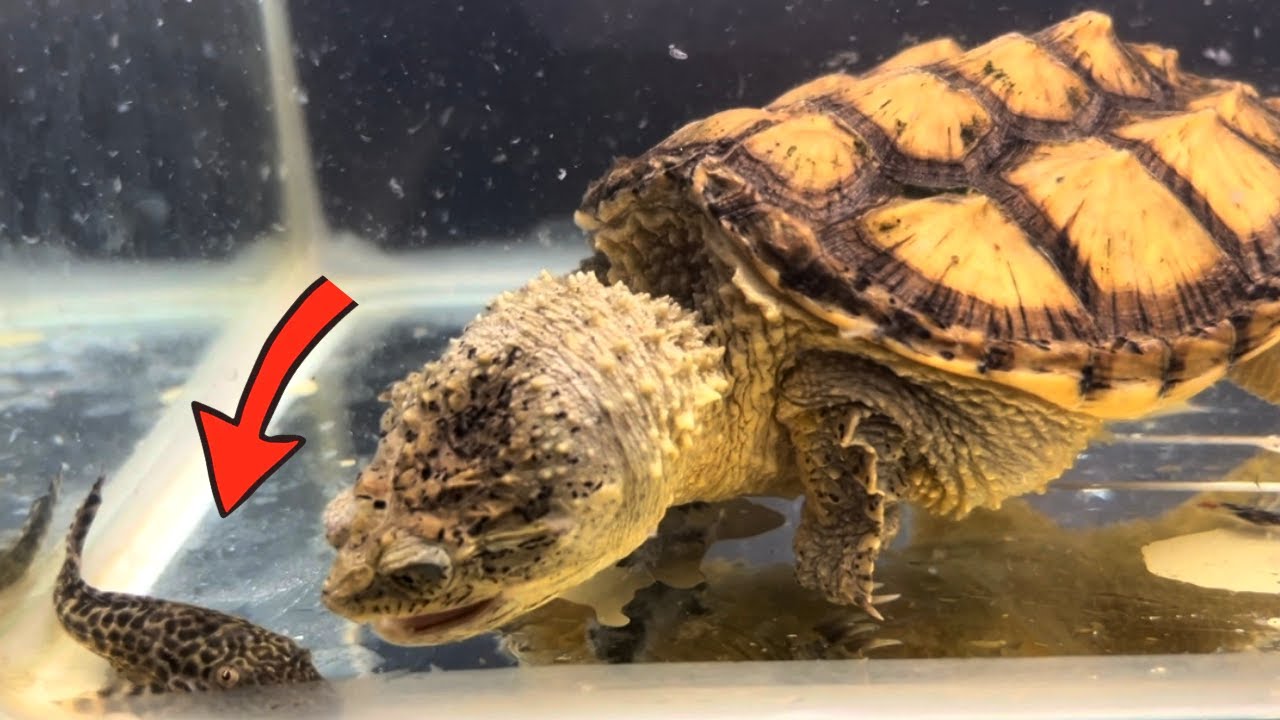
The most alarming discovery in this turtle and fish aquarium setup involved their pleco. What began as a helpful algae eater transformed into a serious health threat when the aquarist noticed the pleco “loves to suck on their shells” while “surfing as the turtles swim.” This seemingly harmless behavior creates dangerous vulnerabilities. Constant shell contact erodes the protective keratin layer, leaving turtles susceptible to fungal infections and shell rot. The pleco’s suction action also causes chronic stress, weakening the turtle’s immune system over time.
Emergency Exit Strategy for Problematic Plecos
When your pleco becomes a shell-sucking menace, immediate action is required. This aquarist wisely planned moving the pleco to an outdoor pond once it reached full size—a critical contingency many overlook. For turtle keepers facing similar issues:
– Monitor interactions hourly during initial introduction
– Prepare a separate holding tank before adding any fish
– Never rely on plecos for tank cleaning in turtle habitats
– Remove problematic fish within 24 hours of observing shell contact
The aquarist admitted their pleco was already “fairly large,” demonstrating how quickly these “helpful” fish become threats. Their outdoor pond solution highlights an essential truth: some fish simply cannot coexist with turtles long-term, requiring escape plans before disaster strikes.
UVB Lighting Failures: The Silent Killer in Mixed Tanks

Perhaps the most dangerous oversight in this turtle and fish aquarium setup involved lighting. Community feedback immediately flagged their fixture as “one of those lights that claim to emit UVB but don’t actually.” This is a critical error since turtles need UVA, UVB, and heat for proper physiological function—a fact many new keepers misunderstand. Without genuine UVB exposure, turtles develop metabolic bone disease within months, causing painful shell deformities and organ failure. The aquarist’s admission that “the heat bulb may be lacking” compounded this risk, creating an environment where their turtle couldn’t properly regulate body temperature.
Fixing Lighting Deficiencies Before Damage Occurs
Correcting UVB deficiencies requires immediate, specific action:
– Replace combo bulbs with certified UVB-specific fixtures (the aquarist confirmed having “a certified UVB bulb” but needed heat adjustments)
– Install dual-lamp systems—one for UVB and separate for basking heat
– Provide daily outdoor sunning as a temporary solution (this keeper used “2 hours a day in a tub pond”)
– Test UVB output monthly with a Solarmeter
The aquarist’s outdoor sunning routine was their only safeguard against severe health issues. But this band-aid solution highlights a harsh reality: improper lighting in turtle and fish aquarium setups causes irreversible damage before visible symptoms appear. Never assume your fixture provides adequate UVB—verify with testing equipment.
Insufficient Basking Platforms: The #1 Turtle Health Crisis
Community comments instantly identified the most urgent flaw: “Be nice to have more basking space.” This seemingly minor oversight represents a life-threatening emergency. Turtles require complete shell drying multiple times daily to prevent shell rot—a fungal infection that eats through bone. Without adequate dry space, moisture becomes trapped against the plastron (bottom shell), creating perfect conditions for infection. The aquarist’s cramped platform forced turtles to crowd during basking, increasing stress and aggression while denying proper drying time.
Building a Fail-Safe Basking Zone in 3 Steps
Transform your turtle and fish aquarium setup with these basking platform essentials:
1. Size it correctly—platform must accommodate all turtles with 2+ inches between shells
2. Ensure total dryness—position above water line with no splash zone
3. Add multiple access points—use ramps on multiple sides to prevent trapping
This keeper’s near-miss demonstrates why basking space isn’t optional—it’s non-negotiable for turtle survival. A single crowded platform creates a domino effect: stressed turtles become aggressive toward fish, weakened immune systems increase disease risk, and shell deterioration accelerates. Always prioritize basking capacity over decorative elements.
Fish Predation: The Inevitable Turtle Behavior You Can’t Ignore

The most sobering community feedback stated plainly: “the turtle is likely to eventually eat the fish.” This isn’t speculation—it’s biological reality. Turtles are opportunistic predators with lightning-fast strikes. Even docile species like red-eared sliders will hunt fish given the chance, especially at night. The aquarist’s setup contained multiple small fish that became natural prey targets, creating constant stress for both species. Fish darting frantically through the tank indicated chronic predator anxiety—a welfare issue many keepers dismiss until fish disappear.
Realistic Fish Selection for Turtle Coexistence
If attempting a turtle and fish aquarium setup, follow these non-negotiable rules:
– Never add small, slow fish (guppies, goldfish, neon tetras)
– Choose only fast, surface-dwelling species like giant danios
– Introduce fish larger than the turtle’s head (minimum 3x size)
– Accept high attrition rates—many fish will become meals
This keeper’s experience proves that no “compatible” fish guarantee long-term coexistence. The moment turtles associate fish with food, hunting behavior becomes irreversible. Always maintain a separate quarantine tank ready to rescue surviving fish.
Creating a sustainable turtle and fish aquarium setup demands ruthless honesty about species incompatibilities. This real-world case reveals how easily well-intentioned keepers overlook critical threats—from shell-sucking plecos to UVB-deficient lighting. Your immediate action steps should be: remove substrate plants, verify UVB output with testing equipment, double basking capacity, and prepare for inevitable fish predation. Remember that turtles have fundamentally different needs than fish—they’re not “just another aquarium resident” but complex reptiles requiring specialized habitats. When in doubt, prioritize turtle health over the aesthetic appeal of mixed-species tanks. For true success, consider separate enclosures: a dedicated turtle habitat with robust filtration and a species-appropriate fish aquarium. This difficult choice prevents the chronic stress and health crises that inevitably plague even the most carefully planned turtle and fish aquarium setups.