How to Get Rid of Aiptasia in Aquarium
Spotting that first translucent anemone with sticky tentacles clinging to your live rock sends panic through any reef keeper. Aiptasia anemones aren’t just unsightly—they’re silent assassins that multiply overnight, sting corals into submission, and can overrun your entire system within weeks. If you’re searching for how to get rid of aiptasia in aquarium setups, you’re facing a battle that demands immediate, strategic action. This guide cuts through the noise with proven methods that actually work, from targeted chemical injections to predator deployment. You’ll learn exactly how to eliminate these resilient pests without harming your prized corals or triggering a tank-wide crisis.
Aiptasia thrive in the nutrient-rich paradise we create for our reefs, exploiting even minor water quality lapses. Their infamous pedal laceration reproduction means a single overlooked polyp can regenerate into hundreds of invaders. But here’s the critical truth: successful eradication isn’t about one silver bullet—it’s a layered assault combining precision strikes, biological warfare, and long-term prevention. Stick with me through this battle-tested plan, and you’ll reclaim your tank’s health within weeks, not months.
Why Aiptasia Anemones Are Destroying Your Reef Tank
Aiptasia don’t just compete for space—they wage chemical warfare. Their stinging cells deliver toxins that cause coral tissue necrosis, turning vibrant SPS colonies into bleached skeletons within days. What makes them terrifying is their dual reproduction strategy: sexual spawning releases clouds of larvae, while pedal laceration lets them clone themselves by shedding microscopic tissue fragments. A single anemone can produce 10-15 clones weekly, with new polyps emerging from rock crevices faster than you can spot them.
How Aiptasia Outmaneuver Your Corals
These pests deploy strategic advantages that doom passive reef tanks. Their symbiotic algae (zooxanthellae) allow them to photosynthesize aggressively in high-light zones, starving corals of energy. When threatened, they retract deep into porous rock—up to 2 inches—where tweezers can’t reach. Most devastatingly, they regenerate from fragments as small as 1mm. Attempting manual removal without extracting the entire pedal disc? You’re accidentally farming more invaders.
Best Biological Predators That Actually Eat Aiptasia

Forget “reef-safe” myths—only three predators deliver reliable aiptasia control. Success hinges on species specificity and tank compatibility. Introduce these at the first sign of infestation for maximum impact.
Peppermint Shrimp: The Selective Specialist
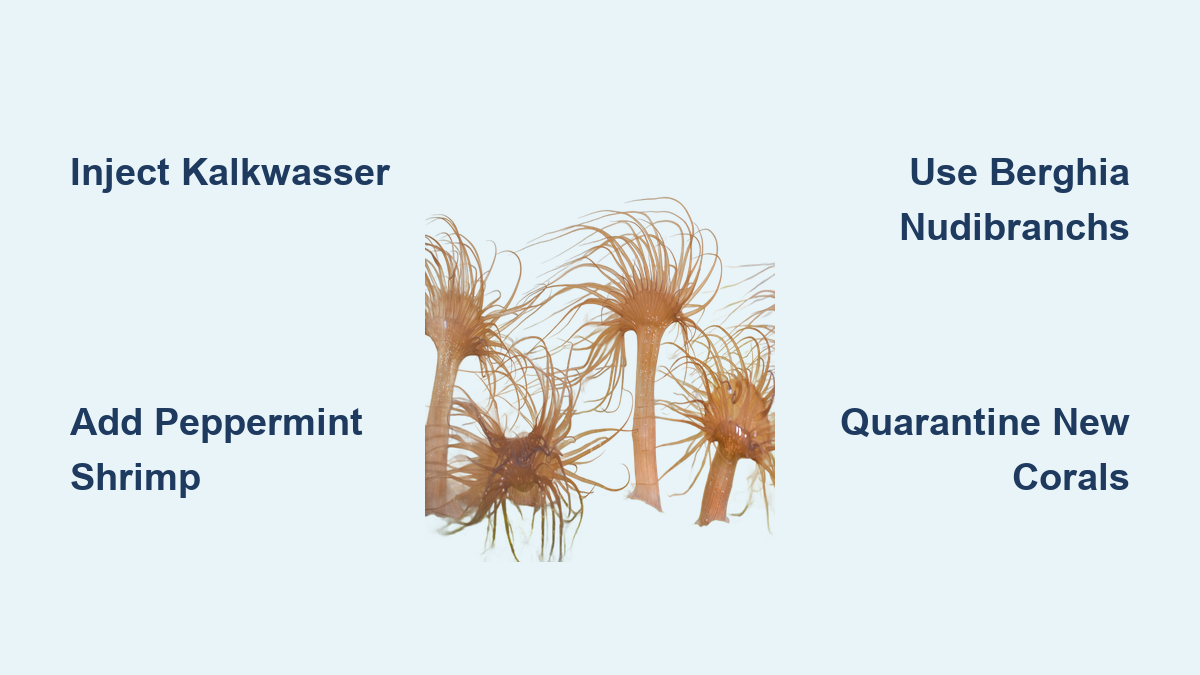
Only true Caribbean Lysmata wurdemanni (distinct white/red bands) consistently hunt aiptasia. Gulf Coast L. boggessi work moderately well, but avoid generic “peppermint shrimp” sold online—many are ineffective lookalikes. Deploy one shrimp per 20 gallons for small infestations. They’ll target anemones under 1 inch within 48 hours but ignore larger specimens. Critical pro tip: Quarantine new shrimp for 2 weeks to prevent introducing their own aiptasia hitchhikers.
Berghia Nudibranchs: The Surgical Strike Force
These inch-long snail-killers are aiptasia’s natural nemesis. Each adult consumes 1-2 anemones daily while juveniles hunt hidden polyps. For a moderate outbreak (15-20 visible aiptasia), add 3-5 Berghia. They’ll reproduce as food becomes abundant, then naturally die off when pests vanish. But heed this warning: Never add them to tanks with wrasses, hermits, or large shrimp—they’ll vanish overnight. Test water parameters first; Berghia perish in unstable systems.
Aiptasia-Eating Filefish: The Controversial Heavy Hitter
Acreichthys tomentosus devours even large anemones but carries a 30% risk of coral nipping. Only deploy in mature tanks (6+ months) with aggressive fish to deter filefish from exploring corals. Introduce one per 50 gallons when aiptasia exceed 2 inches. Monitor closely for 72 hours—if it ignores corals, it’s safe. Never use in small tanks (<30 gallons); stressed filefish turn destructive.
Chemical Kill Methods: Step-by-Step Injection Guide
Direct injection delivers 95% success when executed precisely. This isn’t for the faint-hearted—you’ll need steady hands and patience. Always work at night when aiptasia are fully extended.
Kalkwasser Paste: The Gold Standard
Mix kalkwasser powder with tank water to a toothpaste consistency. Draw into a 1ml syringe with a 22-gauge needle. Target the oral disc (center mouth), injecting until the anemone swells and turns opaque. Within 24 hours, it disintegrates. For rock-embedded specimens, inject at the base where the pedal disc attaches. One treatment per anemone suffices—reinjecting risks rock pH spikes.
Commercial Gels: Precision Without Pain
Products like Red Sea Aiptasia Control form viscous gels that cling to vertical surfaces. Apply a pea-sized blob directly onto the oral disc using the included syringe tip. The anemone ingests it within minutes, dying in 12-48 hours. Works best on exposed anemones >0.5 inches. Avoid spraying—overspray on corals causes tissue recession.
Physical Removal Techniques That Prevent Regrowth

When chemical methods risk nearby corals, these mechanical tactics save the day—but one slip means instant regrowth.
Super Glue Smothering for Tiny Invaders
For polyps under 3mm on flat surfaces, apply a thick bead of reef-safe cyanoacrylate gel (NOT liquid) directly over the oral disc. The glue seals its feeding mechanism, killing it in 48 hours. Works instantly on frag plugs but fails on porous rock—glue seeps into crevices, leaving pedal discs alive. Always wait 24 hours post-application before moving the rock.
Laser Targeting: The Pro’s Secret Weapon
Specialized aquarium lasers (e.g., 445nm diode) cauterize aiptasia at the source. Set power to 300-500mW, hold 6 inches from target, and fire 3-second bursts until the anemone turns white. Reaches polyps buried 1.5 inches deep. Cost? $200+ for a quality unit. Danger? Accidental coral hits cause permanent bleaching. Only attempt after 10+ dry-run sessions on dummy rocks.
Total Tank Sterilization: When All Else Fails

If aiptasia cover >30% of your rockwork, sterilization becomes your only option. This nuclear approach kills all life—including beneficial bacteria—but guarantees total eradication. Plan for a 6-week tank rebuild.
The 5-Step Sterilization Protocol
- Livestock evacuation: Move corals/fish to a cycled quarantine tank.
- Rock extraction: Remove all rock, soak in 3% H₂O₂ bath for 24 hours.
- Deep drying: Air-dry rock for 30+ days (UV light accelerates death).
- Tank scrubbing: Wipe empty tank with vinegar solution, rinse thoroughly.
- Re-cycling: Restart with new sand and dry rock—never reuse old media.
Warning: Skipping the drying phase leaves 70% of aiptasia viable. Patience is non-negotiable.
Immediate Triage for New Aiptasia Outbreaks
Spot one anemone? Act within 24 hours to prevent an epidemic. Your emergency checklist:
- Red flashlight scan: At night, use a red LED to spot extended tentacles (they retract under white light).
- Isolate the rock: Move infested rock to a bare quarantine tank for treatment.
- First-strike injection: Hit visible anemones with kalkwasser paste before they clone.
- Nutrient lockdown: Reduce feeding by 50% and run GFO for 72 hours to starve symbiotic algae.
Delaying beyond 48 hours? Probability of full infestation jumps from 15% to 80%.
Combining Methods for Maximum Eradication
For established infestations (5+ visible anemones), layer these tactics simultaneously:
- Week 1: Inject all anemones >0.5 inches with commercial gel. Add peppermint shrimp.
- Week 2: Introduce Berghia nudibranchs to hunt regrowth. Increase skimmer output by 30%.
- Week 3: Treat remaining polyps with super glue. Test nitrates—keep below 5ppm.
- Week 4: Inspect nightly with red light. If zero new sightings, reduce shrimp count.
Critical mistake: Using vinegar injections. Citric acid alters tank pH, causing coral melt. Stick to kalkwasser or commercial gels.
Long-Term Prevention: Stop Aiptasia Before They Start
Eradication means nothing without ironclad prevention. Implement these non-negotiable protocols:
Coral Quarantine Protocol
All new corals soak in 10-minute iodine dip (0.5ml/liter) followed by 30-minute freshwater bath. Inspect under 10x magnification—aiptasia polyps resemble clear grains of sand. Hold corals in a bare tank for 4 weeks before display tank introduction.
Nutrient Starvation Tactics
Aiptasia vanish when nitrates stay below 10ppm and phosphates under 0.03ppm. Achieve this by:
– Running an oversized protein skimmer (rated for 2x your tank size)
– Adding a macroalgae refugium with Chaetomorpha
– Dosing carbon daily to consume dissolved organics
Most importantly: Never feed more than corals consume in 2 minutes. Leftover food = aiptasia fuel.
Final Note: Aiptasia eradication demands ruthless consistency—but it’s winnable. Start with peppermint shrimp for minor outbreaks and kalkwasser injections for visible anemones. For severe cases, combine Berghia nudibranchs with nutrient starvation. Remember: 90% of failures stem from incomplete pedal disc removal or skipping quarantine. Stay vigilant for 60 days post-treatment, and your reef will thrive pest-free. The moment you spot that first sticky tentacle, deploy this plan—you’ll sleep soundly knowing your corals are safe.