How to Use Aquarium Vacuum Pump
That murky water and slimy gravel bed aren’t just unsightly—they’re silent killers in your aquarium. Left unchecked, decomposing waste spikes ammonia levels, suffocating fish within hours. Your secret weapon? The aquarium vacuum pump (gravel cleaner), which removes 80% of tank toxins during water changes. Yet most hobbyists waste time struggling with siphons or risk contamination by sucking hoses. This guide reveals exactly how to use aquarium vacuum pump safely and efficiently—no mouth contact required—to transform your tank in under 5 minutes per gallon. You’ll learn pro techniques for every substrate type, avoid deadly beginner mistakes, and finally enjoy crystal-clear water without the hassle.
Why Your Gravel Vacuum Sucks (Literally) to Clean Tank Waste
Aquarium vacuum pumps exploit physics, not magic. Gravity pulls contaminated water through the wide bell tube while dense gravel particles tumble back to the substrate. The discharge hose then channels this toxic slurry into your bucket. But here’s what stumps beginners: the bell must move vertically, not horizontally. Dragging it sideways bulldozes gravel into the tube, clogging your system. Instead, plunge the bell 1-2 inches deep, lift slightly to stir debris, and let suction whisk away only light waste. You’ll hear gravel tumbling in the tube—stop when the sound stops and water runs clear above the substrate. This targets fish waste and uneaten food without stripping beneficial bacteria colonies living in the gravel’s lower layers.
Pump-Style Vacuum: The Zero-Suck Solution for Sensitive Hobbyists
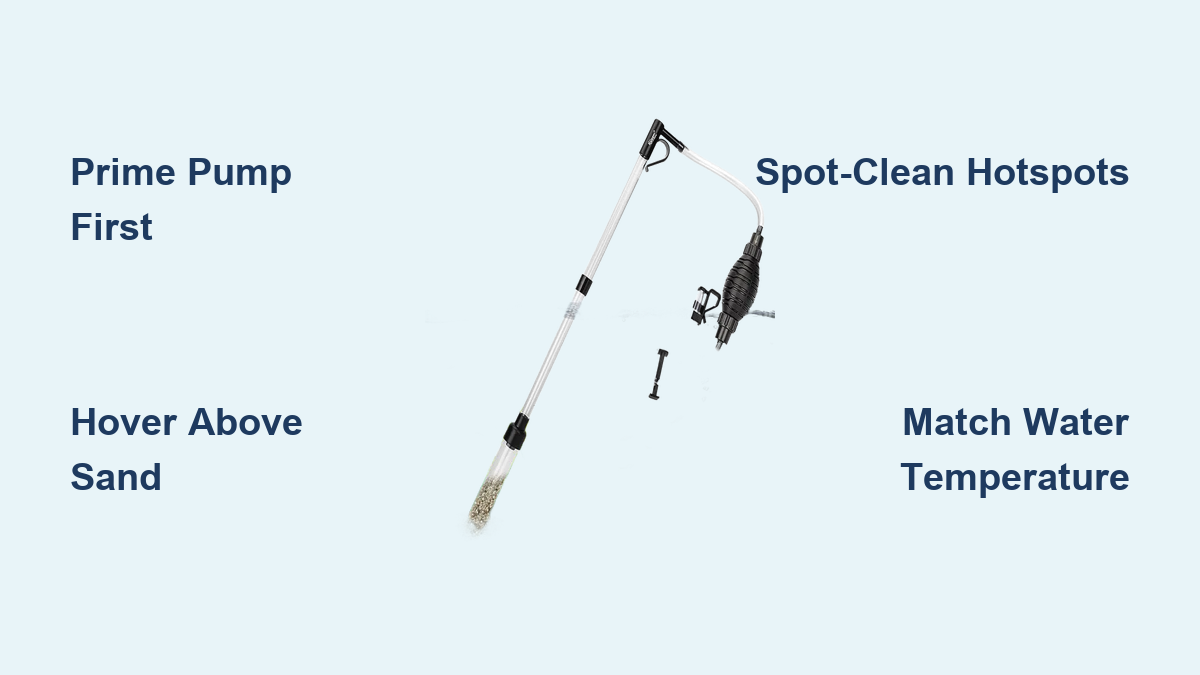
Skip the siphon struggle entirely with a manual pump vacuum like the Dennerle NanoClean. Here’s how to use aquarium vacuum pump models that eliminate mouth contact:
- Prime the Pump: Submerge the entire unit in tank water. Pump the handle 3-5 times until water flows steadily from the discharge hose.
- Position Over Gravel: Hold the bell ½ inch above the substrate. The controlled suction lifts debris without disturbing gravel.
- Spot-Clean Hotspots: Target fish waste clusters near decorations—no need to vacuum the entire tank weekly. Focus on high-traffic zones where ammonia spikes originate.
Pro Tip: Pump vacuums work best for tanks under 20 gallons. For larger setups, use them to clean critical zones while employing traditional siphons elsewhere.
Submersion & Lower Method: Failproof Siphon Start Without Sucking
When you lack a pump vacuum, this technique guarantees flow on the first try:
- Fill the Tube: Submerge the gravel vacuum completely. Point the bell upward like a cup until water overflows from the hose end.
- Seal and Lift: Cover the hose end tightly with your palm. Lift the entire unit just above water level—watch the water level drop 2-3 inches in the tube.
- Re-Submerge to Activate: Lower the bell back into the tank before water exits the tube. Gravity instantly triggers siphon flow.
Critical Checkpoint: If water stops flowing, air entered the tube. Repeat Step 2 but lift the unit higher to create stronger suction.
Step-by-Step Gravel Vacuuming Without Killing Your Tank’s Ecosystem

Pre-Vacuum Safety Protocol: Avoid 3 Costly Mistakes
Unplug heater and filters before inserting the vacuum. A single contact with submerged equipment can crack heaters or shred impellers. Place a towel under your bucket—spills happen. Most crucially: never start siphons if you’ve added medications. Residual chemicals in the hose could poison you during mouth-start attempts. Always use submersion methods in medicated tanks.
Deep-Cleaning Gravel Beds: The 4-Motion Technique
- Target Dirty Zones First: Insert the bell near food residue or fish waste clusters (often under driftwood or near feeding spots).
- Vertical Plunge: Push down firmly until gravel lifts slightly, then release. Repeat 3 times in the same spot—this agitates trapped debris without uprooting plants.
- Listen for Clarity: Stop when the gravel-tumbling sound fades and water above the substrate turns clear (usually 5-10 seconds per spot).
- Move Strategically: Work in concentric circles from tank edges toward the center. Never vacuum more than 30% of the substrate in one session to preserve bacteria.
Warning: With sand substrates, hover the bell ¼ inch above the surface. Full insertion will vacuum your entire sand bed into the bucket within seconds.
Executing Perfect Water Changes: The 25% Rule

Vacuuming is your water change—don’t separate these steps. Siphon directly into a clean 5-gallon bucket until water level drops 1 inch per 10 gallons of tank capacity (e.g., 2 inches for a 20-gallon tank = 25% change). Stop immediately when you hit this mark. Over-draining stresses fish and crashes beneficial bacteria. To restart flow after pausing, simply lift the bell 2 inches then re-submerge—no re-priming needed.
Substrate-Specific Vacuuming Hacks You Won’t Find on YouTube
Fine Sand Beds: The “Hover and Pulse” Method
Standard gravel vacuums devour sand. Instead:
– Use a narrow tube attachment (like a Python gravel washer)
– Hold it 1 inch above the sand
– Pulse the siphon on/off with your thumb over the hose end
– Vacuum only visible debris—never stir the sand
Plant-Friendly Cleaning: Root Zone Protection
Live plants hate disturbed roots. How to use aquarium vacuum pump near flora:
1. Place your hand over the bell’s front opening
2. Gently nudge debris toward the exposed rear section
3. Suction only loose particles—never plunge near stems
Crushed Coral Tanks: The Salt Creep Fix
Mineral deposits clog tubes fast. After each use:
– Flush the vacuum with distilled water
– Soak the bell in vinegar for 10 minutes monthly
– Store disassembled to prevent crystallization
Critical Mistakes That Destroy Aquariums (Fix #3 Today)

Over-Cleaning New Tanks: The Silent Cycle Killer
Never deep-vacuum tanks under 4 weeks old. New colonies of ammonia-eating bacteria live in the substrate. Removing more than 10% of gravel during initial cycles crashes your nitrogen cycle, causing deadly ammonia spikes. For new setups:
– Vacuum only the top ¼ inch of substrate
– Skip high-traffic zones for the first month
– Use pump vacuums on lowest setting
Temperature Shock: The Invisible Fish Killer
Adding cold tap water after vacuuming is a top cause of fish death. Always match temperatures within 2°F:
1. Fill replacement water 24 hours ahead
2. Float a thermometer in both tank and bucket
3. Add warm water gradually while vacuuming (never all at once)
Medication Mishaps: When Sucking Becomes Deadly
Never mouth-start siphons in medicated tanks—even days after treatment. Residual antibiotics or copper-based medicines cause chemical burns. Always use submersion methods, and dedicate a separate vacuum only for medicated tanks.
Pro Maintenance Routine: Keep Your Vacuum Pump Flowing for Years
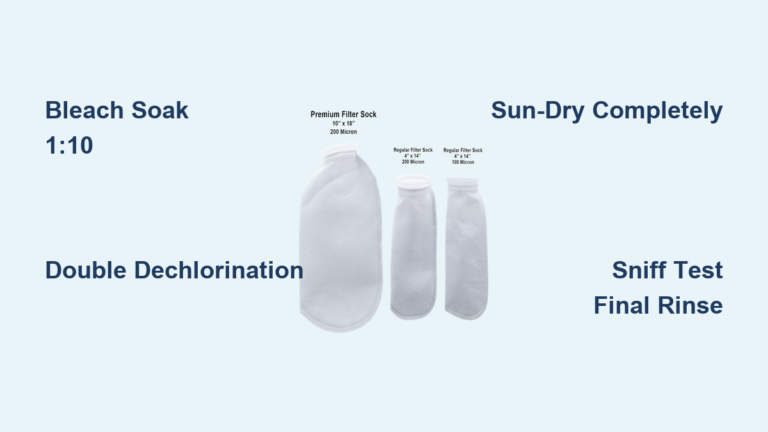
Clean your gravel vacuum immediately after use:
1. Disassemble all parts
2. Soak in 1:10 bleach-water solution for 5 minutes
3. Rinse thoroughly under running water
4. Store hose coiled loosely (never kinked)
Weekly check: Squeeze the hose to feel for blockages. A single pebble can reduce suction by 70%. Flush with hot water if flow weakens.
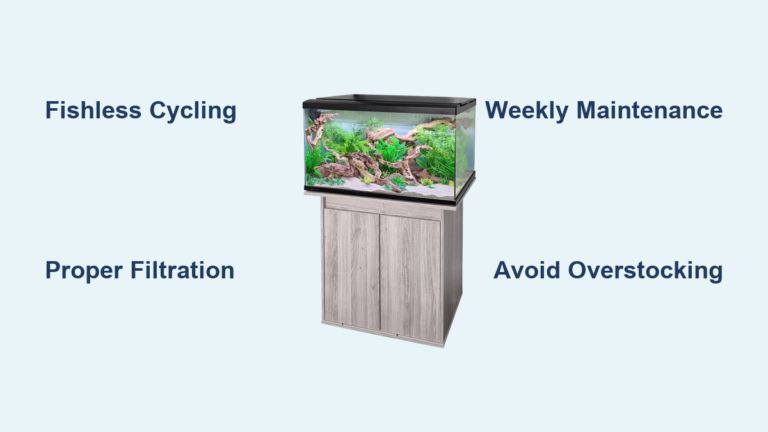
Final Water Clarity Checklist: Your 5-Minute Weekly Routine
- Unplug equipment (30 seconds)
- Prime vacuum using submersion method (60 seconds)
- Spot-clean high-waste zones (2 minutes per 10 gallons)
- Siphon 20-25% water into bucket (90 seconds)
- Add pre-treated replacement water (60 seconds)
Within 48 hours, you’ll see fewer algae blooms and more vibrant fish colors. Consistent vacuuming prevents 90% of common tank emergencies—from mysterious fish deaths to green water outbreaks. Remember: how to use aquarium vacuum pump isn’t about sterile gravel—it’s strategic waste removal. Focus on problem zones, protect your bacteria colonies, and never skip temperature matching. For immediate results, vacuum near your filter intake to boost circulation through cleaned substrate. Your tank’s transformation starts today: grab that vacuum, skip the suck, and reclaim crystal-clear water in minutes.
Next Step: Bookmark this guide for your next water change—and share your clearest tank photo with #NoSuckVacuum to inspire fellow hobbyists.