How to Treat Fish Lice in Aquarium: Quick Steps
Finding nearly invisible parasites clinging to your goldfish is every aquarist’s nightmare. When fish lice infestations take hold, they cause relentless scratching, lethargy, and severe stress—especially in fancy goldfish with delicate fins. Standard treatments like API General Cure or Melafix often fail because they target bacteria or flukes, not these crustacean parasites. Left unchecked, fish lice drain your fish’s energy, create open wounds, and invite deadly secondary infections. This guide delivers a proven battle plan to eliminate even the tiniest lice using targeted medications, precise manual removal, and critical tank sterilization—based on real aquarists’ hard-won victories.
The key to how to treat fish lice in aquarium environments lies in attacking all life stages simultaneously. Fish lice reproduce rapidly, with eggs hatching in just days to restart the infestation cycle. Manual removal alone won’t work—those “nearly invisible” juveniles keep appearing because you’re missing microscopic eggs. Effective treatment requires three coordinated strikes: physically removing adults, dosing with crustacean-specific medication, and completely sterilizing your tank to break the reproductive cycle. Skip any step, and you’ll face the same heartbreaking scenario of daily lice-picking while your fish deteriorate.
Why API General Cure and Melafix Fail Against Fish Lice
Most aquarists waste precious time using common medications that target the wrong parasites. API General Cure contains praziquantel for flukes and metronidazole for bacteria—both useless against fish lice, which are crustaceans. Melafix (tea tree oil) and Metroplex (antibacterial) similarly miss the mark because lice have exoskeletons requiring specific chemical disruption. Using these creates false hope while the infestation worsens, stressing fish further through unnecessary chemical exposure. If you’ve treated for days with no improvement, confirm you’re seeing flat, disc-shaped parasites (not ich spots) before switching tactics.
How to Identify Nearly Invisible Fish Lice on Goldfish
Spotting juvenile lice demands sharp eyes and patience. Look for tiny, translucent discs (0.5-1mm) clinging to fins, gill covers, or body scales—often mistaken for debris. Affected goldfish will “flash” (rub against tank walls), breathe rapidly, or develop red streaks where lice feed. Use a magnifying glass in bright light; lice detach when disturbed but reattach quickly. If manual removal reveals small, crab-like parasites with clawed legs, you’ve confirmed fish lice. Note: Salt baths (1 tbsp/gallon) may cause temporary detachment but won’t kill eggs or prevent reinfestation.
Immediate Manual Removal: Cotton Swab Technique for Stressed Fish
Manual extraction is your first critical step—not a long-term solution but essential to reduce immediate damage. Work swiftly to minimize stress, especially for delicate fancy goldfish.
Setting Up Your Emergency Quarantine Station
Prepare a bare-bottom hospital tank (10+ gallons) with cycled water from your main tank. Add an air stone but no substrate or decor. This clean environment prevents reattachment and lets you monitor fish closely. Use a separate net only for infected fish to avoid cross-contamination. Have tweezers, cotton swabs, and a container of dechlorinated water ready before handling fish.
Safe Lice Extraction Without Harming Scales
Gently guide the fish into a shallow container of tank water. Dip a cotton swab in tank water and roll it over lice—they’ll cling to the swab. For stubborn lice, apply light pressure with tweezers near the parasite’s center (avoiding the fish’s body) and pull straight off. Never use dry tools or excessive force—this rips scales, creating infection sites. Immediately return the fish to the hospital tank after removal. Repeat daily until no lice are visible, but pair this with medication to target hidden juveniles.
Choosing the Right Medication: Cyromazine vs. Diflubenzuron Treatments
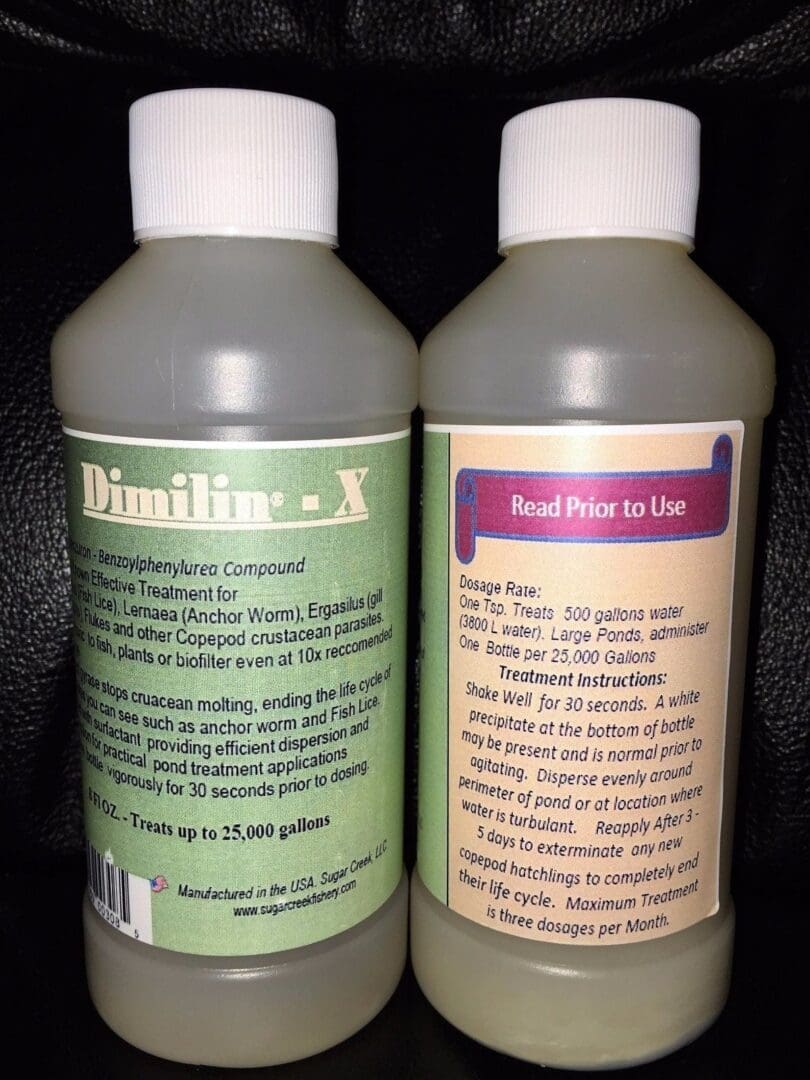
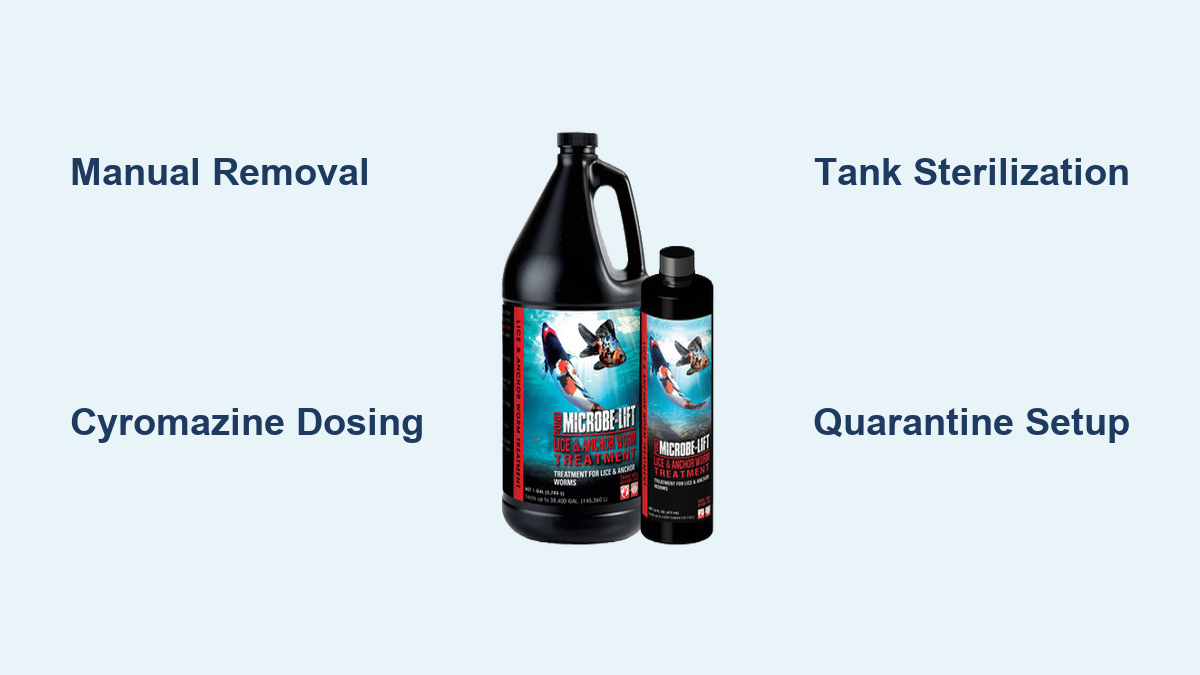
Only two medication types reliably kill fish lice at all life stages: cyromazine and diflubenzuron. These insect growth regulators prevent lice from forming new exoskeletons during molting, stopping reproduction. Available as powders or liquids (e.g., Dimilin, CLout), they require precise dosing based on your tank volume. Crucially, avoid all antibiotics, antifungals, or “all-in-one” parasite treatments—they worsen the problem by weakening fish without affecting lice.
Step-by-Step Dosing Protocol for Complete Eradication
- Calculate accurately: Measure your hospital tank’s exact volume (not the main tank). Under-dosing lets lice survive; overdosing risks fish toxicity.
- Dissolve medication: Mix powder in a cup of tank water before adding to avoid direct contact with fish.
- Administer daily: Most treatments require 5-7 consecutive days. Continue even if lice disappear—eggs hatch during this window.
- Monitor closely: Remove carbon from filters during treatment (it absorbs medication). Watch for unusual fish behavior; if severe, do a 30% water change immediately.
Breaking the Life Cycle: Sterilize Your Tank in 3 Days
Medicating fish alone guarantees reinfestation—lice eggs cling to decor, substrate, and tank walls for weeks. Complete eradication demands total tank sterilization while fish recover in the hospital tank.
The 72-Hour Tank Reset Method
Drain your main aquarium completely. Remove all substrate, filter media, and decorations. Soak non-porous items (rocks, plastic plants) in a 10% bleach solution (1:9 bleach:water) for 15 minutes, then rinse 5x with dechlorinated water. For porous items (driftwood), boil for 20 minutes. Critical step: Leave the empty tank dry for 72 hours—lice eggs die within 48 hours without moisture. Never skip this; residual eggs cause immediate relapse.
Filter and Substrate Decontamination
Replace filter media entirely—media pores harbor eggs that survive rinsing. For substrate, boil gravel for 15 minutes or bake at 200°F for 30 minutes. If reusing sand, soak in undiluted white vinegar for 24 hours, then rinse until water runs clear. Reassemble the tank with fresh, rinsed components before slowly reintroducing cycled water from the hospital tank.
Critical Mistakes That Keep Fish Lice Coming Back
Over 80% of failed treatments trace to these preventable errors. Using salt baths alone (1 tbsp/gallon) creates temporary discomfort for lice but won’t kill eggs—yet many persist with this method for weeks. Transferring fish back to an untreated main tank guarantees reinfestation from surviving eggs. Worst of all, continuing ineffective medications like API General Cure exhausts fish immune systems while the lice multiply unchecked. Always verify medication targets crustaceans specifically.
Why Hospital Tank Setup Determines Success
Your quarantine tank must be fully cycled before moving fish. Uncycled water spikes ammonia, compounding stress from lice. Use a battery-powered air pump for silent operation—stressed goldfish panic at loud filters. Never add new fish to the main tank until it’s been empty and dry for 72 hours post-sterilization. If lice reappear after “successful” treatment, you likely missed hidden eggs in filter crevices.
Preventing Future Outbreaks: The 14-Day Quarantine Rule
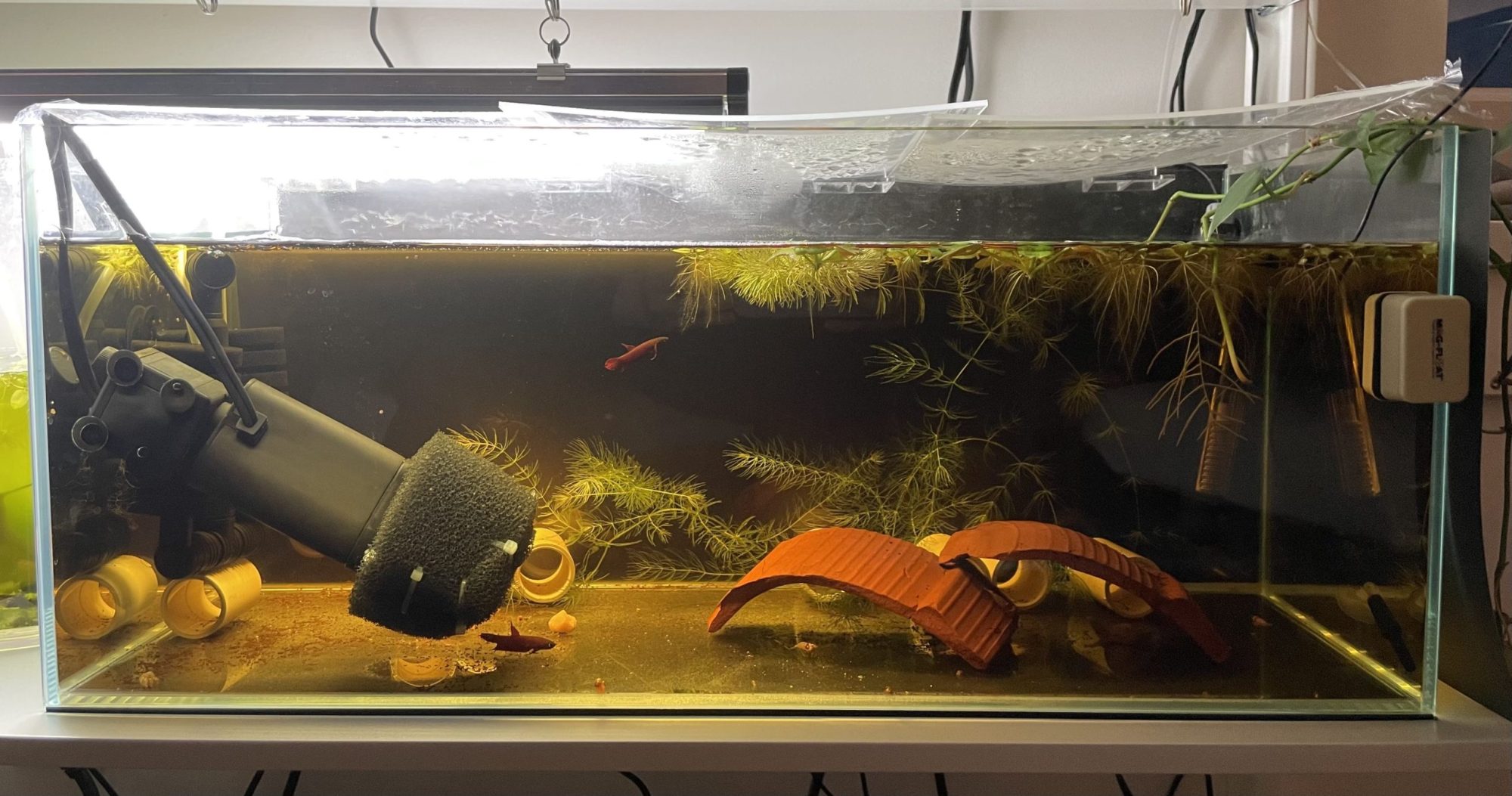
All new fish and plants must undergo strict quarantine before entering your display tank. Set up a separate 10-gallon cycled tank with basic filtration. Observe newcomers for 14 days, checking daily for flashing or parasites. Never introduce store-bought fish directly—most lice infestations originate from contaminated sources. For plants, dip in 5% bleach solution (2 mins) followed by 5 dechlorinated water rinses to kill hitchhikers.
Ongoing Vigilance for Early Detection
Inspect fish during feeding with a flashlight—lice often cluster near fin bases. Weekly salt dips (1 tsp salt/gallon for 5 mins) can deter early infestations but aren’t curative. Maintain pristine water quality; nitrates below 20 ppm boost fish immunity against parasites. If you spot even one louse, start treatment immediately—delaying lets juveniles mature and lay eggs within days.
When to Call an Aquatic Veterinarian
Seek professional help if fish develop secondary infections (white fungus, red ulcers) or stop eating after 3 days of treatment. Vets can prescribe stronger medications like emamectin benzoate, which penetrates lice exoskeletons faster. They’ll also check for misdiagnosis—anchor worms or carp lice require similar but distinct protocols. Don’t wait until fish are near death; severe infestations reduce survival odds below 40% without expert intervention.
Treating fish lice demands precision: cyromazine/diflubenzuron medications, meticulous manual removal, and absolute tank sterilization. Remember that salt baths and common antibiotics like API General Cure waste critical time while lice multiply. By following this three-pronged approach—immediate quarantine, targeted dosing, and the 72-hour dry-out—you’ll break the life cycle permanently. After eradication, enforce strict 14-day quarantines for all new additions and inspect fish weekly with a flashlight. Within a week, your goldfish will stop flashing, regain vibrant color, and swim freely again—proof that how to treat fish lice in aquarium environments is solvable with the right strategy. The moment you see that first healthy, lice-free day, you’ll know the battle was worth every careful step.