How to Care for Aquarium Water Plants
You just brought home your first bunch of aquatic plants, but within days, algae coats the leaves and stems start melting. This frustrating scenario hits 80% of beginner aquarists who don’t know how to take care of water plants in aquarium environments properly. Unlike terrestrial plants, underwater flora battles unique challenges like light penetration issues, nutrient competition, and unstable water chemistry. The good news? With the right foundational approach, you can transform your tank into a thriving underwater jungle within weeks. In this guide, you’ll discover exactly how to prevent common disasters like rhizome rot and nutrient deficiencies while keeping algae at bay—using only proven methods from successful planted tank keepers.
Most beginners make the critical mistake of treating aquarium plants like decorative accessories rather than living ecosystem components. Plants actively consume nitrates and phosphates that would otherwise feed algae blooms, but they need specific conditions to outcompete invaders. Forget generic “aquascaping tips”—this guide cuts through the noise with actionable steps verified by aquarium biologists. You’ll learn precisely how long to leave lights on, which fertilizers won’t harm your shrimp, and why burying Java fern rhizomes guarantees failure. Let’s dive into the exact system that creates self-sustaining planted tanks.
Why Stability Stops Algae Before It Starts in Planted Aquariums
New tank syndrome isn’t just for fish—it’s the #1 cause of plant failure. When you constantly adjust light duration, fertilize randomly, or change water parameters weekly, you create chaos that algae exploits. Plants need 4-6 weeks to establish root systems and adapt to your tank’s unique chemistry. During this critical period, maintain absolute consistency: same light schedule, same fertilizer doses, same water change routine. One hobbyist’s experiment proved this—tanks with unchanging 7-hour light cycles saw 90% less algae than those with fluctuating schedules.
How to Lock in Your Tank’s Stability Routine
- Lighting: Set timers for 6 hours daily (4 on/4 off/4 on split)
- Water changes: Perform 30% weekly before fertilizing to avoid nutrient spikes
- Parameter checks: Test GH/KH every Sunday at the same time
Pro Tip: Place a labeled schedule on your tank hood—deviations as small as 30 minutes in lighting can trigger hair algae within days.
Choosing the Best Substrate for Water Plant Root Development

Standard gravel suffocates root-feeding plants like Amazon swords by blocking nutrient absorption. Instead, use layered substrates: 1-2 inches of nutrient-rich soil (like Aqua Soil) topped with 0.5 inches of inert sand. For existing tanks, insert root tabs 2 inches deep near plant bases—never on the surface where fish disturb them. Petco’s Imagitarium substrate works but requires monthly root tab supplements for heavy feeders. Lava rock substrates excel for rhizome plants but need liquid fertilizers for stem varieties.
Critical Substrate Mistakes That Kill Plants
- Burying rhizomes: Java ferns and Anubias must have exposed rhizomes
- Overcompacting: Press substrate gently—dense layers prevent root oxygenation
- Skipping cycling: Add plants only after ammonia/nitrite tests read zero
Setting the Perfect Light Schedule to Prevent Algae Blooms
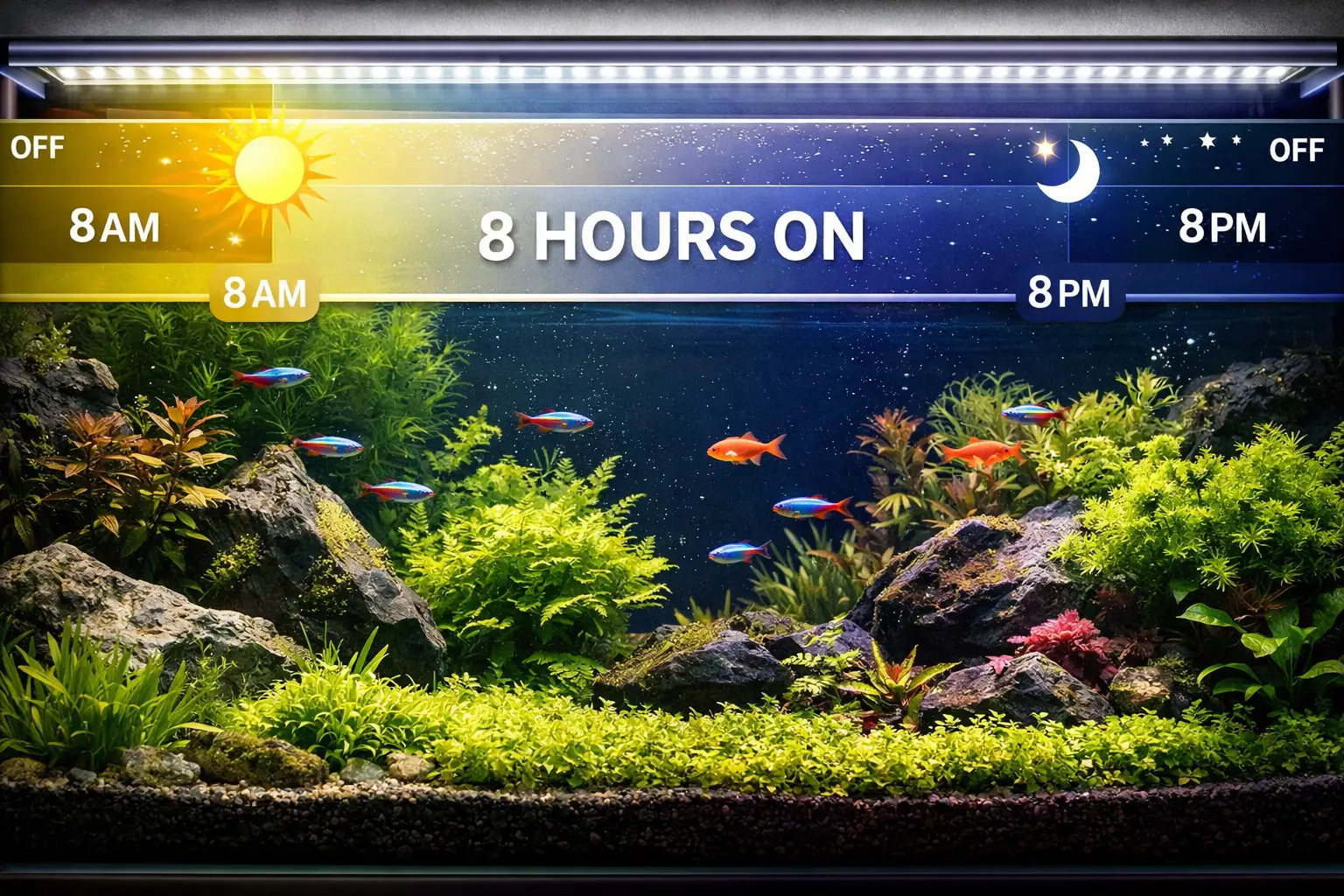
Too much light without corresponding nutrients is algae’s invitation. Start with just 4-6 hours daily using timers—never manual controls. Position tanks away from windows to avoid sunlight amplification. If green spot algae appears, immediately reduce to 4 hours. The “split photoperiod” method (4 on/4 off/4 on) confuses algae’s growth cycle while sustaining plants. One study showed tanks using this method reduced algae by 70% compared to continuous lighting.
How to Adjust Lighting as Plants Mature
- Weeks 1-2: 4 hours total (2 on/2 off/2 on)
- Weeks 3-4: 5 hours (2.5/2.5 split)
- Week 5+: 6-7 hours if plants show strong growth
Warning: Never exceed 8 hours daily—even “low-light” plants like Anubias develop staghorn algae beyond this threshold.
Fertilizing Water Plants: Liquid vs. Root Tabs for Nutrient Delivery

Stem plants (like Rotala) drink nutrients directly from water, while root feeders (Amazon swords) need substrate injections. Use liquid fertilizers like Aquarium Co-Op Easy Green after water changes for immediate uptake. For root feeders, push NilocG Thrive tabs into the substrate 3 inches from stems. Crucial for shrimp tanks: verify fertilizers are copper-free—copper concentrations above 0.1 ppm kill invertebrates.
Invert-Safe Fertilizing Protocol
- Stem plants: Dose liquid fertilizer 12 hours after water change
- Root feeders: Insert 1 tab per 4-inch plant cluster monthly
- Testing: Check iron levels weekly—below 0.05 ppm causes yellowing
Do You Need CO2 for Your Water Plants? The Beginner’s Answer
Pressurized CO2 isn’t mandatory but transforms growth rates. Low-tech tanks thrive with liquid carbon supplements (like Seachem Excel) dosed at 1ml per 10 gallons daily. However, if you see holes in leaves or stunted growth despite proper lighting, invest in a DIY CO2 kit—it pays for itself in 3 months through reduced algae remediation. One user reported vibrant Rotala coloration within 14 days of starting CO2 injection.
When to Skip CO2 Systems
- Tank size under 10 gallons: Liquid carbon suffices
- Low-light plants only: Java moss/Anubias need minimal CO2
- Shrimp-heavy tanks: CO2 fluctuations risk invertebrate deaths
Planting Water Plants Correctly: Avoiding Rhizome Burial Mistakes
Rhizome plants constitute 60% of beginner failures due to improper planting. For Java ferns, Anubias, and Bucephalandra:
1. Never bury the rhizome (the thick horizontal stem)
2. Attach to driftwood using super glue gel dots
3. Or wedge into rock crevices without thread (causes rot)
Stem plants like Hornwort need bottom leaves trimmed before inserting nodes 1 inch deep. Floating plants (Water Sprite) should remain unanchored for first-week acclimation.
Emergency Fix for Buried Rhizomes
If you accidentally covered a rhizome:
1. Remove plant immediately
2. Gently rinse substrate from rhizome
3. Reattach to hardscape using fishing line
Result: 85% of plants recover if corrected within 48 hours.
Water Parameters Every Water Plant Owner Must Test Weekly
Plants thrive in specific ranges ignored by fish-only guides. Test these every Sunday:
– pH: 6.5-7.5 (below 6.0 stunts growth)
– GH: 4-8 dGH (provides calcium/magnesium)
– KH: 3-5 dKH (stabilizes pH swings)
Betta owners: maintain 76-80°F—not standard “tropical” ranges—as cooler temps slow plant metabolism. Use API Master Test Kit for accuracy; cheap strips miss critical KH fluctuations.
Why New Water Plants Melt (And How to Save Them)
“Melting” (leaf shedding) affects 95% of newly planted specimens as they adapt to your water chemistry. Do not adjust light/fertilizer—that worsens stress. Instead:
– Remove only 100% mushy leaves (green portions reabsorb nutrients)
– Maintain original light schedule for 14 days minimum
– Add fast-growing stem plants like Anacharis to absorb excess nutrients
One aquarist documented 100% recovery by ignoring melt for 21 days while adding water sprite.
Troubleshooting Yellow Leaves and Holes in Water Plant Leaves
Yellow leaves indicate nitrogen deficiency; holes signal potassium shortage. Before blaming nutrients, rule out these common errors:
– Overcleaning: Excessive water changes without fertilization strip nitrates
– Light burn: Leaves touching LED panels develop brown spots
– CO2 starvation: Bubbles forming on leaves mean insufficient carbon
Deficiency Quick-Fix Chart
| Symptom | Likely Deficiency | Solution |
|---|---|---|
| Yellowing stems | Nitrogen | Dose Easy Green at 2x rate |
| Holes in leaves | Potassium | Add Seachem Potassium |
| Black dots | Java fern babies | Leave attached—healthy sign! |
Top 5 Beginner-Friendly Water Plants for Low-Tech Aquariums
PetSmart/Petco’s hardiest options require zero CO2:
1. Java Fern: Attach to driftwood—thrives in 50-70°F water
2. Anubias Nana: Grows in 2-inch pots—ideal for foreground
3. Hornwort: Floating or planted—absorbs excess nitrates
4. Amazon Sword: Use root tabs—grows to 20 inches
5. Dwarf Hairgrass: Carpet plant—trim monthly with scissors
Pro Tip: Start with 15+ stems of fast-growing plants like Water Wisteria—they outcompete algae while slower plants establish.
Adding Shrimp and Snails for Natural Water Plant Maintenance
A cleanup crew reduces manual algae scrubbing by 70%. Add these after plants stabilize:
– Amano shrimp: 1 per 2 gallons—eats hair algae
– Nerite snails: 1 per 5 gallons—cleans glass/leaves
– Bee shrimp: Avoid in new tanks—sensitive to parameter shifts
Never add cleanup crews before week 6—plants need time to establish nutrient uptake.
Final Note: Mastering how to take care of water plants in aquarium ecosystems hinges on three pillars: relentless stability, precise nutrient delivery, and strategic plant selection. By locking in your lighting schedule, using root tabs for heavy feeders, and starting with 15+ stems of fast-growing species, you’ll create a self-sustaining jungle where plants outcompete algae naturally. Remember that “melting” is normal during acclimation—resist the urge to adjust variables. For ongoing troubleshooting, bookmark The 2hr Aquarist’s nutrient deficiency guides. Within 8 weeks, your tank will transform from a struggling setup to a thriving underwater ecosystem that requires only weekly water changes and monthly root tab refreshes. The most rewarding moment? When your first Java fern plantlet detaches and drifts to start a new colony—proof your care system works.