How to Remove Damselfly Larvae from Aquarium
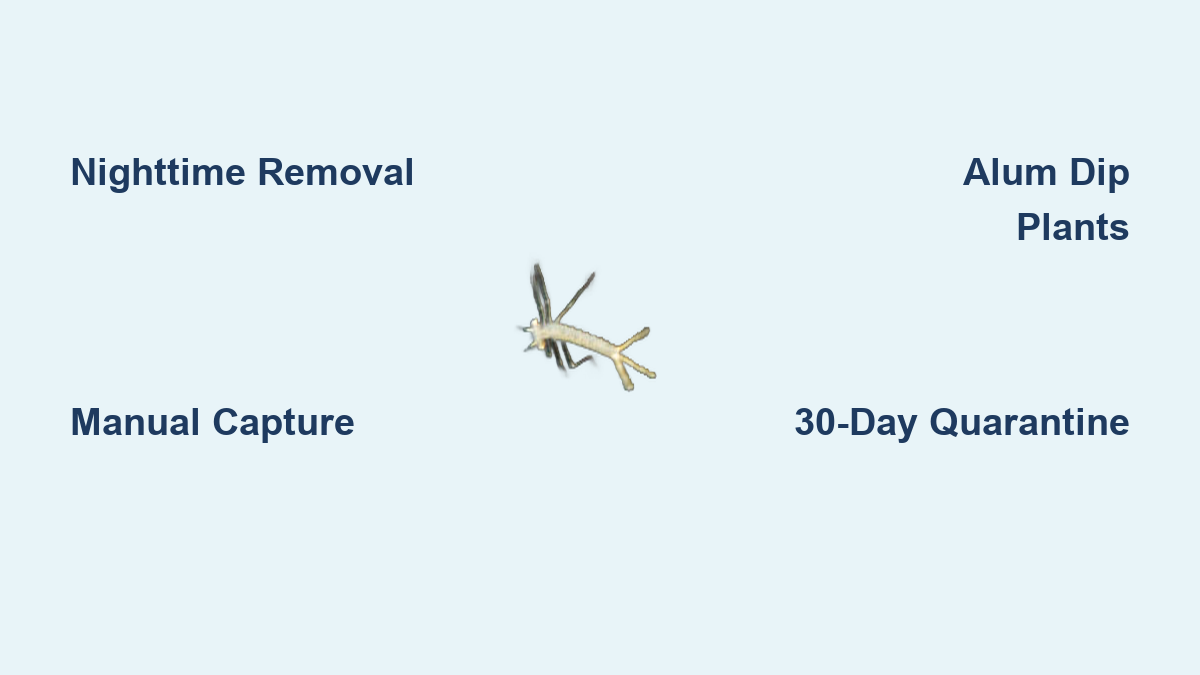
That sudden disappearance of your prized shrimp colony or unexplained fish fry losses often points to a silent assassin hiding in plain sight. Damselfly larvae—slender, alien-like nymphs with three leaf-shaped tail gills—hitchhike into aquariums on new plants like Anachris or Hornwort. These voracious predators ambush shrimp, snails, and tiny fish using a lightning-fast extendable jaw, turning your peaceful tank into a hunting ground. If you’ve spotted these camouflaged invaders clinging to glass or plants, this guide delivers proven, shrimp-safe strategies to eliminate existing infestations and implement foolproof prevention. You’ll learn why manual removal outperforms chemicals, how to execute a 4-week eradication plan, and critical quarantine protocols that stop future outbreaks before they start.
Spot Damselfly Nymphs Before They Devour Your Shrimp Colony
Your first clue isn’t the nymph itself—it’s the vanished shrimp. Damselfly larvae enter tanks as microscopic eggs embedded in plant stems during outdoor cultivation, hatching 1-4 weeks after introduction. Unlike stockier dragonfly nymphs with their bulldog jaws, damselfly nymphs are slender assassins with three paddle-like gills at their tail tip. They freeze motionless against glass or decor, striking with a hinged lower jaw that extends 30% of their body length to impale prey. Check these high-risk zones nightly with a flashlight: plant stems (especially Anachris), substrate crevices, and under driftwood. If you see shrimp behaving erratically or missing limbs, a nymph is actively hunting. Early detection is critical—these larvae grow rapidly, doubling their threat level with each molt.
Manual Removal: The Only Safe Method for Shrimp and Snail Tanks

Chemical treatments destroy invertebrates, making live capture the sole viable option for planted or shrimp tanks. This method preserves your tank’s ecosystem while eliminating every nymph. Success requires precision tools and timing—never attempt with a net, which alerts nymphs to escape.
Nighttime Hunting Tactics for Hidden Damselfly Larvae
Nymphs are nocturnal ambush predators, so conduct removal sessions 1-2 hours after lights-out using a focused flashlight beam. Shine light parallel to glass surfaces to reveal silhouettes, or tap tank walls to trigger movement. Target these hotspots:
– Plant bases where stems meet substrate
– Vertical glass surfaces near filter outflow
– Decor crevices and rock overhangs
Start with 20-minute nightly sessions for the first week, then reduce to every other night as nymphs dwindle. Carry a clear container with tank water nearby to immediately isolate captures.
The Pinch-and-Withdraw Technique for Secure Capture
Use 12-inch fine-tipped aquascaping tweezers for surgical precision. Approach nymphs from above at a 45-degree angle to avoid casting shadows. Pinch firmly behind the thorax (just below the eyes)—not the tail—to prevent gill damage that causes water contamination. If the nymph clings stubbornly:
1. Gently wiggle tweezers side-to-side to loosen grip
2. Apply steady backward pressure (never yank upward)
3. For substrate-embedded nymphs, use a turkey baster to flush them into open water first
Mistake to avoid: Squeezing too hard. Nymphs have fragile exoskeletons that rupture, releasing toxins that stress fish.
Humane Disposal Options for Captured Nymphs
Transfer captured nymphs immediately into a container with tank water. For ethical disposal:
– Freezing method: Place container in freezer for 24 hours (induces torpor before death)
– Native release: Only if confirmed local species—release into natural ponds where they belong (never non-native waters)
Never flush nymphs down drains—they can survive and invade ecosystems. Document each capture to track progress; infestations typically require 15-30 removals over 3-4 weeks.
Why Chemical Treatments Will Ruin Your Shrimp Tank
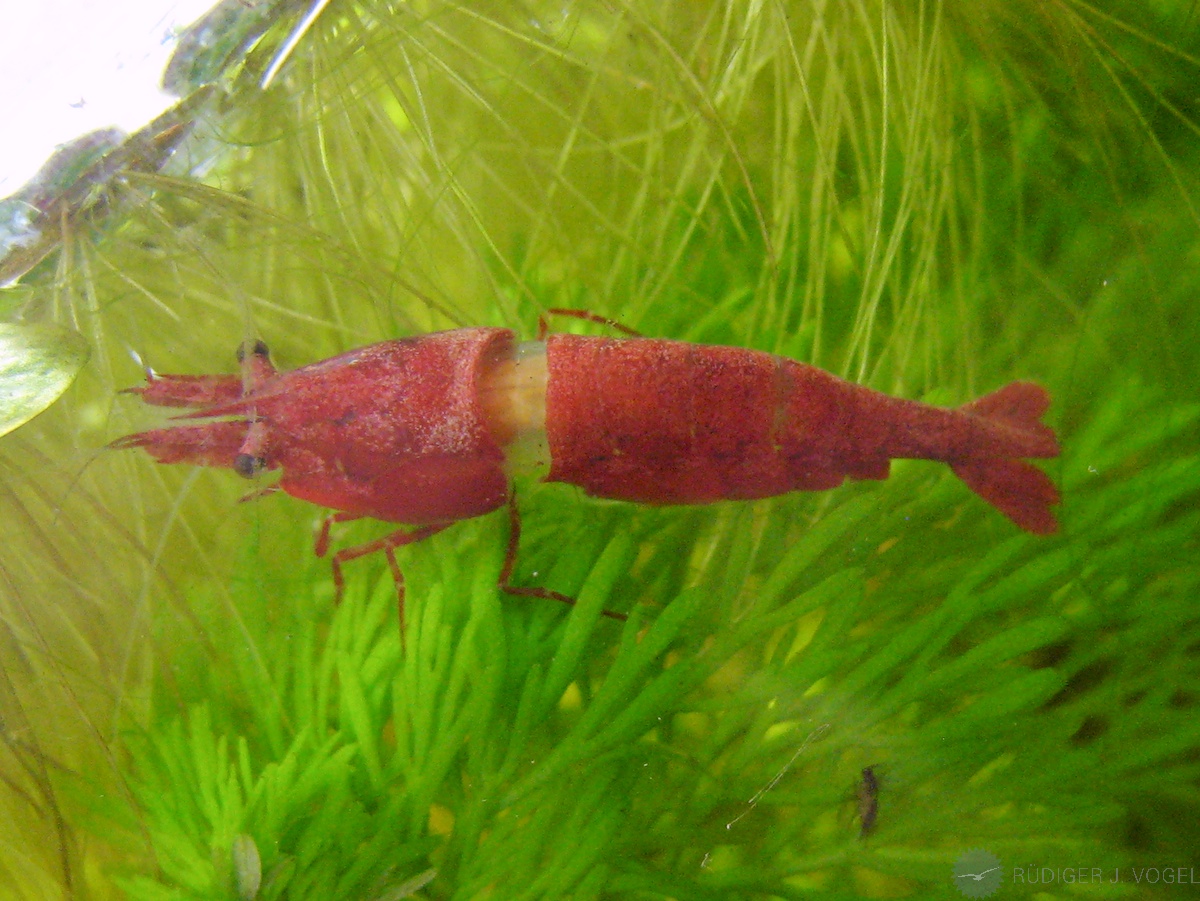
Copper, fenbendazole, and organophosphates marketed as “insect killers” are death sentences for invertebrates. Copper destroys shrimp gills within hours, while fenbendazole crashes biological filters by killing nitrifying bacteria. Organophosphates like malathion persist in substrate for months, causing delayed livestock die-offs. Even “shrimp-safe” de-wormers fail against damselfly larvae—their chitinous exoskeletons resist penetration. Chemicals only become viable in one scenario: a completely empty, plant-less quarantine tank with no livestock. Even then, post-treatment requires 50% water changes and 72 hours of activated carbon filtration. For 99% of hobbyists, chemicals create worse problems than the nymphs they target.
Alum Dip: The Safest Plant Treatment to Prevent Future Infestations
This invertebrate-friendly method kills eggs without harming plants or future tank inhabitants. Mix 3 tablespoons of food-grade alum powder per gallon of tank water. Submerge new plants for 2-3 hours (extend to 4 hours for Hornwort, which tolerates longer soaks). Rinse thoroughly under running water for 5 minutes to remove residue. Alum works by dehydrating eggs through osmosis—no toxic residues remain. Test on a single stem first if using delicate plants like Monte Carlo. This dip eliminates 95% of hitchhikers when combined with quarantine, making it the gold standard for shrimp keepers. Never skip rinsing—alum concentrations above 10ppm stress fish.
30-Day Plant Quarantine: Non-Negotiable for Nymph-Free Tanks

Quarantine isn’t optional—it’s your primary defense. Set up a bare 5-gallon tank with heater, filter, and light (no livestock). Place new plants here for 30-45 days before main tank introduction. Why this timeframe? Damselfly eggs hatch in 10-21 days, with nymphs emerging weeks later. During quarantine:
– Perform weekly alum dips on high-risk plants
– Shine flashlight nightly to spot hatched nymphs
– Remove any visible pests immediately
This process catches late-hatching nymphs that evade initial dips. For critical tanks (e.g., rare shrimp colonies), extend quarantine to 45 days. Document each plant’s quarantine start date—no exceptions.
Potassium Permanganate Soak: A Risky But Effective Alternative
Use this nuclear option only for hardy plants (Anachris, Java fern) when alum fails. Mix 1 gram per 4 liters of water (tea-colored solution). Soak plants 10-15 minutes max—longer causes leaf burn. Critical safety steps:
– Wear nitrile gloves and eye protection
– Work in well-ventilated area (fumes are toxic)
– Rinse plants under running water for 10+ minutes
– Soak in dechlorinator solution for 5 minutes post-rinse
This oxidizer kills 100% of eggs but damages delicate leaves and beneficial bacteria. Reserve for severe infestations in fish-only tanks. Never use in planted display tanks—residual potassium permanganate harms roots.
Fine Mesh Lids: Stop Egg-Laying Adults from Reinfesting Your Tank
Adult damselflies lay eggs by tapping the water surface, so block access with physical barriers. Install a 1mm x 1mm stainless steel mesh lid under your existing hood—small enough to exclude adults but invisible to viewers. Alternatively, float dense mats of water lettuce or frogbit to cover 60% of the surface. This dual approach:
– Prevents new egg deposition from escaped adults
– Reduces evaporation better than open-top tanks
– Maintains oxygen exchange unlike solid lids
Check mesh weekly for debris buildup. Pair this with your quarantine protocol for impenetrable defense—most infestations recur due to skipped surface barriers.
Step-by-Step: Eradicate Damselfly Larvae in 4 Weeks or Less
Execute this battle plan for complete nymph elimination:
Week 1: Conduct two 20-minute removal sessions daily (dawn/dusk). Move vulnerable shrimp to a cycled breeder box.
Week 2: Reduce to nightly sessions. Introduce alum-dipped Indian almond leaves—they release tannins that stress nymphs without harming livestock.
Week 3: Switch to every-other-night hunts. Inspect substrate with a turkey baster to flush hidden nymphs.
Week 4: Perform final 3-night blitz. If no nymphs found, maintain weekly checks for 2 more weeks.
Critical success factor: Persistence. Nymphs molt every 7-10 days, emerging larger and hungrier. Stopping early guarantees regrowth.
Final Note: Damselfly larvae vanish when you combine nightly manual removal with ironclad plant quarantine. Never sacrifice your shrimp colony for chemical “quick fixes”—alum dips and 30-day isolation stop 99% of infestations before plants enter your display tank. For immediate threats, the pinch-and-withdraw technique with long tweezers remains the only reliable solution. Implement fine mesh lids today to block future invasions, and document every plant’s quarantine timeline in a dedicated logbook. Within 4 weeks of systematic action, your aquarium will transform from hunting ground back to the safe haven your aquatic pets deserve.