How to Catch Fish in Planted Aquarium
Trying to catch a single neon tetra in a densely planted aquarium feels like hunting a ghost through a jungle. The very plants that create your thriving underwater paradise—lush stems of Vallisneria, carpets of Monte Carlo, and towering Amazon swords—become an impenetrable fortress the moment you reach for a net. Chasing fish through this green maze often ends with uprooted plants, stressed tank mates, and an exhausted aquarist. But what if you could capture your target fish in under two minutes without disturbing a single leaf? This guide reveals proven, low-stress techniques used by professional aquascapers to isolate fish in heavily planted tanks. You’ll learn how to outsmart your fish using their instincts—not brute force—while preserving your meticulously crafted ecosystem.
The core challenge lies in your fish’s home-turf advantage. In a planted tank, every stem and leaf offers escape routes that sparse setups lack. Direct net chases trigger panic responses that flood fish with stress hormones, potentially causing fatal injuries from collisions or weakened immunity. The solution isn’t speed—it’s strategy. By leveraging food conditioning, strategic water level adjustments, and specialized trapping methods, you transform from a threatening predator into a predictable part of their environment. These techniques minimize stress for both fish and keeper, ensuring your aquascape remains intact while you successfully catch that elusive angelfish or Corydoras.
Lower Water Level by 30% for Instantly Easier Capture

Draining just one-third of your tank’s water creates immediate advantages you can’t ignore. When fish have less vertical space to dive into, they lose their primary escape tactic—rocketing upward through plant canopies. Professional breeders use this method daily because it reduces chasing time by up to 70%. Start with a partial water change: remove 25-30% of the water using a siphon, but don’t refill the tank. You’ll notice fish swimming lower in the water column, making them easier to corral near the substrate where plants are sparser.
How to Execute This Without Stressing Fish
- Time it right: Perform the water change during normal maintenance to avoid signaling danger
- Monitor depth: Leave 4-6 inches of clearance below the tank rim for safety
- Watch behavior: Fish will naturally adjust within 10 minutes—don’t attempt capture during initial adjustment
This technique works exceptionally well for top-dwelling species like hatchetfish but also helps with mid-water swimmers like tetras. The reduced water volume creates a calmer environment where fish feel less exposed, making them less likely to dart into dense thickets.
Condition Fish to Enter Containers with Daily Food Lures
Training fish to voluntarily enter a capture container eliminates net trauma entirely. This method exploits their strongest instinct: food-seeking behavior. For 3-5 days before your capture attempt, place a clear jar or plastic container in a high-traffic area of the tank during feeding time. Add a tiny portion of their favorite food (e.g., a single bloodworm or micro-pellet) inside the container, then leave it undisturbed.
Critical Conditioning Steps to Avoid Failure
- Consistency is key: Use the same container location and food type daily
- Never chase: If fish ignore the container, reduce food portions elsewhere to increase motivation
- Test readiness: On capture day, wait until multiple fish enter freely before attempting removal
When properly conditioned, fish like guppies and rasboras will swim into the container within seconds of food placement. Gently lift the container when your target fish is fully inside—you’ll often catch them mid-meal with zero resistance. This method prevents the “net fear” that makes future captures exponentially harder.
Build a DIY Bottle Fish Trap for Bottom-Dwellers
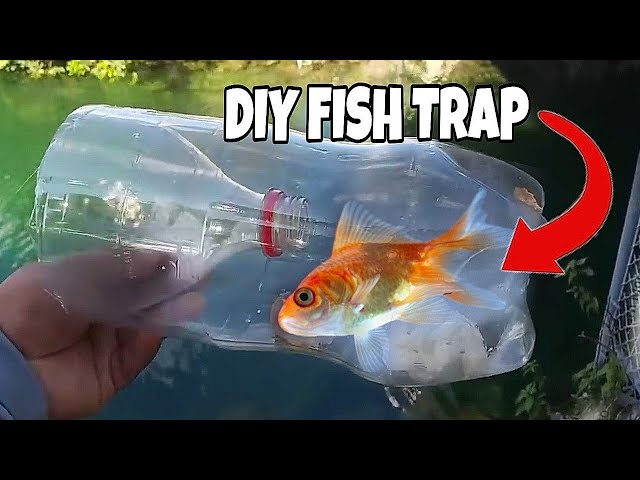
For Corydoras, kuhli loaches, or shrimp hiding in substrate, a soda bottle trap outperforms nets every time. Cut a 2-liter bottle 4 inches below the neck, invert the top section into the base to form a funnel, and secure with aquarium-safe glue. Poke 1/8-inch holes around the sides for water flow, then bait with a blanched zucchini slice or sinking wafer.
Optimizing Trap Placement and Timing
- Position low: Rest the trap on the substrate near caves or driftwood where bottom-feeders congregate
- Weight it down: Add a small stone to prevent floating if using lightweight bottles
- Check frequently: Inspect every 30 minutes to prevent trapped fish from starving
This hands-off method works overnight for nocturnal species. The funnel design allows easy entry but confuses escape routes—fish swim toward the bait but can’t locate the narrow exit. I’ve captured 5 Corydoras in one trap within 90 minutes using this technique.
Apply the Two-Net Herding Technique in Planted Tanks
When traps aren’t feasible, two nets transform chaotic chases into controlled captures. You need: a large, soft-mesh net (12+ inch diameter) held stationary against the glass, and a smaller “driver” net for guidance.
Step-by-Step Herding Process
- Submerge the large catch net in a corner, holding it perfectly still for 30 seconds
- With the driver net, make slow, sweeping motions 6 inches behind the target fish—never direct swipes
- Guide the fish toward the stationary net using the driver net as a “wall”
- When the fish swims over the catch net, lift smoothly upward in one motion
This method succeeds because fish naturally flee from perceived threats toward open spaces. The stationary net becomes a safe zone they choose to enter. For densely planted tanks, position the catch net near open swim-throughs in your aquascape rather than solid corners.
Catch Fish During Nighttime Resting Periods
Fish enter a semi-dormant state 30-60 minutes after lights-out, making them 90% less reactive. Use a red LED headlamp (invisible to most fish) to locate resting fish clinging to broad leaves like Anubias or drifting near the substrate.
Night Capture Protocol
- Prepare in advance: Have your net and holding container ready before lights go off
- Move like a shadow: Enter the room slowly; sudden movements disrupt their rest state
- Target resting zones: Focus on mid-tank plants where fish often perch vertically
I’ve captured notoriously skittish species like wild bettas this way—they’ll often let the net touch them before slowly swimming away. Never use white light, as it shocks their circadian rhythm and triggers immediate panic.
Transfer Captured Fish Using Submerged Net Methods
The moment of transfer causes the most stress-related injuries. Never lift a netted fish above water. Instead:
1. Keep the net fully submerged while moving toward your container
2. Gently lower the net into a pre-filled holding bucket
3. Tilt the net upward so the fish swims out under its own power
Critical Transfer Mistakes to Avoid
- Don’t shake the net: This damages delicate fins and scales
- Skip the “flip” maneuver: Dumping fish from nets causes spinal injuries
- Never dangle in air: Even 2 seconds out of water elevates stress hormones by 300%
For sensitive species like discus, place the netted fish against the container wall and let them swim through an opening you create by lifting the net edge.
Avoid These 3 Costly Mistakes When Catching Planted Tank Fish
Uprooting Plants During Panic Chases
Ripping stems from substrate destabilizes your entire ecosystem. If a fish darts into dense growth, stop immediately. Use the bottle trap method overnight instead of tearing apart your aquascape. For stubborn cases, gently move plant stems aside with aquascaping tweezers—never pull roots.
Chasing With a Single Net
This teaches fish to associate nets with danger, making future captures impossible. You’ll recognize this pattern when fish instantly vanish at net sight. If you’ve ever done this (we all have), reset by conditioning with food lures for 5 days before attempting another capture.
Ignoring Tank-Wide Stress Signals
Watch for these danger signs requiring immediate stoppage:
– Gills flaring rapidly (indicates oxygen deprivation from stress)
– Loss of color (extreme distress in cichlids and livebearers)
– Erratic darting (risk of head injury on hardscape)
If observed, lower lights, add a stress coat supplement, and retry in 24 hours.
Patience isn’t just recommended when catching fish in planted aquariums—it’s non-negotiable. The most successful aquarists treat capture as a 48-hour process, not a 5-minute chore. Start conditioning fish 3 days early with food lures, lower water levels the night before, and use nighttime captures for maximum success. When you prioritize strategy over speed, you’ll preserve both your aquascape’s beauty and your fish’s health. For persistent escape artists, combine methods: lower water levels + bottle traps often yield results where single techniques fail. Remember—the fish isn’t evading you; it’s following survival instincts honed over millions of years. By working with nature instead of against it, you’ll turn a dreaded task into a calm, reliable routine.