Hermit Crab Aquarium Setup Guide
Your hermit crab is suffocating right now if its tank lacks proper humidity. These land-dwelling crustaceans breathe through modified gills that dry out and fail in air below 70% relative humidity—a silent killer in 90% of beginner setups. A proper hermit crab aquarium setup isn’t just sand and shells; it’s a meticulously balanced micro-ecosystem where substrate depth, heat gradients, and water quality directly determine whether your crab lives years or weeks. I’ve seen countless crabs perish from avoidable errors like calcium sand impactions or disturbed molts. This guide gives you the exact protocols used by expert crabbers to build a thriving crabitat from day one.
Tank Size and Lid Configuration That Actually Works
Forget the misleading “10-gallon minimum” myth—your crab’s survival hinges on floor space, not tank height. For 2-3 small crabs (like Purple Pinchers), start with a 20-gallon long tank. Add 5-10 gallons per additional crab, with 29-gallon or 40-gallon breeder tanks being the gold standard for colonies. These wide-bottom tanks provide the critical horizontal space crabs need to dig molting burrows without crowding.
Why Your Screen Lid Is Killing Humidity
Standard mesh aquarium lids are death sentences for hermit crabs. They allow 40-60% humidity loss within hours, dropping levels below the 70% threshold needed for gill function. Switch immediately to a solid glass or acrylic lid with only a 2×2-inch screened ventilation patch. For stubbornly low humidity, seal tank seams with non-toxic silicone and cover 75% of the lid with plastic wrap. Test this: place a damp paper towel under the lid—if it dries in under 24 hours, your enclosure isn’t sealed enough.
Substrate Depth That Prevents Molting Deaths
Most crabs die during molting because their substrate collapses. Your mix must hold tunnel integrity while retaining moisture. Use a strict 5:1 ratio of sterilized play sand (hardware store grade) to coconut fiber (Eco-Earth). Never use calcium sand—it hardens in the gut if ingested, causing fatal blockages.
Critical Substrate Safety Check
- Depth: Measure from tank bottom: 6+ inches (15+ cm) for adults. A crab should be able to bury itself completely with 2 inches of substrate above the burrow.
- Moisture Test: Squeeze a handful—it should hold shape briefly before crumbling. If water drips out, it’s too wet; if it won’t hold shape, it’s too dry.
- Maintenance: Replace 50-75% of substrate monthly using a 1:10 vinegar-water solution to scrub décor. Full substrate changes are needed every 6-8 weeks for small colonies.
Pro Tip: Bake coconut fiber in the oven at 200°F for 20 minutes before mixing to eliminate pests. Always moisten substrate with dechlorinated water—never tap water.
Heat and Humidity Control System Setup
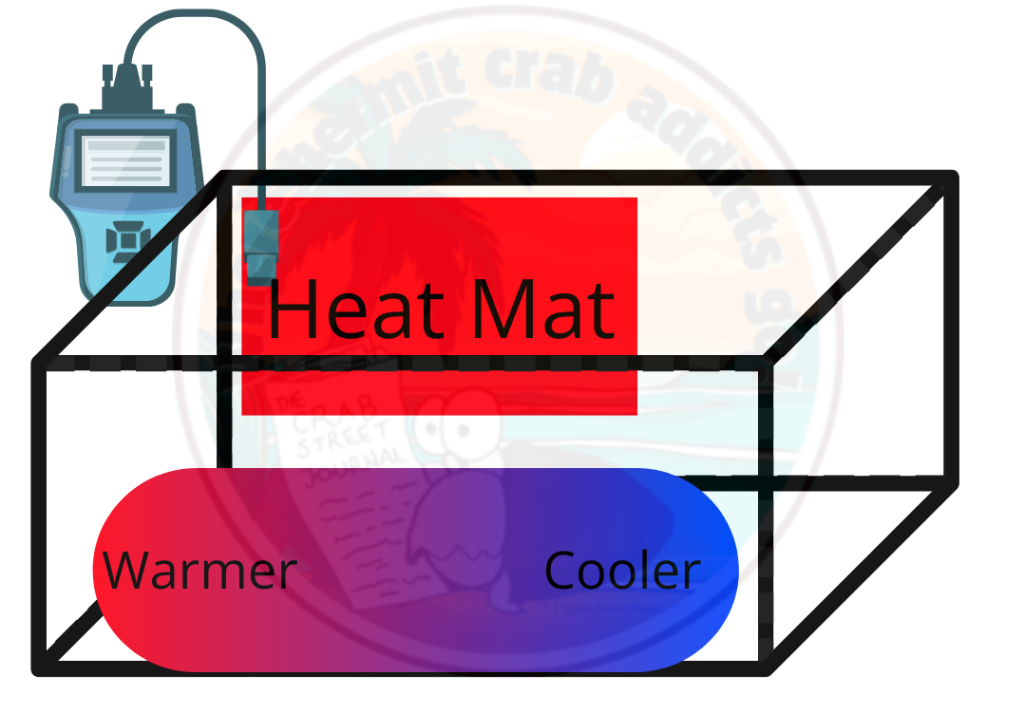
Hermit crabs need both stable temperatures (75-85°F) AND humidity (70-80%), which most beginners fail to balance. The fatal mistake? Placing under-tank heaters beneath the substrate. This dries out the sand from below, causing burrow collapses during molting.
Correct Heating Protocol
- Attach an under-tank heater to the back wall of the tank (not the bottom)
- Position digital thermometers at both ends to verify a gradient (warm end: 82°F, cool end: 76°F)
- Place a hygrometer in the substrate zone—humidity must be measured where crabs live
If your humidity drops below 70%, add a second water pool (not dish!) filled with dechlorinated saltwater. Crabs must submerge their entire shell to regulate internal moisture. Use marine salt mix (never table salt) and provide a mesh ramp for safe entry/exit.
Water Pools and Shell Shop Essentials

Shallow water dishes cause dehydration deaths. Your crab needs to fully submerge its shell to hydrate its gills and manage shell water. Provide two deep pools (at least 1.5x shell height):
– Fresh water: Dechlorinated with sodium thiosulfate
– Saltwater: Marine salt mix at 1.023-1.025 specific gravity
Shell Shop Setup That Stops Aggression
Crab fights almost always stem from shell shortages. Place 3-5 extra natural shells per crab near water pools. Match openings to species:
– Purple Pinchers: D-shaped shells (whelks, turbos)
– Ecuadorians: Round openings (moon snails)
– Critical sizing rule: The new shell’s aperture should be 10-20% wider than the crab’s current claw
Warning: Discard painted or varnished shells—they leach toxins when moistened.
Molting Emergency Protocol
When your crab buries itself completely, do not dig it up. Disturbing a molting crab causes fatal stress in 80% of cases. Instead:
Pre-Molt Signs Checklist
- Sudden increase in water consumption
- Cloudy eyes and lethargy
- Burrowing for 48+ hours
If you suspect a molt, immediately:
1. Top off both water pools
2. Add extra cuttlebone near the surface
3. Cover the tank with a towel to maintain darkness
After emerging (soft, pale shell), isolate the crab in an ISO tank for 10-14 days. Feed soaked bloodworms and crushed eggshells—its new exoskeleton is vulnerable to tank mates during this period.
Daily Maintenance That Prevents Health Crises
Skip these steps, and you’ll face shell rot or mite infestations within weeks:
3-Minute Daily Routine
- Check humidity/temperature readings
- Remove uneaten fresh food (prevents mold)
- Refill water pools to maintain depth
Weekly Deep Clean
- Remove crabs to a temporary container (spray with saline mist)
- Scrub water dishes with vinegar solution
- Vacuum substrate surface to remove waste pellets
- Test saltwater salinity with a hydrometer
Critical sign alert: If your tank smells musty, perform a full substrate change immediately—a foul odor indicates bacterial blooms that cause “Rust Disease” (pitted exoskeletons).
Troubleshooting Immediate Death Triggers

When your crab stops moving, act within hours:
Lethargy Emergency Response
- Check humidity: Below 70%? Mist substrate and seal lid gaps
- Verify heat: Below 75°F? Add secondary heat source
- Offer honey water: Mix 1 tsp honey with 2 tsp dechlorinated water—dip claw tip in solution
Shell Evacuation Protocol (Crab Outside Shell)
This is a code-red emergency. Isolate the crab in a dark container with:
– Damp paper towel
– 2 small shells
– Shallow water pool
– Crushed cuttlebone
Do not force it into a shell—this often causes death. Consult a crab rescue group immediately.
Final Note: A proper hermit crab aquarium setup transforms survival into thriving. By implementing the 6-inch substrate depth, solid lid configuration, and shell shop protocol outlined here, you’ll avoid the three deadliest beginner mistakes: dry burrows, shell shortages, and interrupted molts. Monitor humidity daily with a digital gauge—not a guess—and your crabs will reward you with active foraging, successful molts, and potential lifespans exceeding 20 years. Next, master the saltwater mixing process to prevent osmotic shock—your crab’s gills depend on precise salinity balance.