How to Plant Aquarium Plants: Easy Guide
Your fish dart nervously behind bare decorations, the water looks cloudy despite weekly changes, and that algae bloom won’t quit. You’ve tried everything—until you see a friend’s lush planted tank where fish glide peacefully through swaying greenery. The secret isn’t expensive CO2 systems or nutrient-rich substrates. You can transform your basic gravel aquarium into a thriving underwater garden today using only what you already own. This guide reveals exactly how to plant aquarium plants successfully in standard tanks with factory lights, gravel substrate, and zero additives. Forget complicated planted tank requirements—within 48 hours, you’ll have healthy plants absorbing fish waste, blocking algae, and creating natural hiding spots.
Pinpoint Plants That Thrive in Basic Gravel Tanks
Choosing incompatible plants is the #1 reason beginners fail. Your standard tank lacks nutrient-rich substrate and CO2 injection, so focus exclusively on species that pull nutrients directly from water. These hardy varieties ignore your gravel and feast on fish waste, making them perfect for “set-and-forget” success. Skip demanding stem plants requiring root tabs—your gravel offers nothing for roots to absorb. Instead, target plants evolved to survive in nutrient-poor conditions where survival depends on water column feeding.
Floaters That Clean Water Overnight
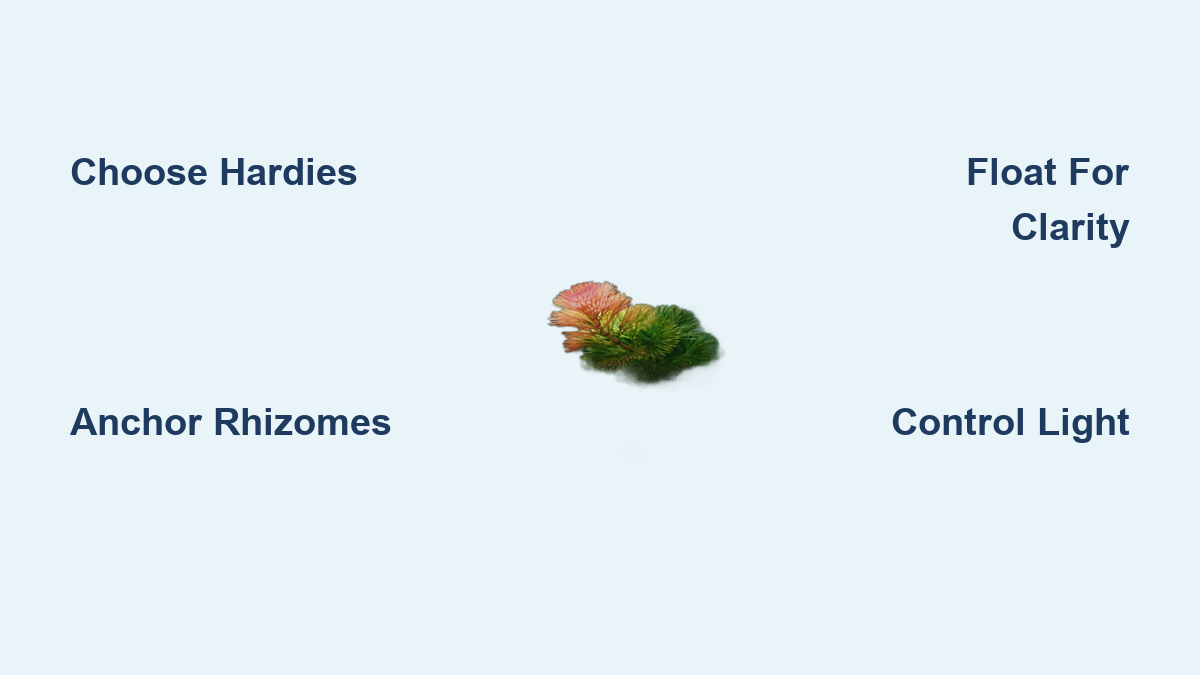
Floating plants deliver instant results by vacuuming nitrates from the water surface. Within 72 hours, you’ll notice clearer water and reduced algae as these plants outcompete green invaders for nutrients. Red root floaters and frogbit work best—they multiply rapidly without clogging filters when managed properly. Critical mistake to avoid: Never place floaters near filter intakes. The current will trap them, causing leaves to brown and rot within days. Instead, use a clear acrylic divider (cut from old picture frames) to corral them in the tank’s back third. Trim excess weekly with scissors—toss trimmings in compost, never down drains where they could invade waterways.
Anchor Plants That Defy Gravel Planting Myths
Anubias and Java ferns fool beginners into thinking they need substrate planting. Here’s the truth: Burying their thick rhizomes (horizontal stems) in gravel causes fatal rot within a week. These plants absorb 90% of nutrients through leaves, not roots. To plant correctly: Hold the rhizome against driftwood, then secure it with 100% cotton thread (fishing line cuts stems). Wrap only the base—not the rhizome—with two loose loops. Within 3 weeks, roots will grip the wood naturally. Pro tip: Place anchored plants near filter outflow. The current delivers nutrient-rich water directly to their leaves, accelerating growth by 40%.
Stem Plants That Root Successfully in Gravel
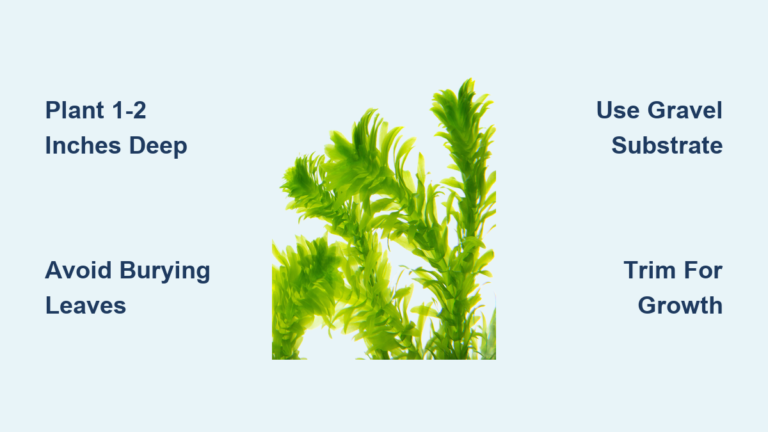
While most stem plants struggle in gravel, Anacharis and Hornwort defy expectations. Their roots act as anchors—not nutrient pipelines—so they tolerate inert substrates. For foolproof planting: Grab 5 stems, bundle bases with thread, and push only the bottom inch into gravel. Never cover the stem nodes (bumps where leaves grow), or they’ll suffocate. Position them behind rocks to shield from fish digging. Warning: If leaves turn translucent or melt within days, your light is too strong. Reduce daily lighting to 6 hours immediately—excess light without nutrients triggers rapid decay.
Execute Planting in 4 Minutes Flat (Step-by-Step)
Rushing this phase guarantees failure. Plants experience severe shock when moved from store tanks to your aquarium. Follow this precise sequence to minimize stress and trigger immediate growth.
Prepare Plants Without Killing Them
Rinse plants in a bucket of dechlorinated water—never tap water—to remove snails and algae. Gently squeeze stems between fingers to dislodge hitchhikers. For rooted plants like Cryptocoryne, trim 50% of roots with sharp scissors; this forces new root growth adapted to your tank. Critical step: Dip emersed-grown plants (common in stores) in 1:19 bleach solution for exactly 90 seconds. Rinse thoroughly in dechlorinated water with added sodium thiosulfate. This kills algae spores while preserving plant health.
Plant During Tank Cycling Windows
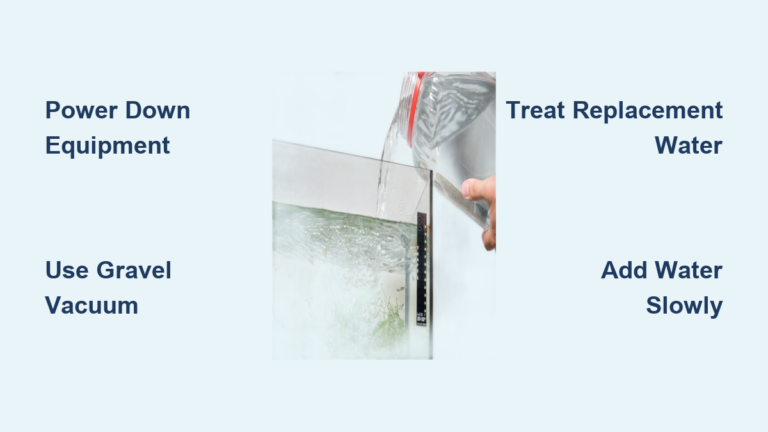
Time planting for 24 hours after a 25% water change. Fresh water provides oxygen-rich conditions that reduce transplant shock. Turn off filters and heaters during planting to avoid disturbing new placements. Arrange hardscape first—create caves with rocks where plants will hide from fish. Position tall stems like Dwarf Sagittaria along the back glass, leaving 2 inches of space to prevent algae buildup on viewing panels.
The 30-Second Planting Technique for Gravel
Use stainless steel tweezers to make a V-shaped hole in gravel. Insert roots while holding the plant’s crown (base where roots meet stem) 1/8 inch above the substrate. Release tweezers slowly—the gravel will collapse around roots, securing the plant. For mosses, press small clumps into rock crevices; they’ll attach within 10 days. Pro move: Place newly planted stems under a rock ledge. This shields them from fish until roots establish.
Stop Killing Plants: The First 14-Day Survival Protocol

Most plants die in the critical adaptation period because owners mistake normal stress for failure. Follow this exact care schedule to ensure survival.
Days 1-3: The “Melting” Phase (Don’t Panic!)
Up to 70% of leaves may yellow or disintegrate—this is normal! Emersed-grown plants shed terrestrial leaves to grow submerged ones. Never remove the plant. Instead, trim only dead leaves with sharp scissors, cutting at the stem base. Perform a 15% water change on day 2 to remove decaying matter that fuels algae. If floaters cover more than 50% of the surface, remove half to ensure light reaches lower plants.
Days 4-7: First Growth Signs
Look for tiny white root hairs emerging from stems—this signals successful adaptation. On day 5, add one Amano shrimp per 10 gallons to eat algae without harming plants. Critical adjustment: If green algae coats stems, reduce lighting to 4 hours daily. Algae blooms mean your plants aren’t absorbing nutrients fast enough yet.
Days 8-14: Establish Maintenance Rhythm
By day 10, new growth should appear. Now begin weekly care:
– Trim fast-growing stems by 1/3 to encourage bushiness
– Remove any plant covered in brown slime (fatal rot)
– Feed fish 25% less—decaying food harms fragile plants
– Test nitrates; if below 5ppm, your plants need liquid fertilizer
Fix These 3 Deadly Planting Mistakes Immediately
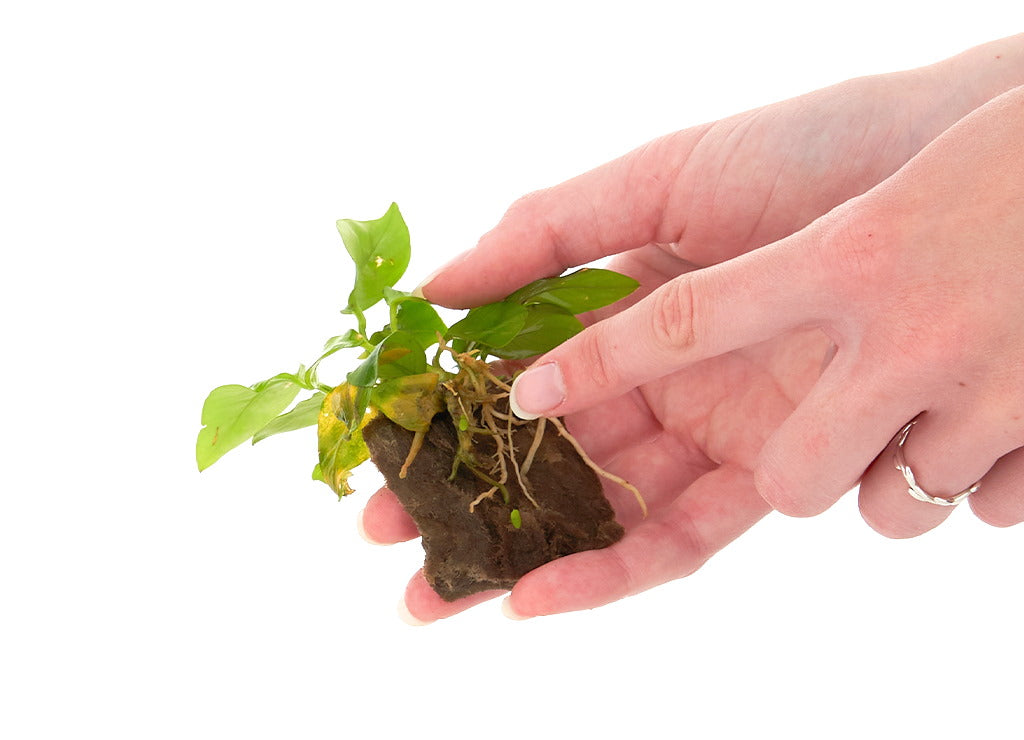
Mistake: Burying Rhizomes Like Terrestrial Plants
Why it kills: Anubias and Java fern rhizomes must stay exposed. Gravel traps moisture against the stem, causing bacterial rot that spreads to roots within 72 hours.
Emergency fix: Remove the plant now. Cut off all rotted black sections with sterilized scissors. Reattach the healthy rhizome to wood using gel superglue (cyanoacrylate). Survival rate jumps to 90% when done within 48 hours of rot detection.
Mistake: Overlooking Plant Quarantine
Store-bought plants often carry snail eggs or black beard algae. Introducing them directly causes infestations that choke plants.
Prevention protocol: Soak plants in 37.5°F (3°C) dechlorinated water for 20 minutes—this kills pests without harming plants. For stubborn algae, dip affected areas in 3% hydrogen peroxide for 30 seconds. Always inspect leaves with a magnifying glass before planting.
Mistake: Ignoring Light Duration Limits
Standard aquarium lights run 12+ hours daily—perfect for algae but fatal for low-tech plants. Without added nutrients, excess light starves plants by accelerating growth they can’t sustain.
Correct setting: Use a timer for 6 hours of light. Position the tank away from windows to avoid natural light extending exposure. If algae appears on glass, scrape it during the light cycle—algae feeds on darkness.
Create a Maintenance-Free Layout in 20 Minutes

Start with this beginner-proof design that thrives on neglect:
1. Background: Anchor 3 Java ferns to driftwood at the tank’s back corners
2. Midground: Plant 5 Anacharis stems behind rocks using the 30-second technique
3. Foreground: Float 10 frogbit plants (corralled with acrylic divider)
4. Focal point: Glue Java moss to a single rock in the center
This layout requires zero trimming for 3 months. The frogbit shades lower plants from excess light while Anacharis absorbs nitrate spikes. Within 6 weeks, moss will cover the rock, creating a natural cave for fish. For ongoing care, trim only floating plants weekly—let everything else grow wild.
Your tank will transform from sterile to stunning without special equipment. Plants will absorb fish waste 24/7, reducing your water change frequency by 30%. Within 8 weeks, you’ll spot baby fish hiding in the greenery—proof your ecosystem is thriving. Start with just one Anubias today; within a month, you’ll have a lush underwater garden that makes fish healthier and your aquarium breathtaking. The only thing you’ll regret is not planting sooner.