How Long to Leave Almond Leaves in Aquarium: Guide
You’ve dropped Indian Almond Leaves into your tank, watching them sink slowly while your betta darts curiously around the new addition. Now you’re staring at your water testing kit, wondering exactly how long to leave almond leaves in aquarium water before they become useless—or worse, harmful. This isn’t just about aesthetics; it’s about harnessing natural tannins to boost fish immunity, soften water for sensitive species, and create a thriving ecosystem. Get the timing wrong, and you risk pH crashes or murky water that stresses your fish. But nail it? You’ll unlock antibacterial benefits, vibrant colors in bettas and shrimp, and a stress-free environment that mimics wild blackwater habitats. In this guide, you’ll discover precisely when to remove or replace leaves based on your tank’s unique needs—no guesswork required.
Indian Almond Leaves (IALs), also called Catappa leaves, release tannins and humic acids that transform aquarium conditions within hours. Yet most beginners leave them in too long or remove them too soon, missing out on their full potential. The ideal duration isn’t arbitrary—it hinges on your specific goals, tank inhabitants, and visual cues you can spot daily. Whether you’re nursing a sick betta, raising shrimp fry, or building a natural biotope, this guide cuts through the confusion with actionable timing strategies verified by aquatic science. Let’s dive straight into making every leaf count.
Water Conditioning vs. Food Source: Match Duration to Your Goal
Your tank’s purpose dictates how long to leave almond leaves in aquarium setups. Generic advice like “replace monthly” fails because a shrimp breeder’s needs differ wildly from a betta keeper’s. Identify your primary objective first—it’s the compass for timing decisions.
For pH Control and Tannin Release (Remove at 3-4 Weeks)
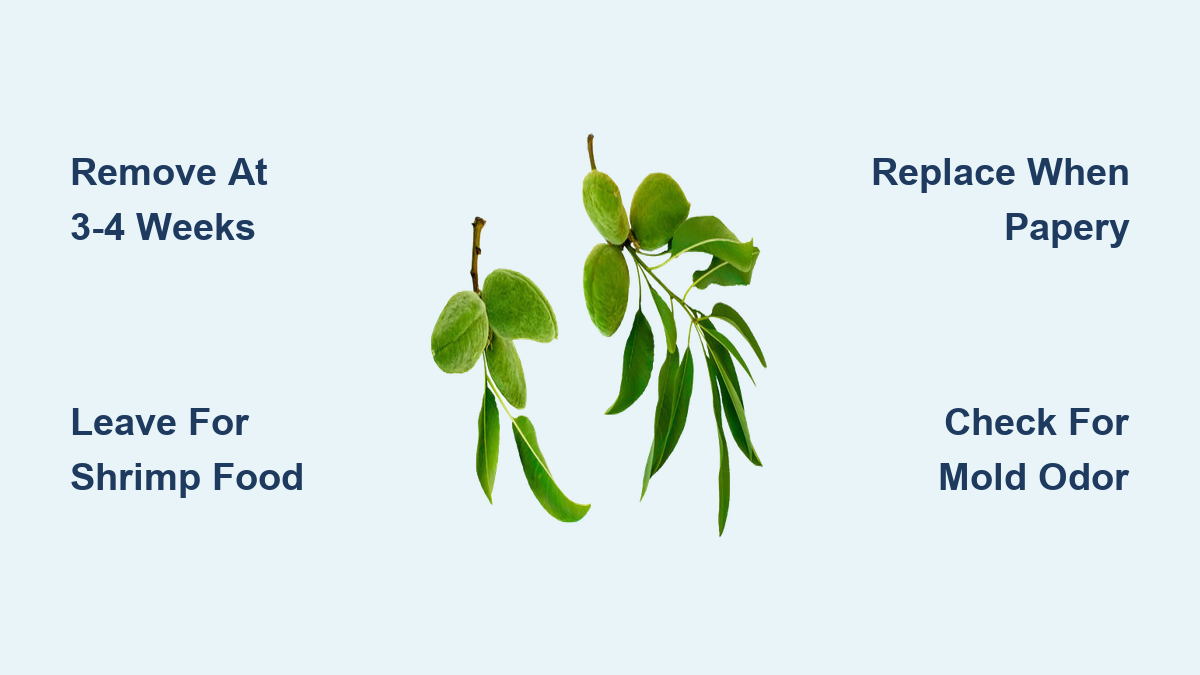
When your mission is softening water and stabilizing pH for species like bettas or tetras, stop leaves at 3-4 weeks. Fresh leaves flood water with tannins in days 1–7, turning it amber while gently lowering pH by 0.5–1.0 units. But after week 3, release plummets as the leaf’s structure breaks down. Keep it longer, and you’ll get minimal benefits while risking debris buildup. Here’s your action plan:
– Add 1 medium leaf per 10 gallons to avoid over-darkening.
– Test pH/KH weekly—if levels stabilize (e.g., pH 6.5 for bettas), remove spent leaves immediately.
– Replace when the leaf turns papery and translucent, often with a lacy skeleton visible. Lingering beyond this wastes tannin potential and invites detritus.
For Shrimp and Fry Food Production (Leave Until Skeletonized)
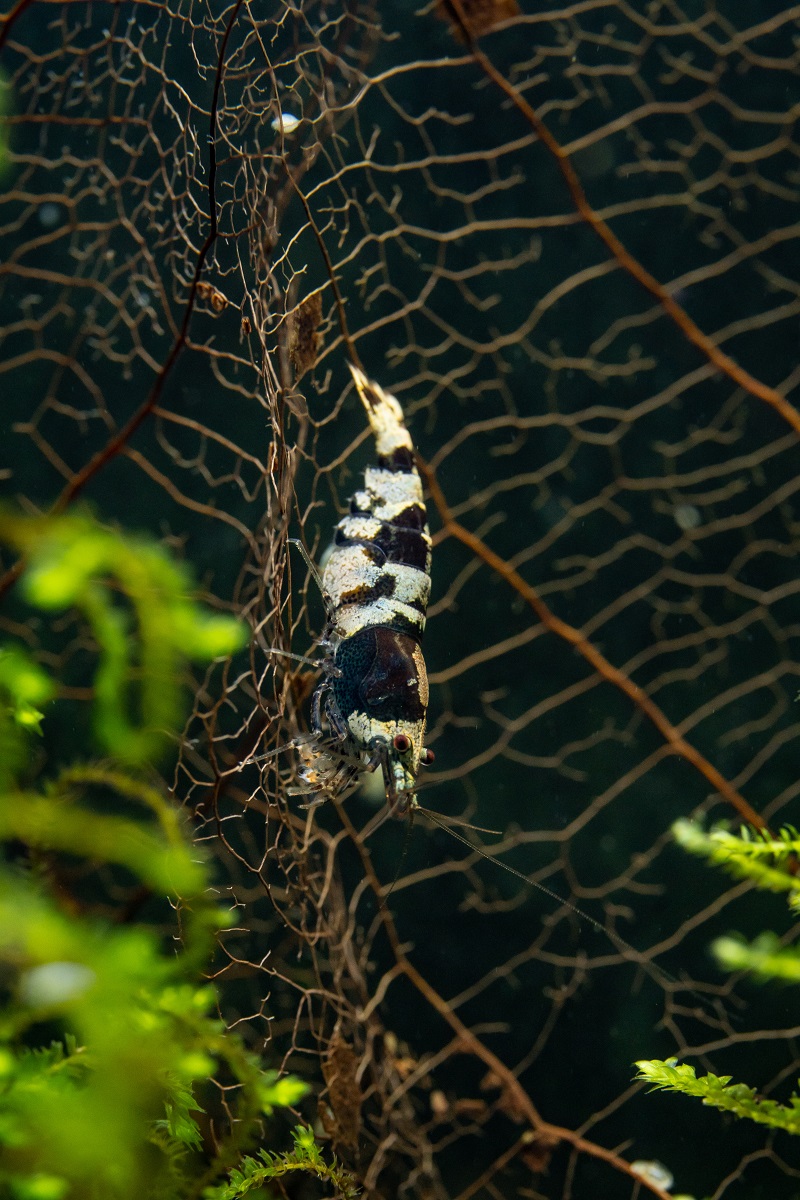
If dwarf shrimp or snails are your focus, keep leaves for 1–3 months until they fully decompose. As the leaf softens, it becomes a biofilm buffet—microorganisms colonize its surface within 48 hours, creating live food for grazing shrimp and hiding spots for fry. Unlike water-conditioning use, here the leaf’s decay is the goal. Monitor these milestones:
– Weeks 1–2: Biofilm blooms; shrimp swarm the leaf.
– Weeks 3–6: Shrimp consume soft tissue, leaving only veins.
– Remove only when the leaf is 90% skeletonized or emits a sour odor. Premature removal starves your cleanup crew and disrupts the food web.
For Self-Sustaining Blackwater Ecosystems (Cycle Leaves Indefinitely)
Advanced biotope tanks mimic forest floors by layering leaves for continuous renewal. Never fully remove leaves—instead, top up with fresh ones as old layers decompose. This creates a stable microhabitat where:
– New leaves on top release tannins steadily.
– Bottom layers feed detritivores and buffer pH long-term.
– Add 1 leaf weekly per 20 gallons to maintain balance. Only discard fragments if white mold spreads aggressively (rare with good flow).
Reading Your Tank’s Visual and Behavioral Cues
Timers lie; your aquarium tells the real story. Master these signs to know exactly how long to leave almond leaves in aquarium environments without testing kits.
Critical Removal Triggers You Can’t Ignore
Your eyes and fish behavior reveal more than any schedule. Act immediately if you spot:
– Water turning opaque black (like strong tea), not amber. This blocks light for plants and stresses light-sensitive fish—remove leaves and do a 30% water change.
– Fish gasping at the surface or clamped fins. Test pH: if it drops below 5.5 (dangerous for most community tanks), pull leaves and add crushed coral to the filter.
– Soggy, slimy leaves with foul odors. Healthy decay is earthy; rot smells sour. Remove affected leaves to prevent ammonia spikes.
Pro Tips for Extending Leaf Lifespan
Maximize tannin output and delay replacement with these vetted tactics:
– Pre-soak leaves in dechlorinated hot water (not boiling) for 10 minutes. This jumpstarts tannin release and sinks them faster.
– Position leaves near filter outflow for gentle circulation—stagnant zones cause mold.
– For betta tanks, place leaves under bubble nests. They provide cover without blocking surface access.
Troubleshooting Common Timing Mistakes
Problem: “My water isn’t tinting after days.”
Fix: The leaf is old or low-quality. Boil a new leaf for 5 minutes to activate compounds, then add it. Hard water (KH >5) also blocks tannins—try distilled water mixes.
Problem: “White fuzzy mold covers the leaf.”
Truth: This harmless fungus feeds shrimp! Only remove leaves if mold spreads to tank glass or fish show stress. Boost flow with a powerhead instead.
Problem: “pH crashed overnight after adding leaves.”
Emergency fix: Remove all leaves immediately. Do a 50% water change and add crushed coral in a mesh bag to the filter. Test pH hourly until stable.
Your 5-Minute Timing Decision Workflow
Follow this sequence weekly to optimize how long to leave almond leaves in aquarium setups:
-
Define your priority (5 seconds):
– Water softening? → Target 3-4 weeks.
– Shrimp food? → Aim for 60+ days.
– Ecosystem mimicry? → Never fully remove. -
Inspect the leaf (30 seconds):
– Stiff and greenish? → Still active (keep in).
– Translucent with holes? → Near exhaustion (replace in 3–5 days).
– Only veins remain? → Remove if not feeding shrimp. -
Check fish behavior (1 minute):
– Bettas resting under leaves? → Perfect timing.
– Shrimp ignoring the leaf? → It’s spent—replace it.
– Fish avoiding dark zones? → Reduce leaves by 50%. -
Test water if unsure (2 minutes):
– pH stable within species range? → Maintain current duration.
– pH dropping weekly? → Remove leaves now and buffer. -
Adjust and document (1.5 minutes):
– Note leaf condition and water color in a log.
– For next batch: Use 20% fewer leaves if water over-darkened.
Timing Takeaways: Never Guess Again
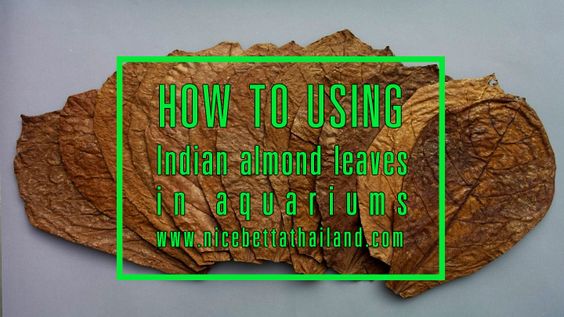
How long to leave almond leaves in aquarium water isn’t random—it’s a precision tool. For water conditioning, remove leaves at 3-4 weeks when tannin release slows and the leaf turns skeletal. For shrimp tanks, leave them 1–3 months until only veins remain—they’re a living food factory. In natural biotopes, cycle leaves indefinitely by adding fresh ones atop decomposing layers.
The golden rule? Observe daily, not weekly. A spent leaf won’t harm your tank, but an over-decaying one can spike ammonia. Start with one leaf per 10 gallons, test pH before adding, and never exceed your fish’s pH tolerance (e.g., bettas thrive at 6.0–7.5). Within two cycles, you’ll intuitively know when to replace leaves by water color and shrimp activity alone.
Ready to master blackwater balance? Next, explore our guide to boiling vs. soaking Indian Almond Leaves for faster tannin release—a game-changer for emergency pH adjustments. Your tank’s health hinges on timing; now you’ve got the clock in your hands.