Best Guppy Aquarium Setup (2026 Guide)
Your vibrant guppies deserve more than just a bowl—they need a carefully crafted ecosystem that mimics their natural habitat. A proper guppy aquarium setup prevents common issues like fin rot, stress-induced aggression, and breeding chaos while showcasing their dazzling colors. Without stable water parameters and adequate space, even hardy guppies become vulnerable to disease. This guide cuts through the guesswork with actionable steps verified by aquarists, covering everything from cycling your tank to selecting the perfect substrate. By the end, you’ll know exactly how to create a thriving environment where guppies display natural schooling behaviors and breed successfully—without the nightmare of overpopulation or water quality crashes.
Choosing the Right Tank Size for Your Guppy Colony
Never start with less than 10 gallons for 3-4 guppies—this is the absolute minimum to prevent toxic ammonia spikes. For a balanced community displaying natural behaviors, a 20-gallon “long” tank is ideal, comfortably housing 12-15 guppies with stable water parameters. Overcrowding in smaller tanks causes aggression, especially when males outnumber females. Always prioritize tank footprint over height; wider surfaces improve oxygen exchange and waste dilution. When selecting substrate, opt for fine gravel or pool filter sand—they’re gentle on guppy fry and simplify vacuuming during water changes. Position your tank away from direct sunlight to avoid algae explosions and drafts that cause dangerous temperature swings between 72°F–82°F (22°C–28°C).
Why Male-to-Female Ratios Prevent Stress
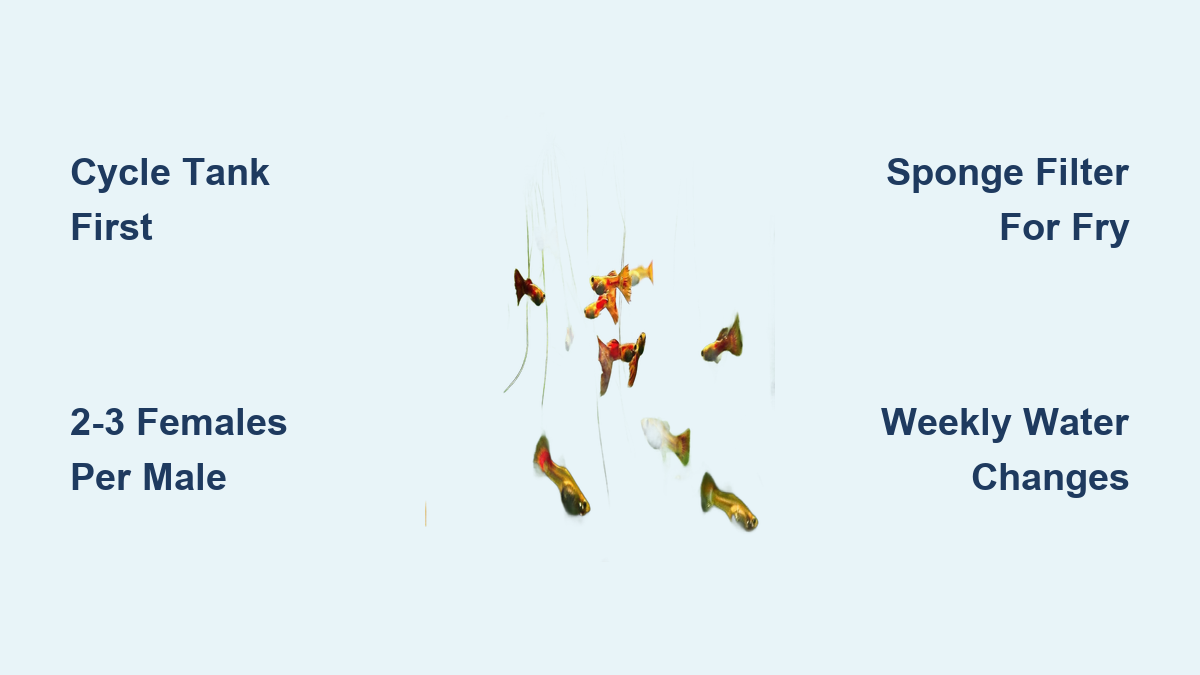
Maintain 2-3 females per male to diffuse harassment—a single male with too few females will relentlessly chase them, causing exhaustion and stress-induced disease. For a 10-gallon tank, start with 1 male and 2-3 females; in a 20-gallon, aim for 4 males and 8-12 females. If you want to control breeding, set up a single-gender tank immediately—never assume overstocking will solve population control.
Cycle Your Tank Before Adding a Single Guppy

Skipping the nitrogen cycle is the #1 cause of new guppy deaths. Use the fishless method: add pure ammonia to reach 4ppm in dechlorinated water, dose bacterial supplements like API Quick Start, and test daily. Wait until both ammonia and nitrite read 0ppm with detectable nitrates (5-20ppm)—this takes 4-8 weeks. Never introduce fish during cycling; ammonia exposure burns gills and causes fatal stress. If you absolutely must use fish-in cycling (not recommended), start with only 2-3 hardy snails or tetras, test water twice daily, and perform 50% water changes whenever ammonia exceeds 0.25ppm.
Sponge Filters: Non-Negotiable for Guppy Fry
Install a sponge filter powered by an air pump in every guppy tank—it provides gentle flow that won’t damage delicate fins while creating a safe haven for fry. For 10-20 gallon tanks, pair it with a hang-on-back filter like AquaClear 30 (rated for 30-40 gallons) to achieve 4-5x hourly turnover. Always wrap the HOB intake with a pre-filter sponge to prevent baby guppies from being sucked in.
Acclimate Guppies to Prevent Shock and Death
When bringing guppies home, skip the “dump-and-run” method that causes lethal osmotic shock. Float the sealed bag in your tank for 20 minutes to match temperatures, then add ¼ cup of tank water to the bag every 5 minutes for 30 minutes. Net the fish directly into the tank—never pour store water into your system, as it often carries pathogens. Watch for these red flags during selection: clamped fins, white spots (ich), or lethargic behavior at the tank bottom. Healthy guppies swim actively with fully fanned tails and vivid coloration.
First 48 Hours: Critical Observation Window
Withhold food for 24 hours post-acclimation to let fish settle. On day two, offer a pinch of Hikari Micro Pellets—they’ll consume it within 90 seconds. Overfeeding is deadly; uneaten food decays into ammonia. If guppies hide excessively or flash (rub against decor), test water immediately—nitrite above 0.5ppm requires a 50% water change with Seachem Prime.
Create a Guppy Paradise with Plants and Flow Control

Guppies thrive in tanks with 70% open swimming space and 30% dense cover. Anchor Java Fern and Anubias to driftwood using cotton thread (never bury their rhizomes), and float Frogbit to diffuse light for shy females. Avoid strong currents—adjust your HOB filter to its lowest setting or angle the outflow toward the glass. Install a Cobalt Neo-Therm heater (50W for 10 gallons, 100W for 20 gallons) with a guard, and set LED lights to 8 hours daily using a timer. Exceeding 10 hours triggers algae blooms that smother plants.
Safe Tank Mates That Won’t Nip Fins
Only add peaceful species:
– Bottom dwellers: Pygmy Corydoras (4-6 in 20 gallons)
– Mid-level: Ember Tetras (6+ for schooling)
– Cleanup crew: Nerite snails (1 per 5 gallons)
Ban Tiger Barbs, Angelfish, and large tetras—they’ll shred guppy fins. Introduce new fish after a 4-week quarantine period to prevent disease outbreaks.
Weekly Maintenance That Prevents 90% of Guppy Problems
Skip this, and you’ll battle algae, disease, and dying fish. Every 7 days:
1. Perform a 25-30% water change using a gravel vacuum to remove waste from sand/gravel
2. Test ammonia (must be 0ppm), nitrite (0ppm), and nitrate (<20ppm) with API Master Test Kit
3. Rinse filter sponges in old tank water (never tap water—it kills beneficial bacteria)
4. Trim yellowing plant leaves and wipe algae off glass with a magnet cleaner
Fixing Common Emergencies Fast
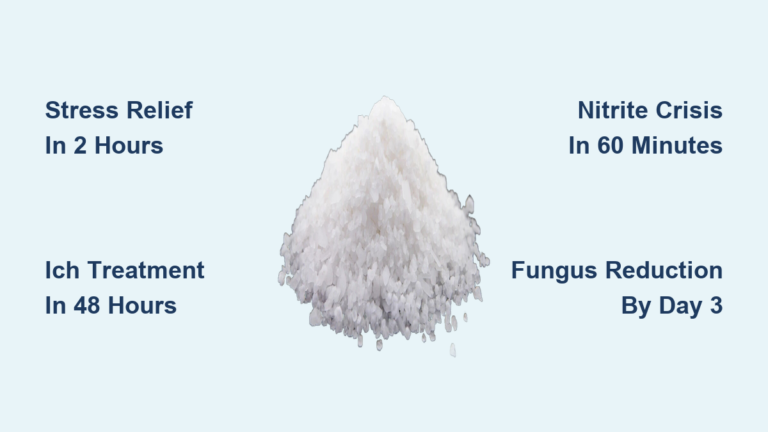
- White spots (Ich): Raise temperature to 86°F over 24 hours + add 1 tsp aquarium salt per gallon
- Tattered fins (Fin Rot): Do a 50% water change, dose Maracyn, and remove aggressive tank mates
- Green water algae: Reduce light to 6 hours daily and add Amano shrimp (1 per 10 gallons)
Breeding Guppies Without Population Chaos
Want to breed? Set up a separate 10-gallon tank with a sponge filter, Java Moss clumps, and no substrate (for easy fry spotting). Move pregnant females when their gravid spot darkens and belly squares off—they’ll give birth within 24-48 hours. Remove the female immediately after birthing to prevent fry cannibalism. Feed newborns infusoria for 5 days, then switch to powdered Hikari First Bites 3x daily. Expect 20-60 fry per birth; cull weak or deformed individuals to maintain strain health.
Spotting Illness Before It’s Fatal
Healthy guppies have erect dorsal fins, clear eyes, and steady gill movement. Act immediately if you see:
– Clamped fins + lethargy: Test for ammonia spikes
– Rapid gill flaring: Check oxygen levels—add an air stone
– White cottony patches: Treat Columnaris with Furan-2
Always isolate sick fish in a quarantine tank—never medicate your main display.
Your guppy aquarium setup is now a self-sustaining ecosystem where vibrant fish thrive for 2-3 years. Stick to weekly water changes, maintain 2-3 females per male, and never skip quarantine for new additions. Within months, you’ll witness fascinating behaviors: males performing courtship dances, fry darting through Java Moss, and natural color variations emerging in successive generations. Remember—the secret to guppy success isn’t expensive gear, but consistency in water quality. Test parameters weekly, keep a maintenance log, and within a year, you’ll be confidently upgrading to advanced setups like planted breeder tanks or CO2-enhanced displays. The true reward? Watching your living rainbow flourish.