How to Remove Black Algae from Aquarium
That stubborn black fuzz clinging to your aquarium plants and decor isn’t just unsightly—it’s black brush algae (BBA), the bane of many aquarium enthusiasts. This tenacious algae species (Rhodophyta sp.) appears as dark green to black tufts that firmly attach to surfaces, resisting most standard cleaning methods. Unlike green algae that comes and goes, black brush algae digs in and takes over if left unchecked. The good news is you can eliminate it permanently by targeting both the visible growth and the underlying tank imbalances that allowed it to thrive. In this guide, you’ll discover specific, actionable techniques that aquarium experts use to eradicate black algae and prevent its return—no vague advice, just proven methods that deliver results.
Why Black Brush Algae Takes Over Your Aquarium
Black brush algae thrives in aquariums with inconsistent CO₂ levels, fluctuating nutrients, and poor water flow. Unlike other algae types, BBA can establish itself across a wide range of water parameters, making it particularly challenging to eliminate. The primary triggers include unstable carbon dioxide injection in planted tanks, excessive nitrates and phosphates from overfeeding or inadequate maintenance, and inconsistent lighting schedules. When your plants experience stress from these fluctuations, they can’t effectively compete for resources, giving BBA the perfect opportunity to colonize your tank. The algae’s dark, brush-like texture allows it to grip surfaces tenaciously, making physical removal difficult without the right approach.
Immediate Black Algae Removal Techniques That Deliver Results

Hydrogen Peroxide Spot Treatment for Stubborn Patches
When black algae clings to hardscape and plant leaves, direct hydrogen peroxide application provides immediate visible results. Turn off all filtration and aeration before treatment to prevent dilution. Using a 1ml syringe, apply 3% hydrogen peroxide directly onto the algae patches, allowing 1-2 minutes of contact time. You’ll notice bubbling as the peroxide works to break down the algae’s structure. Crucially, remove sensitive fish and invertebrates during treatment or shield them in another tank section, as hydrogen peroxide can harm aquatic life at effective concentrations. After treatment, perform an immediate 50% water change to remove residual peroxide. For heavily infested plants, create a dip solution of 1 part 3% hydrogen peroxide to 2 parts tank water and submerge for 2-3 minutes before thorough rinsing.
Effective Manual Removal Strategies for Glass and Hardscape
Physical removal should always accompany chemical treatment for comprehensive black algae elimination. Use a dedicated algae scraper or stiff brush to dislodge BBA from glass surfaces—regular scraping prevents the algae from establishing deep roots. For rocks and driftwood, remove them from the tank for aggressive cleaning. Never use household cleaning products, as residue can poison your aquarium. Instead, soak infested decorations in a 1:19 bleach-to-water solution for 2-3 minutes, then rinse thoroughly with dechlorinated water. For plants, prune heavily infected leaves completely—BBA cannot grow on healthy new growth, so sacrificing affected foliage creates a clean slate for recovery.
Strategic Biological Control with Algae-Eating Crew

While not a standalone solution, adding the right cleanup crew provides ongoing maintenance after initial removal. Amano shrimp (2-3 per 10 liters) relentlessly graze on black algae without harming healthy plants. True Siamese Algae Eaters (Crossocheilus oblongus, 1 per 20 liters) specifically target BBA, but verify you’re getting the correct species, not the similar-looking Flying Fox. Nerite snails (2-3 per 10 liters) excel at cleaning hard surfaces and plant leaves. Introduce these species gradually after completing chemical treatments, as many algae eaters cannot withstand the concentrations needed to kill established black algae.
Fix Your Tank Conditions to Prevent Black Algae Recurrence
Balance Nutrients with Precision Testing and Dosing
Algae blooms signal nutrient imbalances that require correction, not just symptom treatment. Test your water for nitrates (target 5-10 ppm) and phosphates (keep below 0.5 ppm) using a reliable test kit. If levels exceed these ranges, reduce feeding, increase water change frequency, and vacuum the substrate thoroughly to remove decaying organic matter. During active BBA outbreaks, temporarily pause fertilizer dosing until the algae is under control. Once clear, resume with a comprehensive fertilizer at half-strength, gradually increasing as plant health improves. A dense, healthy plant mass outcompetes algae for available nutrients—prioritize fast-growing stem plants like hornwort or wisteria to create this competitive advantage.
Stabilize CO₂ Levels for Planted Aquariums
Inconsistent CO₂ is the single biggest trigger for black algae in planted tanks. Install a drop checker to monitor CO₂ levels continuously, aiming for 15-30 ppm during the photoperiod. If using pressurized CO₂, ensure your regulator maintains stable injection throughout the light cycle—fluctuating levels stress plants and create openings for BBA. For non-CO₂ tanks, consider liquid carbon supplements like Flourish Excel, applied directly to problem areas at 2-4 times standard dose. Apply daily for 4-7 days until algae turns grey or pink, indicating die-off, then perform a 50-70% water change to remove dead material.
Optimize Lighting Schedule and Intensity
Black algae exploits lighting inconsistencies that stress plants. Use a programmable timer to maintain a strict 6-8 hour photoperiod—never exceed 8 hours daily during active outbreaks. For severe cases, reduce to 4-6 hours temporarily. Position lights to ensure even coverage without dark spots where BBA can establish. If using high-intensity lighting, consider reducing intensity by raising fixture height or using a dimmer. Never implement sudden lighting changes, as this stresses plants further—adjust gradually over several days.
The 3-Step Emergency Protocol for Active Black Algae Outbreaks
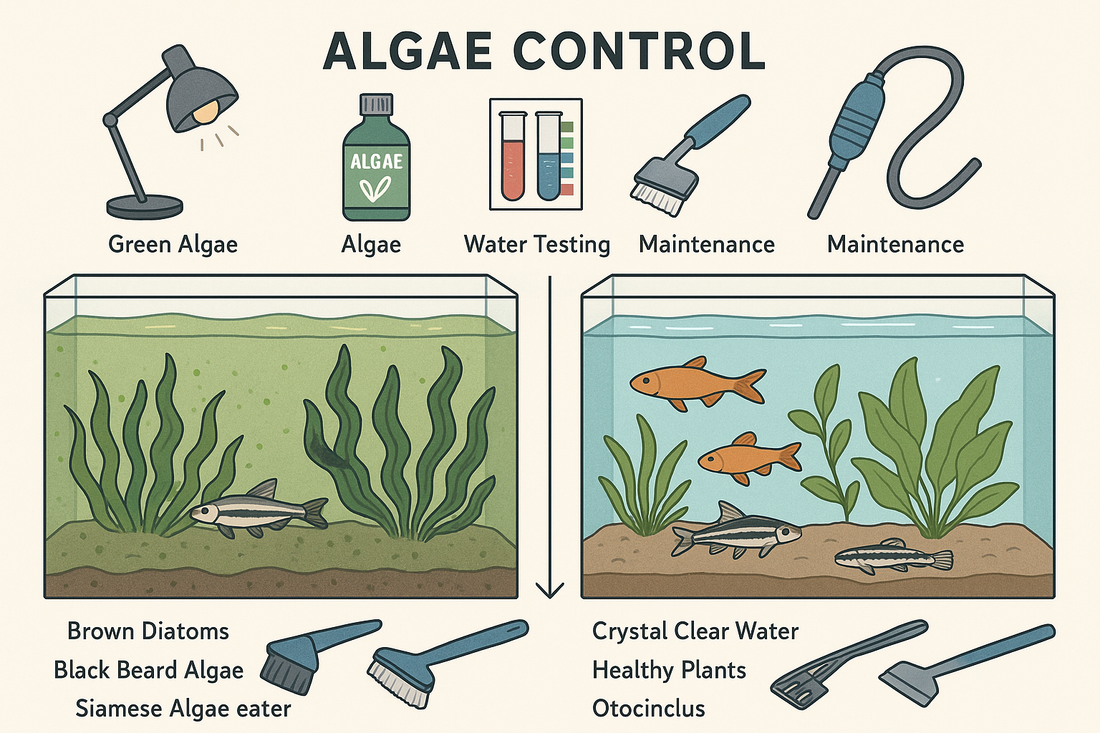
Step 1: Aggressive Physical Removal
Begin by manually removing as much visible black algae as possible. Prune infected plant leaves completely, scrape hardscape surfaces, and vacuum the substrate to remove loose algae fragments. This reduces the biomass you’ll need to treat chemically and prevents spores from spreading during subsequent steps. Perform a 50% water change immediately after physical removal to export nutrients feeding the remaining algae.
Step 2: Targeted Chemical Treatment
Apply hydrogen peroxide directly to remaining BBA patches using a syringe, allowing 1-2 minutes of contact time before rinsing. For persistent areas, follow with a Flourish Excel spot treatment at 4x normal concentration, left for 1-2 minutes before water changes. Always remove sensitive species like shrimp or scaleless fish during treatment—they cannot tolerate the concentrations required for effective BBA elimination.
Step 3: Immediate Parameter Correction
Test water parameters immediately after treatment to identify the root cause. If nitrates exceed 20 ppm, increase water change frequency to 50% every other day until levels stabilize. If CO₂ fluctuates, implement a drop checker and adjust injection rates. Adjust lighting duration to 6 hours daily until the tank stabilizes. These corrections prevent regrowth while your plants recover from the outbreak.
Black Algae Prevention Strategies for Long-Term Tank Health
Quarantine New Plants with Algae-Killing Dips
Prevent introducing BBA by quarantining all new plants for at least two weeks. Before adding to your main tank, dip plants in a 1:19 bleach-to-water solution for 2-3 minutes, then rinse thoroughly with dechlorinated water. Alternatively, use a hydrogen peroxide dip (1 part 3% H₂O₂ to 2 parts tank water) for 2-3 minutes. This kills algae spores without harming most healthy plants when done correctly.
Maintain Nutrient Balance with Consistent Maintenance
Implement a strict weekly maintenance routine: 30-50% water changes, substrate vacuuming, and filter media cleaning. Test nitrates and phosphates weekly, keeping nitrates below 20 ppm and phosphates under 0.5 ppm. Use comprehensive fertilizers at half-strength rather than overdosing individual nutrients. Monitor plant growth—if leaves yellow or show holes, adjust fertilization accordingly rather than adding more nutrients indiscriminately.
Create Unfavorable Conditions for Black Algae Growth
Black algae thrives in stagnant water with poor circulation. Position powerheads or adjust filter outputs to create gentle flow throughout the tank, especially around plant stems where BBA establishes. Maintain stable CO₂ levels if injecting, and avoid sudden parameter changes. Keep lighting consistent—use timers with gradual ramp-up/down features to simulate natural light cycles without shocking plants.
Final Note: Eliminating black algae requires both aggressive removal of visible growth and correction of the underlying tank imbalances that allowed it to establish. While spot treatments provide immediate results, long-term success comes from consistent maintenance, stable parameters, and healthy plant growth that outcompetes algae for resources. With patience and the right approach, you can transform your aquarium from an algae-infested environment to a thriving, balanced ecosystem where black algae has no opportunity to return.