Pea Puffer Aquarium Setup Guide
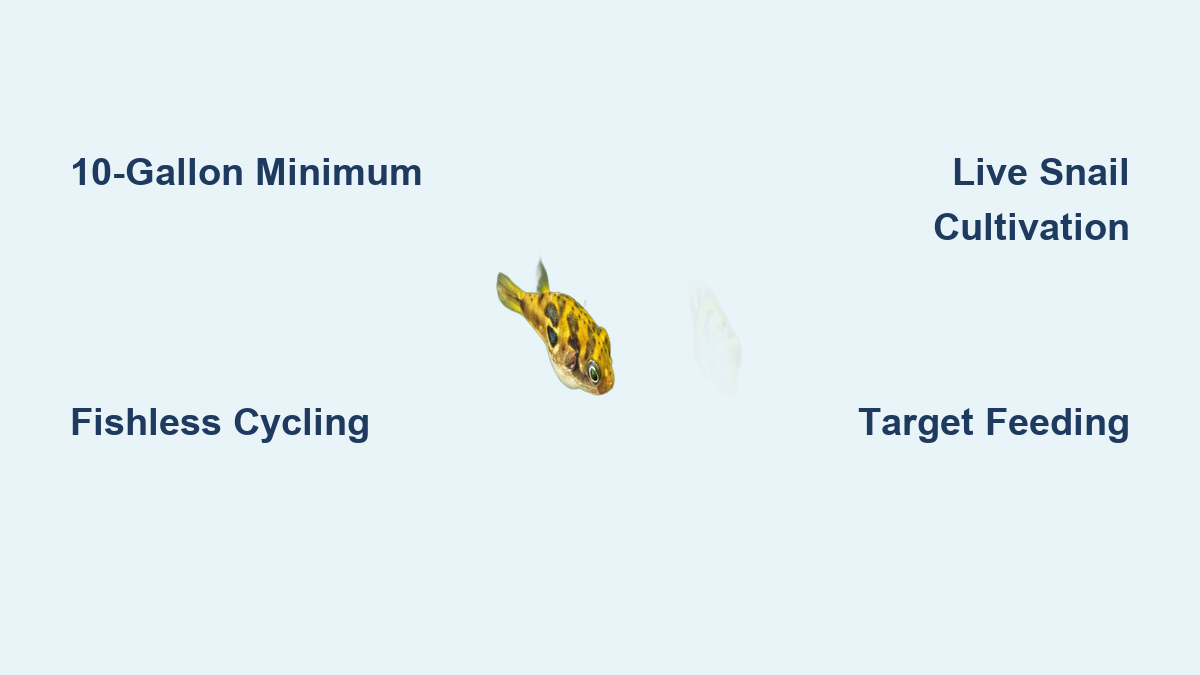
That tiny pea puffer (Carinotetraodon travancoricus) staring up at you from the pet store tank seems harmless—until it wastes away despite daily feedings or tears apart tank mates. Most beginners don’t realize these pint-sized predators demand a meticulously crafted pea puffer aquarium setup from day one. Unlike hardy community fish, they’ll starve on standard pellets and turn violent in bare tanks. The harsh truth? Over 80% of pea puffer deaths stem from improper initial setup—not disease. This guide cuts through the misinformation to deliver the exact steps that prevent starvation, reduce aggression, and create a thriving environment. You’ll learn why live snail cultivation isn’t optional, how to structure territories that stop fighting, and the water parameters that keep stress at bay.
Your pea puffer’s survival hinges on three non-negotiable pillars: a fully cycled tank, live food systems, and strategic tank layout. Skip any one, and you’ll face malnutrition, aggression, or fatal water spikes. The good news? With this precise setup roadmap, you can avoid the most common fatal mistakes within 30 days. Let’s build a habitat where your puffer doesn’t just survive—but hunts, interacts, and thrives.
Why 10 Gallons Per Puffer Is Non-Negotiable (Not a Suggestion)
That “10-gallon minimum” rule isn’t arbitrary—it’s a lifeline against aggression and unstable water. A single pea puffer in anything smaller than 10 gallons faces constant stress from ammonia spikes and nowhere to hide, triggering starvation or self-harm. But here’s what beginners miss: 10 gallons is the absolute floor, not the target. For one puffer, jump to a 20-gallon long tank immediately. The extra length creates critical territory zones, while the larger water volume buffers pH swings that kill puffers in smaller setups.
How Tank Size Directly Prevents Starvation
- In a cramped 10-gallon: Dominant puffers block food access, leaving shy individuals to waste away with “pinched stomachs”
- In a 20-gallon long: Visual barriers from plants/rocks let each puffer hunt freely without confrontation
- Critical tip: Never house males alone in small tanks—they turn territorial toward their own reflection, causing chronic stress
Fishless Cycling: The 6-Week Process That Saves Puffer Lives
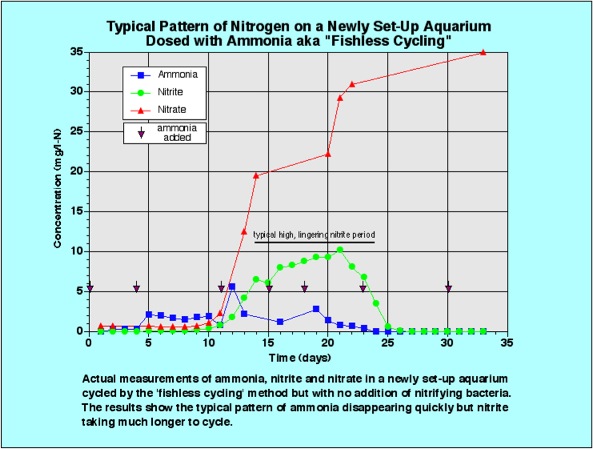
Adding pea puffers to an uncycled tank is a death sentence. Their sensitive systems can’t tolerate even 0.25 ppm ammonia—yet beginners often skip this step, causing mysterious “sudden deaths.” You must complete a full fishless cycle (4-8 weeks) before introducing a single puffer. This isn’t optional maintenance; it’s the foundation of your pea puffer aquarium setup.
Step-by-Step Cycling for Zero Ammonia Spikes
- Dose pure ammonia to 2-3 ppm daily (use unscented household ammonia with no surfactants)
- Test religiously with liquid kits—paper strips miss dangerous nitrite levels
- Wait for 0 ppm ammonia AND nitrite with rising nitrates (this takes 4-8 weeks)
- Confirm stability with 3 consecutive zero readings before adding puffers
Warning: Skipping this step causes “new tank syndrome”—your puffer’s gills burn from ammonia, leading to gasping, lethargy, and death within days.
Dense Planting and Hardscape: Your Aggression Stopper

A barren tank is a pea puffer warzone. These intelligent hunters need complex terrain to establish territories and avoid constant chasing. Without it, you’ll see torn fins, hiding puffers, and starvation from stress. Your aquascape must create visual barriers—every inch matters.
Must-Have Layout Elements for Peaceful Cohabitation
- Foreground: Carpet mosses (Christmas or Java moss) to break line-of-sight at bottom level
- Midground: Tangled driftwood branches with attached anubias or bolbitis
- Background: Fast-growing stems (hornwort or water sprite) to diffuse aggression
- Critical additions: Upside-down terracotta pots and smooth rocks for instant caves
Pro tip: Rearrange decor weekly—bored puffers get destructive. Introduce new snail-hunting zones to stimulate natural behavior.
Water Parameters That Prevent Chronic Stress
Chasing “perfect” numbers kills more puffers than imperfect ones. Stability trumps precision—wild swings in pH or temperature trigger stress that suppresses immunity. Aim for these consistent ranges:
| Parameter | Target Range | Danger Zone |
|---|---|---|
| Temperature | 75–80°F (24–27°C) | Below 74°F or above 82°F |
| pH | 6.5–7.5 | Below 6.0 or above 8.0 |
| Hardness | 5–15 dGH (soft-moderate) | Below 3 or above 20 dGH |
| Nitrates | <20 ppm | Above 40 ppm |
Key insight: Test water before each feeding. If parameters shift, skip feeding—digestion stresses unstable puffers.
Gentle Filtration Setup: Avoiding Injury While Keeping Water Crystal Clear

Pea puffers dart near filter intakes, risking sucked-in eyes or torn fins. Standard hang-on-back filters are death traps. Your system must deliver strong biological filtration with near-zero flow.
Safe Filtration Checklist
- Use a sponge filter as primary filtration (no intake tubes)
- Supplement with HOB rated 20% larger (e.g., 25-gallon filter on 20-gallon tank)
- Cover intakes completely with pre-filter sponges (cut to 2x intake size)
- Position outflow toward back wall to diffuse current
Must-do: Rinse filter media only in tank water during water changes—tap water kills beneficial bacteria.
Live Snail Cultivation: Why Bladder Snails Are Your Puffer’s Lifeline
Frozen bloodworms won’t cut it. Pea puffers need crunchy live snails daily to wear down their constantly growing beaks. Without this, they develop overgrown beaks that prevent eating—leading to slow starvation. Ramshorn and bladder snails are the only acceptable staples.
Building a Foolproof Snail Breeding System
- Use a 5-gallon bucket with old tank water, air stone, and zucchini slice
- Never use pond snails (grow too large) or Malaysian trumpet snails (burrow)
- Harvest daily: Snails must be pea-sized (smaller than puffer’s eye)
- Critical rule: Never rely on main tank breeding—puffers eat all eggs
Pro tip: Add a pinch of fish food weekly to boost snail reproduction without polluting.
Hand-Feeding Techniques: Ensuring Every Puffer Gets Enough Food
In groups, dominant puffers hog food while shy ones starve. Target feeding with a pipette is the only way to guarantee nutrition. This also builds trust—your puffer will recognize you and beg for food.
Step-by-Step Target Feeding Protocol
- Place pipette near shy puffer’s hiding spot (never chase)
- Release single snail/worm directly in front of mouth
- Count吞咽s: Feed until belly swells slightly (5-7 snails daily)
- Rotate feeders: Spend 30 seconds per puffer to ensure equity
Warning: Sunken bellies at stores mean poor diet—not parasites. Most recover within 48 hours of live feeding. Skip prophylactic dewormers unless you see red worms protruding.
Male-to-Female Ratios: Creating Peaceful Groups in 20+ Gallons
Pea puffers aren’t loners—they’re social but fiercely territorial. Housing them alone causes depression; wrong ratios cause warfare. Sexing is nearly impossible when young, but ratios make or break group harmony.
The Only Safe Social Structures
- Solitary: Only in 10+ gallon heavily planted tanks (provide mirror for interaction)
- Pairs: 20-gallon minimum with 3+ visual barriers (high aggression risk)
- Harem: 1 male to 2-3 females in 20+ gallon long tanks (ideal setup)
Red flags requiring intervention:
– Constant chasing beyond 10 seconds
– Nipped fins or hiding for >24 hours
– Uneven bellies after feeding
Spotting Malnutrition and Parasites: Early Warning Signs
Starvation masquerades as “picky eating.” Watch for these silent killers:
- “Pin-head” syndrome: Oversized head with shrunken body = chronic underfeeding
- Camallanus worms: Red threads protruding from anus (treat with Paracleanse)
- Boredom stress: Glass surfing or nipping decor (add snail-hunting zones)
Critical action: If belly looks concave after 2 days of live feeding, quarantine and offer blackworms—they’re irresistible to starving puffers.
Is a Pea Puffer Right for You? 4 Dealbreaker Questions
Before buying, answer these honestly—your puffer’s life depends on it:
- Can you dedicate 15 minutes daily to culturing snails/worms? (No pre-made foods suffice)
- Do you have a 20-gallon long tank (not just 10 gallons) fully cycled for 6+ weeks?
- Will you commit to weekly water changes and live food variety?
- Are you prepared to hand-feed every puffer to prevent starvation?
If you answered “no” to any, choose alternatives like bettas or honey gouramis. Pea puffers reward dedication with personality—they’ll recognize you and interact—but demand uncompromising care.
Final Note: A successful pea puffer aquarium setup transforms starvation risks into daily hunting joy. Master live food cultivation, prioritize territory design over aesthetics, and respect their non-negotiable needs. In 30 days, you’ll have a tank where puffers dart through mossy forests, crunch snails with precision, and greet you at the glass—a living ecosystem born from precise setup. Your journey starts today: cycle your tank, plant those barriers, and cultivate those snails. The rewards are worth every meticulous step.