How to Anchor Plants in Aquariums
Your lush aquatic garden shouldn’t resemble a floating debris field after every water change. If you’ve ever replanted the same stem three times in one session or watched carpeting plants drift like miniature icebergs, you know the frustration of how to hold plants down in aquarium setups. This constant battle disrupts your aquascape’s aesthetics and starves plants of essential root development. The root cause? Fine sand substrates that offer zero grip, buoyant new growth, or overpowering water currents that treat delicate roots like kelp in a tsunami. Mastering how to hold plants down in aquarium environments transforms unstable jungles into thriving ecosystems where roots anchor deeply and growth explodes.
New aquascapers often assume plants will naturally root themselves, only to discover loose stems clogging filters and rhizomes floating freely. Without proper anchoring, plants waste energy regenerating roots instead of growing upward, leading to stunted development and algae-prone conditions. Whether you’re battling Monte Carlo runners in sand or Anubias rhizomes refusing to cling, this guide delivers field-tested solutions. You’ll learn substrate-specific techniques, safe anchoring tools that won’t poison your tank, and professional tricks to secure even the most rebellious greenery—all without damaging delicate root systems.
Why Delicate Aquarium Plants Refuse to Stay Planted
Fine substrates like sand or powdered gravel create a rootless nightmare where stems sink deeper with every water current. Unlike nutrient-rich planted substrates with clay bases, these loose materials offer no resistance for fragile roots to grip. Fast-growing stems like Hornwort or Rotala become aquatic tumbleweeds when new growth outpaces root development, while carpeting plants like Dwarf Hairgrass float freely until their runners establish contact. Even gentle filter outflows can uproot unsecured plants during critical establishment phases, turning your aquascape into a game of whack-a-mole. Understanding these specific failure points—substrate composition, plant maturity, and flow intensity—is essential for choosing the right anchoring method.
How Water Flow Dislodges New Plantings
Strong currents from canister filters or powerheads act like underwater hurricanes for unanchored plants. Position new plantings away from direct outflow paths, or temporarily reduce flow during the first 72 hours using a baffle. Test your flow by placing a leaf near the outflow—if it rockets across the tank, it’s too strong for vulnerable roots. For stubborn floaters, create natural barriers using rocks or driftwood upstream to diffuse current before it hits delicate growth zones.
Securing Plants with Safe, Non-Toxic Weights
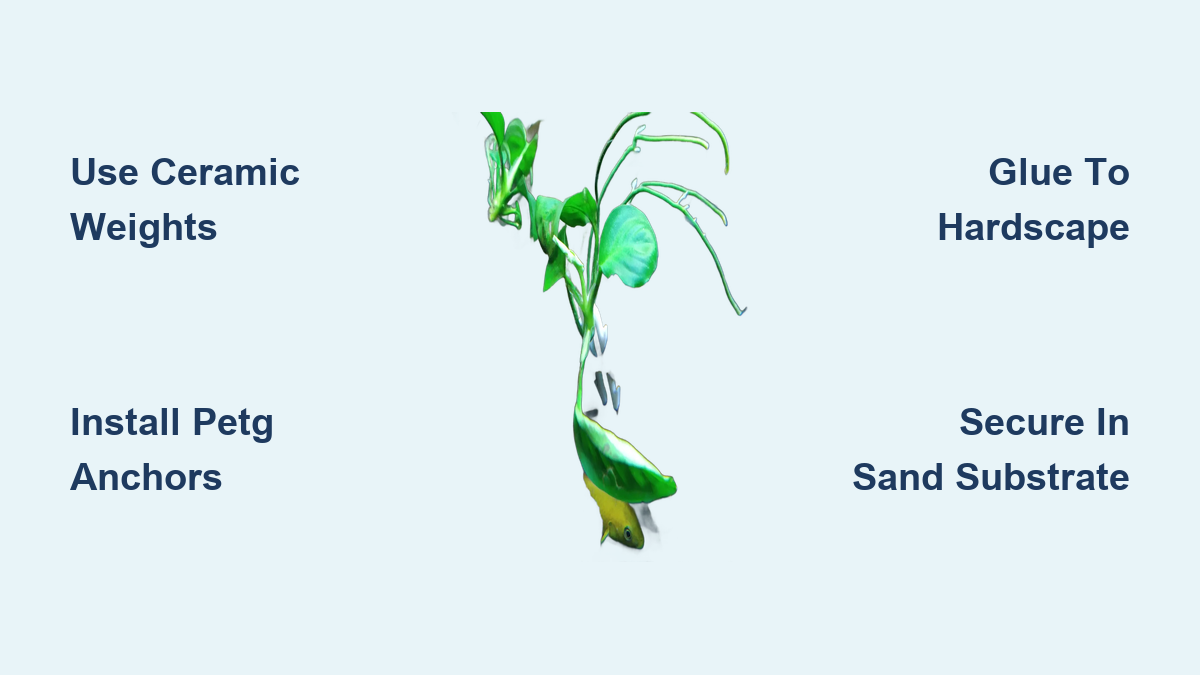
Forget lead strips that leach toxins into your ecosystem—modern aquarium weights prioritize plant health without contaminating water. Inert ceramic anchors shaped like U-bends or flat discs provide chemical-free stability for rhizome plants like Java Fern. Simply tuck the rhizome into the ceramic groove and bury the base under 0.5 inches of substrate. The porous material won’t alter pH while its weight counters buoyancy, and unlike metal, it won’t corrode during maintenance. For carpeting plants, sprinkle pea-sized river stones around newly planted stems to act as natural ballast until roots take hold.
Why Ceramic Beats Lead for Plant Anchoring
Lead weights create long-term contamination risks as they oxidize in water, potentially poisoning fish and invertebrates. Ceramic alternatives maintain structural integrity for years without degrading. Their textured surfaces also encourage beneficial bacteria colonization that aids root development. When positioning ceramic anchors, ensure they contact the substrate directly—never let them rest solely on plant stems, which could cause crushing damage during expansion.
Using PETG Plant Anchors for Substrate Stability

Aquarium-safe PETG plastic plant anchors solve the “float-away” problem for stem and carpeting plants without toxic risks. Unlike brittle PLA alternatives, these durable clips maintain flexibility in water while resisting algae growth. Crucially, these aren’t standalone weights—they require substrate cooperation to function properly. The anchor’s design features a stem-holding clip connected to a flat base that buries 0.5-1 inch deep. As substrate settles around the base, it creates downward pressure that holds plants vertical while roots establish. Available in black, blue, green, or white, these anchors blend naturally into aquascapes.
Step-by-Step Anchor Installation for Carpet Plants
- Prepare the anchor: Select small clips for delicate stems like Monte Carlo; use large clips for bushy plants like Ludwigia.
- Position the plant: Gently insert 0.5 inches of stem base into the clip’s opening without crushing roots.
- Bury the base: Push the anchor’s flat section vertically into substrate until only the clip remains visible.
- Secure surrounding area: Dab substrate around the clip with your finger to eliminate air pockets.
For best results, space anchors 2 inches apart in carpet zones—overcrowding restricts root spread. Within 10-14 days, roots will outgrow the clip, making removal easy by gently wiggling the anchor sideways.
Attaching Rhizome Plants to Hardscape Without Substrate
Anubias and Java Fern rhizomes will rot if buried, requiring direct attachment to driftwood or rocks. Super glue gel (cyanoacrylate) creates instant, fish-safe bonds that cure underwater in 30 seconds. Apply a rice-grain-sized dab to the rhizome’s base, press firmly against hardscape for 15 seconds, and hold steady until set. For larger specimens, wrap black cotton thread around rhizome and wood in a figure-eight pattern, tying knots loosely to allow growth space. The thread decomposes naturally within 6-8 weeks as roots grip the surface.
Avoiding Common Attachment Mistakes
Never use fishing line or nylon thread—it cuts into expanding rhizomes like cheese wire. Similarly, avoid hot glue guns; their fumes release toxins during curing. When gluing, work in sections: attach one plant cluster per session to prevent glue drying in the tube. If positioning near filters, angle rhizomes downward so water flow pushes roots against surfaces rather than peeling them loose.
Planting Techniques for Slippery Sand Substrates
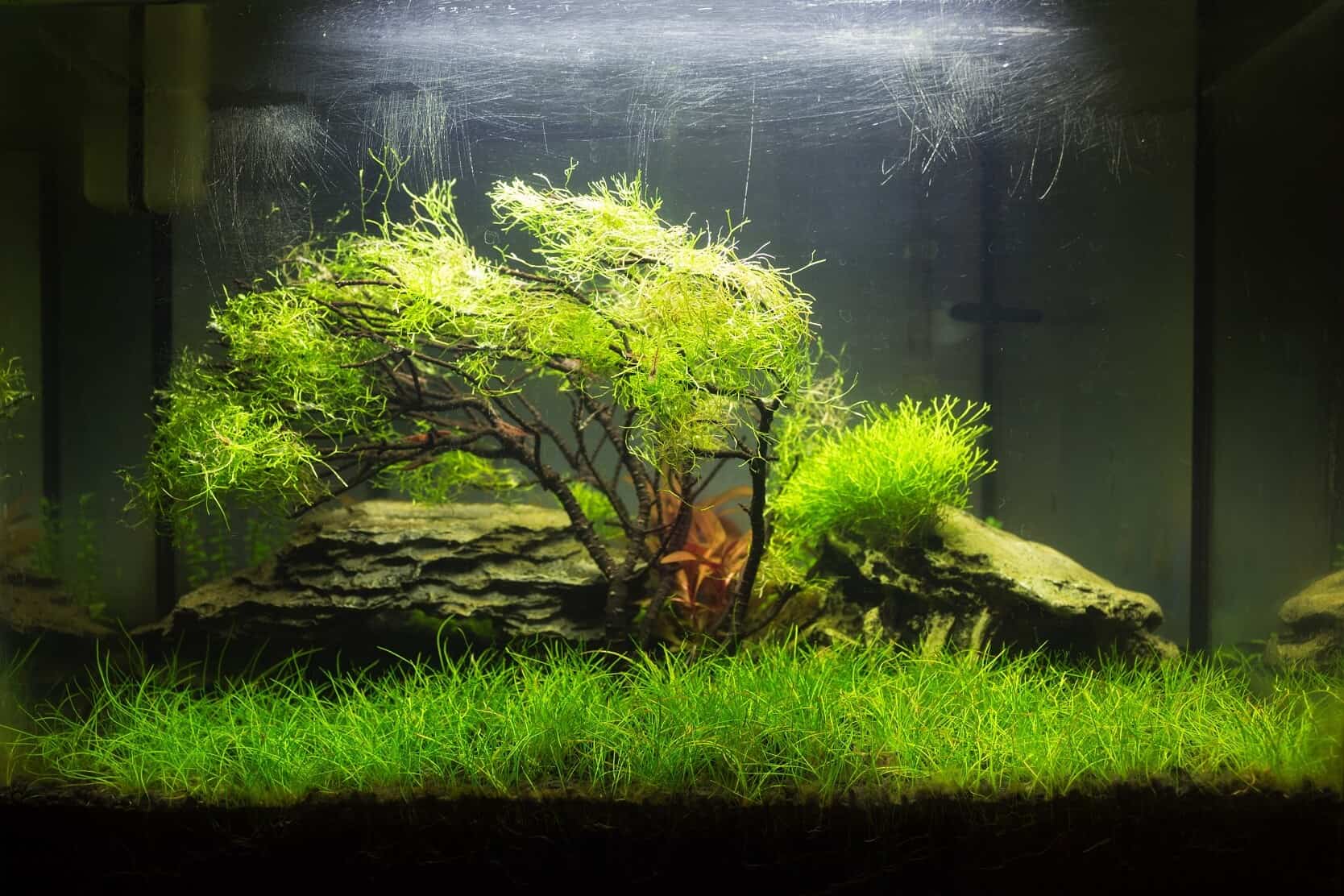
Sand’s smooth particles require specialized planting to prevent immediate floatation. Use long-tip tweezers to spear stems 1 inch deep, then immediately pinch substrate around the base with your finger to eliminate air pockets. For carpet plants, create “plant islands” by pressing 3-4 stem clusters into a single hole 0.25 inches apart—this mass effect anchors roots collectively. In pure sand tanks, layer 1 inch of nutrient-rich planted substrate beneath the sand cap to give roots a foothold while maintaining the sand aesthetic.
Securing Dwarf Hairgrass in Fine Gravel
Divide into 6-8 stem portions using scissors. Insert tweezers vertically, open tips to grip base, then push 1.5 inches deep. Before releasing, sweep adjacent gravel toward the stem with your fingertip to create a miniature “anchor mound.” For the first week, avoid disturbing these zones during water changes—use a gravel vacuum held 2 inches above the substrate.
DIY Slate Anchors for Heavy-Duty Stability
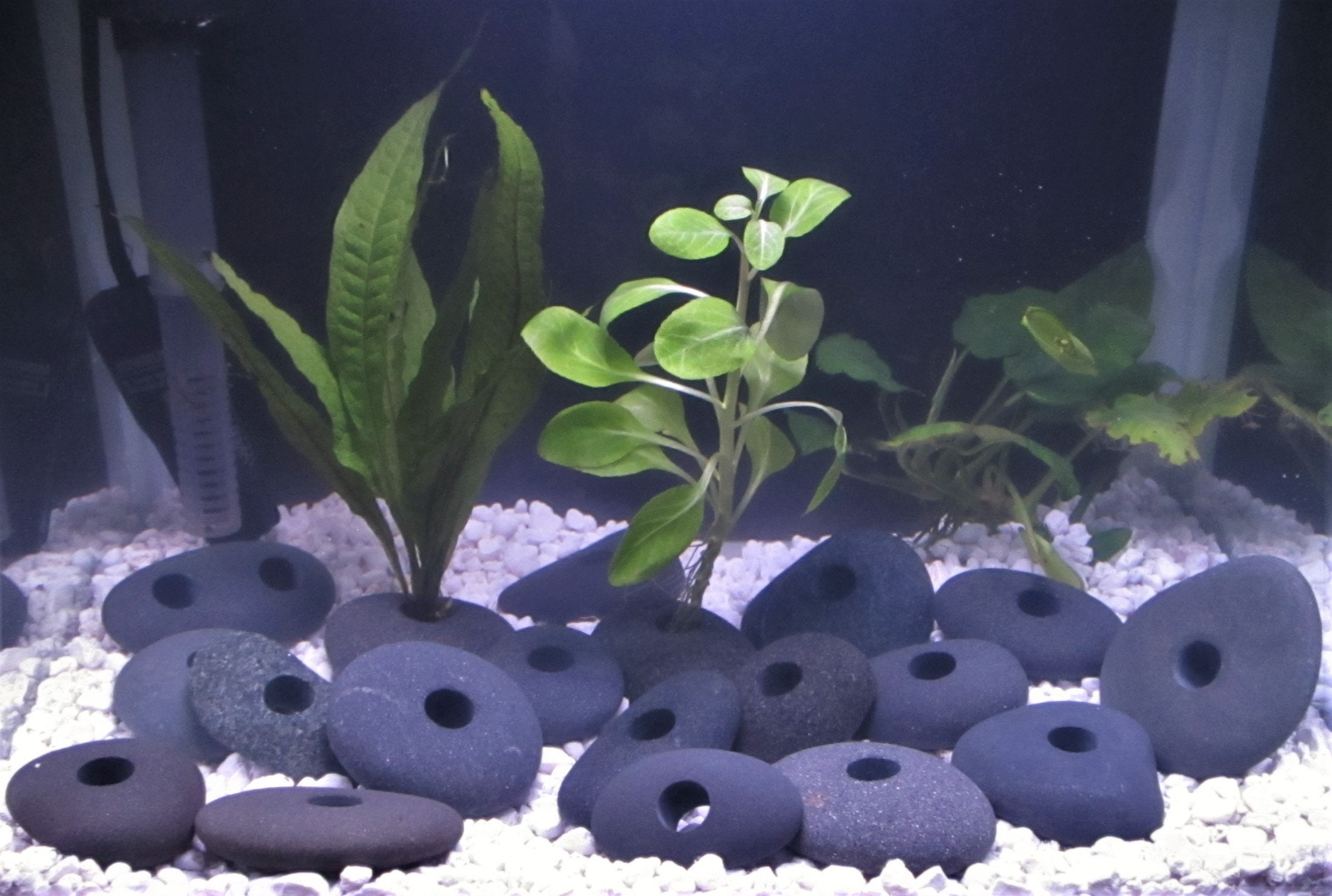
When commercial anchors aren’t available, create permanent plant bases using aquarium-safe slate. Select smooth, flat pieces 2-3 inches wide. Place the plant rhizome against the slate, then wrap clear fishing line in a loose basket weave pattern—never tight knots that constrict growth. Bury the slate 0.5 inches deep with the plant facing upward. Within 3-4 weeks, roots will weave through the slate’s pores, creating a self-sustaining anchor that can be relocated without replanting.
Why Pencil Lead Isn’t Safe for Anchoring
Some tutorials suggest mechanical pencil lead as a tie material, but graphite contains binders that may leach toxins. Always use inert alternatives: silicone-coated fishing line (clear or green) or cotton quilting thread. If using rubber bands, choose natural latex-free varieties that degrade cleanly within weeks.
Containing Floating Plants Without Substrate Anchors
Duckweed and Water Sprite naturally float but often clog filters when currents concentrate them. Create surface corrals using flexible airline tubing: form 6-inch diameter circles, connect ends with a plastic coupling, and secure to tank walls with suction cups. Position corrals near outflows to trap plants in nutrient-rich zones while preventing filter blockages. For heavy surface coverage, add a second tubing ring 2 inches below the surface to create a submerged “net” that holds plants in place.
Moss Attachment Methods for Natural Looks
Peat moss balls or Christmas moss require surface adhesion, not burial. Pull apart into 1-inch portions, then apply super glue gel to driftwood in zigzag patterns. Press moss firmly onto glue for 20 seconds—use tweezers to avoid finger prints. For rock surfaces, wrap thread in a loose grid pattern over the moss patch, securing ends under the rock. Within 3 weeks, rhizoids will penetrate surfaces, making threads removable.
Aftercare for Newly Anchored Plants
The first 14 days determine whether plants thrive or float free. Immediately after anchoring, dose liquid carbon supplements like glutaraldehyde to boost root development by 40%. Place root tabs 1 inch from stems for heavy feeders like Amazon Swords, but avoid direct contact with roots. During water changes, hover the vacuum tube 1 inch above new plantings to prevent suction dislodgement—use a cup to divert flow if necessary.
Critical First-Week Flow Adjustments
Reduce filter output to 30% for 72 hours post-planting using a valve or baffle. Position powerheads to create gentle surface movement rather than substrate disruption. Test stability by lightly blowing on plants—any movement means insufficient anchoring. If stems tilt more than 30 degrees, add ceramic anchors immediately before roots detach.
Trimming for Permanent Root Establishment
After 10 days, trim 20% of the top growth on stem plants. This redirects energy to root development, creating stronger anchors within 2 weeks. For carpet plants, use scissors to snip horizontal runners above substrate level—this encourages downward root growth rather than surface spreading. Never pull floating plants; cut them at the substrate and replant properly.
Final Note: Mastering how to hold plants down in aquarium setups transforms frustrating replanting sessions into a one-time effort. By matching anchoring methods to your specific substrate and plant types, you’ll create self-sustaining ecosystems where roots grip firmly and growth flourishes. Remember that proper anchoring isn’t about brute force—it’s about working with plant biology to create natural stability. Once established, these techniques reduce maintenance by 75% while boosting plant health. For persistent floaters, revisit your substrate composition and flow dynamics; often the real solution lies beneath the surface. Your thriving, stable aquascape awaits—one securely anchored stem at a time.