How to Use Zeolite in Aquarium: A Simple Guide
You tested your water this morning and the ammonia strip glows toxic red. Your fish hover near the surface, gills flaring desperately. In this crisis, zeolite becomes your aquarium’s emergency lifeline—but misuse could drown your tank in trapped ammonia. Unlike biological filtration that converts ammonia, zeolite chemically traps this poison like a microscopic sponge. This guide reveals exactly how to use zeolite in aquarium emergencies while avoiding deadly mistakes, including the critical half-replacement method that prevents ammonia floods. You’ll learn precise placement techniques, recharge protocols, and why it’s useless for nitrate control in large tanks.
Most aquarists discover zeolite too late—during an ammonia spike that kills fish within hours. Yet when deployed correctly, it buys crucial time for new tank cycles or filter crashes. The catch? Zeolite doesn’t solve the root problem; it’s a temporary bandage for your nitrogen cycle. Relying on it long-term starves beneficial bacteria, setting you up for disaster when the media saturates. We’ll cut through forum myths (no, zeolite won’t eliminate water changes in your 800-gallon tank) and give you actionable steps that work. By the end, you’ll know exactly when to deploy zeolite—and when to run from it.
Why Zeolite Only Targets Ammonia (Not Nitrites or Nitrates)
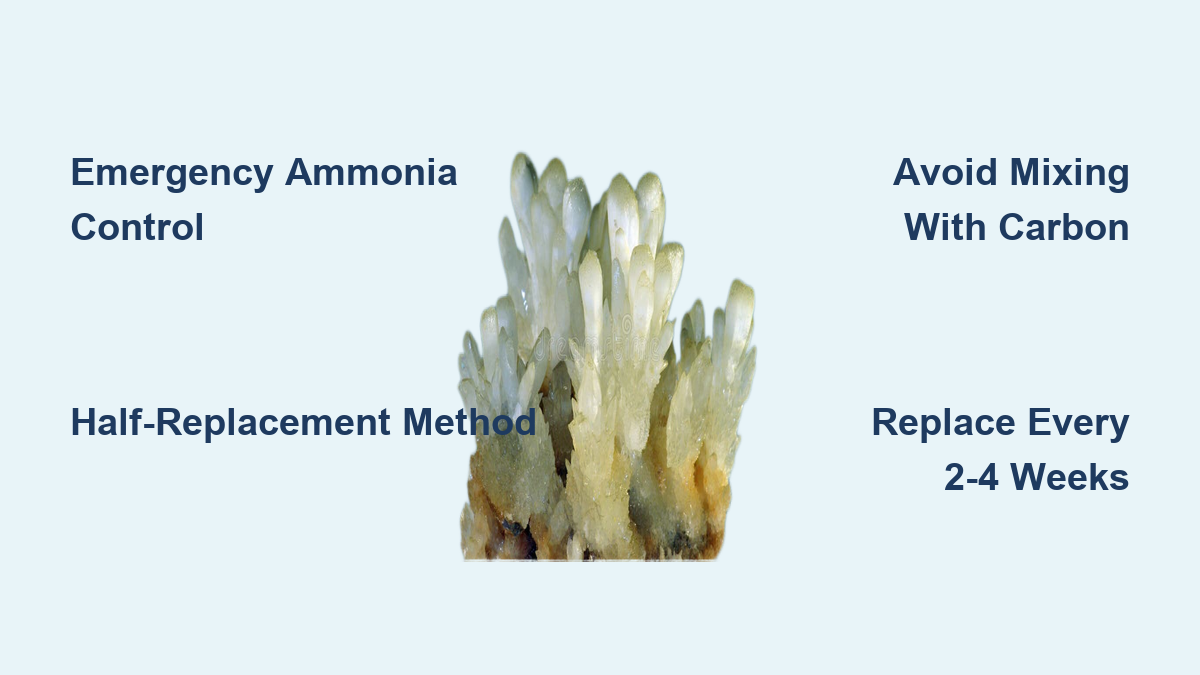
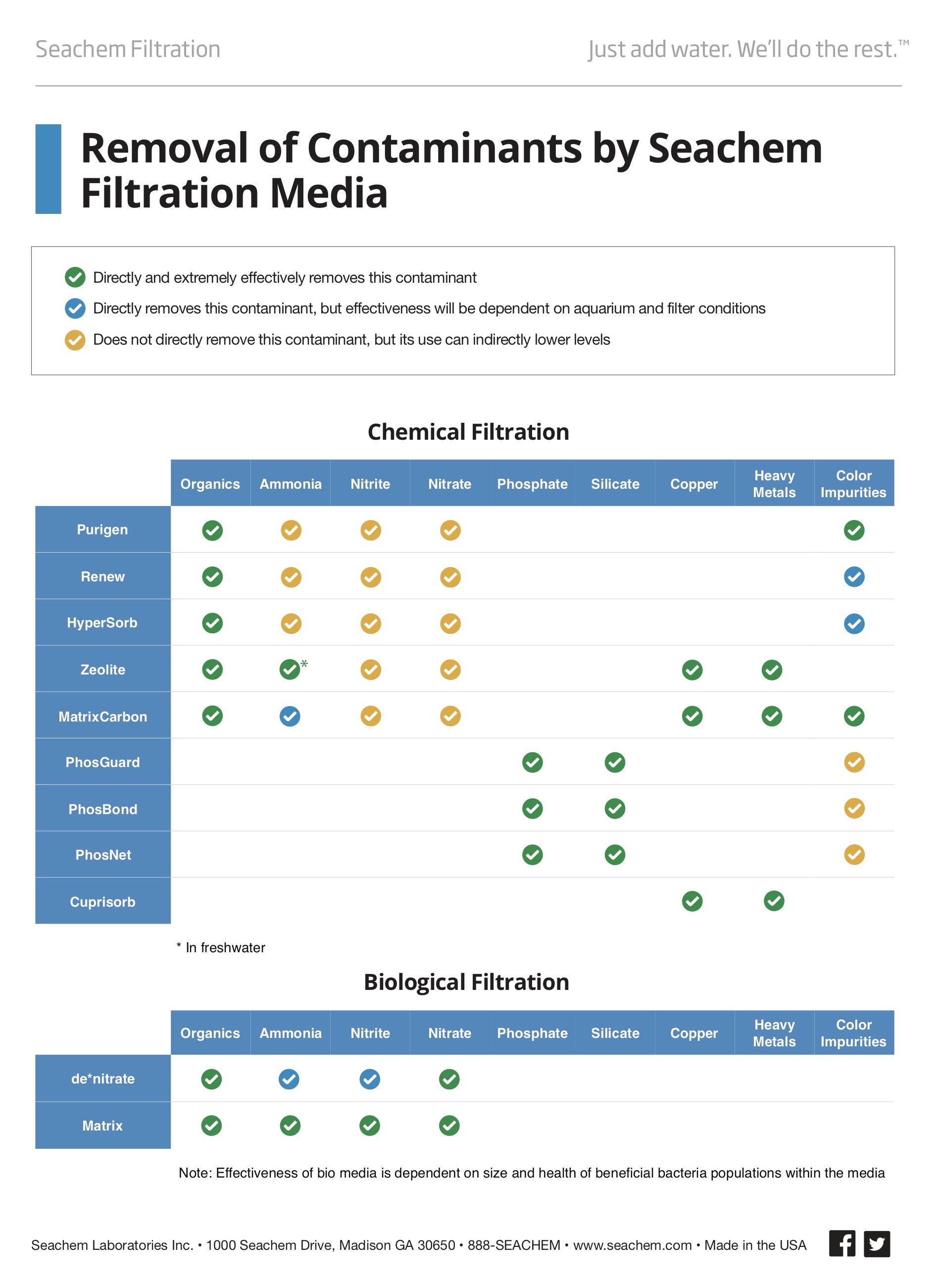
Zeolite’s volcanic mineral structure contains negatively charged pores that magnetically attract positively charged ammonia ions (NH₄⁺). This chemical adsorption physically traps ammonia molecules within its crystalline cage. Crucially, zeolite ignores nitrites and nitrates completely—it only grabs ammonia. This explains why forum users report frustration when trying to reduce nitrates: one 800-gallon tank owner hoped zeolite would minimize water changes, not realizing nitrates require plant uptake or dilution.
How Zeolite Differs From Biological Filtration
- Zeolite: Instantly removes ammonia (chemical action)
- Beneficial bacteria: Convert ammonia → nitrite → nitrate (biological action)
- Critical consequence: In established tanks, zeolite starves nitrifying bacteria by eliminating their ammonia food source. Your biofilter collapses, causing worse spikes later.
When Ammonia Testing Reveals Zeolite’s Limits
If your liquid test kit shows 0 ppm ammonia but fish show distress, zeolite won’t help. Nitrites or nitrates are likely the culprit—zeolite sits useless against these toxins. Always test for all three parameters before deploying it.
Critical Safety Protocol: Preventing Ammonia Floods During Removal

Removing saturated zeolite improperly is the #1 cause of sudden tank crashes. Trapped ammonia floods back into the water when media is disturbed, poisoning fish within hours. Follow this exact sequence:
Step-by-Step Half-and-Half Replacement
- Test ammonia: Confirm levels are 0 ppm (if ammonia is present, zeolite is still active—don’t touch it yet).
- Remove 50% of media: Scoop out half the zeolite using a clean net. Discard or recharge it.
- Wait 72 hours: Monitor ammonia daily. If levels stay at 0, proceed.
- Replace remaining half: Install fresh media in two-day intervals.
Pro Tip: Saturation signs include cloudy water around the media bag or ammonia readings climbing despite no new fish/debris.
Why Saltwater Recharging Fails Long-Term
Soaking used zeolite in 5-10% non-iodized saltwater for 24 hours does release ammonia—but each recharge reduces capacity by 15-20%. After 3-4 cycles, it’s ineffective. Never rinse with tap water: Chlorine forces instant ammonia release, spiking tank levels. Use only dechlorinated tank water.
Installing Zeolite for Maximum Ammonia Capture
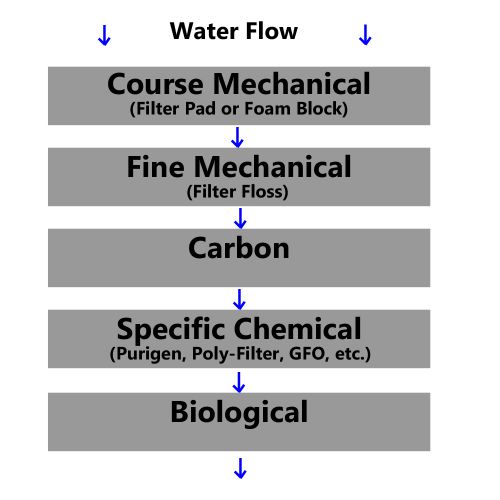
Place matters more than quantity. Incorrect positioning turns zeolite into a decorative paperweight.
Optimal Filter Placement Strategy
- HOB/Canister filters: Nest media bags after mechanical filter pads (sponges/floss) but before biological media (ceramic rings).
- Flow rate: Water must move through zeolite at 2-4x tank volume per hour. If your 55-gallon tank’s filter runs at 200 GPH, use ≤1 cup zeolite to avoid clogging.
- Bag size: Overfilling restricts flow. Fill mesh bags only ⅔ full—granules need room to tumble.
Emergency Setup for New Tank Cycling
- Add zeolite to 50% of your filter volume during initial setup.
- Introduce 1-2 hardy fish (e.g., zebra danios).
- Test ammonia daily. When levels hit 0.5 ppm, add more zeolite.
- Once ammonia stays at 0 ppm for 14 days, gradually reduce zeolite by 25% weekly while adding bacteria supplements.
Warning: This is a last-resort method. Fish-in cycling without zeolite risks death; with zeolite, it risks biofilter collapse later.
When Zeolite Saves Tanks (and When It Sabotages Them)
Emergency Scenarios Where Zeolite Is Essential
- Filter crash: Power outage kills bacteria colony—add zeolite immediately while restarting biofilter.
- Quarantine tanks: A 10-gallon hospital tank lacks established bacteria. Zeolite prevents ammonia poisoning during treatment.
- Overstocked deliveries: Transporting 20+ fish for 4+ hours? Pack zeolite in breather bags.
Situations Where Zeolite Causes Catastrophe
- Established cycled tanks: Removes ammonia food source → bacteria die → next feeding causes fatal spike.
- Heavily planted tanks: Plants thrive on ammonium; zeolite starves them while nitrates keep rising.
- Medicated tanks: Absorbs antibiotics/copper treatments, rendering doses ineffective.
Real Example: That 800-gallon tank owner seeking nitrate control? Zeolite won’t touch nitrates. His 3-hour water changes remain essential—though a Python water changer could cut this to 45 minutes.
Avoiding Costly Zeolite Mistakes Aquarists Regret
Mistake #1: Using Zeolite as “Insurance” in Stable Tanks
Why it fails: Biofilm coats zeolite granules, blocking pores within weeks. Ammonia bypasses it while starving bacteria.
Fix: Reserve zeolite for emergencies only. Store pre-packed bags in sealed containers for instant access.
Mistake #2: Ignoring Saturation Timelines
Zeolite lasts 2-4 weeks in crisis mode (high ammonia), but only 6-8 weeks in maintenance mode.
Visual cue: Fresh zeolite is chalky white; saturated media turns translucent gray. Test ammonia every 3 days once discoloration appears.
Mistake #3: Combining With Carbon or Resins
Carbon adsorbs medications; zeolite adsorbs ammonia. Together, they compete for water contact, halving effectiveness. Never mix chemical media—use one type per emergency.
Zeolite vs. Biological Media: Why Bacteria Win Long-Term
| Factor | Zeolite | Ceramic Rings/Bio Balls |
|---|---|---|
| Ammonia removal | Traps temporarily (requires replacement) | Converts permanently (self-sustaining) |
| Nitrate impact | Zero effect | Creates nitrates (manage via plants/water changes) |
| Maintenance | Weekly testing, monthly replacement | Rinse only when flow drops (every 3-6 months) |
| Crisis value | Emergency ammonia “fire extinguisher” | Foundation of stable ecosystem |
Key insight: Zeolite is your ammonia ambulance—not the hospital. Once the crisis passes, rebuild biological filtration immediately. Add bacteria starters (not bottled “cycle accelerators”) and avoid cleaning all media at once.
Your Action Plan for Safe Zeolite Use
- Emergency spike: Add zeolite only if ammonia >0.5 ppm. Test every 4 hours.
- New tank: Use for first 10 days max, then phase out over 2 weeks.
- Removal: Always replace 50% at a time, waiting 72 hours between changes.
- Storage: Keep unused zeolite in airtight containers—exposure to air reduces potency by 30% in 6 months.
Final truth: Zeolite solves ammonia emergencies but worsens every other problem. That 800-gallon tank’s real solution isn’t more filter media—it’s a Python water changer to slash maintenance time. For lasting health, prioritize bacterial colonies over chemical fixes. When ammonia strikes, zeolite buys time. But the only permanent fix is a thriving biofilter and consistent water changes. Keep zeolite in your emergency kit, not your daily routine—and never let it replace the fundamentals that keep fish alive.