How to Use a Turkey Baster in Aquarium Cleaning
That missed frog pellet sinking into your sand bed? It’s not just unsightly—it’s a ticking time bomb. Within 24 hours, uneaten food like Top Fin frog pellets sprout white fungus, poisoning your water column while your African dwarf frog patiently waits for its next meal. Gravel vacuums create tidal waves in five-gallon tanks, scattering delicate aquascapes and stressing shy fish. But there’s a $2 solution hiding in your kitchen drawer: the humble turkey baster. This guide reveals exactly how to use a turkey baster in aquarium maintenance for surgical precision cleaning, targeted feeding, and stress-free water changes—proven by decades of fishkeepers battling the same frustrations in nano tanks and planted aquariums. You’ll learn to remove debris without disturbing sand, feed picky bottom-dwellers, and even acclimate new fish—all while avoiding the #1 mistake that ruins bulbs.
Sanitize Your Aquarium Turkey Baster Before First Use
Never dip a brand-new turkey baster straight into your tank. Kitchen chemicals lurk in microscopic pores, and cross-contamination kills fish faster than ammonia spikes. Rinse the entire unit—including the bulb’s interior—with hot, dechlorinated water for 60 seconds. Squeeze the bulb underwater 10 times to flush hidden residues. For ongoing safety, dedicate one baster exclusively to aquarium duties (blue bulbs work great for visual separation from kitchen tools). After each use, blast hot tap water through the tube until it runs clear, then hang it vertically to dry completely. Skipping this step invites mold growth inside the bulb—a silent killer when reintroduced to tank water.
Why Vinegar Soaks Prevent Costly Failures
Weekly maintenance prevents catastrophic seal failure. Submerge the baster in a 1:1 vinegar-water solution for 20 minutes to dissolve mineral buildup that stiffens the bulb. Without this, suction power drops by 70% as calcium deposits jam the mechanism—especially critical when targeting stubborn waste under driftwood. Never use bleach; residual traces destroy beneficial bacteria colonies on contact.
Suck Up Uneaten Frog Pellets Before Fungus Spreads

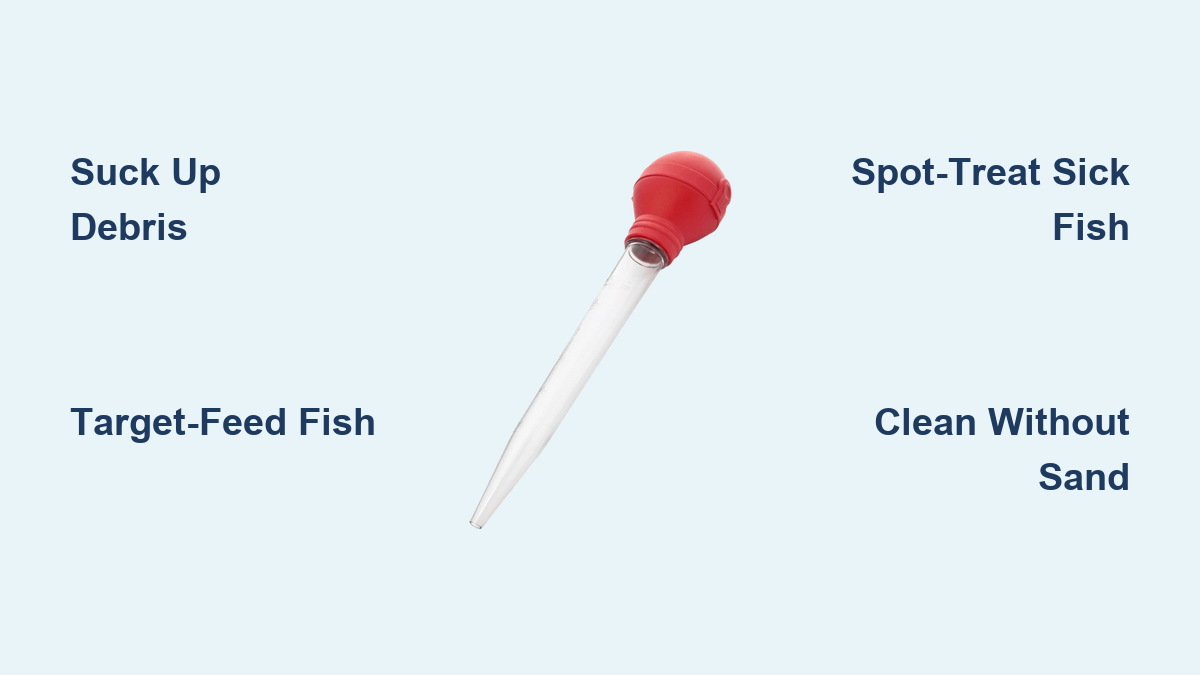
African dwarf frogs miss 40% of sinking pellets, creating toxic hotspots in sand beds. A turkey baster eliminates this hazard without clouding water. Position the tip ¼ inch above debris—never touching the substrate. Compress the bulb fully underwater, then release slowly as you hover over the target. The controlled suction lifts pellets while leaving sand undisturbed. Dump captured waste into a coffee filter propped over a cup (as hobbyist “ao” discovered), letting clean water drain back into the tank while trapping solids. For fungus-covered pellets, repeat twice: first to remove the contaminated food, then to extract residual spores before they bloom.
How to Clean Gravel Without Losing a Single Grain
Contrary to forum fears, a properly sized turkey baster won’t suck up gravel. Hold the tip just above the substrate surface and pulse the bulb gently. Larger gravel (pea-sized or bigger) remains anchored while detritus lifts into the tube. In five-gallon tanks, this technique outperforms even “small” gravel vacuums—PetSmart’s $6 “Betta baster” works, but a standard kitchen model gives better control. For stubborn waste trapped between rocks, angle the tip sideways to create lateral suction that slides debris into the stream without dislodging hardscape.
Target-Feed Shy Bottom Dwellers in 30 Seconds
Timid fish like corydoras or kuhli loaches starve when competing with surface feeders. Draw thawed bloodworms or gel-based foods into the baster, then position the tip near the fish’s snout. Gently squeeze to release a pea-sized portion directly onto the substrate. For fry tanks, dilute powdered food with tank water, draw it into the baster, and squirt micro-portions near resting spots—SageMyster’s method delivers 10x more food to betta fry than surface sprinkling. With live foods like baby brine shrimp, pulse the baster near plant roots to concentrate nutrients where shrimp grazers congregate.
Avoid the Overfeeding Trap in Nano Tanks
New keepers often drown tanks by over-squirtting. Limit portions to what fish consume in 15 seconds—usually 2-3 pulses for a five-gallon tank. Excess food decays faster in small volumes, spiking ammonia within hours. If pellets scatter, stop immediately; use the baster’s suction to retrieve leftovers before they sink.
Spot-Treat Sick Fish Without Medicating the Whole Tank
:strip_icc()/fin-rot-1378481-FINAL-0546cd6b03564df595829abaae45f7c6.png)
When one betta develops fin rot in a community tank, dosing the entire aquarium stresses healthy fish. Draw liquid medication like API Pimafix into the baster, then position the tip 2 inches from the affected area. Pulse gently to create a localized treatment cloud that clings to fins for 30 seconds—longer than manual brushing but without netting stress. For internal infections, mix crushed Metroplex with gel food, draw it into the baster, and squirt the slurry directly into the fish’s path. Hospital tank treatments become surgical: Hallyx’s method of “gently squirting” meds near injured fish reduces recovery time by isolating treatment.
Perform Mess-Free Water Changes in Quarantine Tanks
Forget struggling with siphon tubes in cramped breeding tanks. For 20% water changes in five-gallon setups, submerge the baster completely, squeeze the bulb dry, then lift it out while sealing the tube end with your thumb. The vacuum holds 3-4 ounces per pump—ideal for removing water from under dense plants without uprooting stems. Release the thumb over a bucket to drain. To add new water, fill the baster with conditioned water, position it near the substrate, and squeeze slowly to avoid disturbing fish. This method prevents the “tidal wave” effect that terrifies shrimp in nano tanks during standard siphon changes.
Why Coffee Filters Beat Buckets for Waste Separation
Place a coffee filter in a shallow dish over your tank, propped open with tweezers. After sucking up debris, squirt the contents into the filter. Water drains back into the aquarium while solid waste stays trapped—a game-changer for daily spot cleaning between full water changes. This technique, shared by forum user “ao,” cuts cleanup time by 50% and eliminates bucket spills.
Fix These 3 Turkey Baster Mistakes Immediately
Mistake #1: Sucking Sand into the Bulb
Holding the tip too close to fine substrates draws sand into the mechanism, grinding the seal. Always maintain a ¼-inch gap above the sand bed. If sand enters, flush immediately with hot water—dried sand causes permanent suction loss.
Mistake #2: Using Kitchen Tools for Aquariums
Even “thoroughly cleaned” kitchen basters retain soap residues. PetSmart’s $6 Betta-specific basters aren’t worth the markup, but buy a dedicated $2 model from the grocery store. Label it “AQUARIUM ONLY” with permanent marker.
Mistake #3: Applying Excessive Suction Force
New users crush the bulb aggressively, creating vortexes that scare fish and uproot plants. For 95% of tasks, a 30% squeeze provides ideal suction. Test on floating leaves first—you should move the leaf without submerging it.
Pro Hacks Only Experienced Keepers Know
Acclimate New Fish Without Net Stress
Draw tank water into the baster, then gently squirt it into the fish’s transport cup every 5 minutes. The slow drip mimics drip acclimation methods without complex tubing setups—perfect for shy species like endlers that panic in nets.
Revive Stagnant Plant Root Zones
In planted tanks, inject liquid fertilizer directly into substrate near Amazon sword roots using the baster’s precision stream. Avoid foliar feeding sensitive plants like anubias that develop algae from nutrient splatter.
Entertain Bored Fish During Cleaning
Hallyx’s trick works wonders: After spot-cleaning, gently squirt water currents near active fish like danios. They’ll chase the stream, reducing stress during maintenance. Stop immediately if fish show gill flaring—this isn’t play for all species.
A $2 turkey baster outperforms expensive gadgets for targeted aquarium care because it gives you surgical control where broad tools fail. By mastering these techniques—sucking up missed frog pellets before fungus blooms, feeding bottom-dwellers without overstocking the water column, and spot-treating sick fish—you’ll slash maintenance time while boosting fish health. The key is respecting its precision: never substitute kitchen tools, maintain a ¼-inch substrate gap, and use coffee filters for instant waste separation. Within one week of consistent use, you’ll notice cleaner sand beds, fewer ammonia spikes from missed food, and calmer fish during cleaning sessions. For nano tank owners drowning in siphon chaos, this simple tool isn’t just convenient—it’s essential for keeping small ecosystems thriving. Ready to eliminate “tidal wave” water changes? Grab that baster and reclaim control over your miniature underwater world today.