How to Use Bio Media in Aquarium: A Simple Guide
Your aquarium water turns cloudy overnight. Fish gasp at the surface. Ammonia spikes despite weekly water changes. If this sounds familiar, your biological filtration is failing—and the solution starts with properly using bio media. Unlike chemical filters that mask problems, bio media hosts the beneficial bacteria that convert deadly ammonia into harmless nitrates. This guide reveals exactly how to use bio media in aquarium systems to build a stable ecosystem, debunking common myths that sabotage tank health. You’ll learn where to place media for optimal flow, why most ceramic rings underperform, and the single mistake that crashes 90% of new tanks.
Bio media isn’t magic—it’s real estate for bacteria. The porous surfaces provide safe havens where colonies grow large enough to process fish waste. But 95% of hobbyists misplace media or choose ineffective types, turning filters into decorative pumps. Without sufficient usable surface area in high-flow zones, toxins accumulate even with “premium” media. The good news? Fixing this takes minutes once you understand three core principles: water flow trumps theoretical surface area, placement dictates bacterial survival, and cleaning methods make or break your cycle.
Ceramic Rings Exposed: Why Sponge Foam Wins for Usable Surface Area
The Micro-Pore Myth That Wastes Your Money
Manufacturers advertise ceramic rings with “massive surface area,” but most pores are too small for water or bacteria to access. As aquariumscience.org confirms, “There’s no meaningful flow through the pores of ceramic rings.” Beneficial bacteria require constant ammonia and oxygen flow—microscopic pores trap debris instead of nutrients, clogging within weeks. One hobbyist tested this by placing rings in a high-flow filter; after a month, the exterior became slimy while internal pores remained unused, making them “no more porous than gravel.”
Why 30 PPI Sponge Dominates Biological Filtration
Coarse sponge foam (20-30 PPI) provides superior accessible surface area. Water flows freely through its open-cell structure, delivering nutrients to every bacterial colony. Unlike ceramic rings, sponge:
– Self-cleans as water movement dislodges debris
– Never requires replacement (lasts 5+ years)
– Doubles as mechanical filtration
– Survives gentle rinsing in tank water
When a nano-tank owner swapped ceramic rings for sponge in their Fluval filter, ammonia levels dropped 70% in 48 hours. The difference? Bacteria thrived where water actually flowed.
Top 5 Bio Media Types Ranked by Flow and Bacterial Colonization
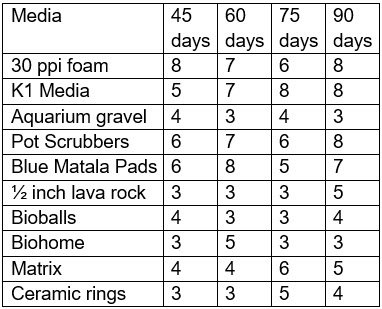
Best for Most Tanks: Coarse Sponge Foam (20-30 PPI)
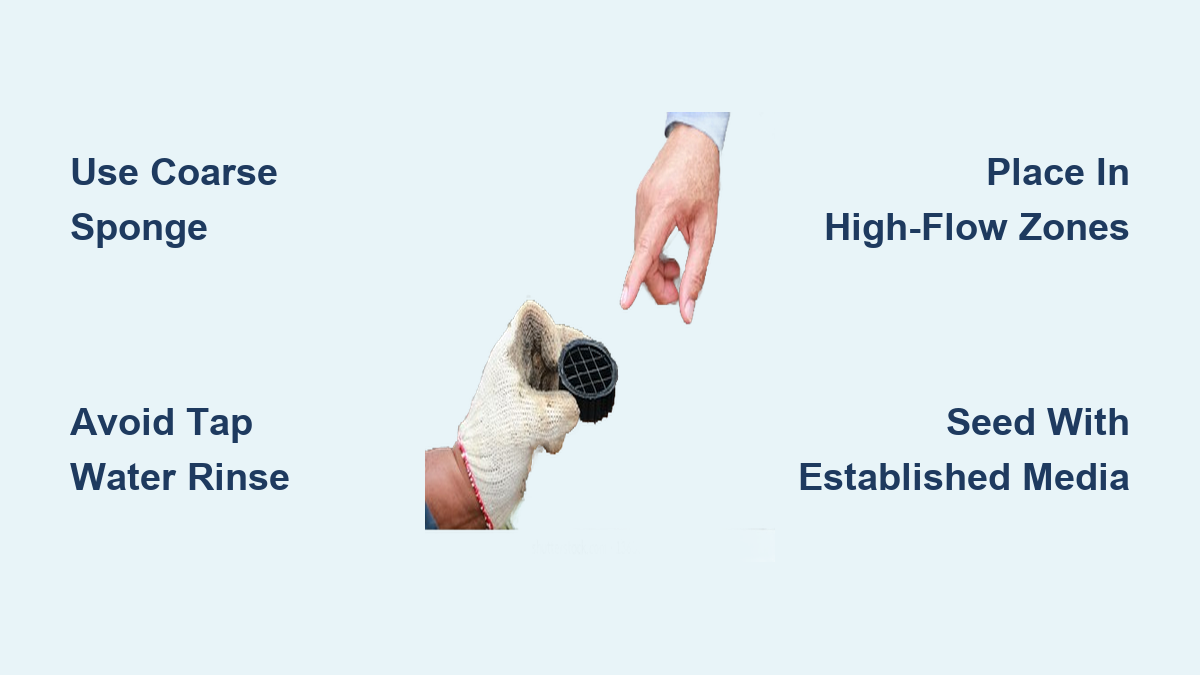
Why it wins: Unbeatable flow-to-surface-area ratio. Place it as the final media layer in canister filters or fill HOB baskets loosely. Rinse monthly in old tank water—never tap water—to preserve bacteria.
Budget Pick: Lava Rock or Pumice Stone
Use case: Inexpensive seeding for new tanks. Crush into 1cm chunks and place in filter baskets. Avoid substrate placement—low flow makes it ineffective. One aquarist reported stable cycled tanks using lava rock in sponge filters, but results vary with rock porosity.
High-Bioload Champion: Seachem Matrix or K1 Media
Critical tip: These engineered media work only in high-flow filters. Matrix needs canister filters to prevent clogging; K1 requires fluidized bed reactors. Never place in low-flow areas—they’ll trap debris without sufficient water movement.
Ceramic Rings: When (and How) to Use Them
Reality check: Only effective if:
– Placed in high-flow zones (not substrate)
– Cleaned monthly to prevent pore clogging
– Used with coarse pre-filters to block debris
Fluval Biomax’s “replace every 6 months” advice is sales-driven—ceramic doesn’t degrade. But if clogged, it becomes useless.
Sponge Filters: The All-in-One Solution
Nano tank fix: For tanks under 10 gallons, a sponge filter is your bio media. Wrap the air stone in coarse sponge, and position it where water movement creates gentle flow. No additional media needed.
Exact Filter Placement: Canister, HOB, and Sponge Setups
Why Substrate Placement Fails (Even in Nano Tanks)
Placing ceramic rings on your substrate seems logical—but it’s nearly useless. Beneficial bacteria need constant water flow, yet substrate zones have near-zero circulation. As one expert notes: “Very little bacterial growth occurs in the substrate due to lack of significant water flow.” The exception? Under-gravel filters with powerheads—but 99% of tanks lack this setup. If you try substrate media, expect ammonia spikes during feeding when waste overwhelms stagnant zones.
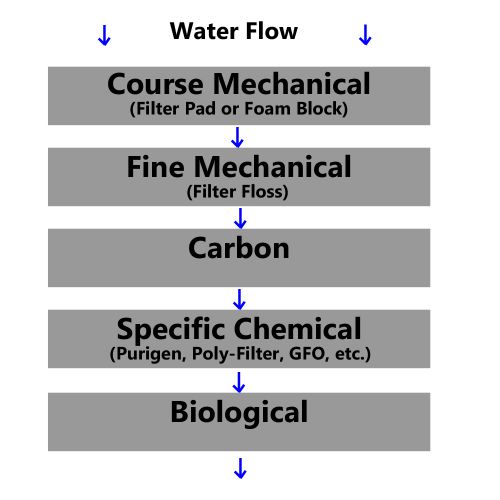
Canister Filter Layering: The 3-Stage Flow System
- Bottom basket: Coarse sponge (mechanical pre-filter)
- Middle basket: Chemical media like Purigen (optional)
- Top basket: Bio media (sponge or Matrix) filling 70% of space
Crucial: Never pack media tightly. Leave 30% airspace for water to circulate through the media—not around it. Overfilling reduces flow by 50%, starving bacteria.
Hang-On-Back (HOB) Filter Setup for Small Tanks
- Remove carbon pads (they absorb bacterial starters)
- Fill main chamber with coarse sponge, leaving 1″ gap at top
- Add 2-3 ceramic rings only if sponge compresses over time
Pro tip: Angle the outflow to create surface agitation—this oxygenates water flowing through your bio media.
Cycle Your Tank in 1 Week: Seed with Used Media or Fishless Method
Step-by-Step Fishless Cycling with Bio Media
- Dose ammonia to 2-4 ppm (use pure ammonia, not household)
- Add bacterial starter (Dr. Tim’s One & Only) directly to bio media
- Test daily: When 2 ppm ammonia drops to 0 within 24 hours, you’re cycled
Time saved: This takes 7-10 days versus 4-6 weeks without seeding.
The Instant Cycle: Transfer Bacteria from Established Tanks
How it works: Take 20% of used sponge from a healthy tank and place it in your new filter. Within 48 hours, bacteria colonize new media. One hobbyist cycled a 5-gallon nano tank in 3 days this way—zero fish loss.
Never do this: Adding “seeded” media to substrate. Bacteria die without filter flow—always place in active filtration paths.
6 Bio Media Mistakes That Crash Your Tank (Avoid These!)

#1: Washing Media in Tap Water
Chlorine destroys bacteria instantly. Fix: Rinse only in old tank water during water changes. Squeeze sponge gently—never scrub.
#2: Replacing All Media at Once
Removing old media kills your bacterial colony. Fix: Replace <30% monthly, or rotate sections weekly.
#3: Ignoring Flow Rate Requirements
Bio media needs 4-6x tank volume turnover hourly. Check: If water trickles through media, upgrade your pump.
#4: Placing Media After Chemical Filters
Carbon absorbs bacterial nutrients. Fix: Always position bio media after chemical stages.
#5: Over-Cleaning During Cycling
New tanks need dirty media. Rule: Don’t clean bio media until ammonia/nitrite tests hit zero.
#6: Using “Bio Balls” in Canister Filters
Their smooth surfaces host fewer bacteria than sponge. Swap: Replace with coarse foam for 3x more colonization.
Nano Tank Bio Media Special Protocol: Small Filters, Big Results
For tanks under 10 gallons, every millimeter counts. Do this:
– Use only coarse sponge (cut to fit filter baskets)
– Place filter outlet near surface for oxygen infusion
– Skip ceramic rings—they clog nano filters in days
– Clean monthly by swishing in tank water (never squeeze)
One Betta keeper stabilized a 3-gallon tank by replacing Fluval Biomax with folded sponge. Ammonia stayed at 0 ppm for 6 months—proof that flow trumps marketing claims.
Your bio media’s effectiveness hinges on two factors: water flow through accessible pores and careful bacterial preservation. Ditch ceramic rings for coarse sponge in high-flow zones, seed filters with established media, and never rinse in tap water. Within days, you’ll see fewer water changes, zero ammonia spikes, and fish thriving in crystal-clear water. Remember—the best bio media isn’t the most expensive; it’s the one where bacteria actually get fed. Start tonight by checking your filter flow: if water moves slowly through media, you’ve found your tank’s hidden toxin factory. Fix it, and you’ve built an ecosystem that runs itself.