How to Raise pH in Reef Aquarium: Easy Steps
Your reef tank’s pH reading just hit 7.9 again. You’ve watched sensitive corals like Acropora retract their polyps, and your pH test strips confirm it’s creeping lower each morning. This isn’t just a number—it’s a silent stressor threatening your entire ecosystem. Reef aquariums demand rock-solid stability between 8.1–8.4 pH, and chasing quick fixes with harsh chemicals risks crashing your system. The solution isn’t complicated: raise pH in reef aquarium by targeting alkalinity with surgical precision. This guide reveals exactly how to use baking soda—the reef keeper’s secret weapon—to restore balance without dangerous swings. You’ll learn why alkalinity is your pH’s guardian angel, avoid the top 3 mistakes that kill corals, and implement a dosing system that costs pennies per gallon.
Why Your Reef Tank’s pH Keeps Dropping Overnight
Low pH in reef aquariums rarely stems from a single cause—it’s usually a perfect storm of biological and environmental factors. Your tank’s pH naturally dips at night as corals and fish respire, releasing CO₂ into the water. But when levels stay stubbornly below 8.0, three culprits dominate:
How Household CO₂ Sabotages Your Reef’s pH
Indoor air often contains 2-3x more CO₂ than fresh ocean air, especially in sealed rooms. This excess CO₂ dissolves into your tank water, forming carbonic acid that drags pH down. You’ll notice the lowest readings just before dawn—the “morning dip.” Reef keepers using baking soda to raise pH often miss this root cause, wasting effort on temporary fixes. Pro Tip: Place a simple fan near your tank to blow across the water surface. This off-gasses CO₂ and can lift pH by 0.2–0.3 points overnight—no chemicals needed.
Why Alkalinity Is Your pH’s Safety Net
Alkalinity (measured in dKH) acts like a chemical shock absorber. When your alkalinity falls below 8 dKH, the water loses its ability to neutralize acids from fish waste and CO₂. This is critical: you cannot stabilize pH without first fixing alkalinity. Commercial “pH up” products often contain strong bases that cause dangerous spikes, while baking soda gently rebuilds your buffer capacity. Remember: chasing 8.4 pH with acid/base adjusters is like balancing on a tightrope—alkalinity supplementation is building a safety net.
Precise Baking Soda Dosing for pH Recovery

Blindly adding baking soda risks catastrophic pH swings that bleach corals. Follow this exact protocol to raise pH in reef aquarium safely:
Calculate Your Dose Like a Reef Chemist
Never guess—use this formula based on The Marine Aquarium Handbook:
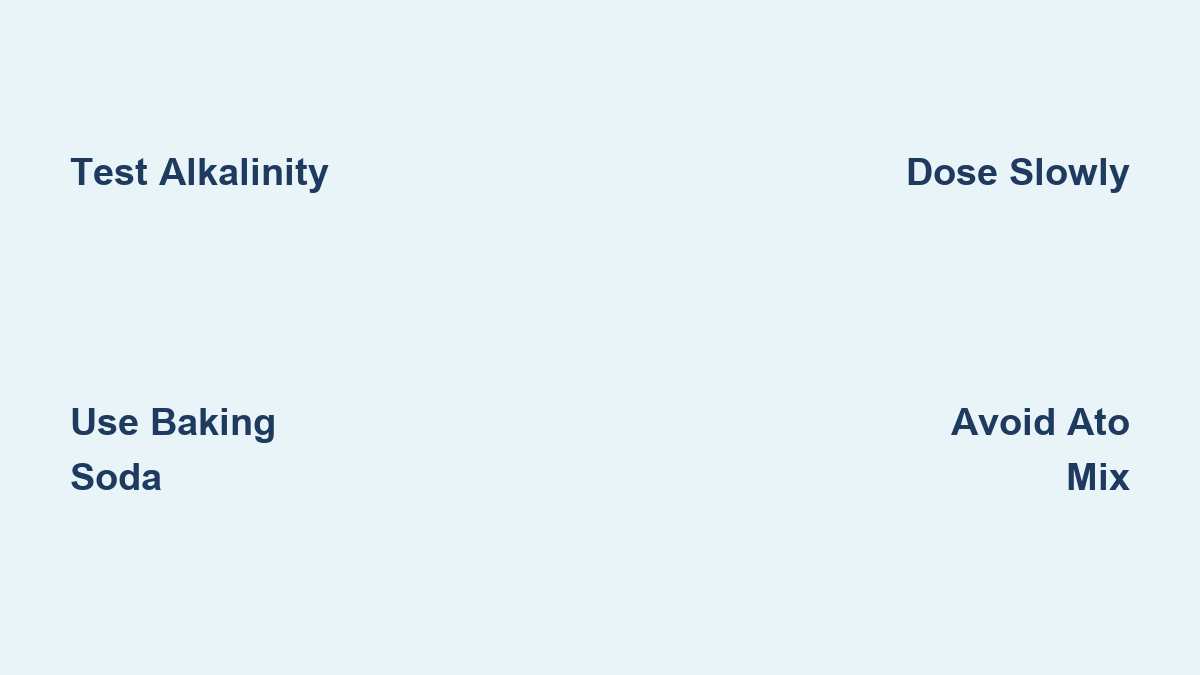
1. Test current alkalinity (e.g., 7 dKH). Target 9 dKH for stability.
2. Calculate needed increase: 9 – 7 = 2 dKH deficit.
3. For a 55-gallon tank (accounting for rock displacement ≈ 45 gallons water):
– 1 tsp baking soda raises 20 gallons by ≈1 dKH
– Dose = (45 gal ÷ 20 gal) × 2 dKH = 4.5 tsp
4. Critical: Split this into two 2.25 tsp doses 12 hours apart. Never exceed 1.5 dKH increase per day.
The RO/DI Water Mixing Method That Prevents Coral Burns
Never dissolve baking soda in tank water. Here’s why reef experts insist on RO/DI:
– Tank water contains calcium that reacts instantly with bicarbonate, creating localized hotspots of 9.5+ pH
– These micro-zones can dissolve snail shells and burn coral tissue in seconds
– Correct procedure:
1. Mix 1 tsp baking soda per cup of RO/DI water (not distilled—minerals matter)
2. Stir until completely clear—no cloudiness
3. Drip slowly into high-flow area of sump over 2+ hours
4. Wait 24 hours before retesting alkalinity
Critical Mistakes That Crash Reef Tanks
Even with perfect dosing, these errors undermine pH stability:
Why Your ATO System Is Sabotaging Your Efforts
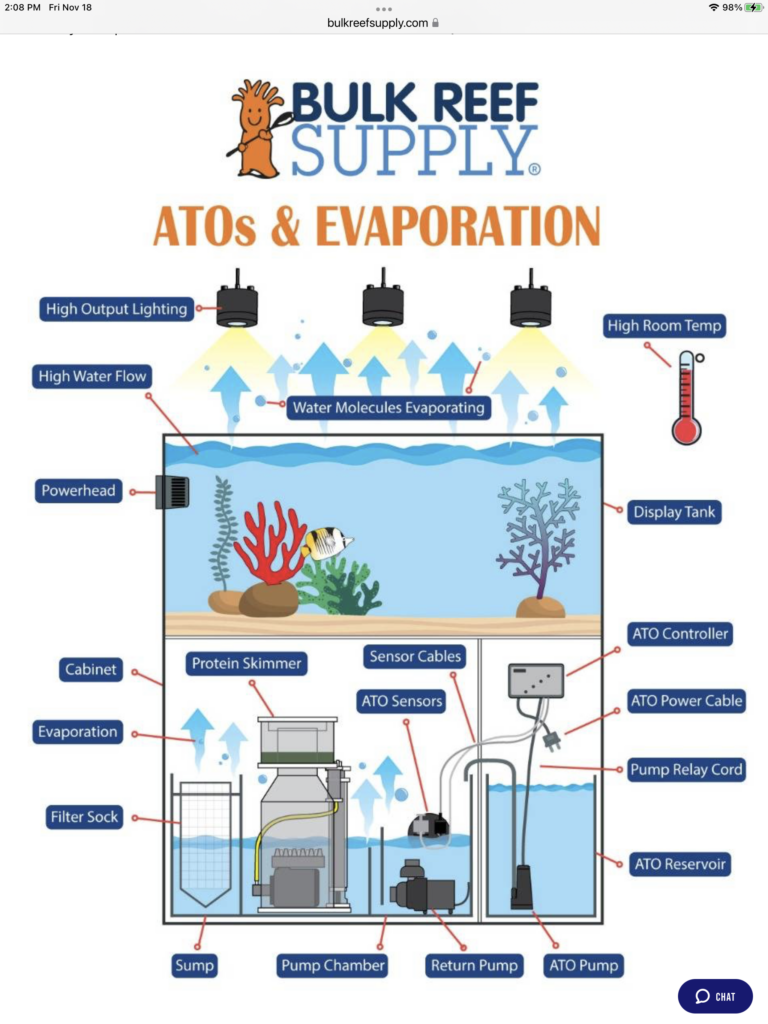
Adding baking soda to top-off water is a reef-killer. As water evaporates, baking soda concentrates in your reservoir. When your ATO dumps this supersaturated solution into the tank, alkalinity spikes 3–4 dKH in minutes—enough to bleach Montipora in hours. Fix: Only use pure RO/DI in top-off systems. If alkalinity drops between doses, increase kalkwasser drip rate instead.
The “pH Chasing” Trap That Causes Rollercoaster Parameters
Obsessively testing pH hourly leads to dangerous overcorrection. Reef keeper mudplayerx learned this when liquid buffer pushed his pH to 8.6 overnight after skipping kalkwasser for a week. Recovery protocol:
– Test alkalinity once daily—ignore pH fluctuations under 0.2 points
– If alkalinity is stable (8–11 dKH) but pH stays low, boost gas exchange
– Only dose baking soda if alkalinity falls below 7.5 dKH
Long-Term pH Stability Solutions Beyond Baking Soda
For permanent pH control, integrate these systems that work while you sleep:
Kalkwasser: The Automated pH Guardian
Drip saturated limewater (kalkwasser) as your top-off water. It delivers calcium and alkalinity while neutralizing CO₂. Setup guide:
1. Mix 1 tsp kalk powder per gallon RO/DI until no powder dissolves
2. Drip at 100–200 ml/hour into high-flow area
3. Key benefit: Automatically slows during high-pH daytime, speeds up at night—perfect pH stabilization
Refugium with Reverse Lighting: Nature’s CO₂ Scrubber
Mount a refugium with Chaetomorpha algae on a 12/12 schedule opposite your main tank lights. At night, when your display tank’s pH drops, the refugium’s photosynthesis consumes CO₂ and releases oxygen. Real-world result: Reef keeper ophiura saw morning pH rise from 7.8 to 8.2 using this method alone.
Baking Soda vs. Commercial Products: The Cost Breakdown
| Product | Cost per 1 dKH Increase (55 gal) | pH Impact | Risk Level |
|---|---|---|---|
| Grocery Baking Soda | $0.03 | Gradual | Low |
| Red Sea Alk Buffer | $1.20 | Immediate | Medium |
| B-Ionic Base Part | $0.85 | Gradual | Low |
Why baking soda wins: As pool technician pfitz44 discovered, a $10 Costco bag treats 20,000+ gallons—enough for most reef tanks for years. Commercial products often contain unnecessary buffers that cloud water. Exception: Use Kent Turbo Calcium if calcium also runs low, but baking soda remains the alkalinity MVP.
Advanced Technique: Supercharge Your Baking Soda
For faster results, transform baking soda into a stronger buffer:
1. Spread 1 cup baking soda on baking sheet
2. Bake at 300°F (150°C) for 60 minutes
3. Cool completely—this converts sodium bicarbonate to sodium carbonate
4. Dose carefully: 1 tsp now raises 20 gallons by 1.7 dKH (vs. 1.0 dKH raw)
5. Warning: Always pre-mix in RO/DI and drip slowly—this version reacts 30% faster
Final Note: Raising pH in reef aquarium isn’t about hitting a magic number—it’s about building resilience. Start tonight: test alkalinity, calculate your precise baking soda dose, and dissolve it in RO/DI water. Within 72 hours, you’ll see polyps expand fully and pH stabilize between 8.1–8.4. Never chase pH directly; let alkalinity be your guide. For ongoing success, pair weekly baking soda top-offs with a refugium on reverse lighting and kalkwasser top-off. Your corals won’t just survive—they’ll reward you with explosive growth and vibrant colors. Remember: the most stable reefs aren’t perfect, they’re patiently managed.