How to Tell If Ammonia Is High in Aquarium
Your guppies suddenly hover at the surface, gasping like they’re drowning. The danios dart erratically before hiding in corners. One fish lies motionless at the tank bottom while others lose interest in food. You check the water—it looks clear, the filter hums normally, and pH tests fine. But within days, you lose another fish. This isn’t mystery illness—it’s high ammonia in aquarium poisoning, the silent killer lurking in 80% of new tanks. Unlike cloudy water or algae blooms, ammonia gives subtle warnings before it’s too late. Knowing how to know if ammonia is high in aquarium water could save your entire ecosystem. In this guide, you’ll learn the exact behavioral red flags, physical symptoms, and emergency steps to reverse ammonia spikes before gills turn fatal red.
Fish Gasping at Surface: The First Emergency Alarm
When your fish crowd the water’s surface, gulping air like drowning swimmers, high ammonia in aquarium is almost certainly burning their gills. Ammonia destroys delicate gill tissue, preventing oxygen absorption even in well-oxygenated water. This isn’t normal behavior—it’s a life-or-death oxygen crisis.
Why Surface Gasping Means Immediate Action
- Time is critical: Fish can survive 24-48 hours in toxic ammonia, but gill damage becomes irreversible within hours
- Misdiagnosis risk: Beginners often mistake this for low oxygen and add airstones alone—without fixing ammonia, this delays the real solution
- Species variation: Active fish like danios show gasping first; hardier species like catfish may seem fine initially (as seen in the knowledge base case)
Pro Tip: Shine a flashlight sideways across the tank at night. If you see fish “piping” (mouths open wide at surface), test ammonia immediately—do not wait for other signs.
Spot Ammonia Burns Before Gills Turn Red

By the time you see crimson gills, ammonia levels have likely exceeded 1.0 ppm for days—pushing fish into critical condition. But earlier visual clues exist if you know where to look.
How to Check for Early Ammonia Damage
- Inspect gills with magnification: Use your phone camera zoom on resting fish. Healthy gills are pink; early ammonia burns show as faint red streaks along gill filaments
- Examine fin edges: Ragged, cloudy fin tips indicate chemical burns before full rot sets in
- Watch breathing rate: Count gill movements for 15 seconds. Over 60 breaths/minute in tropical fish signals distress (normal is 30-50)
Critical Warning: Red gills mean ammonia has destroyed oxygen-absorbing tissue. Even with emergency treatment, survival rates drop below 30% at this stage—act at the first behavioral sign.
Water Clarity Lies: Why You Can’t Trust Visual Cues
That milky haze or surface foam you associate with dirty water? It’s a late-stage symptom of ammonia spikes, appearing only after prolonged toxicity. Clear water doesn’t mean safe water—ammonia is invisible until it triggers biological crashes.
When Visual Signs Actually Matter
| Symptom | Ammonia Level Indicator | Urgency |
|---|---|---|
| Protein foam at surface | >2.0 ppm for 48+ hours | Critical – Immediate 70% water change |
| Milky water cloud | Nitrite spike following ammonia | High – Test within 1 hour |
| Green algae bloom | Chronic low-level ammonia | Medium – Test weekly |
Expert Note: The knowledge base commenter was right—”by the time you see red gills, damage is usually irreversible.” Never rely on water appearance. As one aquarist learned after losing guppies: “pH was fine, filter working, but no test kit” meant missing the invisible killer.
Emergency 5-Step Ammonia Crisis Protocol
When fish gasp or hide, follow this exact sequence. Every minute counts—ammonia above 0.5 ppm damages gills within 30 minutes.
Step 1: Confirm with Liquid Test Kit (Not Strips)
Dip strips often miss ammonia below 1.0 ppm. Squeeze liquid reagent into a water sample and compare to the chart in natural light. If it shows any color (even faint yellow), ammonia is present.
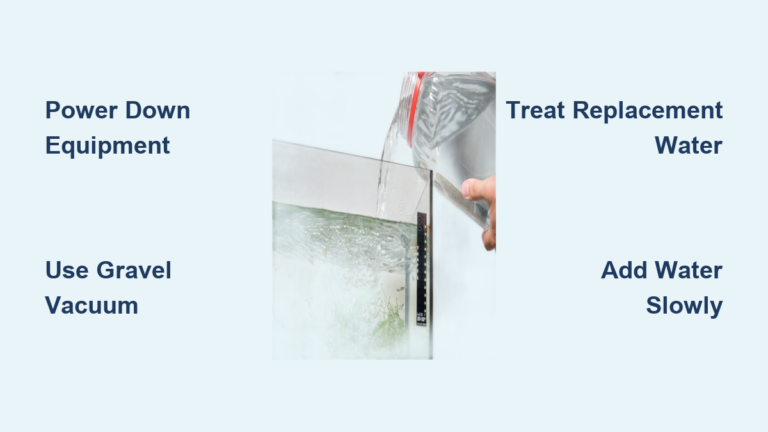
Step 2: Execute 50-70% Water Change
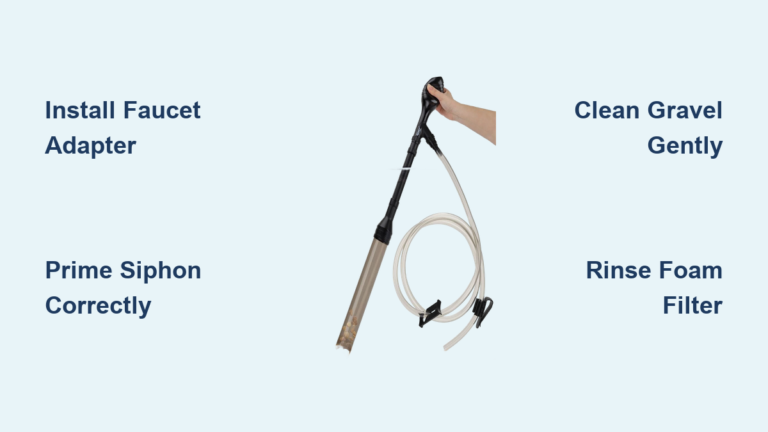
- Vacuum gravel thoroughly to remove decaying matter
- Match new water temperature within 1°F of tank water
- Never skip dechlorinator—chlorine destroys beneficial bacteria
Step 3: Detoxify with Seachem Prime
Dose immediately after water change (5ml per 50 gallons). Prime binds ammonia into non-toxic form for 48 hours—this buys time to fix root causes. As the knowledge base solution proved: “detoxifier for the next week saved the rest of the fish.”
Step 4: Maximize Oxygen Levels
- Point filter output toward surface to create rippling
- Add battery-powered airstone if power fails
- Remove 10% of water to lower surface tension
Step 5: Starve the Ammonia Source
Stop feeding for 48 hours. Every uneaten flake feeds the ammonia problem. Resume with half-portions once ammonia reads 0 ppm.
Time Estimate: Full process takes 25 minutes. Delaying even one step risks permanent gill damage.
Stop Ammonia Before It Starts: 4 Non-Negotiable Prevention Tactics
The pet store employee who claimed “three days is long enough to cycle” doomed that new tank. Cycling takes 4-8 weeks—no shortcuts. Implement these to keep ammonia at 0 ppm.
Never Skip the Full Nitrogen Cycle
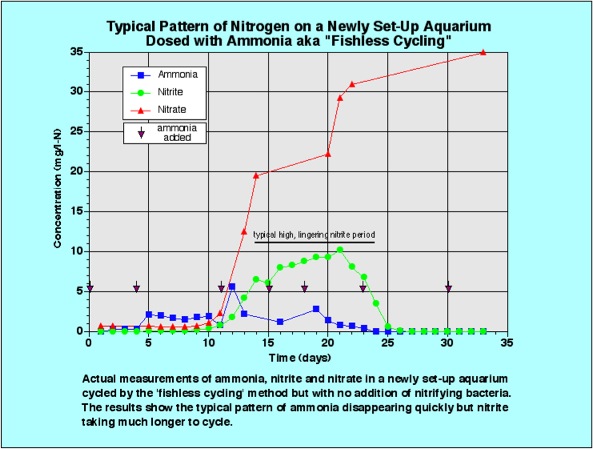
– Fishless cycling: Dose pure ammonia (5ppm) for 4 weeks while monitoring nitrites
– Accelerate safely: Use Seachem Stability (not “bacteria in a bottle” quick fixes)
– Test daily during cycling: Ammonia must hit 0 ppm before adding fish
Stock Slow, Feed Less
- Follow the “inch-per-gallon” rule only for adult fish size
- Feed once daily—what fish eat in 90 seconds
- Remove uneaten food after 2 minutes
Filter Maintenance That Preserves Bacteria
- Rinse media in tank water (not tap) during water changes
- Replace <30% of media at once
- Never clean all components simultaneously
Pro Tip: Keep a spare cycled filter sponge in your tank. If ammonia spikes, drop it into the main filter to instantly boost bacteria.
Why “My Test Shows No Ammonia But Fish Are Gasping” Happens
You’re not imagining it—fish gasping with 0 ppm ammonia usually means one of two hidden threats:
Nitrite Poisoning Mimics Ammonia
Nitrite (NO2) blocks oxygen transport in blood. Test immediately—levels above 0.5 ppm require the same emergency steps as ammonia. Common in new tanks mid-cycle.
Oxygen Starvation from Temperature
Warm water holds less oxygen. If tank exceeds 82°F (28°C), add an airstone even if ammonia tests safe. This explains why “danios and catfish seemed fine” while guppies struggled—their oxygen needs differ.
Critical Insight: Always test ammonia, nitrite, and nitrate together. A single test gives false confidence.
Final Lifesaving Takeaways
How to know if ammonia is high in aquarium water isn’t about waiting for dead fish or cloudy water—it’s reading the subtle language of distressed fish. Surface gasping, lethargy, and rapid gill movement are your early warnings. When these appear, act within hours: confirm with liquid test, change 50-70% water, dose Seachem Prime, and stop feeding. Prevention hinges on full cycling (never trust “quick cycle” claims), conservative stocking, and weekly 20% water changes. Remember the aquarist who saved their guppies: “picked up Seachem Prime and bacteria to cycle fully while fish were present.” That combination of emergency detox and patient cycling is the gold standard. Keep ammonia test kits stocked like fire extinguishers—useless until you desperately need them. Test weekly, act at the first sign, and your tank will stay at the only safe level: 0 ppm.