How to Remove Dragonfly Larvae from Aquarium
You spot one lone shrimp missing. Then another. Suddenly, your thriving Neocaridina colony vanishes overnight. The silent assassin? A dragonfly or damselfly nymph lurking in your aquarium plants. These aquatic predators don’t announce their arrival—they decimate fish fry, shrimp, and snails while you sleep. Left unchecked, a single nymph can obliterate your entire miniature ecosystem in days. This guide delivers the exact identification methods, removal protocols, and foolproof prevention strategies you need to save your tank. Learn how to spot these stealth invaders within 24 hours and implement the only three proven solutions that won’t kill your beneficial bacteria or beloved invertebrates.
Dragonfly vs. Damselfly Nymphs: Spotting the Stealth Predators in Your Tank

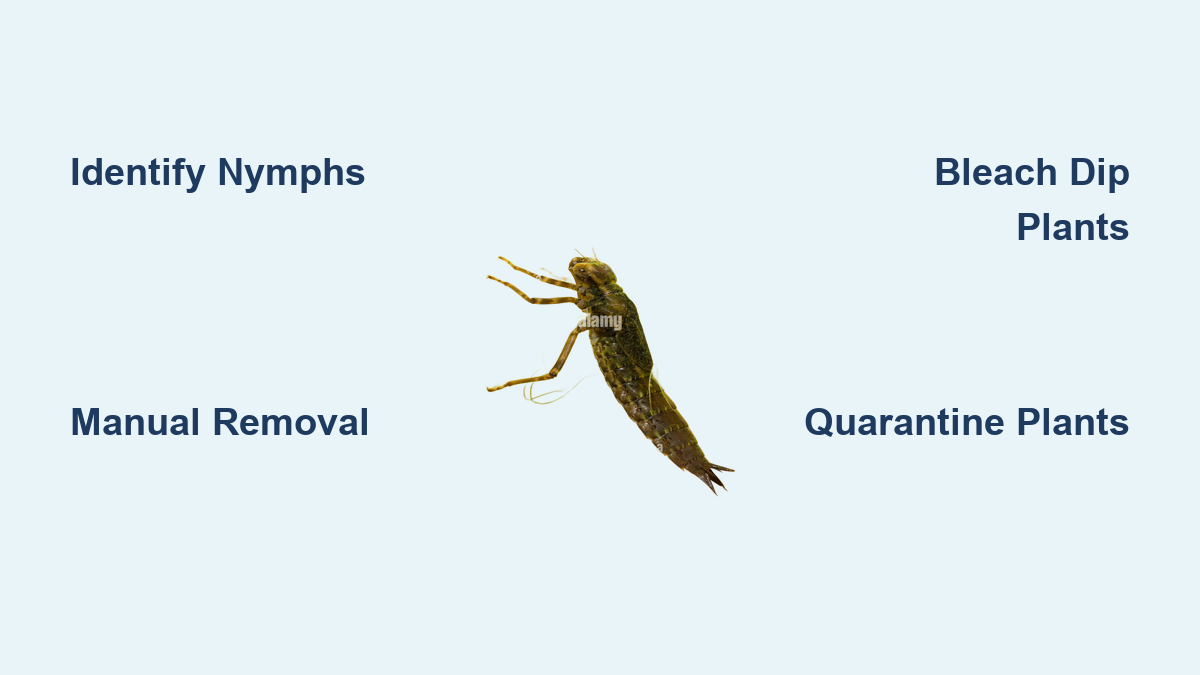
Your first defense is accurate identification. Mistaking these nymphs for harmless insect larvae guarantees disaster. Dragonfly nymphs (Anisoptera) are stocky, with large eyes positioned on top of their heads and a hulking, almost prehistoric appearance. They move with sudden, jerky motions when disturbed. Damselfly nymphs (Zygoptera) are slender stick-figures with eyes on the sides of their heads, often swaying gently like aquatic vegetation. Both share the deadly “mask”—a hinged lower jaw that shoots forward at lightning speed to impale prey. Check leaf axils of Cabomba or Anacharis, behind filter intakes, and along driftwood seams. Shine a flashlight across the substrate at night; their glassy eyes reflect light like tiny stars. If you see a motionless “stick” lurch forward to snatch a shrimp, you’ve confirmed the invasion.
Why One Nymph Equals an All-Out Tank Emergency (Not a Curiosity)
This isn’t a “cool find” to observe—it’s an imminent catastrophe. Dragonfly and damselfly nymphs are obligate carnivores with insatiable appetites. A single nymph consumes 5-10 baby shrimp per day while growing. They target your most vulnerable livestock first: neon tetra fry, cherry shrimp juveniles, and ramshorn snail babies disappear within hours of hatching. Their hunting strategy is devastatingly efficient—they remain statue-still for hours, then strike with their extendable jaw in 15 milliseconds, faster than a shrimp can react. Within 72 hours, a single nymph can reduce a 50-shrimp colony to near extinction. Unlike pest snails, these predators offer zero ecological benefit to your closed system. Every minute you delay action, more livestock dies.
How Dragonfly Larvae Sneak Into Your Aquarium (99% Come From Plants)

Your tank didn’t spontaneously generate these invaders. They arrived as hidden stowaways, almost always via aquatic plants. Outdoor-grown specimens like Hygrophila, Hornwort, or pond-sourced Anacharis harbor eggs laid directly into plant stems by adult insects. Newly hatched nymphs (as small as 2mm) cling to leaf undersides or hide in the hollow stems of Cabomba. Less commonly, they hitchhike on damp driftwood collected from ponds or in “free” snail-infested plant bundles. Crucially, eggs survive standard shipping conditions—they don’t require water to develop. If you added new plants within the last 4-6 weeks and now see mysterious livestock losses, nymphs are the prime suspect. Never assume store-bought plants are safe; even reputable vendors source from outdoor ponds.
Immediate Nymph Removal: Your 3-Step Emergency Protocol
Spot one nymph? Assume multiple are present. Execute this sequence within 24 hours to prevent total collapse.
Manual Extraction Under Bright Light (Night is Best)
Nymphs are nocturnal hunters. Conduct removal after lights-out using a bright flashlight. Equip yourself with:
– Long curved aquascaping tweezers (for precision)
– A 10ml turkey baster (for dislodging hidden nymphs)
– A dedicated “quarantine cup” filled with tank water
Method: Shine light parallel to glass to reveal shadows. Target leaf axils, filter tubes, and substrate crevices. Use the turkey baster to blast water behind decorations—nymphs often cling tightly but release when startled. Tweeze firmly behind the head (avoid crushing). Submerge captured nymphs immediately in 90°F tank water to prevent escape. Repeat nightly for 7 days minimum. Pro Tip: Add 1 tablespoon of aquarium salt per gallon to your tank water for 24 hours—this stresses nymphs, making them more active and easier to spot.
The Only Safe Chemical-Free Plant Treatment: Bleach Dip Protocol
Never use salt dips or insecticides—they fail against nymphs and endanger invertebrates. Only a diluted bleach solution reliably kills eggs and larvae on hardscape. For plants:
- Prepare a 1:20 bleach solution (1 part unscented household bleach to 19 parts dechlorinated water)
- Submerge only the infested plants for 90-120 seconds—no longer
- Agitate gently to ensure full coverage
- Rinse thoroughly under running dechlorinated water for 5 minutes
- Soak in dechlorinator solution (e.g., Seachem Prime) for 10 minutes
- Quarantine plants in a bare tank for 7 days before reintroduction
Critical Warning: Test on one leaf first. Delicate plants like Anubias may brown. Destroy heavily infested plants immediately—saving them risks your entire tank.
Total Tank Reset: The Last-Resort Nuclear Option
Only attempt if nymphs persist after 2 weeks of manual removal. Requires complete livestock evacuation:
- Move all fish/shrimp to a cycled hospital tank
- Remove every plant (discard them—do not save)
- Soak rocks and driftwood in 10% bleach solution (1:9 ratio) for 15 minutes
- Scrub tank glass with undiluted vinegar (never bleach)
- Replace 100% of substrate
- Recycle the tank from scratch
This process takes 4-6 weeks to re-establish. Reserve it for severe infestations where livestock losses exceed 50%.
Preventing Future Invasions: Your 100% Effective Quarantine System

Prevention isn’t optional—it’s your only sustainable defense. Implement this three-tiered protocol for every new plant.
Step 1: Mandatory 4-Week Plant Quarantine Tank
Maintain a dedicated 5-gallon quarantine tank with:
– Bare-bottom glass
– Heater (78°F)
– Sponge filter seeded from your main tank
– No livestock (only plants)
Place all new plants here for 28 days minimum. Nymphs hatch within 3 weeks—any that emerge die without prey. Check daily at night with a flashlight. Only move plants to your display tank after a full month with zero nymph sightings.
Step 2: Pre-Quarantine Bleach or Alum Dip
Before plants enter quarantine, dip them:
Bleach Dip (Most Effective):
1:20 bleach solution for 90-120 seconds → thorough rinse → dechlorinator soak
Alum Dip (Plant-Safe Alternative):
3 tablespoons alum powder per gallon of water for 3 hours → thorough rinse
Never skip rinsing—residual chemicals will kill shrimp instantly.
Step 3: Surgical Visual Inspection Before Purchase
At the store, demand to inspect plants under bright light. Use a 10x magnifying glass to check:
– Stem joints of Hornwort
– Undersides of Anubias leaves
– Root balls of potted plants
– Hollow stems of Cabomba
Reject any plant with visible “sticks” or tiny, jointed creatures. When in doubt, don’t buy it.
Critical Dragonfly Larvae Questions Answered (No Fluff)
Will my betta or guppies eat the nymphs?
Larger fish like adult angelfish might occasionally nip at nymphs, but this is unreliable and dangerous. Nymphs easily evade fish and will continue hunting fry and shrimp. Never rely on fish for control—your shrimp colony will be gone before fish take interest.
Can dragonfly larvae harm humans?
No—they lack biting mouthparts for human-scale prey. However, their ecological impact on your tank can cost hundreds in lost livestock and tank restarts. The real danger is to your aquatic investment, not you.
Why don’t cucumber or food traps work?
Unlike pest snails, dragonfly nymphs ignore stationary food. They’re ambush predators that only strike live, moving prey. Traps using shrimp bait fail because nymphs detect movement remotely—they won’t enter confined spaces for food. Manual removal is the only reliable method.
Should I release captured nymphs outdoors?
Only if you have a permanent local pond already hosting native dragonflies. Releasing non-native species disrupts ecosystems. Never release into puddles or temporary water—they’ll die. In most cases, euthanize captured nymphs by freezing to protect your tank.
Your aquarium’s survival hinges on two actions: rigorous plant quarantine and immediate manual removal at the first sign of trouble. Nymphs won’t starve out—they’ll eat your entire shrimp colony first. Implement the bleach dip protocol on every new plant, maintain a bare quarantine tank, and inspect nightly with a flashlight for the next week. Within 14 days of strict protocol, your tank will be nymph-free. Remember: prevention takes 10 minutes per plant; losing your tank takes seconds. Start your quarantine tank today—your next shipment of Anacharis could be carrying silent assassins. For ongoing protection, bookmark this guide and inspect new plants under magnification before they ever touch your tank water.