55 Gallon Freshwater Aquarium Stocking Ideas (2026 Guide)
Your 55-gallon freshwater aquarium isn’t just another tank—it’s your gateway to creating a thriving underwater ecosystem. This versatile size offers enough space for diverse communities while remaining manageable for most hobbyists. The right stocking plan transforms your tank from a simple fish container into a dynamic, balanced aquatic world where every inhabitant thrives.
Many beginners make the critical mistake of overstocking based on the outdated “one inch per gallon” rule, only to face cloudy water, stressed fish, and constant maintenance headaches. With proper planning, your 55-gallon tank can become a stunning centerpiece that brings years of enjoyment. In this guide, you’ll discover proven 55 gallon freshwater aquarium stocking ideas that create harmony between species while minimizing maintenance issues.
Why Your 55-Gallon Tank Needs Strategic Stocking
Debunking the 1-Inch-Per-Gallon Stocking Myth
That old “one inch of fish per gallon” rule? Toss it out immediately. This oversimplified guideline fails spectacularly for a 55-gallon freshwater aquarium because it ignores three critical factors: body shape, activity level, and waste production. A 10-inch angelfish produces significantly more waste than ten 1-inch neon tetras, and active swimmers like danios need more horizontal space than sedentary fish.
Your actual stocking capacity depends on multiple variables. A heavily planted tank with excellent filtration can support more fish than a bare tank with minimal filtration. Always research each species’ adult size—many fish sold as juveniles double or triple in size. The true test of proper stocking? Crystal clear water, active fish with intact fins, and stable water parameters between weekly maintenance.
Critical Pre-Stocking Requirements for Your 55-Gallon Tank
Before adding a single fish, your 55-gallon freshwater aquarium must complete a full nitrogen cycle. This biological process establishes beneficial bacteria that convert deadly ammonia into less toxic compounds. Rushing this step causes the #1 killer of new aquariums: ammonia poisoning.
Here’s what success looks like: ammonia and nitrite readings at 0 ppm, with detectable nitrates (20-40 ppm). This cycling process typically takes 4-8 weeks. Add fish gradually—no more than 2-3 per week—to allow your bacterial colony to expand. Test your water twice weekly during this critical period using a liquid test kit (not strips) for accurate readings.
Five Winning 55-Gallon Freshwater Aquarium Stocking Ideas

Create a Balanced Community with Top, Mid, and Bottom Dwellers
This classic approach maximizes your tank’s vertical space while creating natural interactions. Start with one pair of Pearl Gouramis (avoid males together—they’ll fight) as your centerpiece. Their iridescent spots and peaceful nature make them perfect for community tanks.
Add 15 Rummy Nose Tetras for mid-water activity—their synchronized schooling creates mesmerizing movement. For the bottom level, 12 Sterbai Corydoras provide constant entertainment with their whisker-like barbels searching for food. Complete the ecosystem with two Bristlenose Plecos (under 6 inches) and 8 Amano Shrimp for algae control.
Pro Tip: Always feed sinking pellets specifically for bottom dwellers before turning off the lights—this ensures your corydoras and plecos get enough food before competing with mid-water fish.
Build a Centerpiece Cichlid Community That Thrives

A 55-gallon tank offers perfect space for showcasing dwarf cichlids without aggression issues common in smaller tanks. Choose either a pair of German Blue Rams (requires stable 82-86°F water) or a trio of Electric Blue Acaras (more hardy but slightly larger).
Support your centerpiece with 25 Cardinal Tetras as dither fish—their constant movement signals safety to cichlids. Add 8 Kuhli Loaches to occupy the substrate layer with their eel-like bodies, plus 6 Ember Tetras for top-level activity. The secret to success? Provide at least 6 hiding spots using driftwood and rocks to establish territories.
Warning: Never mix African and South American cichlids—they require completely different water parameters and will fight to the death.
Design an Active River Tank for High-Energy Fish
Recreate a flowing river environment with this dynamic stocking plan. Install a powerhead to create strong current, then add 30 Giant Danios—their torpedo-shaped bodies cut through water with incredible speed. Mix in 15 White Cloud Mountain Minnows for contrasting color and slightly calmer movement.
The star of this setup? 8 Hillstream Loaches clinging to rocks in the current. These fascinating “butterfly plecos” need high oxygen levels (use an air stone) and cool water (64-75°F). Add smooth river rocks and minimal plants like Anubias to complete the natural riverbed aesthetic.
Time Estimate: Cycling this high-bioload tank takes 6-8 weeks. Start with just danios and minnows, adding hillstream loaches last since they’re sensitive to water quality fluctuations.
Showcase a Single Spectacular Species
Sometimes simplicity creates the most stunning displays. For maximum visual impact, dedicate your entire 55-gallon to 50+ Chili Rasboras—their collective glow creates a living lava lamp effect. Or create drama with one male and four female Angelfish, allowing natural hierarchy to develop.
Pro Tip: When keeping single-species tanks, research breeding behaviors. Angelfish pairs form strong bonds but become highly territorial during spawning—be prepared to separate if aggression occurs.
Craft a Planted Dutch Aquascape with Complementary Fish
In this plant-focused setup, fish play supporting roles. Start with dense plant coverage (70%+ of tank), then add 20 Green Neon Tetras whose blue-green hues complement red-toned plants. Include 10 Pygmy Corydoras to clean the substrate without disturbing delicate roots.
Critical Mistake to Avoid: Never add goldfish, Buenos Aires tetras, or silver dollars to planted tanks—they’ll devour your aquatic garden within days. Stick to small, non-plant-eating species like rasboras and tetras.
Essential Equipment Upgrades for Your Stocked 55-Gallon Tank
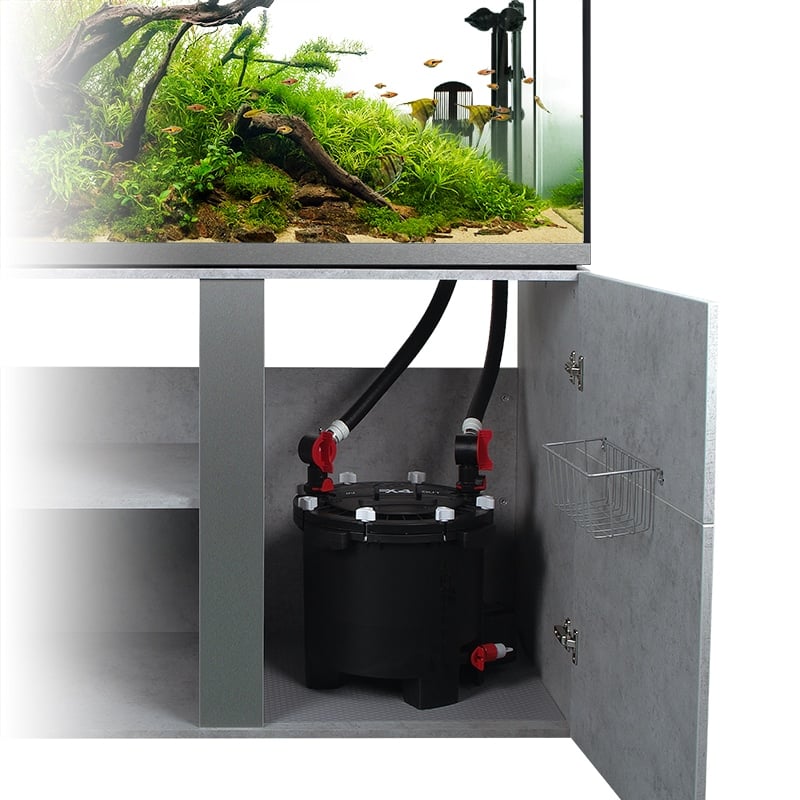
Your filter needs serious upgrading for a properly stocked 55-gallon freshwater aquarium. That standard HOB filter? Replace it with a canister system rated for 75+ gallons (like the Fluval FX4) to handle the bioload. Add a sponge pre-filter to protect small fish like neon tetras from getting sucked into intakes.
Must-Have Upgrade: Install two 200W heaters (set 2 inches apart) for stable temperature—single heaters often struggle in 55-gallon tanks during winter. Set your thermostat 1-2 degrees below ideal to prevent dangerous overheating if one fails.
Common Stocking Disasters to Avoid
The “Innocent” Fish That Will Ruin Your Tank
That adorable Common Pleco you see at the store? In six months, it will be an 18-inch monster producing waste equivalent to 20 tetras. Similarly, Clown Loaches reach 12 inches—they need 100+ gallons as adults. Always research adult size before purchase.
Red Flag Species: Any fish described as “great for beginners” that grows over 8 inches. This usually means it’s destructive to plants or tank mates as it matures.
The Overstocking Trap Even Experts Fall Into
Adding “just one more” fish seems harmless until your nitrate levels spike weekly. A properly stocked 55-gallon tank requires only 25-30% water changes weekly. If you’re doing 50% changes just to keep nitrates below 40 ppm, you’ve overstocked.
Visual Cue: Watch for “gasping” at the surface or excessive lethargy—these indicate oxygen depletion from overstocking. Immediately reduce feeding and increase aeration.
Pro Maintenance Routine for Stocked 55-Gallon Tanks
Skip the generic “change 25% weekly” advice—your maintenance should match your specific stocking plan. Heavily stocked tanks need 30% water changes every 5 days with gravel vacuuming, while species-only setups might only require 20% changes weekly.
Game-Changing Tip: Add a weekly dose of liquid bacteria supplement after water changes—it boosts your biological filtration by 40%, reducing ammonia spikes when adding new fish. Test your water every 3 days for the first month after stocking.
Your 55-gallon freshwater aquarium holds incredible potential—but only with strategic stocking. Remember that the most stunning tanks prioritize fish health over visual density. Start with fewer fish than you think you can handle, observe their interactions, and only add more after 4-6 weeks of stable parameters. This patient approach creates a self-sustaining ecosystem where your fish don’t just survive, but thrive with natural behaviors on full display. The true measure of successful 55 gallon freshwater aquarium stocking ideas isn’t how many fish you can fit, but how vibrantly each one lives.