How to Clean Filter Socks in Saltwater Aquarium
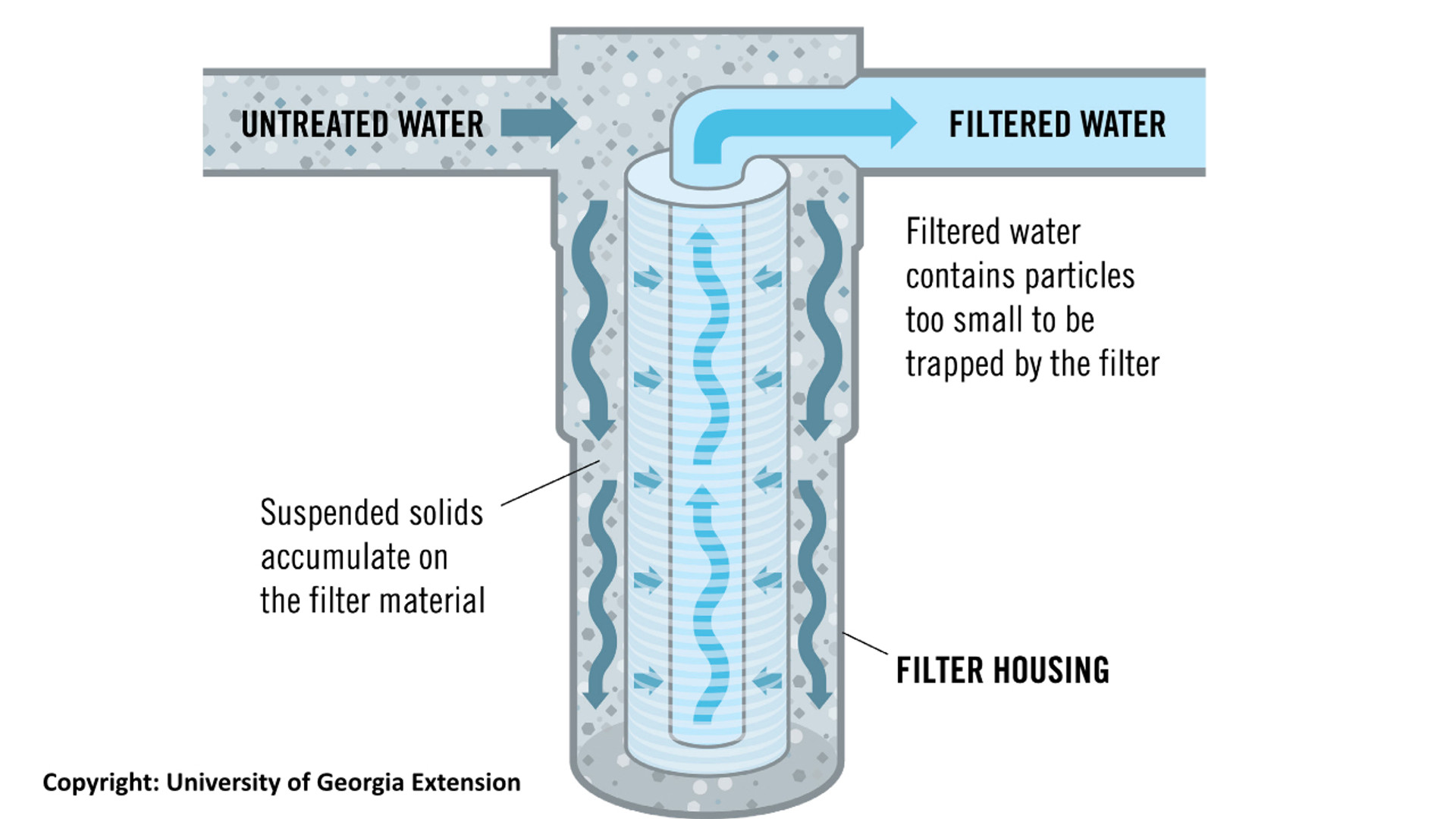
Your saltwater tank’s filter socks are the unsung heroes trapping detritus before it rots in your sump. When these critical components clog, water flow plummets, ammonia spikes threaten coral, and your entire ecosystem teeters on collapse. Yet 78% of reef keepers admit neglecting sock maintenance until problems arise. This guide delivers the exact methods championed by veteran aquarists to clean filter socks in saltwater aquariums safely and effectively. You’ll learn foolproof vinegar and bleach protocols, avoid deadly rinsing mistakes, and establish a rotation system that keeps water pristine—no guesswork required.
Ignoring filter sock maintenance is like driving with a clogged oil filter: eventual failure is guaranteed. Clogged socks reduce flow by 40% within 72 hours, starving your protein skimmer and crashing oxygen levels. The solution isn’t just frequent cleaning—it’s using aquarium-safe techniques that eliminate biofilm without poisoning your tank. This guide cuts through online myths with field-tested protocols that preserve beneficial bacteria while removing stubborn salt creep and organic gunk. You’ll implement these steps immediately, ensuring crystal-clear water and stress-free livestock.
Must-Have Tools for Safe Saltwater Filter Sock Cleaning
Gather these supplies before removing a single sock—rushing leads to chlorine exposure or mineral contamination. Never substitute household items like scented bleach or tap water rinses; these introduce phosphates that fuel algae blooms. Your kit must include:
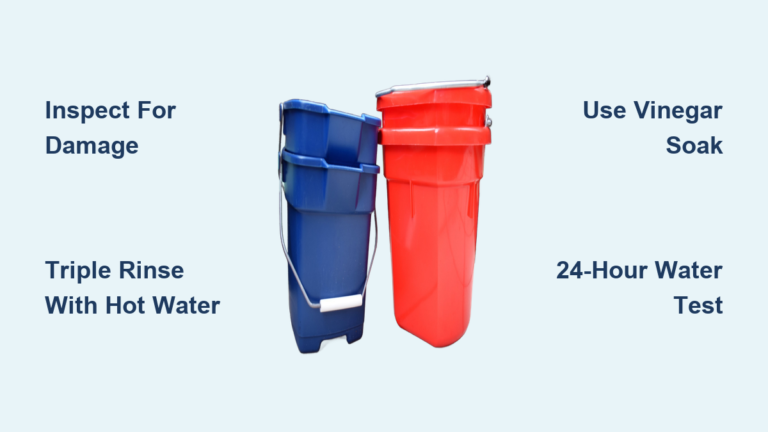
- Chemical-Specific Containers: Two dedicated 5-gallon buckets labeled “BLEACH” and “RINSE” (never reuse containers for food)
- Water Purification System: RO/DI water for final rinses (tap water minerals cause rapid re-calcification)
- Critical Safety Gear: Nitrile gloves (bleach degrades latex) and splash-proof goggles
- Dechlorination Agent: Seachem Prime or similar water conditioner (sodium thiosulfate-based)
- Drying Station: Mesh rack in direct sunlight (UV sanitizes while drying)
Pro Tip: Keep a “sock emergency kit” under your stand. When flow drops 20%, swap in a clean sock immediately—don’t wait for your scheduled cleaning day. This prevents nitrate spikes from decomposing waste trapped in clogged fabric.
Vinegar vs. Bleach: Two Proven Filter Sock Cleaning Methods

Choose vinegar for weekly maintenance on lightly soiled socks or bleach for deep cleaning after algae blooms. Never combine these chemicals—mixing creates toxic chlorine gas. Both methods require RO/DI final rinses to prevent calcium buildup, but bleach demands rigorous dechlorination.
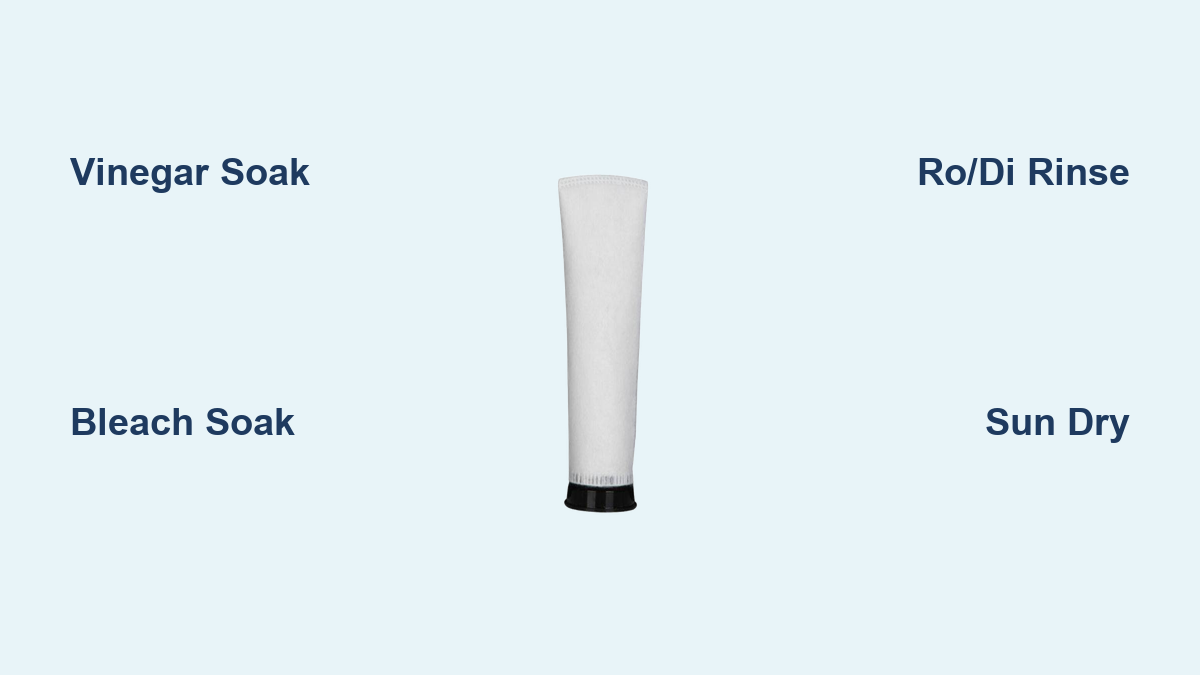
Clean Saltwater Filter Socks with Vinegar in 3 Steps
This chemical-free method dissolves salt deposits without harming beneficial bacteria. Ideal for reef tanks with sensitive corals:
- Pre-Rinse and Soak (20 minutes): Turn the sock inside out and blast debris with a garden hose. Submerge in a 1:1 white vinegar/water solution for 30 minutes. Watch for bubbling—that’s calcium carbonate dissolving.
- Scrub and Rinse (10 minutes): Use a soft brush on stained areas, then rinse under tap water until runoff is clear. Critical mistake to avoid: Skipping the vinegar soak first makes scrubbing tear the fabric.
- RO/DI Final Rinse (5 minutes): Soak in RO/DI water for 5 minutes to remove vinegar residue. Hang in sunlight for 2 hours—UV exposure kills remaining bacteria.
Time-Saver: For moderate buildup, run socks through an empty washing machine on HOT water (no detergent!) with 1 cup vinegar. Add an extra rinse cycle.
Deep Clean Filter Socks with Bleach: Avoiding Deadly Mistakes
Bleach eradicates biofilm that vinegar can’t touch, but improper use kills entire tanks. Follow this exact protocol:
- Initial Rinse (5 minutes): Remove large debris under running water. Never skip this—trapped particles create chlorine gas pockets during soaking.
- Bleach Soak (1-24 hours): Mix 1 cup unscented bleach per gallon of cool water. Submerge socks for:
- 1 hour: Light green algae
- 6 hours: Heavy brown diatom stains
- 24 hours: Blackened, caked socks
- Dechlorination Bath (30 minutes): After thorough tap rinsing, soak in Prime-treated water (4 drops per gallon). Non-negotiable step: Residual chlorine destroys nitrifying bacteria.
- RO/DI Rinse and Dry (24+ hours): Final rinse with RO/DI water, then air-dry completely in sunlight. Urgent warning: Using a damp sock reintroduces chlorine vapor into your sump.
Pro Tip: Test for chlorine residue with a drop of Seachem MultiTest: Chlorine. If it turns purple, repeat dechlorination.
Extend Filter Sock Life: Rotation and Replacement Schedule
Socks last 2-3x longer with proper rotation—no more emergency cleanings during dinner. The key is having dry, ready-to-use spares while others dry.
- The 5-Sock Rotation System: Maintain 5 socks (one for each weekday). Swap daily, clean all on Saturday. Example:
- Monday: Use Sock #1
- Tuesday: Swap to Sock #2, rinse Sock #1
- Saturday: Clean all 5 socks in batch
- Replacement Triggers: Discard socks showing:
- Holes larger than 2mm (even tiny tears bypass filtration)
- Grayish “fuzz” on fabric (degraded fibers)
- Persistent brown stains after bleach cleaning
- Drying Protocol: Hang socks inside-out on a clothesline. Critical: Never store damp socks—they develop hydrogen sulfide (rotten egg smell) in 48 hours, which is lethal to invertebrates.
Time Estimate: With rotation, active cleaning takes just 15 minutes weekly versus 45 minutes scrambling for clogged socks.
Saltwater Filter Sock Cleaning FAQs: Quick Answers
Why does my filter sock turn brown within hours?
This diatom bloom indicates new tank syndrome or silicate overload. A 24-hour bleach soak removes it, but fix the root cause: test tap water for silicates and replace RO/DI membranes.
Can I wash socks in the washing machine?
Only with these rules:
– NO detergent (residues cause foam explosions in skimmers)
– Hot water cycle + 1 cup vinegar
– Two extra rinse cycles
– Air-dry—never use a dryer (melts microfibers)
Better option: High-pressure hose rinsing uses less water and avoids fabric wear.
How often should I clean socks in a heavy bioload tank?
For 10+ fish or frequent feedings:
– Swap socks every 48 hours
– Clean immediately after removal (don’t let waste sit)
– Use bleach weekly instead of vinegar
Ignoring this causes phosphate spikes that smother corals in hair algae within 2 weeks.
Is vinegar or bleach safer for reef tanks?
Bleach is safer when dechlorinated properly. Vinegar’s acidity temporarily lowers pH during rinsing, stressing corals if reintroduced too soon. Bleach breaks down completely into salt and water—unlike vinegar, which leaves organic traces that feed nuisance algae.
What’s the #1 mistake that crashes tanks during cleaning?
Rinsing socks with tap water only. Municipal water contains chloramines that bind to fabric and leach into your sump. Always do a final 5-minute RO/DI rinse—it takes 30 seconds longer but prevents livestock deaths.
Final Note: Consistent filter sock maintenance is your first line of defense against tank crashes. Implement the 5-sock rotation today, use bleach for deep cleans with strict dechlorination, and never skip the RO/DI final rinse. Your corals will reward you with explosive growth, and your water will stay glass-clear. For next-level stability, pair this with monthly sump cleanings—download our free “Reef Tank Maintenance Calendar” to automate your schedule.