How to Increase Nitrogen in Aquarium: Easy Tips
Yellowing leaves creeping from tips toward stems on your Amazon swords or cryptocorynes while your nitrate test shows stubborn 0 ppm? This isn’t a failing nitrogen cycle—it’s a sign your plants are too efficient. In heavily planted aquariums, lush growth often consumes nitrogen faster than fish waste can replenish it, starving older leaves of this critical nutrient. Unlike cloudy water or fish illness, this deficiency silently sabotages plant health through progressive chlorosis. You’ll learn exactly how to safely boost nitrogen levels using tested methods that avoid toxic ammonia spikes and algae explosions, restoring vibrant green growth within days. This guide cuts through forum myths to deliver the single actionable solution that works for 95% of planted tank owners.
Identifying True Nitrogen Deficiency in Planted Tanks
Don’t assume yellowing automatically means nitrogen shortage. Other issues like iron deficiency or root rot cause similar symptoms but require different fixes. True nitrogen deficiency follows a distinct pattern: older leaves turn pale yellow starting at the tips and edges while veins stay green, eventually spreading toward the stem. New growth typically remains unaffected initially. Crucially, your liquid nitrate test must confirm 0 ppm in a stocked, planted tank—test strips are unreliable for this purpose. If you see yellowing but measure 10+ ppm nitrates, you’re dealing with potassium or magnesium deficiency instead.
Why Your Test Shows Zero Nitrate Despite Fish Waste
Your aquarium produces nitrogen through fish waste and decomposing matter, but fast-growing plants like hornwort or stem plants act as nutrient vacuum cleaners. In balanced tanks, nitrates hover at 5-20 ppm. When plants outpace waste production, they deplete nitrates to undetectable levels. This isn’t “bad”—it means your ecosystem functions well—but it starves mature leaves of nitrogen needed for chlorophyll production. Never skip testing: adding nitrogen without confirmation causes dangerous algae blooms when other nutrients are imbalanced.
Why Ammonia Dosing Causes More Harm Than Good
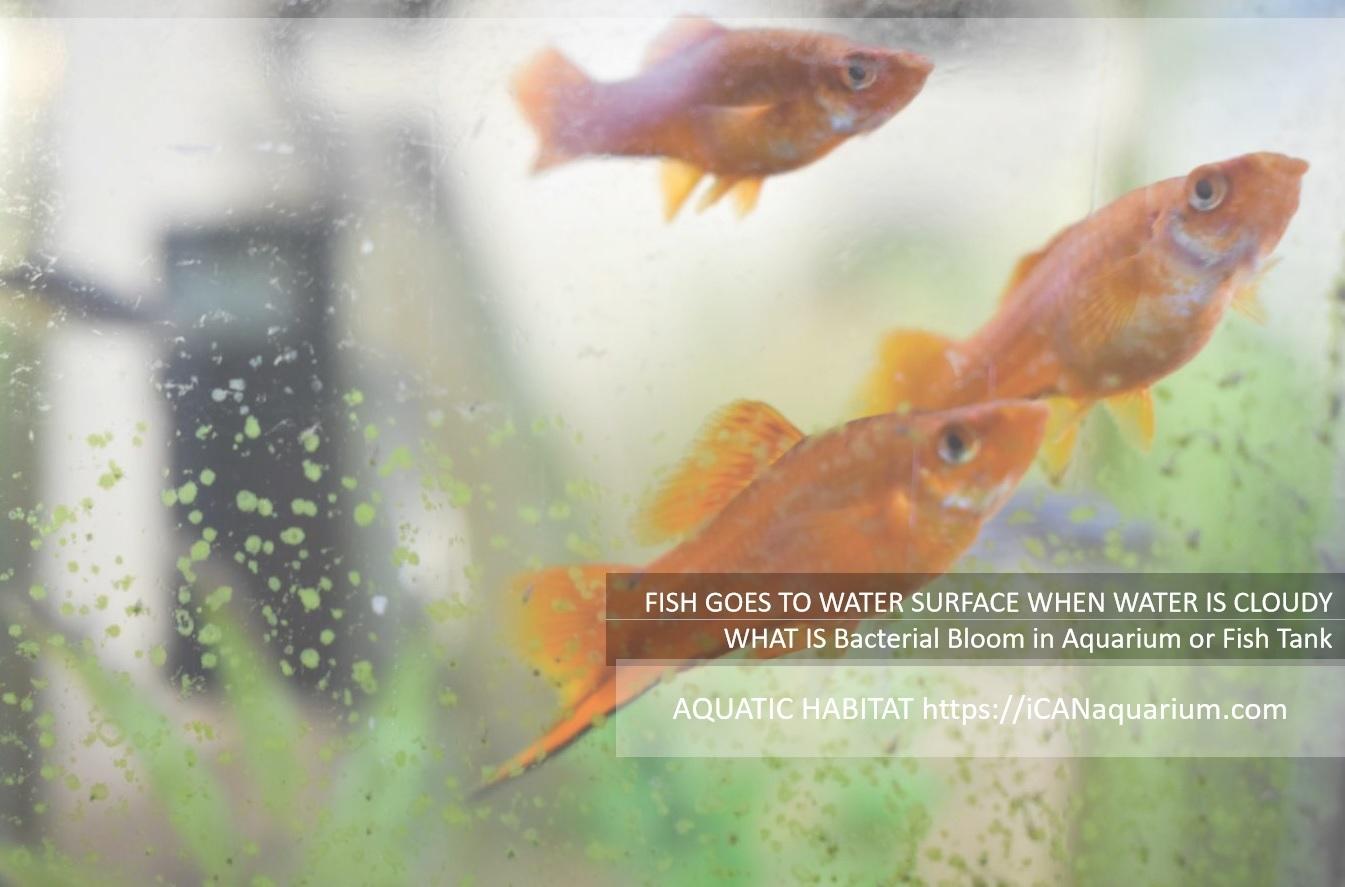
Never dose ammonia products like Dr. Tim’s in established tanks—this is the fastest route to catastrophic algae outbreaks and livestock loss. While ammonia converts to nitrate in cycled tanks, the process creates dangerous spikes:
– Ammonia burns fish gills even at 0.5 ppm, causing gasping and lethargy
– Shrimp and scaleless fish (like Corydoras) die at lower concentrations
– Excess ammonia directly fuels hair algae and cyanobacteria explosions
Planted tank experts like Tom Barr documented how ammonia dosing consistently triggers algae in controlled experiments. The temporary nitrate boost isn’t worth risking your entire tank. If your cycle is incomplete, fix that first—don’t mask symptoms with dangerous shortcuts.
Choosing the Right Nitrogen Supplement for Your Tank
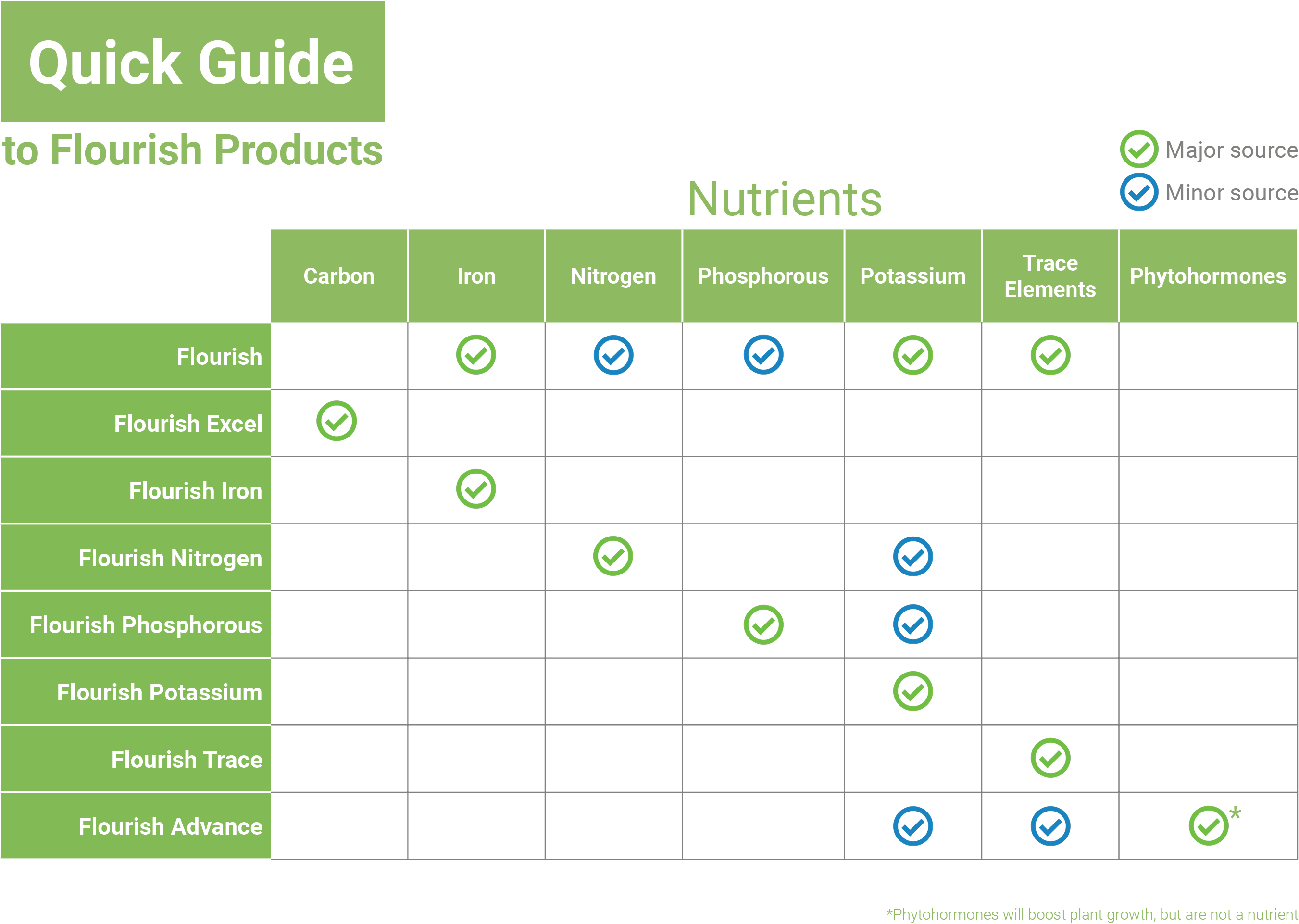
Skip aquarium salt or DIY mixes—targeted nitrate sources prevent imbalances. Your only safe options:
Seachem Flourish Nitrogen for Beginner Tanks
This liquid fertilizer delivers pre-measured potassium nitrate (KNO₃), making it foolproof for tanks under 50 gallons. Dose 5 mL per 10 gallons to raise nitrates by 5 ppm. Safe for all shrimp, snails, and fish when used as directed. Its concentrated formula means one 100mL bottle treats a 20-gallon tank for 4 months. Ideal if you dose weekly and want zero measuring.
Dry Potassium Nitrate for Large or Budget-Conscious Setups
For tanks over 50 gallons or multiple systems, pure KNO₃ powder costs pennies per dose. Mix 1 teaspoon with 500mL RO water to create a stock solution. Dose 1mL per gallon to raise nitrates by 10 ppm. Critical: Use a 0.01g precision scale—too much causes fish stress. Store solution away from children. Brands like Green Leaf Aquariums sell lab-grade KNO₃ with dosing calculators.
Never use plant fertilizers from garden stores—they contain copper and urea toxic to aquatic life. Always choose aquarium-specific products.
Step-by-Step: Safely Raising Nitrate Levels in 48 Hours
Follow this exact sequence to avoid shocking plants or livestock. Total time: 15 minutes.
Perform a 25% Water Change First
Replace 1/4 of your tank water with dechlorinated water before dosing. This clears organic pollutants that could react with added nutrients. Skip this step, and you risk sudden pH swings or cloudiness. Use a gravel vacuum to stir debris while changing water—don’t disturb plant roots.
Dose Nitrate Immediately After Water Changes
Add your chosen supplement right after refilling the tank. Plants absorb nutrients most efficiently during this “reset” phase. For Seachem Flourish Nitrogen:
1. Shake bottle well
2. Add 0.5 mL per gallon of new water added (e.g., 5 mL for a 10-gallon water change)
3. Wait 30 minutes, then retest nitrates
For dry KNO₃ solution: Dose 0.5mL per gallon to target 5 ppm. Never dose above 10 ppm in one session—excess nitrates stress fish.
Monitor Plant Response for 72 Hours
Check older leaves daily. Healthy recovery shows:
– Day 1: Yellowing halts at current stage
– Day 3: New growth appears vibrant green
– Day 5: Faint green tint returns to yellowed leaf edges
If yellowing spreads, test for potassium deficiency (brown leaf patches) or insufficient CO₂ (stunted growth). Stop dosing if nitrates exceed 15 ppm.
Maintaining Stable Nitrogen Levels Long-Term

Prevent recurring deficiencies with this weekly routine:
Weekly Water Change and Replenishment Cycle
- Change 20-30% water every 7 days
- Dose nitrate fertilizer only to replace what was removed
- Test nitrates 1 hour post-dose—aim for 5-10 ppm
Pro Tip: Keep a log of doses and test results. Most tanks need 2-4 mL of Seachem Flourish Nitrogen weekly per 10 gallons to maintain 5 ppm nitrates. Adjust based on plant density—fast-growing stem tanks need more than low-tech setups.
Balancing Nitrogen with Phosphates and Potassium
Nitrogen alone won’t fix yellowing if other nutrients are missing. Use this ratio:
– Nitrates (NO₃): 5-10 ppm
– Phosphates (PO₄): 0.5-1 ppm
– Potassium (K): 10-15 ppm
Dose Seachem Flourish Phosphorus if phosphates test near zero. Most complete liquid fertilizers (like APT Complete) provide balanced macros—add targeted nitrogen only when testing confirms deficiency.
Critical Mistakes That Worsen Nitrogen Deficiency
Adding Extra Fish to “Boost Waste”
This is the most common—and dangerous—mistake. Adding fish:
– Overloads your filter within weeks
– Increases ammonia spikes during feeding
– Causes aggression in community tanks
– Rarely raises nitrates significantly (a 10-gallon tank needs 5+ additional fish to see measurable change)
Your plants need immediate nitrogen—not months of tank instability. Dose supplements instead.
Skipping Water Changes to “Preserve Nitrates”
Zero-nitrate readings tempt hobbyists to skip water changes. This backfires:
– Dissolved organics build up, blocking plant nutrient uptake
– Phosphates accumulate, triggering algae
– Heavy metals from tap water concentrate, stunting growth
Water changes enable stable dosing. Stop them, and you trade one problem for three worse ones.
Overdosing to “Fix It Faster”
More nitrogen ≠ faster recovery. Excess nitrates:
– Cause rapid algae growth on leaves within 48 hours
– Stress fish (look for clamped fins or rapid gilling)
– Deplete oxygen as bacteria multiply
Always dose the minimum amount needed. If yellowing persists after 7 days at 5 ppm nitrates, check lighting or CO₂—not nitrogen levels.
Troubleshooting Persistent Yellowing After Nitrogen Boost
If leaves stay yellow after correct nitrate dosing:
Check Your Lighting Duration
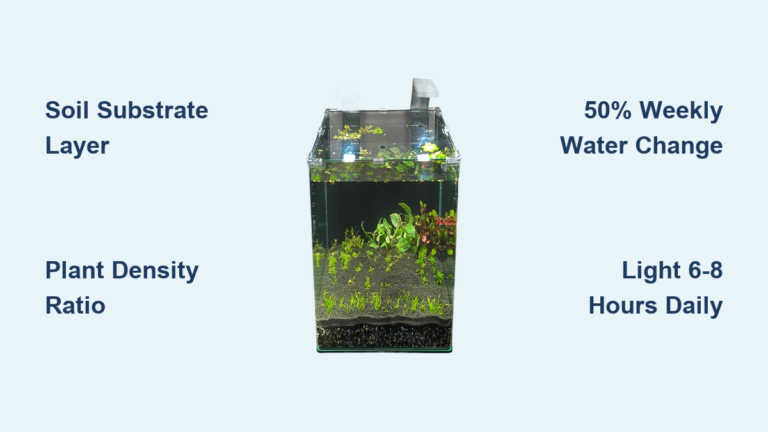
Plants can’t use nitrogen without sufficient light. Aim for 6-8 hours daily—use a timer. Too little light causes pale growth; too much triggers algae. If using LEDs, ensure spectrum includes 6500K white light for photosynthesis.
Verify CO₂ Levels in High-Tech Tanks
In CO₂-injected systems, yellowing often means inconsistent saturation. Test CO₂ at dawn:
– Below 20 ppm: Plants can’t process nitrogen
– Above 30 ppm: Fish gasp at surface
– Ideal: 25-30 ppm (bubble count: 1 bubble/second per 10 gallons)
Add a drop checker if levels fluctuate. Plants ignore nitrogen without stable CO₂.
Final Note: Yellowing leaves from nitrogen deficiency resolve predictably when you dose potassium nitrate correctly. Perform a water change, add 5 ppm nitrates using Seachem Flourish Nitrogen or KNO₃, and monitor for 72 hours—95% of tanks show visible improvement by day three. Never use ammonia, add fish, or skip water changes chasing this fix. Maintain 5-10 ppm nitrates through weekly replenishment dosing, and pair with phosphate testing to prevent future deficiencies. Within a week, your stem plants will surge with new growth, and sword leaves will regain their deep green luster—proof your ecosystem is perfectly balanced. For ongoing success, test nitrates weekly alongside your water changes and keep a nutrient log to catch imbalances early.