How to Use PhosGuard in Aquarium: Easy Steps
You’ve scrubbed tank glass for six months straight. Water changes happen twice weekly. Fertilizer doses are halved, lights stay dimmed, and Seachem Excel treatments feel like throwing money at a brick wall. Yet that gritty brown diatom algae still coats every surface in your African cichlid tank. When standard solutions fail, PhosGuard becomes your last hope—but tossing it into your filter could crash your ecosystem if done wrong. This guide reveals exactly how to deploy PhosGuard in planted freshwater aquariums to eliminate phosphate-fueled algae while keeping sensitive plants and livestock thriving. Learn precise dosing, critical safety steps, and regeneration tricks professionals use to make this media work where other methods fail.
Why PhosGuard Targets Diatom Algae Better Than Other Media
PhosGuard isn’t just another phosphate remover—it’s a precision tool against the specific nutrients feeding your nightmare algae. Unlike carbon or basic resins, its synthetic aluminum oxide structure has microscopic pores designed to adsorb phosphates and silicates. This dual action is crucial because diatom algae (the brown scourge) feeds primarily on silicates from tap water or substrate, while green algae thrives on phosphates. In planted tanks, this creates a dangerous balancing act: remove too much phosphate and your Amazon Swords starve; leave excess and algae explodes. PhosGuard’s controlled adsorption allows you to surgically reduce problem nutrients without nuking your entire nutrient profile. You’ll see results within 48 hours when silicate levels drop below 2.0 ppm, starving diatoms at their source.
PhosGuard Safety Check: Protecting Shrimp and Sensitive Plants
Will PhosGuard harm my African cichlid tank? Absolutely not—if you follow these protocols. Seachem’s formula is non-toxic for fish, snails, and shrimp when dosed correctly, even in hard-water cichlid setups. But critical mistakes can cause crashes:
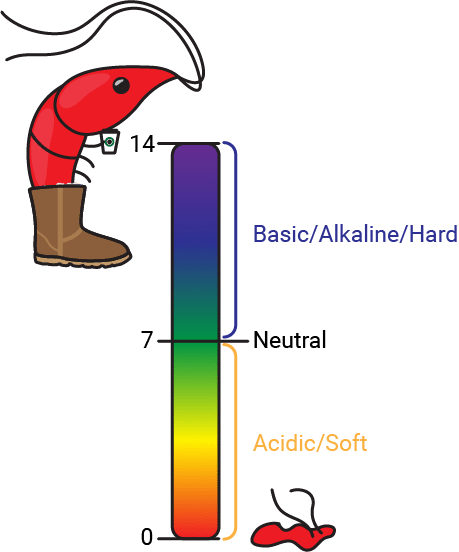
- Shrimp/Snail Danger Zone: In soft, acidic water (below 6.5 pH), PhosGuard can temporarily raise pH and hardness as it adsorbs ions. For Caridina shrimp or sensitive snails, this spike causes fatal stress. Always pre-rinse media in tank water and start with half-dose in low-pH tanks.
- Plant Emergency Signs: Within 24 hours, watch for stunted new growth on stem plants (like Rotala) or purple/black discoloration on older Amazon Sword leaves—classic phosphate deficiency. If spotted, remove 50% of media immediately.
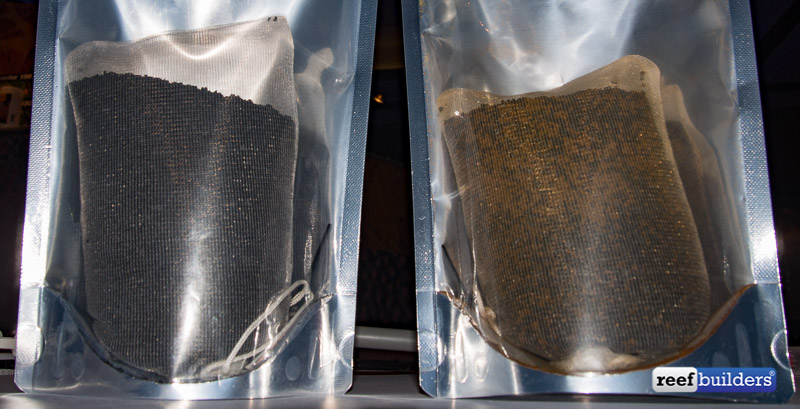
- Cloudy Water Fix: Poorly rinsed PhosGuard releases white aluminum precipitate. Solution: Rinse beads in a mesh bag under running dechlorinated water until clear—this takes 5+ minutes.
Never skip the pre-rinse step. One hobbyist’s tank turned milky overnight because they dumped dry media straight into their canister filter. The precipitate coated plant leaves, suffocating them until emergency water changes saved the tank.
Step-by-Step PhosGuard Deployment for Planted Tanks
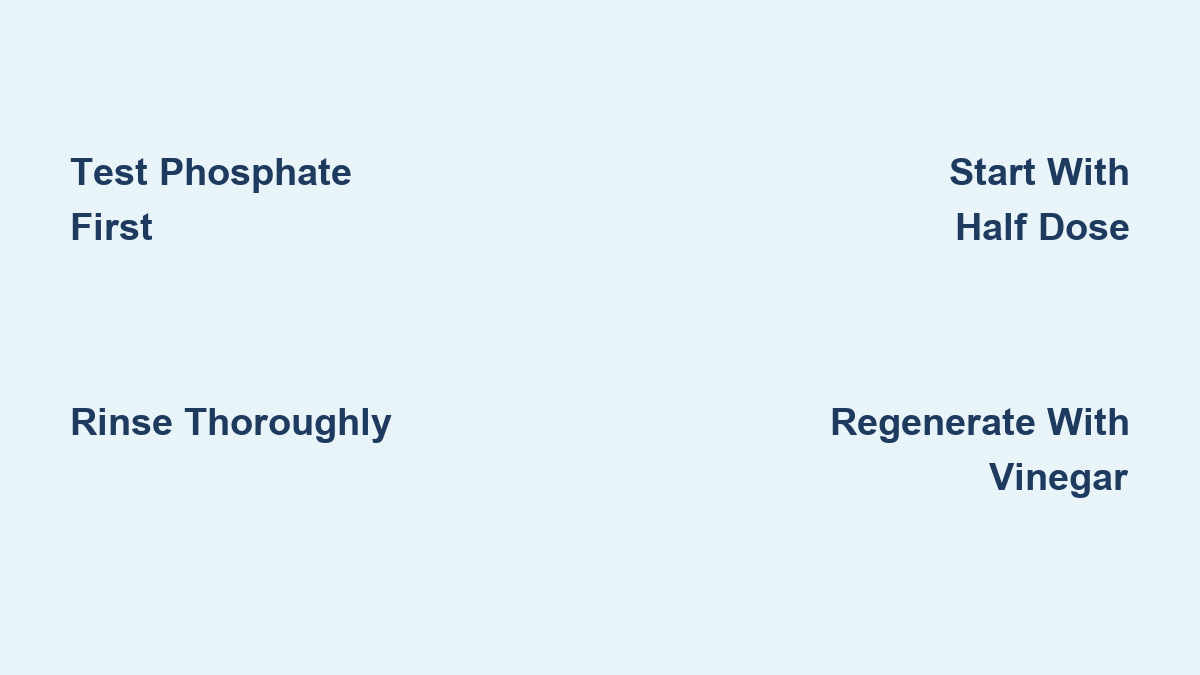
Calculate Your Exact Dosage (No Guesswork)
Forget “one cup per 50 gallons.” Your actual dose depends on phosphate levels and tank sensitivity:
- Test First: Use an accurate phosphate kit (like API Freshwater) to measure current levels.
- Below 0.5 ppm: Start with 125 mL per 50 gallons (half dose)
- 0.5–2.0 ppm: Use standard 250 mL per 50 gallons
- Above 2.0 ppm: Begin with 375 mL per 50 gallons (max safe dose)
- Adjust for Plant Sensitivity: Heavy root feeders (like Cryptocorynes) tolerate lower doses. Reduce by 30% if you see deficiency signs in previous algae treatments.
- African Cichlid Note: Hard water buffers pH swings. Use full dose—no reduction needed.
Install Media in High-Flow Filter Zones
Where you place PhosGuard determines its effectiveness and safety:
- Rinse Thoroughly: Swirl media in a mesh bag under dechlorinated water for 5 minutes until runoff clears. Skipping this causes cloudy water disasters.
- Choose Filter Position:
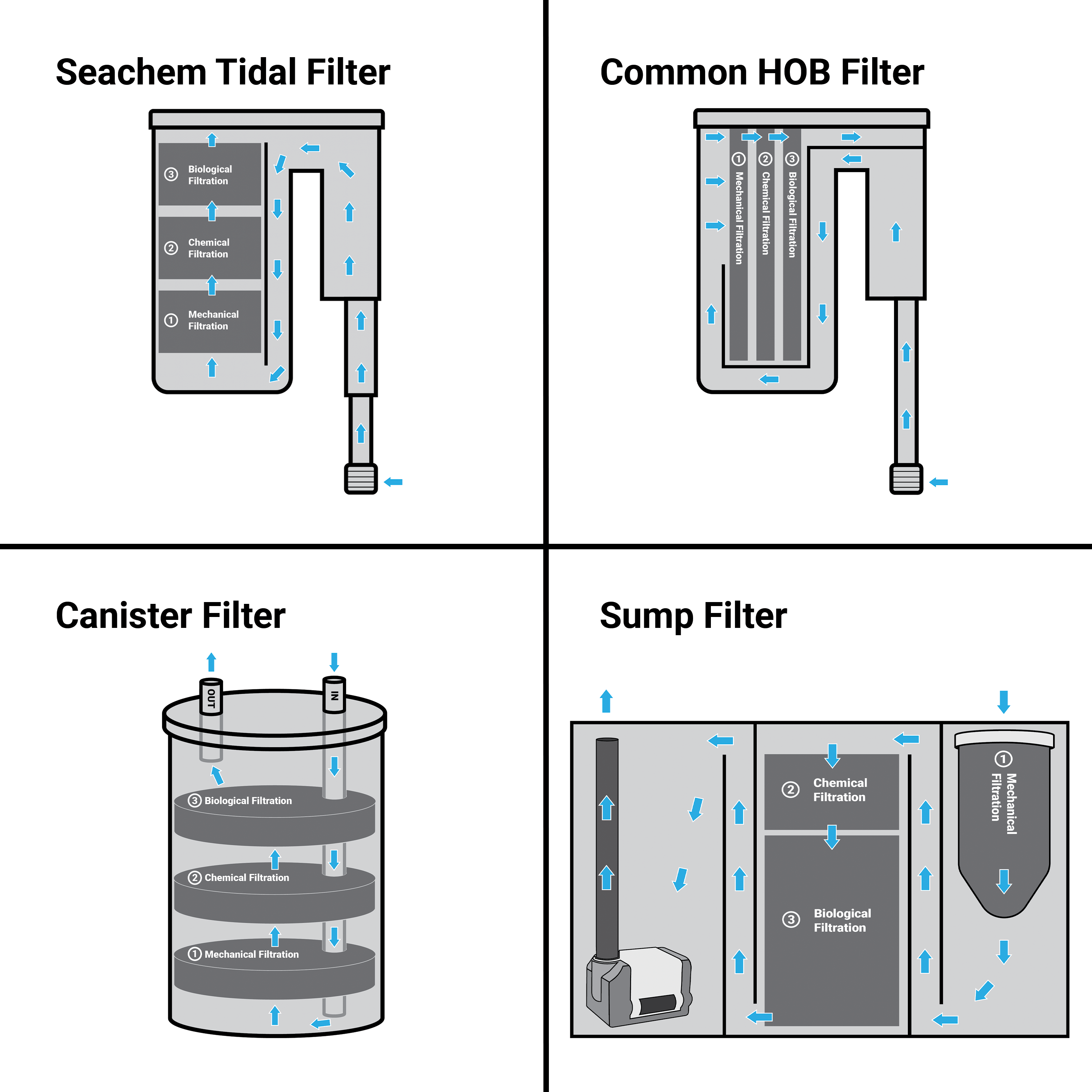
- Canister Filters: Place in the second media chamber after mechanical filtration (e.g., after filter floss). Water must flow through beads, not around them.
- HOB Filters: Use a fine-mesh bag secured over the intake tube—never loose in the chamber where beads could escape.
- Critical Flow Rate: Maintain 4-6x tank volume turnover hourly. Below 4x, PhosGuard becomes ineffective; above 6x, it exhausts too fast.
Monitor for 72 Hours: The Danger Window
The first three days require intense vigilance:
- Hour 0-24: Test phosphate every 6 hours. A drop below 0.1 ppm means immediate media removal (plants starve fast).
- Hour 24-48: Check for livestock stress—shrimp clinging to glass or snails leaving shells indicate pH shock. Add 1 Tbsp baking soda per 10 gallons to stabilize if needed.
- Hour 48-72: Inspect plant tips for yellowing. If present, remove 30% of media and increase root tabs.
One user’s Amazon Sword melted within 48 hours because they ran full dose without testing. Their phosphate crashed to zero—proof that “set and forget” destroys planted tanks.
Why PhosGuard Fails (And How to Fix It)
“I Used PhosGuard But Saw Zero Results” – Typical Causes
- Insufficient Contact Time: Media buried under filter floss gets bypassed. Fix: Place beads in direct water path with no obstructions.
- Tap Water Phosphate Flood: If your tap water tests above 1.0 ppm phosphate, weekly water changes reload the problem. Fix: Pre-treat new water with PhosGuard in a separate container.
- Silicate Overload: Diatoms need silicates >5.0 ppm. Standard phosphate tests don’t measure this. Fix: Use a silicate test kit; if high, double PhosGuard dose.
Regenerate PhosGuard Properly (Or Ruin Your Tank)
Regeneration extends media life but demands precision—get one step wrong and toxic residues enter your tank:
- Remove Saturated Media: When beads turn rust-orange (usually after 4 weeks), take them out.
- Bleach Soak: Submerge in 1:1 bleach/water mix for 3 hours in a well-ventilated area. Never use plastic containers—bleach degrades them.
- Rinse Until Odorless: Run dechlorinated water through beads for 20+ minutes. Sniff test: No bleach smell = safe.
- ACID SOAK (Non-Negotiable): Soak in 10:1 water/vinegar mix for 4 hours. Skipping this leaves alkaline residues that spike pH.
- Final Rinse: Flush until pH of runoff matches tank water (use a pH test strip).
NEVER skip the acid soak. A user killed all their shrimp after regenerating without vinegar—the residual bleach raised pH to 8.5 overnight.
PhosGuard vs. GFO: Which Works for Diatom Algae?
| Feature | PhosGuard | GFO (Granular Ferric Oxide) |
|---|---|---|
| Silicate Removal | YES (critical for diatoms) | Poor |
| Plant Safety | Higher risk of deficiencies | Lower risk |
| pH Impact | Raises pH in soft water | Lowers pH slightly |
| Best For | Freshwater diatom outbreaks | Saltwater or high-phosphate tanks |
| Cost | $18 for 500mL (regeneratable) | $22 for 500mL (single-use) |
For freshwater diatom algae, PhosGuard wins because silicates are the root cause. GFO users in the knowledge base reported “no difference” with diatoms—exactly what you’d expect since GFO barely touches silicates.
Maintenance Schedule to Prevent Algae Relapse
PhosGuard isn’t a one-time fix. Follow this cycle to keep algae defeated:
- Weeks 1-4: Run media continuously. Test phosphates weekly. Target 0.5–1.0 ppm (ideal for plants, starves algae).
- Week 5: Remove media. If diatoms reappear within 3 days, run a second cycle at 75% dose.
- Ongoing: Use 125 mL per 50 gallons monthly as preventative maintenance after algae clears.
- Critical Tip: Pair with weekly 30% water changes using RO water if your tap has >0.5 ppm phosphate. This breaks the nutrient reload cycle.
When to Avoid PhosGuard Completely
This media fails in three scenarios—save your tank and money:
- Newly Cycled Tanks: Unstable parameters magnify pH swings. Wait until tank is 3+ months old.
- Low-Tech Planted Tanks: Plants like Anubias get phosphate from substrate. Media causes deficiency without fixing lighting issues causing algae.
- High Nitrate Tanks (>40 ppm): Algae feeds on nitrates when phosphates drop. Fix nitrate sources first.
One user wasted months battling algae because they treated phosphates while ignoring decaying plant matter spiking nitrates. Test all parameters before deploying PhosGuard.
Final Note: PhosGuard eliminates diatom algae in 90% of planted tanks when dosed correctly—but it’s a scalpel, not a sledgehammer. Always start with half-dose, test phosphates daily for the first week, and pair it with silicate testing for diatom outbreaks. Regenerate media every 4 weeks to save costs, but never skip the vinegar soak. Within 10 days, you’ll see diatoms recede from hardscape as phosphate levels stabilize between 0.5–1.0 ppm. For lasting results, combine PhosGuard with reduced lighting (6 hours/day) and monthly RO water changes to break the algae cycle permanently. Your tank can be algae-free—without sacrificing plant health or livestock safety.