Best Aquarium Rocks for Your Tank (2026 Guide)
Your aquarium rocks shouldn’t sabotage your tank’s ecosystem. Choosing the wrong stone can turn your peaceful underwater world into a chemical nightmare overnight—spiking pH levels, poisoning sensitive fish, or clouding water for weeks. I learned this the hard way when my Lake Huron beach rocks made my tetras dart frantically until a massive water change saved them. This isn’t just about aesthetics; it’s about survival. In this guide, you’ll discover exactly which types of aquarium rocks work for your specific tank setup, how to test questionable stones in 60 seconds, and why Ontario beach rocks require special handling. You’ll never second-guess a rock purchase again.
Identifying Hazardous vs. Safe Aquarium Rock Types
Not all stones are created equal for aquarium use. Some silently alter water chemistry while others provide stable, fish-friendly environments. Knowing these distinct categories prevents costly mistakes.
Avoid These 3 Dangerous Rock Types Immediately
Calcareous rocks are silent pH killers in soft-water tanks. Limestone, tufa rock, and calcareous sandstone contain calcium carbonate that dissolves in water, relentlessly driving up pH and hardness. If your discus or neon tetras suddenly gasp at the surface, check for these offenders. Ontario lake beaches often contain limestone fragments—recognizable by white calcite veins cutting through gray stone—that will destroy Amazon biotopes but thrive in African cichlid tanks.
Metallic ore rocks introduce invisible toxins. Avoid any stone with rusty streaks, brass-colored flecks, or greenish copper tarnish. These leach heavy metals that accumulate in fish organs over weeks, causing mysterious deaths. Lake Huron beaches occasionally yield iron-rich stones with orange oxidation—these belong in geological collections, not aquariums.
Fragile or razor-sharp rocks create physical hazards. Shale that crumbles under pressure or quartz with glass-like edges can slice fish fins during territorial disputes. Never use stones that leave powder on your fingers when rubbed—that’s a stability red flag.
Top 5 Proven Safe Aquarium Rocks for Any Tank
Slate is Ontario rock hunters’ secret weapon. This fine-grained metamorphic stone splits into flat, stable slabs that won’t alter pH—perfect for Lake Huron beach finds. Its neutral chemistry makes it ideal for soft-water species, and you can stack it into dramatic plateaus without collapse risk. Just avoid pieces with visible mica flakes that could cloud water.
Seiryu stone delivers Japanese-inspired drama with minimal chemistry impact. Its signature blue-gray spikes and white calcite veins create instant focal points in planted tanks. While technically limestone-based, its low porosity means slower mineral release—making it manageable in moderately hard water setups. Budget for its premium price; authentic pieces cost $30+ per pound.
Dragon stone (Ohko) offers ancient-looking texture without water parameter swings. This brittle, iron-rich rock features deep channels that anchor mosses and provide shrimp hideouts. Its orange-brown weathered surface won’t raise pH significantly, but porous spots may trap debris—scrub thoroughly before use. Ontario collectors occasionally find similar weathered stones near riverbeds.
Lava rock is the biological filtration powerhouse. Its honeycomb structure hosts massive beneficial bacteria colonies while providing planting pockets. The reddish-brown chunks won’t alter pH but may initially release trapped air bubbles—boil for 10 minutes to prevent annoying surface foaming. Avoid black lava rock; it often contains toxic metals.
Petrified wood adds organic elegance safely. Despite its wood-like appearance, this fossilized material is chemically inert. Test with vinegar to confirm (no fizzing), then boil to remove tannins that could yellow water. Ontario’s sedimentary layers rarely yield authentic pieces—most are imported, so check for artificial dyes.
How to Test Lake Rocks in 60 Seconds (Vinegar Test Method)
Never assume beach rocks are aquarium-safe. Ontario’s Lake Huron shores mix safe slate with dangerous limestone, requiring instant verification.
Why the Vinegar Test Beats Guesswork Every Time
Grab white vinegar and a dropper—this $1 test prevents $100 fish losses. Calcium carbonate reacts with acid, producing visible CO2 bubbles. A single fizz means the rock will continuously raise your pH. I’ve seen Lake Huron “slate” pieces bubble violently due to hidden limestone content. No reaction? You’ve likely found inert stone.
Step-by-Step Testing Protocol
- Dry the rock completely – moisture dilutes vinegar and causes false negatives
- Place 3 drops on multiple surfaces – test crevices and flat areas separately
- Observe for 30 seconds – delayed fizzing still indicates carbonate content
- Repeat weekly for new additions – some rocks leach minerals slowly
Critical mistake to avoid: Don’t test submerged rocks. Surface moisture masks reactions. I learned this when “safe” Ontario stones altered my tank after two weeks—dry testing would have caught the hidden calcite.
Ontario Beach Rock Preparation: Lake Huron Specific Protocol

Lake-sourced rocks require extra precautions due to potential pollutants and biological contaminants. Skip these steps and risk introducing parasites that wipe out your entire tank.
Sterilization Methods That Actually Work (No Shortcuts)
Bleach bath for porous rocks:
– Mix 1 cup unscented bleach per 5 gallons water
– Submerge rocks 15 minutes max (porous stones absorb bleach beyond this)
– Critical: Neutralize residues with Seachem Prime-soaked towels—rinsing alone leaves toxic traces
– Sun-dry 72 hours minimum; UV light breaks down residual chemicals
Boiling for solid rocks:
– Use only non-layered stones (slate, granite)
– Submerge in pot, bring to rolling boil
– Maintain boil 10 minutes (5 minutes kills surface bacteria; 10 ensures parasite death)
– Cool gradually in water to prevent thermal shock cracks
Never skip the sun-dry phase—Lake Huron rocks often harbor zebra mussel larvae that survive boiling but die in direct sunlight.
Aquascaping Layout Mistakes That Ruin Natural Appeal
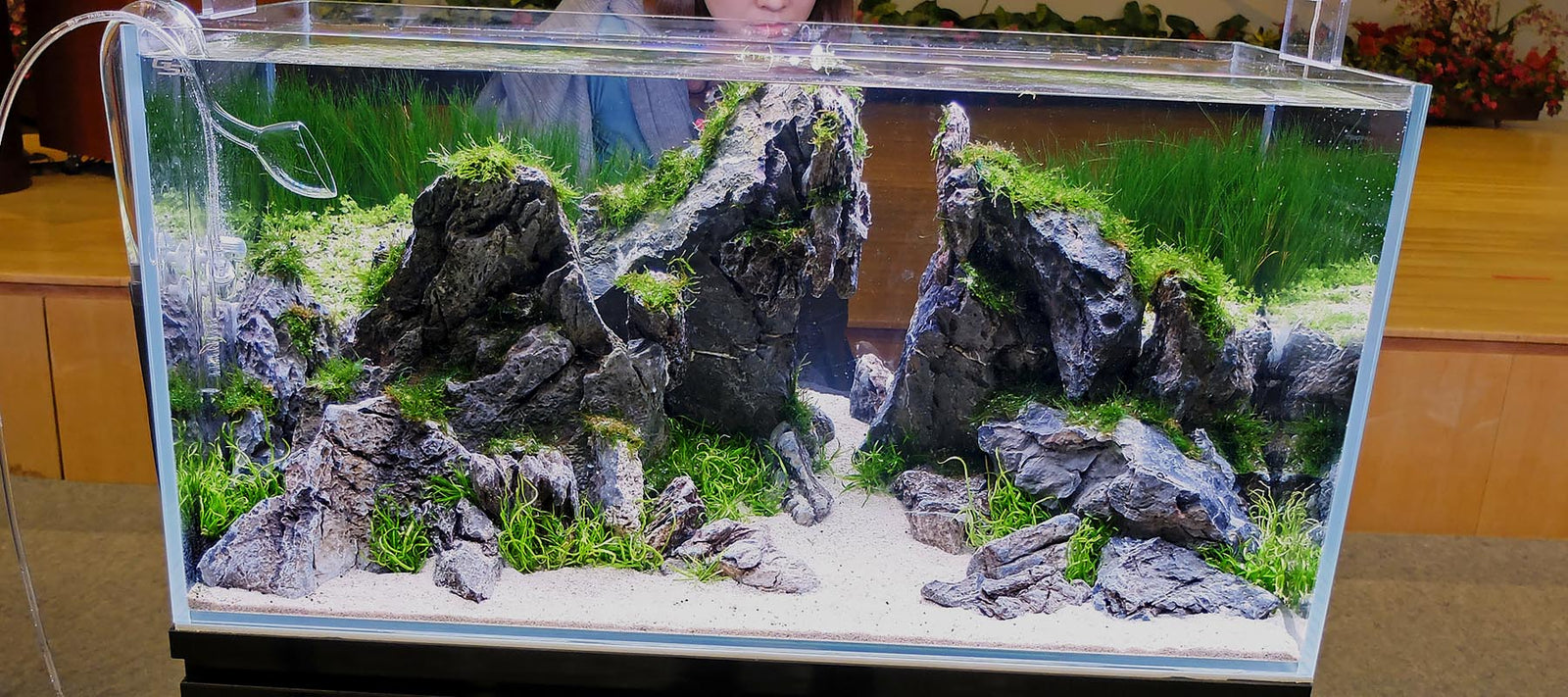
Even safe rocks create artificial-looking tanks when arranged poorly. Fix these common errors for professional results.
Create Depth with Strategic Rock Sizing
Place largest stones (6+ inches) at the tank’s 1/3 and 2/3 marks following the Rule of Thirds. Smaller companion rocks (2-4 inches) should angle toward them, never mirroring positions. I transformed my Lake Huron slate pile by burying the base 40% into substrate—this eliminated “floating rock” syndrome and created mountain-range perspective.
Stability Secrets for Heavy Rock Setups
Stacking failures cause 30% of aquarium disasters. Always:
– Test stability by gently shaking the structure
– Wedge base rocks into substrate at 15-degree angles
– Use aquarium-safe silicone only between flat surfaces (never as primary support)
– Place heaviest rocks lowest—top-heavy arrangements collapse during water changes
When to Absolutely Avoid Natural Beach Rocks
Some environments produce inherently unsafe stones. Steer clear of:
– Riverbed rocks with smooth, rounded shapes (often contain dissolved metals from industrial runoff)
– Ocean shorelines with salt-crusted surfaces (sodium residues persist for months)
– Quarry sites showing tool marks (chemical treatments alter composition)
Ontario collectors should particularly avoid Lake Erie beaches near industrial zones—tested samples showed elevated zinc levels even after cleaning.
Essential Maintenance for Long-Term Rock Safety
Rocks don’t stay safe forever. Monitor these warning signs:
– White crust buildup = mineral leaching (scrape with algae magnet)
– Persistent cloudiness = substrate erosion (remove and re-sterilize)
– Fish scraping behavior = sharp edges developing (sandpaper underwater)
Replace any rock showing cracks—these create bacterial traps that trigger disease outbreaks.
Final Note: Choosing the right types of aquarium rocks transforms your tank from a fish container into a thriving ecosystem. Always test Ontario beach finds with vinegar, sterilize using the bleach-sunlight method, and arrange stones using odd-number groupings for natural appeal. Remember: inert rocks like slate won’t alter your water, while limestone requires intentional use in hard-water tanks. Within 48 hours of proper rock preparation, you’ll see calmer fish, clearer water, and healthier plant growth. For Lake Huron collectors, focus on dense, non-porous stones without visible veins—they’re your safest bet for creating stunning, stable aquascapes that last for years.