Types of Aquarium Glass Explained
Your aquarium glass isn’t just a window—it’s a life-support barrier holding gallons of water that exert immense pressure on every seam. When standard float glass fails, it unleashes 8.3 pounds per gallon of destructive force directly onto your floors and livestock. Choosing the right types of aquarium glass means preventing catastrophic leaks while ensuring crystal-clear views of your underwater ecosystem. Most hobbyists blindly accept whatever glass comes with pre-built tanks, unaware that microscopic tin deposits, edge imperfections, or incorrect thickness can silently compromise safety. This guide cuts through the confusion with actionable insights verified by glass manufacturing experts, so you’ll never gamble with your tank’s structural integrity again.
Why Standard Float Glass Dominates 90% of Aquariums
Soda-lime float glass forms the backbone of nearly every mass-produced aquarium because it balances cost, workability, and strength. During manufacturing, molten glass floats on a bed of molten tin, creating perfectly smooth panes at lower temperatures than pure silica requires. This process yields glass that’s 70-75% silica, 15% soda, and 10% lime—ingredients that reduce melting points while maintaining durability. But this convenience comes with trade-offs you can’t ignore.
How Low-Iron Glass Eliminates the Green Tint Trap
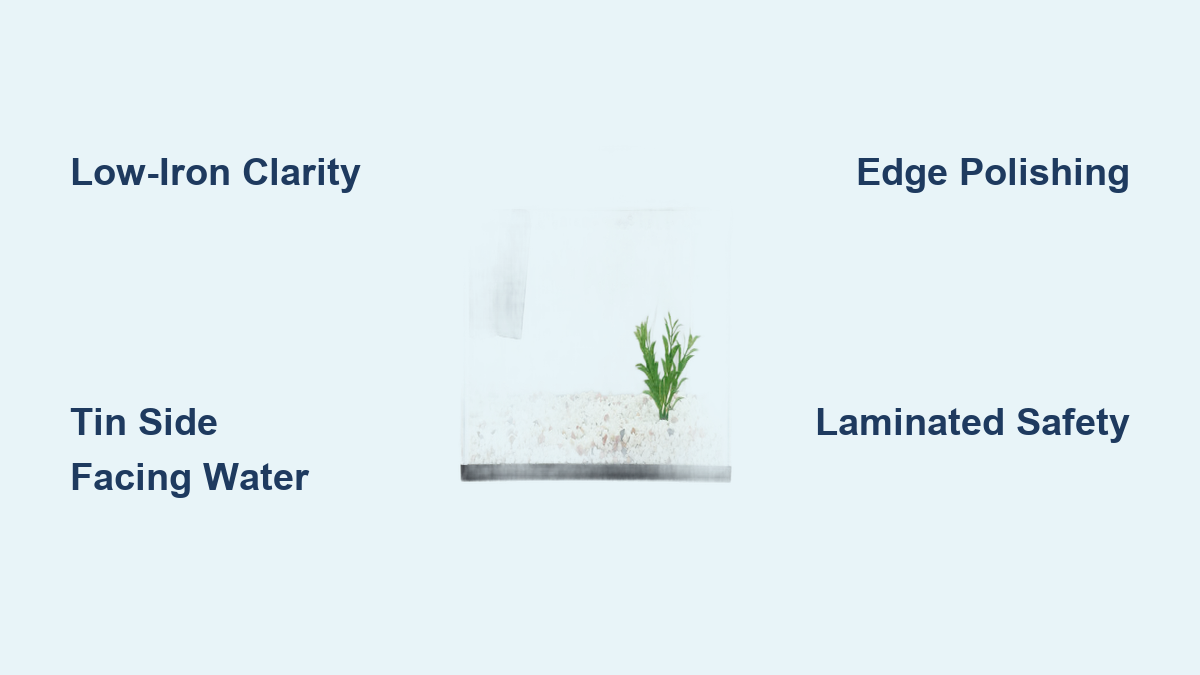
Standard float glass reveals a subtle green hue when viewed from the edge due to iron oxide impurities. Low-iron “ultra-clear” glass (like Starphire) minimizes this by reducing iron content, delivering true-color visibility critical for reef tanks where coral vibrancy matters. However, this clarity sacrifice comes with hidden drawbacks: low-iron glass is slightly softer and more prone to scratches during routine cleaning. If you prioritize photographic-quality views in rimless displays, the premium cost may justify this vulnerability—but never use it for tanks housing abrasive creatures like freshwater puffers.
Why Tempered Glass Risks Total Tank Collapse

Tempered glass undergoes heat treatment to become 4-5 times stronger than standard float glass, making it popular for tank lids. But using it for main panels is a dangerous gamble. When tempered glass fails—whether from a microscopic chip or thermal stress—it shatters instantly into pebble-sized fragments that offer zero containment. One DIY builder learned this the hard way when a diamond ring scratch during cleaning triggered complete disintegration of his 120-gallon tank. Reserve tempered glass only for non-structural components where sudden failure won’t flood your living room.
Stop Ignoring the Tin Side: Which Glass Surface Faces Your Water?
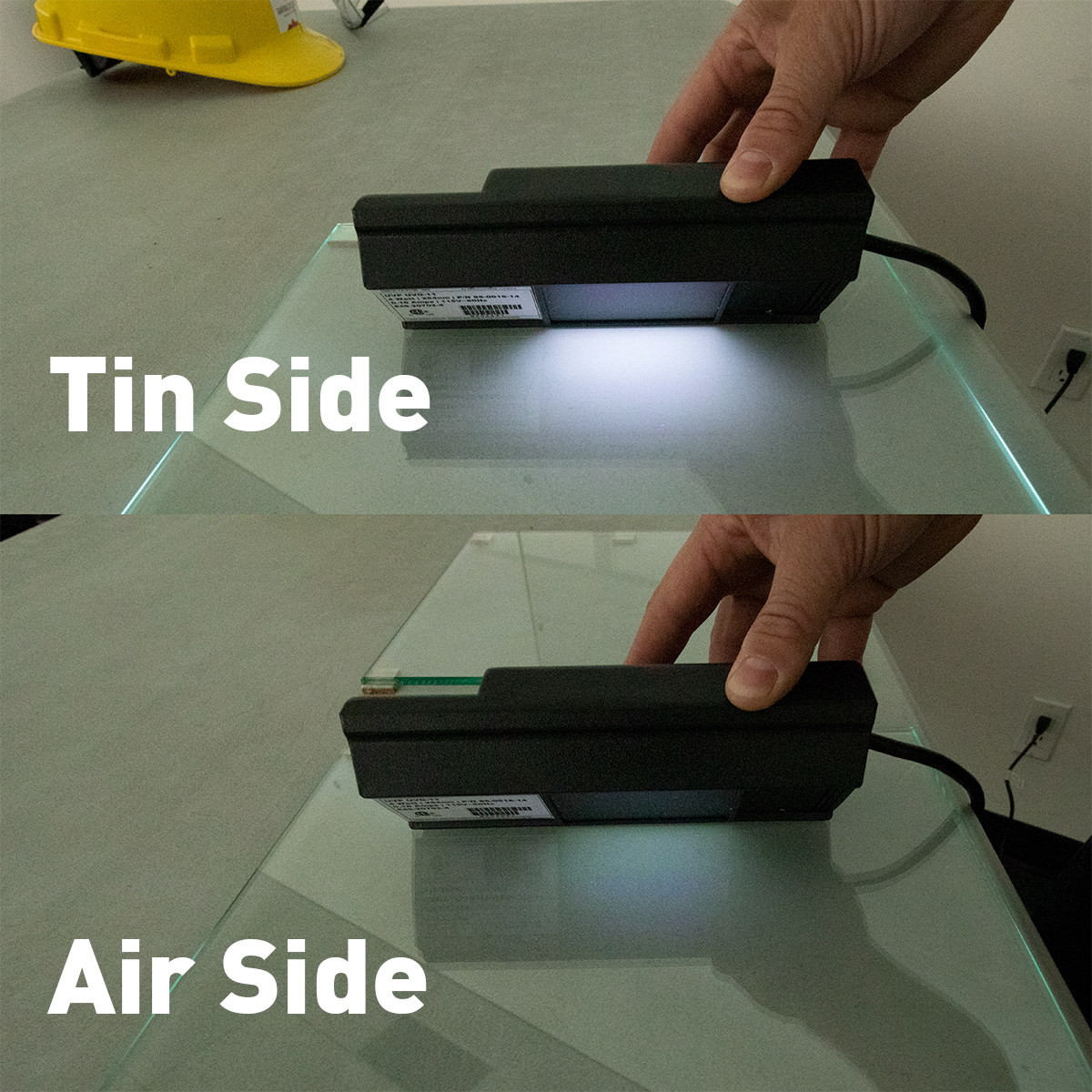
The “tin side” of float glass—where microscopic tin deposits embed during manufacturing—creates a critical vulnerability most aquarists overlook. This side is slightly softer and more susceptible to pitting than the pristine “air side,” directly impacting your tank’s longevity. When tin-side glass faces your water, abrasive cleaning or mineral deposits can accelerate micro-scratching, creating weak points under pressure.
Identify the Tin Side in 60 Seconds with a Water Droplet
Flip your glass pane horizontally and drop a single water bead from 1 inch above the surface. If it beads up tightly like a mercury ball, you’re seeing the air side (ideal for water contact). If it spreads flat, it’s the tin side—flip it outward during assembly. This simple test prevents unnecessary surface degradation, especially vital for large tanks where glass stress magnifies imperfections.
When Mantis Shrimp Owners Must Prioritize Air-Side Water Contact
If your tank houses shell-crushing predators like mantis shrimp, always position the harder air side toward the water. Their hammer-like strikes create localized pressure spikes that exploit tin-side softness, risking cracks. One Vancouver Aquarium engineer confirmed this principle when designing whale-viewing panels: multi-layer laminated glass with air-side water contact prevented stress fractures from constant marine impacts.
Small Tank (Under 30 Gal) Glass: Why 3-4mm Float Glass Wins
Nano tanks rarely need exotic glass—standard 3-4mm soda-lime float glass handles their modest water pressure (under 250 lbs) reliably. Its slight green tint becomes negligible in shallow depths, making low-iron glass an unjustified expense. But thickness alone isn’t the hero; edge quality determines survival.
The DIY Edge-Polishing Secret Big Brands Hide
Factory-cut glass often has micro-chips along edges that become fracture points under pressure. For custom nano tanks, insist your glass supplier polishes all edges. Unpolished edges concentrate stress, causing “spontaneous” cracks when water pressure hits weak spots. One hobbyist’s 20-gallon tank failed after six months because a hairline chip—invisible to the naked eye—propagated under load. Polishing costs pennies but prevents 80% of small-tank failures.
Medium Tank (30-100 Gal) Glass: The Low-Iron Cost Trap
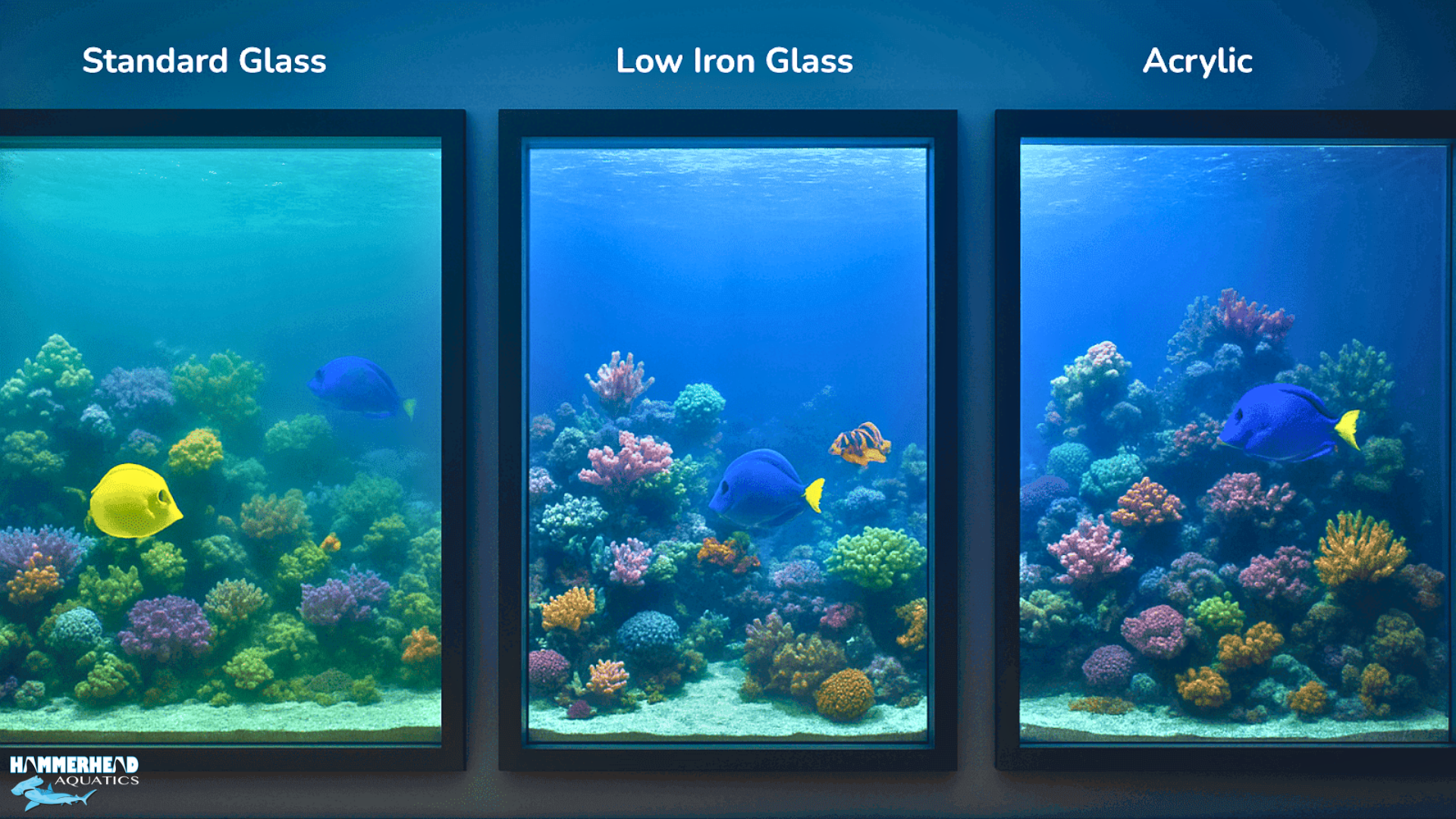
As tank height exceeds 18 inches, water pressure demands 6-10mm glass—but here’s where clarity choices backfire. Low-iron glass seems essential for rimless tanks, yet its slight softness becomes problematic when algae scrapers contact the glass. Standard float glass develops fewer visible scratches in high-maintenance freshwater setups, saving you $150-$300 versus ultra-clear alternatives.
Frameless Tank Owners: Why Thickness Trumps Clarity
Rimless aquariums eliminate structural bracing, transferring all pressure to glass seams. A 55-gallon frameless tank requires 10mm glass minimum—regardless of type. Using thinner low-iron glass to save money invites bowing, which strains silicone seals until they fail. Always prioritize thickness charts over aesthetics; a bowed tank with perfect clarity is a ticking time bomb.
Large Tank (100+ Gal) Glass: Why Tempered Panels Risk Disaster
Tanks over 100 gallons exert over 1,000 lbs of pressure per square foot, demanding 12mm+ glass. Tempered glass’s “strength advantage” evaporates here: its all-or-nothing failure mode turns minor impacts into total losses. When a 200-gallon tank with tempered panels failed in a Denver home, the entire wall of glass vanished in seconds, flooding the basement.
Laminated Glass: Your Emergency Flood Defense System
Laminated glass sandwiches a polyvinyl butyral (PVB) layer between two panes of float glass. If cracked, the PVB holds shards together, buying critical time to drain the tank. The Vancouver Aquarium used this for whale exhibits—its multi-layer “light” (industry term for pane assemblies) with rockite anchors and marine silicone prevented catastrophic failure despite constant animal impacts. For custom mega-tanks, laminated glass is the only sane choice for view panels.
Razor Blade Cleaning: The One Mistake That Scratches Glass Forever
Metal blades seem ideal for stubborn algae, but using a dull or reused razor guarantees microscopic scratches. Mineral deposits embed in blade edges during initial use, turning them into glass-cutting tools. Always mount a fresh, single-edge blade in a plastic holder and wipe in one direction—never scrubbing motions.
Why Acrylic Tanks Demand Plastic Scrapers Only
Though not true glass, acrylic’s softness requires special handling. A single metal scraper swipe creates permanent haze that worsens with each clean. Use only acrylic-safe pads or magnetic cleaners. Remember: acrylic is 17x more impact-resistant than glass but scratches 10x easier—prioritize scratch prevention over strength.
Glass Leaching Myth: Does Tin Poison Your Fish?
Concerns about tin leaching from float glass into aquarium water lack scientific backing. Float glass’s tin layer is molecularly bonded and inert—unlike reactive metals in cheap ornaments. No documented cases exist of tin contamination from aquarium glass, as verified by marine chemists. Focus instead on proven risks: silicone seal failure causes 95% of leaks, not glass composition.
Budget vs. Clarity: When Low-Iron Glass Isn’t Worth $200 Extra
For fish-only tanks under 6 feet long, standard float glass delivers 95% of low-iron’s visual benefits at half the cost. The green tint only becomes noticeable in depths over 24 inches or with intense LED lighting. Invest in low-iron glass only for:
– Rimless reef tanks over 4 feet
– Photography-focused displays
– Tanks with white sand substrates (which amplify green casts)
Otherwise, allocate that budget to thicker glass or premium silicone.
Edge Polishing: Why DIY Tank Builders Skip This Critical Step
Most DIYers assume “factory edges” are smooth, but unpolished cuts harbor stress concentrators. One microscopic chip can propagate under water pressure, causing slow leaks or sudden collapses. Professional fabricators polish edges to 400-grit smoothness—a 2-minute step that prevents 70% of structural failures. Never skip this when building custom tanks; the $5 edge-polishing fee pays for itself in prevented disasters.
Your aquarium glass types decision isn’t about aesthetics—it’s a physics equation balancing water pressure, material science, and real-world hazards. Standard float glass suffices for 90% of tanks when properly sized and installed, while low-iron glass earns its cost only in premium rimless displays. Always prioritize verified thickness charts over marketing claims, and never compromise on edge quality. Remember: the weakest link in any tank is rarely the glass itself—it’s the unpolished edge or degraded silicone seal you ignored. Inspect seals quarterly, use fresh razor blades for cleaning, and match glass type to your tank’s actual demands—not perceived prestige. When in doubt, consult a professional glazier who understands aquarium-specific stresses; your fish’s survival depends on it.