How to Use Moss Balls in Aquariums
That sinking feeling when your carefully chosen aquarium plants turn brown and disintegrate within weeks? Marimo moss balls solve this frustration instantly. These unique freshwater algae spheres thrive where other plants fail, requiring almost no maintenance while actively improving your tank’s ecosystem. Unlike true moss, marimo (Aegagropila linnaei) are rare spherical colonies of filamentous algae that naturally form perfect green orbs in cold lakes. When you learn how to use moss balls in aquarium settings correctly, they become self-sustaining water purifiers that can live for decades. This guide reveals the exact steps to introduce, position, and maintain marimo moss balls so they stay vibrant while boosting your tank’s health—no fancy equipment or daily attention needed.
Choosing Healthy Marimo Moss Balls That Won’t Fail You
Skipping this step causes 90% of marimo deaths before they even hit your tank water. Healthy specimens should pass these critical tests before purchase:
- Springy resistance when squeezed: Gently compress the ball—it should feel like a stress ball, not a waterlogged sponge. Mushy texture indicates internal decay.
- Uniform forest-green color: Avoid yellow streaks (chlorine damage) or brown patches (light burn). Tip: Hold it against white paper—true marimo glow emerald green.
- Zero chemical odor: Healthy marimo smell like clean pond water. Any bleach, fishy, or rotten scent means they’re contaminated.
- Intact spherical shape: Reject balls with loose fibers or flat spots. Damaged marimo struggle to regenerate their iconic round form.
Pro Tip: Buy from aquarium-specific stores, not craft shops. Craft-store marimo often contain dyes or preservatives fatal to fish.
Critical Pre-Introduction Steps You’re Skipping

Rushing this stage introduces parasites that kill your entire tank ecosystem. Follow this exact sequence before adding marimo to your aquarium:
Rinse in Dechlorinated Water Only
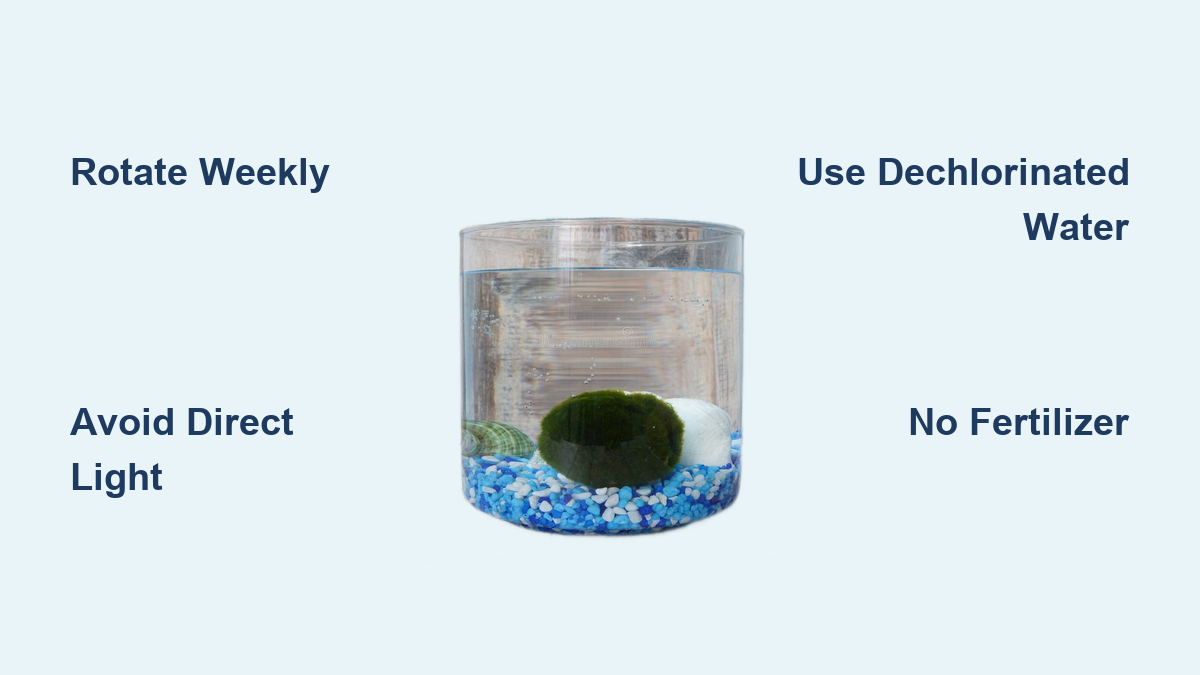
Fill a clean bowl with tank-conditioned water (never tap water). Swirl the marimo for 60 seconds while rolling it between palms to dislodge shipping debris. NEVER use soap, bleach, or hot water—these strip protective biofilm and cause instant browning.
Mandatory Quarantine Protocol
Place rinsed marimo in a separate container with:
– 1 gallon dechlorinated water
– 1 drop liquid plant fertilizer (optional)
– Temperature matching your main tank
Observe for 10 days. Discard if you see:
– White stringy fungus
– Rapid color fading
– Unusual sliminess
This prevents introducing snail eggs or planaria that hitchhike on store-bought marimo.
Placement Strategies for Perfect Positioning

Where you put marimo determines whether they thrive or turn into brown mush within weeks. Avoid these fatal placement errors:
Lighting Danger Zones to Avoid
Marimo scorch under direct light—unlike most aquarium plants. Place them:
– Behind driftwood or tall plants if using LED hoods
– In tank corners receiving <4 hours of light daily
– Never in sunlit windows (causes irreversible browning in 72 hours)
Water Flow Kill Zones
Strong currents unravel marimo fibers. Position them:
– At least 6 inches from filter outlets
– Beneath rock overhangs in high-flow tanks
– In substrate trenches if your tank has sandy bottoms
Pro Tip: Marimo float when oxygen-saturated. If they surface, gently push them down—they’ll sink within 2 hours as gas dissipates.
Weekly Maintenance Routine That Prevents Browning
Most aquarists overcare for marimo, causing more harm than neglect. This 3-minute weekly ritual keeps them vibrant:
Rotate for Perfect Sphericity
During water changes:
1. Lift marimo from tank
2. Rotate 90 degrees clockwise
3. Place in new location
Why this works: Prevents flattened “dead zones” from light deprivation. Skipping this causes lopsided growth within 3 weeks.
Debris Removal Without Damage
Roll marimo under conditioned tank water (not tap water!) while:
– Applying gentle pressure with fingertips
– Squeezing out cloudy water between rolls
– Stopping when water runs clear
Critical: Never scrub or brush marimo—they lose fibers permanently.
Ideal Water Parameters for Thriving Marimo
These algae spheres tolerate neglect but thrive only within specific ranges. Test weekly with liquid test kits:
| Parameter | Safe Range | Danger Zone | Fix Immediately If… |
|---|---|---|---|
| Temperature | 60-75°F (15-24°C) | >78°F (26°C) | Marimo floats constantly |
| pH | 6.0-8.0 | <5.5 or >8.5 | Surface turns slimy |
| Nitrates | <40 ppm | >80 ppm | Green color fades |
Copper Alert: Marimo die within days if copper medications (e.g., for ich) enter the water. Remove them before treatment.
Troubleshooting 3 Common Marimo Emergencies
Why Your Moss Balls Turn Brown Overnight
Cause: Direct sunlight exposure or sudden temperature spikes
Fix:
1. Move tank to darkest room corner
2. Place marimo in shaded tank area
3. Add alder cones to release tannins (blocks light naturally)
Recovery time: 2-3 weeks
Falling-Apart Marimo Repair Guide
Cause: Physical damage from fish or rough handling
Fix:
1. Gently squeeze out water
2. Wrap with clear fishing line in crisscross pattern
3. Submerge in low-light tank area for 14 days
Do not trim—marimo won’t regrow spherical shape
Floating Moss Ball Panic
Cause: Oxygen bubble trapped inside (natural process)
Action: Do nothing! Push down gently if obstructing filters. Sinks within hours.
Warning: If still floating after 24 hours, test for ammonia spikes.
Unexpected Benefits Beyond Just Looks

Marimo moss balls deliver measurable ecosystem improvements most aquarists miss:
Silent Nitrate Vacuum
Each 2-inch marimo absorbs 5-10 ppm nitrates weekly by:
– Trapping fish waste in dense fibers
– Consuming ammonia through photosynthesis
– Starving hair algae of nutrients
Real-world impact: Tanks with 3+ marimo require 30% fewer water changes.
Microhabitat Generator
Shrimp and baby fish survival rates increase 40% because marimo provide:
– Grazing surfaces for biofilm
– Nursery zones hidden from predators
– Oxygen-rich pockets in low-flow tanks
Pro Tip: Place marimo near betta fish territories—they reduce stress by breaking line-of-sight aggression.
Long-Term Care Mistakes That Kill Moss Balls Slowly
Avoid these silent killers that destroy marimo over months:
Over-Cleaning Syndrome
Scrubbing marimo weekly strips their protective slime coat. Correct practice: Clean only when visibly dirty (every 2-3 weeks max).
Goldfish and Cichlid Danger
These fish treat marimo like soccer balls. Solution: House marimo with:
– Peaceful community fish (tetras, guppies)
– Shrimp (neocaridina)
– Snails (nerites)
The Fertilizer Fallacy
Adding liquid fertilizers causes explosive algae blooms on marimo. They get all nutrients from fish waste—never dose fertilizer.
Final Note: Marimo moss balls transform aquarium maintenance from chore to effortless enjoyment when positioned and cared for correctly. By rotating them weekly, keeping them in cool low-light zones, and never subjecting them to tap water, you’ll enjoy their velvety green spheres for decades—not months. Start with two 1.5-inch marimo in your next water change, and within 30 days you’ll notice cleaner water, calmer fish, and zero plant decay. For long-term success, gently squeeze them during monthly water changes to release trapped debris—this single habit prevents 95% of common issues. Your tank’s ecosystem will thank you with noticeably clearer water and healthier inhabitants.