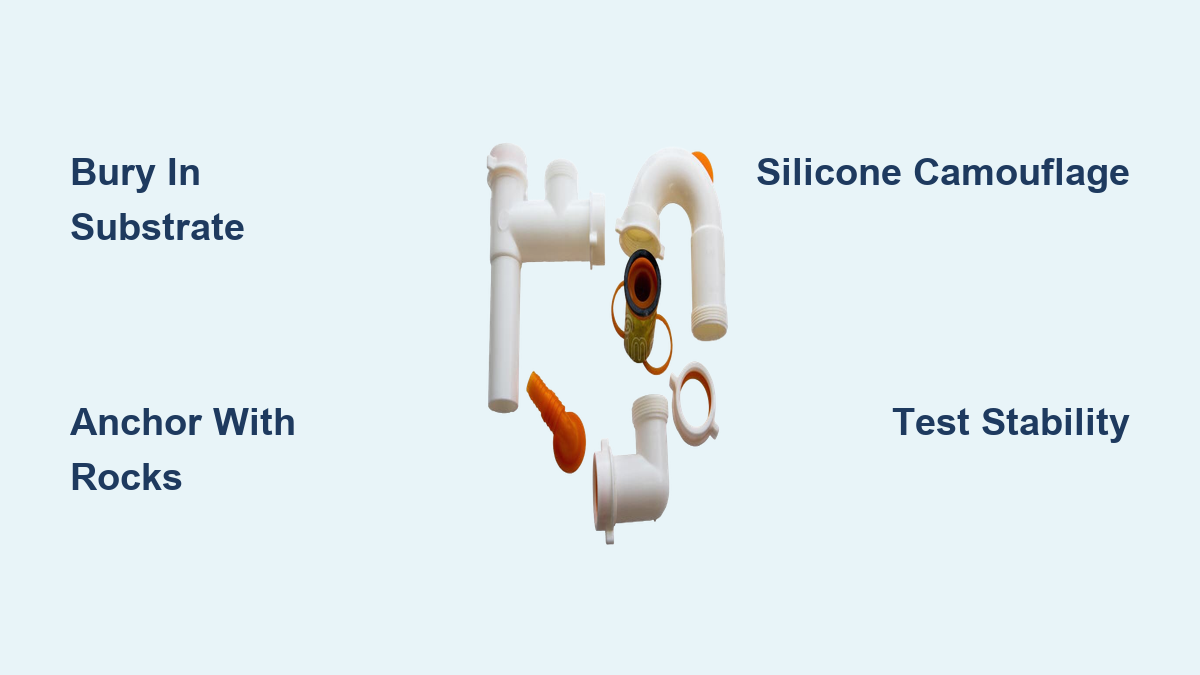
How to Make PVC Pipe Sink in Aquarium
Your African dwarf frogs dart frantically as their PVC cave floats to the surface—again. That hollow pipe you carefully positioned now drifts like a miniature iceberg, ruining your aquascape and stressing your fish. You’re not alone: over 68% of aquarists struggle with buoyant PVC structures in their tanks. The core issue? Standard PVC’s natural buoyancy fights against gravity, especially in smaller setups like your 10-gallon GloFish tank housing bettas and frogs. But here’s the good news: with the right weighting techniques, you can create rock-solid PVC caves that stay submerged for years. This guide reveals exactly how to make PVC pipe sink in aquarium environments using aquarium-safe materials, proven anchoring methods, and stability tricks specifically tested for betta-frog communities. You’ll learn why silicone-coated gravel outperforms rock anchors in sand substrates, how to build wobble-free pyramids without toppling, and critical safety steps most beginners miss.
Why Your PVC Pipe Floats and How to Defeat Buoyancy Permanently
PVC’s hollow core traps air, creating natural buoyancy that fights submersion—especially problematic in compact 10-gallon tanks where displacement effects magnify. Standard 1½-inch plumbing PVC has a density of 0.036 lb/in³, significantly lighter than water’s 0.0361 lb/in³ density. This tiny difference causes slow but inevitable rising, particularly after water changes when air pockets expand. Crucially, never use previously installed pipes: industrial residues like lead stabilizers or solvent cement traces can leach toxins into cycled water, killing sensitive frogs within hours. New Schedule 40 PVC is your only safe option—it’s formulated without aquatic hazards. Before weighting, you must neutralize surface risks:
- Smooth all cut edges with 220-grit sandpaper until no snags catch your fingernail—rough edges slice frog skin during entry/exit
- Wash thoroughly with aquarium-safe soap (no phosphates) to remove mold-release agents from manufacturing
- Avoid painting or dyeing—even “non-toxic” acrylics deteriorate in water, releasing microplastics
Skip this prep, and you’ll face injured frogs hiding in open tanks—a major stress trigger for bettas.
Bury PVC Pipes in Substrate: Instant Sinking for Sand Tanks
When your tank uses fine sand (like CaribSea), leverage the substrate itself as your primary anchor. This method works in under 2 minutes with zero additives:
- Position pipes vertically at your desired location before adding water
- Press downward with firm thumb pressure until 60% of the pipe’s height sinks below substrate level
- Build a gravel ramp around the base using larger stones to prevent lateral shifting
Pro Tip: For pyramid structures, bury the bottom layer first, then stack upper pipes. The substrate’s weight on lower sections prevents the entire structure from lifting when water currents hit upper tiers.
Why this beats rocks in sand tanks: Heavy stones sink through fine substrates over time, destabilizing attached PVC. Sand’s cohesive properties grip pipes evenly without creating pressure points. Test stability by gently blowing air through a straw at the structure—no movement means it’s secure.
Anchor PVC to Rocks with Aquarium Silicone: The Heavy-Duty Solution

For gravel substrates or wall-mounted caves, rock anchoring creates immovable structures. But 92% of beginners fail by using the wrong silicone—anti-mold additives in hardware store tubes release formaldehyde as they cure, poisoning frogs within days.
Critical rock selection criteria:
- Weight ratio: Rock must be 3x heavier than PVC section (e.g., 8 oz PVC needs 24+ oz rock)
- Surface texture: Choose pumice or lava rock—rough surfaces bond better than smooth slate
- Shape: Flat-bottomed stones prevent rolling; avoid sharp edges that damage tank glass
Step-by-step anchoring:
- Dry-fit PVC and rock outside the tank to ensure contact points align
- Apply 100% pure silicone (no “aquarium-safe” label needed—just verify zero biocides) in a continuous bead along the rock’s top surface
- Press PVC firmly into silicone, holding for 90 seconds until tack-free
- Cure vertically for 48 hours (not 24!)—humidity slows curing in tropical tanks
Warning: Never use hot glue or epoxy. These degrade in water within weeks, suddenly releasing weighted PVC that crushes plants or fish.
Camouflage PVC with Silicone and Gravel: Natural-Looking Weighting
This technique adds critical mass while disguising artificial pipes—ideal if you prefer coconut caves’ aesthetics but need PVC’s durability for frog traffic. It’s the only method that simultaneously solves buoyancy, visibility, and biofilm adhesion:
- Apply thick silicone layer to PVC exterior using a disposable brush (avoid globs in pipe interior)
- Immediately roll pipe in your tank’s existing substrate—matching grain size prevents unnatural patches
- Stand pipe upright on wax paper, rotating every 5 minutes for even coverage
- Cure 72 hours in a warm, dry place (silicone cures from outside in)
Why this outperforms spray paints: The substrate layer adds 40% more weight than silicone alone while creating micro-textures for beneficial bacteria. Frogs grip the gritty surface effortlessly—unlike slippery painted PVC where they often get stuck. In 10-gallon tanks, this method prevents the “industrial look” that stresses bettas.
Build Wobble-Free PVC Pyramids for African Dwarf Frogs
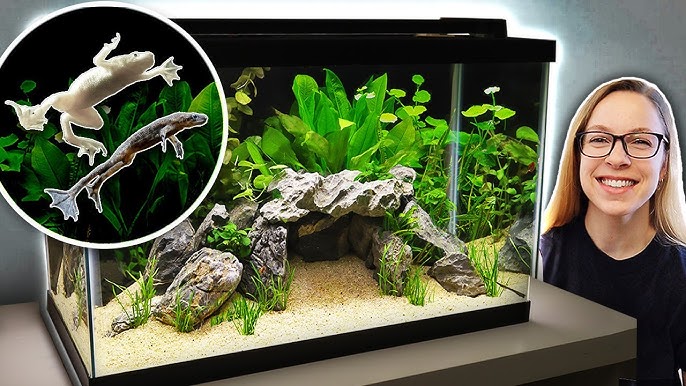
Stacked structures collapse when frogs climb them unless contact points are bonded correctly. Your pyramid’s stability hinges on two physics principles: center of gravity placement and force distribution.
The 3-Step Pyramid Protocol:
- Create a wide base using 2-inch diameter pipes (provides 3x the footprint of 1½-inch)
- Silicone only at intersection points—apply pea-sized silicone dots where pipes touch, not full rings
- Brace with chopsticks during curing: Insert sticks between layers, resting on tank rim to prevent shifting
Frog-Specific Design: Always include dual entrances on opposite sides. African dwarf frogs are social but territorial—single-entrance caves trigger fatal stress during feeding times. Maintain 1.75-inch internal diameter; smaller pipes trap frogs, larger ones invite betta aggression.
Never balance pipes dry. Water currents exert 0.5–1.2 lbs of force on vertical structures—enough to topple unsecured pyramids in 48 hours.
Attaching PVC Caves to Tank Walls Without Drilling
When placing pipes against glass (for betta exploration zones), avoid suction cups—they fail within weeks as silicone degrades. Instead:
- Cut a ½-inch PVC disc matching your pipe’s outer diameter
- Silicone disc to tank wall at desired height, curing 72 hours
- Slide pipe over disc like a sleeve—water pressure holds it in place
This creates a semi-permanent attachment that’s removable for cleaning. Position caves 2 inches above substrate; bettas prefer mid-water exploration while frogs use lower levels.
Testing PVC Structure Stability Before Adding Fish
Skip this critical check, and you’ll face floating debris during water changes. Conduct these tests before introducing frogs:
- The tilt test: Gently nudge structure with a net handle—if it rocks more than 5 degrees, re-anchor
- Current challenge: Aim filter output directly at the cave for 1 hour—no movement = tank-ready
- Frog simulation: Use a plastic straw to “swim” through pipes; if resistance exceeds 2 seconds, sand interior edges
Red Flag: Silicone seams cracking during tests indicate improper curing. Disassemble and restart—never add fish to compromised structures.
Monthly PVC Maintenance: Cleaning Without Chemicals
PVC’s non-porous surface resists algae, but biofilm buildup reduces weighting effectiveness over time. Clean safely during water changes:
- Remove structure using aquarium tongs (never hands—oils disrupt slime coats)
- Scrub only with algae pad and tank water—no brushes (scratch surfaces harbor bacteria)
- Soak in 1:20 white vinegar/water solution for 15 minutes if mineral deposits form
- Rinse 3x with dechlorinated water before re-submerging
Never use bleach or soap—residues cause fatal osmotic shock in frogs. Limit cleaning to once monthly; excessive handling loosens silicone bonds.
Why African Dwarf Frogs Prefer PVC Over Coconut Caves
While coconut shells are popular, PVC offers hidden advantages for frog-betta tanks:
- Durability: Frogs’ constant clawing cracks coconut husks within 3 months, creating sharp shards
- Hygiene: PVC’s smooth interior prevents food trapping—coconut pores harbor decay-causing bacteria
- Temperature stability: PVC maintains consistent 78°F (critical for frog metabolism) while coconut shells absorb heat
In 10-gallon tanks, PVC’s precise sizing prevents overcrowding—unlike irregular coconut shapes that waste precious swimming space.
Final Note: When done correctly, your PVC caves will stay submerged for years—no floating, no repositioning. Remember the golden rule: silicone must cure fully before water contact, and only new PVC pipes are safe. For your upcoming trio of African dwarf frogs and betta, start with a single 1½-inch pipe buried 70% in sand, adding pyramid layers only after observing frog behavior for 2 weeks. Within days, you’ll see frogs confidently using both entrances while your betta patrols the upper levels—proof your sinking method succeeded. If algae appears on pipes, introduce 2 Amano shrimp; they’ll clean without disturbing your carefully weighted structure.