How to Keep Jellyfish in Aquariums: A Complete Guide
Watching moon jellies pulse through crystal-clear water creates a hypnotic, otherworldly display unlike any standard aquarium. But if you’re determined to learn how to keep jellyfish in aquariums, you’ll quickly discover these delicate drifters demand radically different care than tropical fish. Most beginners fail within weeks because they unknowingly use standard tanks that shred jellyfish bells on intakes or create deadly dead zones. The truth? Success hinges on three non-negotiable elements: a specialized kreisel tank, microscopic plankton food, and obsessive water stability. After analyzing dozens of failed setups and consulting marine biologists, I’ve distilled exactly what works—so you can avoid the 90% mortality rate that plagues new keepers. This guide covers proven techniques from Reef2Reef forums and jellyfish-care veterans, including where to find $200 tanks (instead of $500) and how to feed without fouling your water.
Why Standard Fish Tanks Destroy Jellyfish Within Hours

Your existing reef tank won’t work for moon jellies—their gelatinous bodies tear against sharp corners or get sucked into filter intakes within hours. Unlike fish with swim bladders, jellyfish are passive drifters that rely on ocean currents to stay suspended. In a rectangular aquarium, they collide with walls, accumulate in corners, and suffocate as mucus clogs their feeding structures. Even gentle powerheads create chaotic turbulence that flips jellies upside down, preventing them from capturing food. One ReefCentral user documented 100% mortality across three attempts using standard 20-gallon tanks before switching to a kreisel design. The solution isn’t stronger filtration—it’s eliminating suction points entirely through laminar circular flow.
Kreisel Tank Flow Mechanics: How It Saves Jellyfish
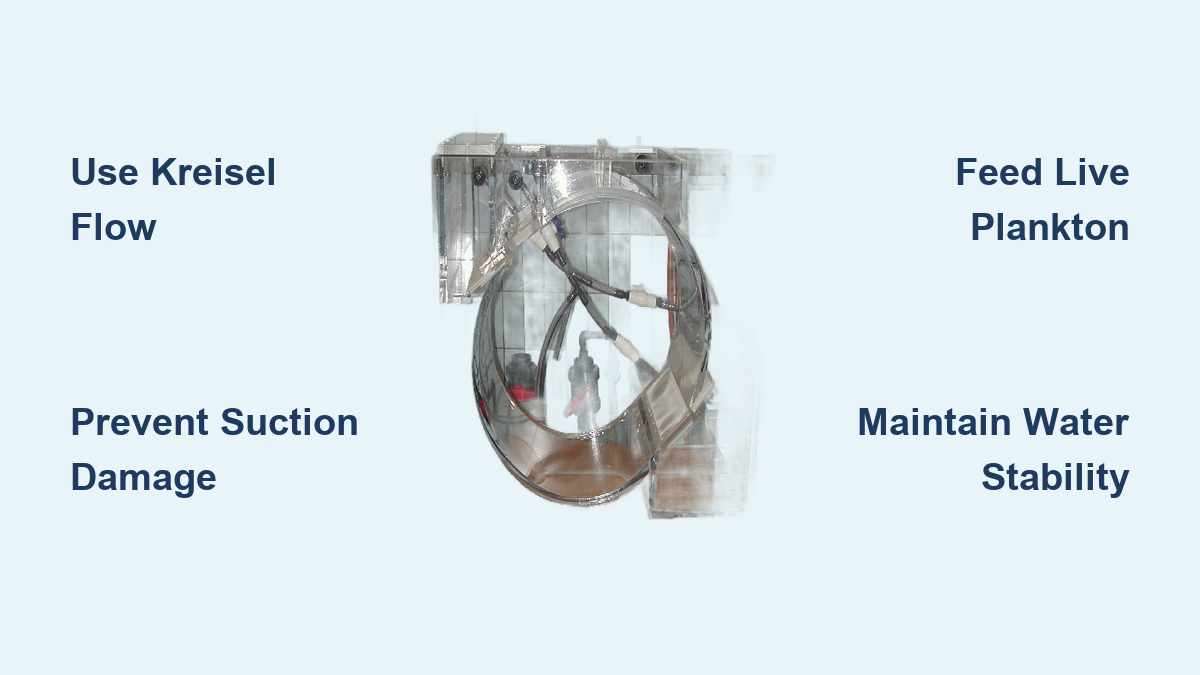
A true kreisel tank uses a circular water current that gently lifts jellies away from walls while mimicking natural ocean gyres. Water enters through a perforated false bottom or wall slot, creating a smooth upward spiral that keeps jellies suspended in the water column. This prevents bell damage and ensures constant oxygen exchange across their entire body. Pseudokreisels (like the Orbit 20) achieve similar results with strategically placed spray bars and overflow boxes—critical because moon jellies must rotate vertically to feed properly. Without this flow, their tentacles tangle on tank surfaces within 48 hours, leading to tissue necrosis.
Choosing Moon Jellies vs Upside-Down Jellyfish: Tank Requirements Compared
Moon Jellies Demand Kreisel Tanks—No Exceptions
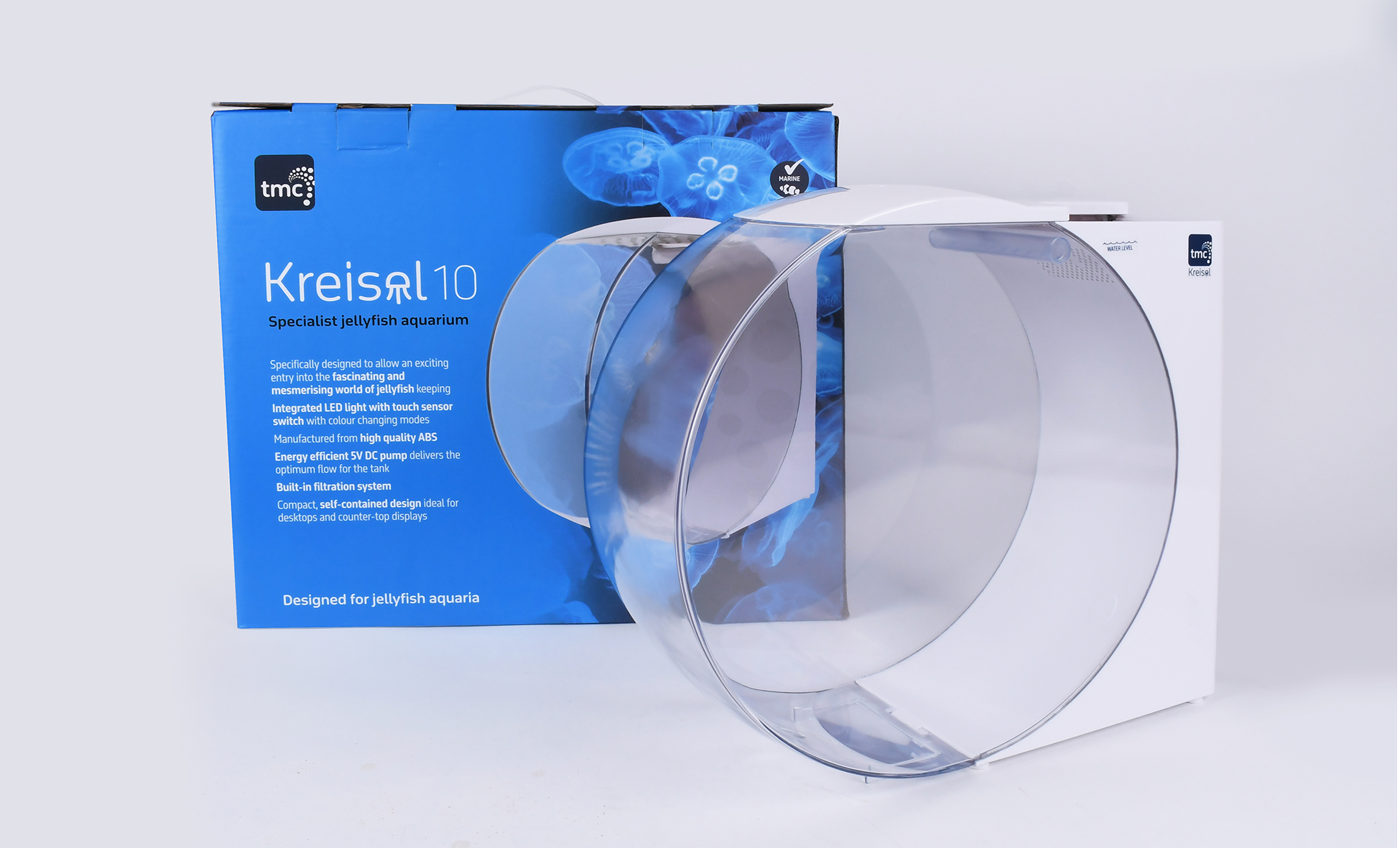
Aurelia aurita requires the circular flow of a kreisel tank. Attempting to house them in standard aquariums causes fatal bell abrasion within days. Commercial kits like the Cubic Aquarium Orbit 20 ($350 new) or refurbished eBay models (search “Orbit 20 jellyfish tank” for $200 deals) include integrated flow systems. DIY options exist but demand precision—forums like GTA Aquaria detail builds using modified cylindrical tanks and Koralia pumps, but misaligned flow ports create deadly dead zones.
Upside-Down Jellyfish: The Low-Flow Alternative
Cassiopea species rest bell-down on sandy substrates, making them compatible with shallow (6-8″), wide reef tanks. They photosynthesize like corals and tolerate slower vertical flow from a single powerhead. However, they still require pristine water and nightly plankton feedings—never house them with fish that might nip their tentacles.
Water Quality: Why Boxed Saltwater Beats DIY Mixes for Beginners
Jellyfish lack kidneys and absorb toxins directly through their mesoglea, making them 10x more sensitive than clownfish to parameter swings. Reef2Reef data shows ammonia spikes above 0.25 ppm cause irreversible bell damage within hours. Here’s the non-negotiable protocol:
- Use pre-mixed saltwater (e.g., Instant Ocean Reef Crystals) for initial fills—DIY mixes often contain micro-contaminants that trigger mucus overproduction
- Maintain 32 ppt salinity (1.026 specific gravity) with a refractometer; fluctuations >0.001 cause osmotic shock
- Install a chiller for temperatures between 64-68°F—most species originate from cold currents and melt above 72°F
- Test daily for nitrites and pH; jellyfish thrive at 8.1-8.3 but collapse below 8.0
Cycle your tank for 45 days minimum before adding jellies. One Nano-Reef member lost an entire colony after introducing jellies at day 30 when undetectable nitrites spiked.
Feeding Jellyfish: The Microscopic Plankton Protocol That Prevents Starvation
Jellyfish can’t chase food—they capture plankton drifting into their tentacles. Standard flake food is useless; you need particles under 500 microns. Here’s the proven feeding sequence:
- Use live baby brine shrimp (BBS) as the primary food—hatch brine shrimp eggs 24 hours before feeding for optimal nutrition
- Thaw frozen rotifers in tank water for 5 minutes to prevent temperature shock
- Turn off tank flow for 10 minutes during feeding so jellies can capture food
- Target-feed using a pipette: gently squirt food near pulsing bells
- Siphon uneaten food after 15 minutes—any residue crashes water quality
Never skip feedings—even 48 hours without food causes bell shrinkage. Upside-down jellies supplement with zooxanthellae but still need nightly plankton.
3 Fatal Mistakes That Shred Jellyfish in 90% of Home Setups
Mistake #1: Using Standard Filters With Intake Socks
Power filters with intake tubes shred jellyfish like blenders. Solution: Install a closed-loop system with 100+ micron mesh pre-filters over all inlets. One FishLore user saved his colony by wrapping intakes in bridal veil fabric.
Mistake #2: Overcleaning the Tank
Scraping algae off glass creates micro-plastic particles that clog jellyfish feeding structures. Clean only the front panel weekly with a magnetic cleaner—never disturb the back/sides where jellies rest.
Mistake #3: Adding Jellies Before Full Cycling
Jellies need mature tanks with established copepods. Adding them during cycling causes instant ammonia poisoning. Wait until nitrate levels stabilize below 5 ppm.
Where to Buy Jellyfish Tanks Without Paying Retail Prices

Commercial kreisel tanks average $450, but these strategies slash costs:
- eBay refurbished units: The Orbit 20 frequently sells for $199-$250 (search ending auctions)
- Reef2Reef classifieds: Members sell used kits with flow pumps for $225
- DIY shortcut: Modify a 10-gallon cylinder tank with a Koralia Nano 400 (mounted horizontally) and false bottom—forums have CAD files
Avoid cheap “jellyfish tanks” on Amazon—they lack proper flow dynamics and cause 100% mortality.
Daily Maintenance Checklist: 12 Minutes to Jellyfish Success
Jellyfish care isn’t low-effort, but this routine prevents disasters:
- 7:00 AM: Test salinity/pH (adjust if needed)
- 7:05 AM: Feed live BBS with pipette
- 7:20 AM: Siphon uneaten food
- 7:25 AM: Wipe front glass only
- Weekly: Replace 10% water with pre-mixed saltwater
Skip any step, and you’ll see warning signs within 48 hours: irregular pulsing, white mucus strands, or bell inversion.
Why Moon Jellies Live Just 6-12 Months (And How to Maximize Lifespan)
In captivity, Aurelia aurita typically survive 8-10 months due to their natural life cycle—not poor care. Wild jellies die after spawning, and aquarium conditions accelerate this. However, these tactics add months:
- Feed twice daily with varied plankton (rotifers + BBS)
- Keep temps at 64°F—warmer water speeds metabolism
- Never handle jellies—use airline tubing to move them
- Quarantine new jellies for 2 weeks to prevent disease spread
Upside-down jellies live longer (1-2 years) but require intense lighting for photosynthesis.
Troubleshooting Pulsing Issues: Is Your Jellyfish Dying?
Irregular pulsing indicates urgent problems:
- Slow, weak pulses: Low oxygen—check flow rate or add air stone
- Spasmodic jerking: Ammonia poisoning—do 25% water change immediately
- Bell inversion: Physical damage—remove sharp objects from tank
- No pulsing for 1 hour: Likely dead—remove to prevent tank contamination
One ReefCentral user saved his colony by discovering his chiller had failed—pulsing normalized within hours of cooling.
Final Note: Mastering how to keep jellyfish in aquariums demands precision, but the payoff is unmatched—a living galaxy in your living room. Start with a single moon jelly in a pre-baffled tank like the Orbit 20, use live baby brine shrimp religiously, and never skip water tests. Within three months, you’ll witness that first perfect pulse sequence that makes every meticulous effort worthwhile. For ongoing support, join the Jellyfish Keepers Facebook group where members share real-time troubleshooting—because in this niche hobby, community is your most vital filter. Remember: the difference between a dead tank and a thriving jelly galaxy lies in respecting their wild origins, not forcing them into fish-tank paradigms.