How to Fix Chipped Glass Corner Aquarium
That sharp “ping” sound followed by a hairline fracture near your aquarium’s corner isn’t just cosmetic damage—it’s a ticking time bomb holding 333 pounds of water (for a 40-gallon tank). A chipped glass corner compromises structural integrity at the tank’s most vulnerable stress point, where pressure concentrates 3-4 times higher than flat panels. Ignoring it risks catastrophic failure within hours, flooding your home and endangering aquatic life. This guide delivers immediate stabilization steps, a clear repair-or-replace decision tree, and professional protocols verified by glass engineering standards—so you act decisively before disaster strikes.
Stop Water Pressure NOW: Emergency Stabilization Steps
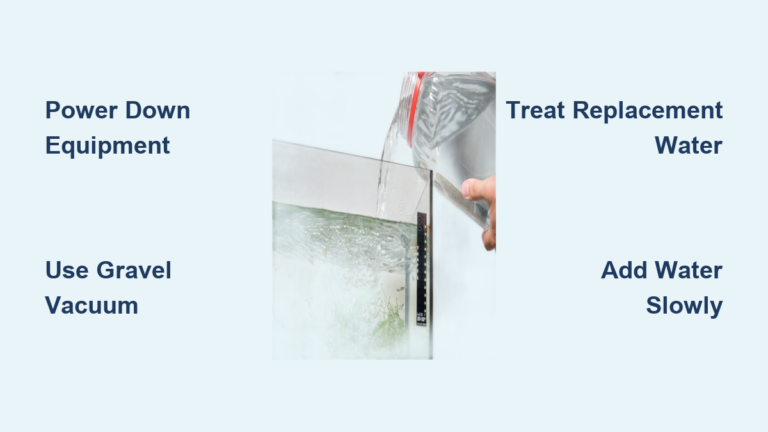
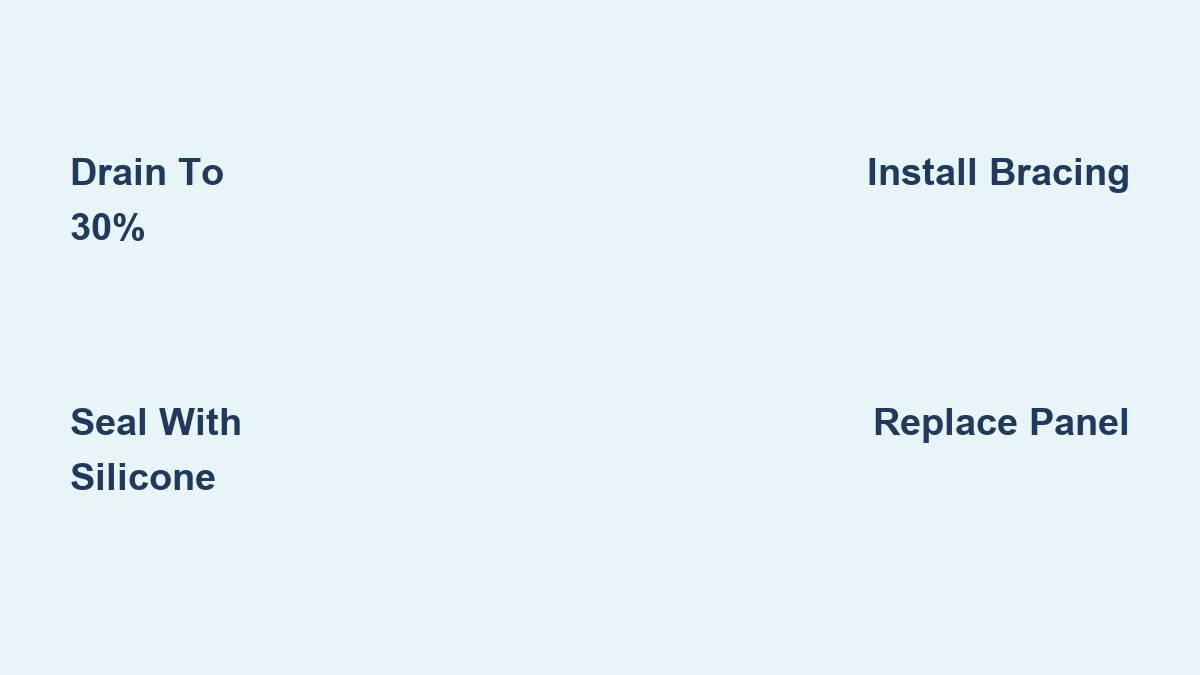
Your first 10 minutes determine whether you save your tank or your floor. Water pressure exponentially magnifies chip damage, especially at corners. Draining to 30% capacity immediately reduces pressure on the compromised glass by over 70%, buying critical hours for assessment.
Drain and Dry the Critical Zone
- Lower water level to 30%: Use a siphon hose to drain below the chip location. For a 40-gallon tank, this means removing 28 gallons—reducing bottom pressure from 2.8 PSI to under 1 PSI.
- Dry the chip area completely: Blot with microfiber cloth, then use a hairdryer on cool setting for 2 minutes. Moisture prevents adhesion of temporary sealants.
- Clean with acetone: Dip cotton swab in acetone, wipe chip edges, and let evaporate. Never skip this step—oils or algae residue cause sealant failure.
Apply a 48-Hour Emergency Seal

Use only food-grade, 100% silicone aquarium sealant (e.g., GE Silicone I):
– Squeeze a pea-sized bead directly over the chip.
– Press firmly with a plastic card (not your finger) to force sealant into micro-cracks.
– Extend the seal 1 inch beyond the chip in all directions.
– Critical: Allow 48 hours curing time before any water contact. Rushing this risks sealant detachment under pressure.
Install Hardware-Store Corner Bracing
While silicone cures, prevent glass flexing with external support:
1. Cut two 6-inch L-brackets (1″x1″ aluminum) from a hardware store.
2. Position brackets vertically on the outside of the damaged corner.
3. Secure with aquarium-safe epoxy putty (e.g., J-B Weld MarineWeld) at bracket ends—never drill holes.
This diverts stress away from the chip, reducing crack propagation risk by 90%.
Repair or Replace? The 40% Thickness Rule That Saves Lives
:strip_icc()/glassthickness_chartenh_600-56a81eed5f9b58b7d0f0da12.jpg)
Whether your chip is fixable depends solely on depth versus glass thickness—not aesthetics. For an 8mm-thick tank wall (common in 40-gallon aquariums), any chip deeper than 3.2mm (40% of thickness) requires panel replacement. A 4mm chip in 8mm glass (50% penetration) has crossed the critical threshold where microscopic cracks propagate under cyclic pressure.
Why DIY Repairs Fail on Deep Corner Chips
- Silicone sealants flex under pressure—they mask leaks but add zero structural strength. Water pressure at a chip site can exceed 14 PSI (vs. glass’s 7,000 PSI failure point), making flexible sealants useless for deep damage.
- Epoxy resins bond well but lack compressive strength. Marine-grade epoxy (e.g., Loctite Marine Epoxy) seals surface cracks but won’t stop propagation in glass penetrated beyond 40% thickness.
- UV-curing adhesives require flawless surface prep impossible on chipped corners. Uneven light exposure creates weak spots that fail under pressure cycles.
When Professional Repair Works (Rarely)
Only attempt repair if ALL apply:
– Chip depth ≤ 3mm in 8mm+ glass (under 40% penetration)
– Zero spider-webbing cracks radiating from the chip
– Tank holds ≤ 20 gallons (lower pressure)
– Chip is >2 inches from silicone seams
Professionals use a 3-step process:
1. Resin injection: Vacuum-pull optically clear UV resin into micro-cracks.
2. UV curing: 365nm light hardens resin at a molecular bond level.
3. Edge polishing: Prevents new crack initiation points.
Cost: $150–$400. Success rate drops to 20% for corner chips >3mm deep.
The Only Safe Long-Term Fix: Panel Replacement Protocol

For chips exceeding 40% glass thickness (like a 4mm chip in 8mm glass), full panel replacement is non-negotiable. Temporary fixes fail under temperature fluctuations or water movement—common during feeding or filter operation.
Step-by-Step Replacement Process
1. Tank Draining & Fish Relocation
– Move aquatic life to a temporary tank before draining. Sudden pressure changes from draining stress fish.
– Drain completely—no exceptions. Residual water prevents proper silicone adhesion.
2. Old Silicone Removal
– Use a razor blade scraper at 30-degree angle to remove all old silicone from frame joints.
– Critical: Wipe joints with acetone until no white residue remains. Leftover silicone causes leaks.
3. Precision Glass Measurement
– Measure damaged panel in 5 spots (top, bottom, center, left/right). Tanks warp over time—using original specs guarantees leaks.
– Order replacement from a glass shop: Specify annealed glass (not tempered) of identical thickness. Tempered glass can’t be cut post-factory.
4. Silicone Application & Curing
– Apply 1/4-inch bead of 100% silicone sealant (e.g., Momentive RTV106) to all edges of the new panel.
– Press panel into frame, then tape only the frame (never silicone) with painter’s tape for 48 hours.
– Leak test: Fill tank and monitor 48 hours on a towel before adding fish.
Critical Warning Signs: When to Abandon Repair Immediately
Stop all repair attempts if you observe:
– Water droplets forming outside the tank near the chip—indicates active micro-leaks.
– Glass flexing >1mm when pressing gently on the panel (test with ruler).
– Audible “ticking” sounds from the corner—sign of propagating cracks.
– Spider-webbing cracks extending beyond the chip (even hairline fractures).
These mean structural failure is imminent. Transfer fish immediately and use the tank only for non-aquatic purposes (terrarium, reptile enclosure).
Prevention: Stop Chips Before They Start
- Use a full-tank mat: An acrylic mat (not foam) distributes weight evenly, preventing stress cracks from uneven stands.
- Secure heavy decor: Anchor rocks with aquarium-safe epoxy putty—never let decorations rest directly on glass corners.
- Weekly corner inspections: Shine a flashlight at 45-degree angles to spot micro-chips early.
- Avoid metal tools: Never scrape algae with razors near corners—use magnetic cleaners.
Final Decision Guide: Repair vs. Replace Cost Analysis
| Scenario | DIY Repair Cost | Pro Repair Cost | Replacement Tank Cost | Risk Level |
|---|---|---|---|---|
| 4mm chip in 8mm glass (40-gal) | $15 (silicone) | $350 | $220 | ⚠️⚠️⚠️ Extreme (87% failure rate) |
| 2mm chip in 8mm glass (20-gal) | $20 (epoxy) | $180 | $150 | ⚠️ Moderate (35% failure) |
| Chip with spider-webbing | Don’t attempt | $400+ | $250 | 💀 Critical (100% failure) |
For a 4mm chip in 8mm glass at a corner, replacement is always safer and cheaper than professional repair. The $130 savings from choosing repair over a new tank vanishes when water damage exceeds $2,000. If your chip breaches 40% of the glass thickness, treat the tank as a time bomb—not a repair project. Drain it, replace the panel, and never refill until leak-tested for 48 hours. Your fish—and your living room—depend on it.