How to Clear Hazy Aquarium Water: Quick Steps
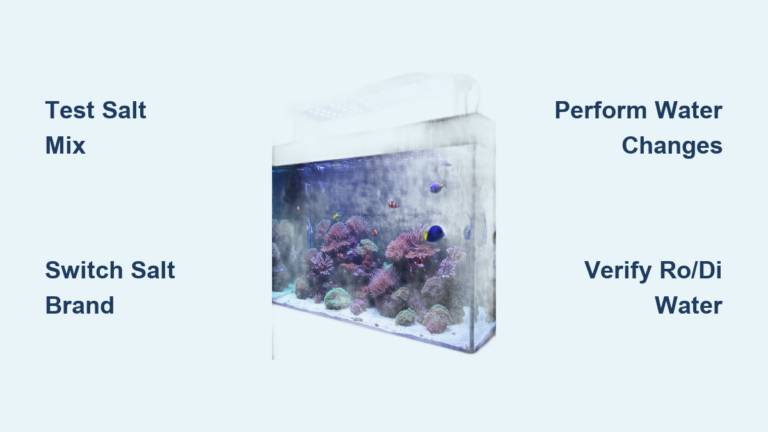
Waking up to a murky aquarium feels like watching your underwater paradise vanish overnight. That once-crystal-clear tank now resembles pea soup, milky coffee, or even iced tea—hiding your fish behind a frustrating haze. This isn’t just an eyesore; cloudy water signals serious imbalances threatening your fish’s health. Whether you’re battling bacterial blooms in a new tank, green algae explosions, or stubborn tannin stains, this guide delivers precise, science-backed fixes. You’ll learn to diagnose the exact cloudiness type within minutes and apply targeted solutions that clear water fast—often within hours—without harming your aquatic ecosystem.
Most beginners panic and overreact, performing massive water changes that worsen the problem. But hazy water has four distinct causes, each demanding a unique fix. I’ve helped hundreds of fishkeepers restore clarity by matching solutions to the specific cloudiness type. Forget generic advice: this guide cuts through confusion with actionable steps verified by aquarium science. By the end, you’ll know exactly how to clear hazy aquarium water while preventing future outbreaks—keeping your fish thriving in pristine conditions.
Identify Your Aquarium’s Cloudiness Type by Color
White or Gray Haze: Bacterial Bloom vs. Suspended Particles
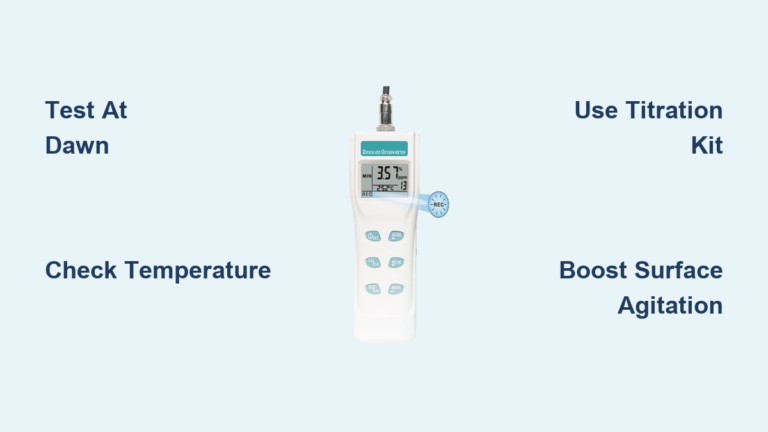
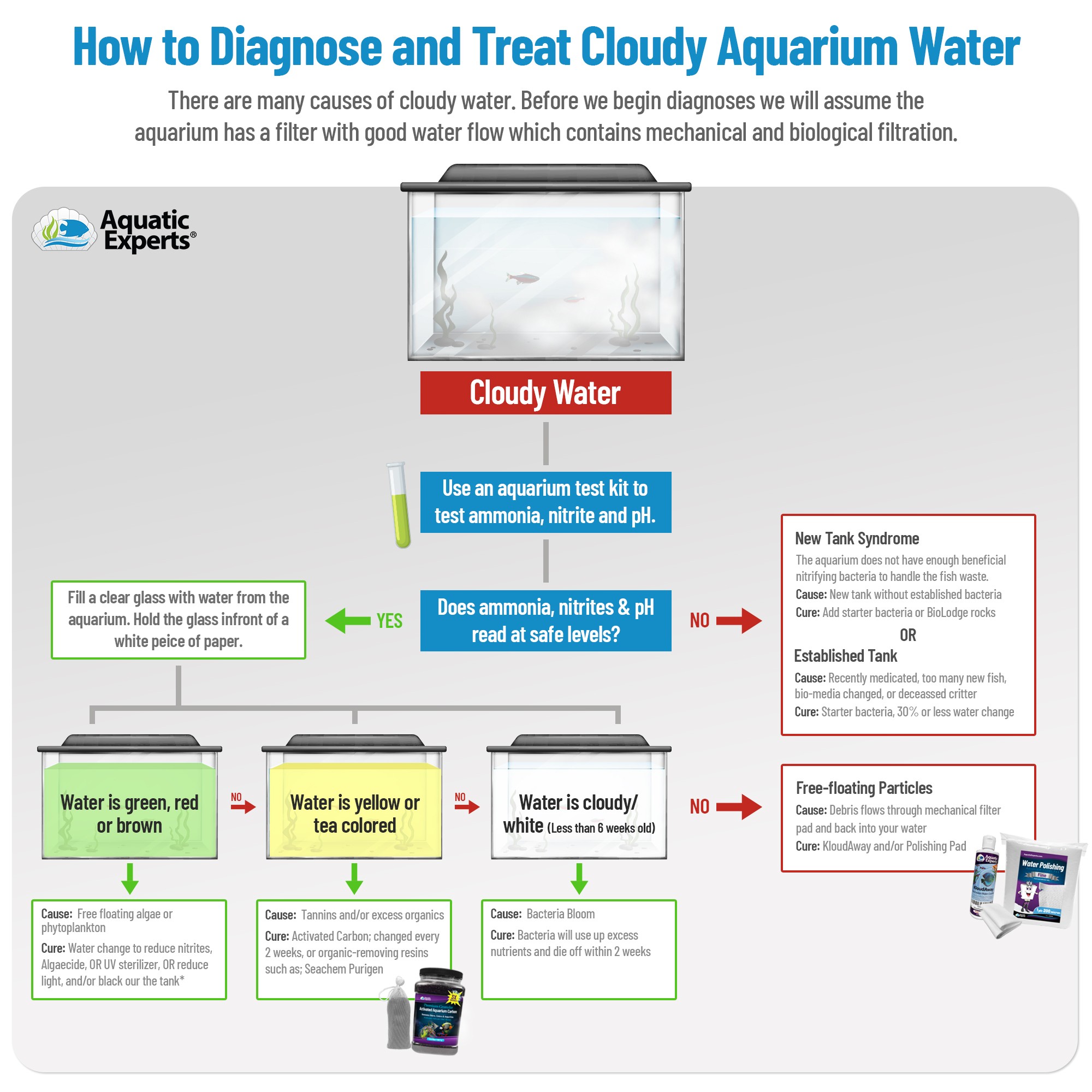
Don’t assume all white clouds mean the same thing. Bacterial blooms create a milky, opaque haze that swirls like fog when you disturb the water. This typically hits new tanks between 2-4 weeks after setup as beneficial bacteria multiply to handle ammonia. You’ll see it after adding too many fish at once or deep-cleaning your filter. Crucially, water parameters will show ammonia or nitrite spikes (test with an API Master Kit).
Suspended particles cause a dusty, grainy appearance you can often trace to recent gravel vacuuming or new substrate. Shine a flashlight through the tank: if particles float visibly like snow, it’s mechanical, not biological. Unlike bacterial blooms, water tests will show normal ammonia/nitrite levels. This happens when your filter’s mechanical stage lacks fine media to trap debris.
Green Water: Algal Bloom Symptoms
When your tank turns into “pea soup,” you’re facing a single-celled algal bloom. This isn’t surface algae—it’s microscopic algae suspended everywhere, making visibility impossible beyond a few inches. It thrives on excess nitrates/phosphates from overfeeding or poor maintenance, combined with 8+ hours of direct light. Test kits will confirm nitrate levels above 40 ppm and possibly high phosphates. Unlike bacterial blooms, green water worsens rapidly in sunny rooms or with strong aquarium lights left on too long.
Yellow or Brown Tint: Tannin Staining Explained
This isn’t true cloudiness—it’s a clear tea-colored tint from driftwood or botanicals releasing tannic acids. The water remains transparent (you’ll see decorations clearly), but takes on a bourbon-like hue. It’s harmless for most fish (especially Amazonian species like tetras) and actually lowers pH. Confirm by checking if the color intensifies after adding new wood. Unlike green or white clouds, water tests stay normal—no ammonia spikes or nutrient imbalances.
Fix Bacterial Bloom Without Water Changes (New Tank Solution)
Why Waiting 3-7 Days Solves New Tank Cloudiness
Your instinct to do a water change will backfire. Bacterial blooms consume excess organic waste as your tank cycles—interrupting this starves beneficial bacteria. Do nothing except test water daily. Ammonia/nitrite will peak, then drop to zero as bacteria multiply. The cloudiness clears naturally in 3-7 days once the cycle stabilizes. Keep feeding normally (but only what fish eat in 2 minutes), and add an airstone to boost oxygen—bacteria need it to process waste. Rushing this with chemicals like Seachem Clarity traps particles but prolongs the bloom by recycling nutrients.
Critical Mistakes That Prolong Bacterial Blooms
Never replace all filter media—this destroys the bacterial colony growing on it. Rinse sponges gently in old tank water during weekly 15% water changes instead of tap water (chlorine kills bacteria). Avoid “cycling accelerators” claiming instant results; most contain ineffective bacteria strains. If cloudiness persists beyond 10 days, test for high phosphates in your tap water—this feeds blooms. Use a phosphate remover like Seachem PhosGuard after the cycle completes, not during.
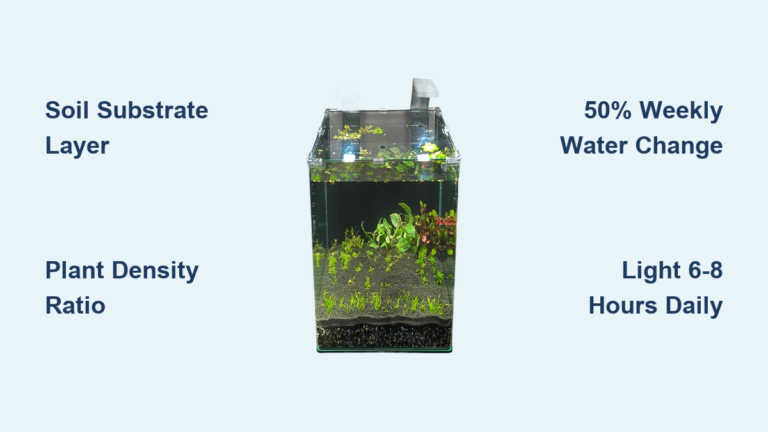
Clear Green Algae Bloom in 4 Days With Complete Blackout
Step-by-Step Blackout Method for Green Water
1. Perform a 50% water change using dechlorinated water to reduce nutrients.
2. Wrap the tank in opaque material (black trash bags work) blocking all light—including room light.
3. Turn off aquarium lights and cover windows—algae needs zero photons to die.
4. Add an airstone for oxygen (algae consumes O2 at night).
5. Wait 72-96 hours without feeding fish.
6. Uncover, do another 25% water change, and resume normal lighting.
This starves algae in 3-4 days. Never skip the water changes before/after—nutrients must be removed or algae returns. During blackout, watch for fish gasping; if seen, uncover immediately and add extra aeration.
UV Sterilizer Setup for Permanent Algae Control
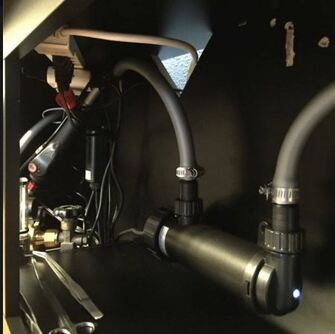
For recurring green water, install a UV sterilizer inline with your filter. Run it 24/7 at 10-30 watts (for 20-50 gallon tanks). It zaps algae cells as water passes through, clearing water in 24-48 hours. Critical tip: Match flow rate to UV wattage (e.g., Fluval 3.0 handles 100 GPH for 30 gallons). Run it 3 days post-blackout, then weekly as maintenance. UV won’t fix the cause (excess nutrients), so combine with reduced feeding and weekly 20% water changes.
Remove Tannin Stains From Driftwood With Purigen
Activated Carbon vs. Purigen for Tannin Removal
Activated carbon pulls tannins but exhausts in 2-4 weeks and removes medications. Seachem Purigen outperforms carbon: it’s a synthetic polymer that absorbs tannins 5x longer and regenerates with bleach. Place it in your filter’s media basket—use 100ml per 20 gallons. For severe stains, boil new driftwood 1-2 hours before adding to tank to leach tannins upfront.
Water Change Schedule for Tinted Water
Since tannins dissolve, replace 25% of tank water every 3 days while Purigen works. Don’t skip changes—this dilutes accumulated tannins faster. Test pH during changes; if below 6.0 (for non-acid-loving fish), add crushed coral to your filter to buffer. Most stains fade completely in 2-3 weeks. Remember: slight tea coloring is natural and beneficial for many species—only treat if color intensifies rapidly.
Trap Suspended Particles With Filter Floss in 6 Hours
How to Install a Polishing Pad in Your Filter
1. Buy poly-fil or filter floss (not cotton balls—they disintegrate).
2. Cut to size and place as the final stage in your filter (after bio-media).
3. Run filter 24/7—particles get trapped in the fine mesh.
4. Rinse or replace floss daily when clogged.
This works for cloudy water after gravel vacuuming or adding new sand. For HOB filters, stuff floss into the intake tube’s pre-filter sponge. Canister filter users should add it to the last media chamber.
Seachem Clarity Dosage for Instant Clarity
For immediate fixes, dose Seachem Clarity (2.5ml per 40 gallons). It clumps particles so your filter catches them. Do not use with UV sterilizers—it renders them ineffective. Results show in 4-6 hours. Never exceed dosage; overdosing clouds water further. Always pair with mechanical filtration—Clarity alone won’t help if your filter lacks fine media.
Prevent Cloudy Water With Weekly 20% Water Changes
Why Overcleaning Your Filter Causes Cloudiness
Deep-cleaning all filter media at once destroys bacterial colonies. Rinse sponges in a bucket of old tank water during water changes—never tap water. Replace only 1/3 of media monthly. If using cartridges, squeeze them gently in tank water instead of replacing. A healthy filter should never cause cloudiness; if it does, your tank is overstocked or overfed.
Feed Only What Fish Eat in 2 Minutes Rule
Overfeeding causes 80% of cloudiness from decaying food. Feed once daily, dropping tiny portions until fish stop eating in 2 minutes. Remove uneaten food immediately with a siphon. For algae-prone tanks, skip feeding 1 day weekly. Add algae-eaters like nerite snails after fixing the root cause—otherwise, they starve when algae dies.
Top 4 Products That Clear Hazy Water Fast
Best UV Sterilizer for Green Water (Fluval 3.0 Review)
The Fluval 3.0 (for 10-30 gallon tanks) clears green water in 48 hours at $65. Its quartz sleeve prevents overheating, and adjustable flow ensures optimal contact time. Run it 24/7 during blooms, then 4 hours daily for prevention. Avoid cheap “UV clarifiers”—they lack sufficient wattage for true sterilization.
Seachem Purigen Recharge Schedule for Tannin Control
Purigen lasts 4+ months before regenerating. When exhausted (turns dark brown), soak in 1:1 bleach/water for 24 hours, rinse, then soak in sodium thiosulfate solution for 8 hours to neutralize chlorine. Recharge every 2-3 months for tanks with driftwood. Never skip regeneration—it becomes toxic to fish.
Clear water isn’t about perfection—it’s about balance. Bacterial blooms in new tanks often resolve naturally, while tannins can benefit certain fish. Focus on water parameters (ammonia/nitrite must be zero) and fish behavior over cosmetic clarity. Test weekly with an API Master Kit, perform 20% water changes every 7 days, and never disturb your filter media recklessly. For persistent issues, check your tap water for phosphates—a hidden algae trigger. Remember: a slightly hazy tank with healthy fish beats crystal-clear water with stressed inhabitants. Your fish thrive in stable environments, not sterile ones. Start today with one small fix—your underwater world will sparkle again by tomorrow.