How to Fertilize Aquarium Plants: Easy Guide
Your aquarium plants are silently starving, and you might not even realize it. Without proper fertilization, even with perfect lighting and CO2, your aquatic garden will develop yellowing leaves, stunted growth, and become vulnerable to algae takeovers. Learning how to add fertilizer to aquarium plants correctly is the missing piece that transforms a struggling tank into a lush underwater paradise. This guide cuts through the confusion to give you a precise, step-by-step method that delivers visible results in just two weeks—without triggering the algae blooms that plague most beginners.
Most aquarists make critical mistakes when starting with plant fertilization—overdosing in hopes of faster growth, using the wrong fertilizer type for their plants, or applying nutrients at the wrong time. The truth is, adding fertilizer to aquarium plants isn’t complicated when you understand your specific tank’s needs and follow a proven system. Whether you’re maintaining a simple low-tech tank with Java Ferns or a high-tech aquascape with carpeting plants, this guide provides the exact techniques to nourish your plants safely and effectively.
Why Your Aquarium Plants Need Specific Nutrients (Not Just Fish Food)
Fish waste and decomposing matter provide some nutrients, but they’re completely unbalanced for plant growth. Your aquatic plants require precise ratios of nitrogen, phosphorus, and potassium—the NPK trio—plus essential micronutrients like iron and manganese. Without these, even with perfect lighting, your plants will struggle to photosynthesize efficiently. The most common mistake beginners make when trying to add fertilizer to aquarium plants is assuming fish food residues are sufficient.
Nitrogen Deficiency: When Older Leaves Turn Yellow and Drop Off
Watch for pale or yellowing older leaves while new growth remains green—this classic sign means your plants are nitrogen-starved. Nitrogen fuels leaf and stem development, and without enough, plants cannibalize older leaves to support new growth. Fix this immediately by adding potassium nitrate (KNO₃) at 1/4 teaspoon per 50 gallons. Within 7-10 days, you’ll notice richer green color returning to mature leaves and stronger new growth emerging. Never overdose trying to fix this quickly—excess nitrogen causes explosive algae growth.
Iron Starvation: Identifying Interveinal Chlorosis in New Growth
When new leaves emerge with yellowing between the veins while veins stay green, you’re dealing with iron deficiency. This common problem particularly affects red plants like Rotala and stem plants like Ludwigia. Act fast by dosing chelated iron at 1 ppm—most liquid iron supplements require about 1ml per 10 gallons. Within 3-5 days, new growth should show improved coloration. For persistent cases, check your pH; iron becomes less available above pH 7.0.
Liquid Fertilizers vs. Root Tabs: Which Method Works for Your Tank Setup

The biggest decision when learning how to add fertilizer to aquarium plants is choosing between water column feeding and root feeding methods. Your plant selection determines the right approach—using the wrong method wastes money and causes nutrient imbalances. Most successful planted tanks use a combination of both techniques tailored to specific plant needs.
How to Dose Liquid Fertilizers for Anubias and Java Fern Without Overdosing
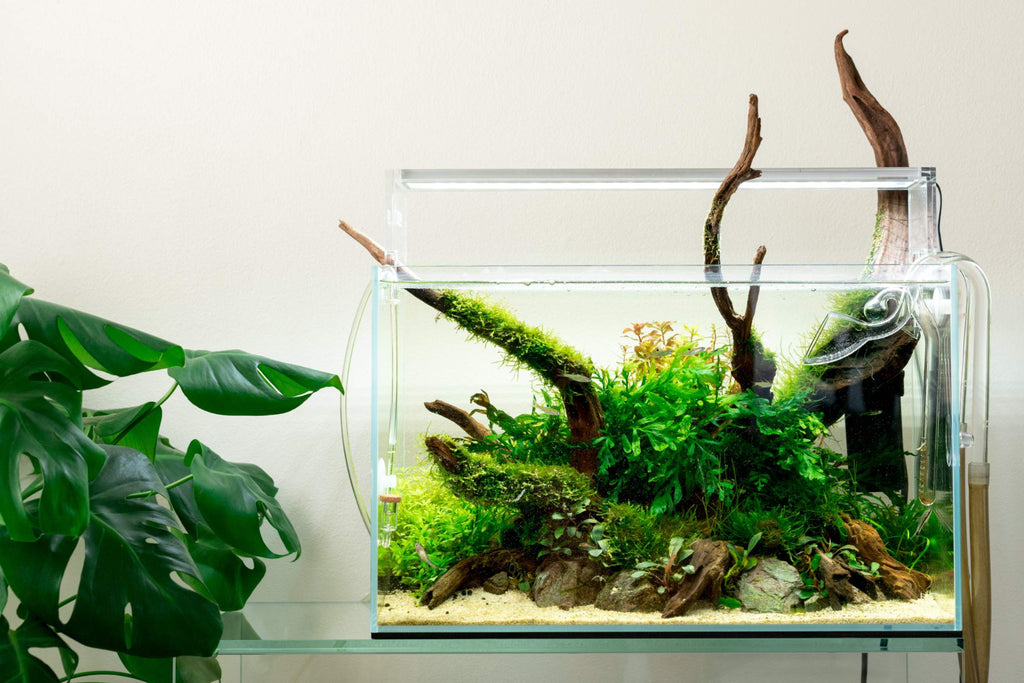
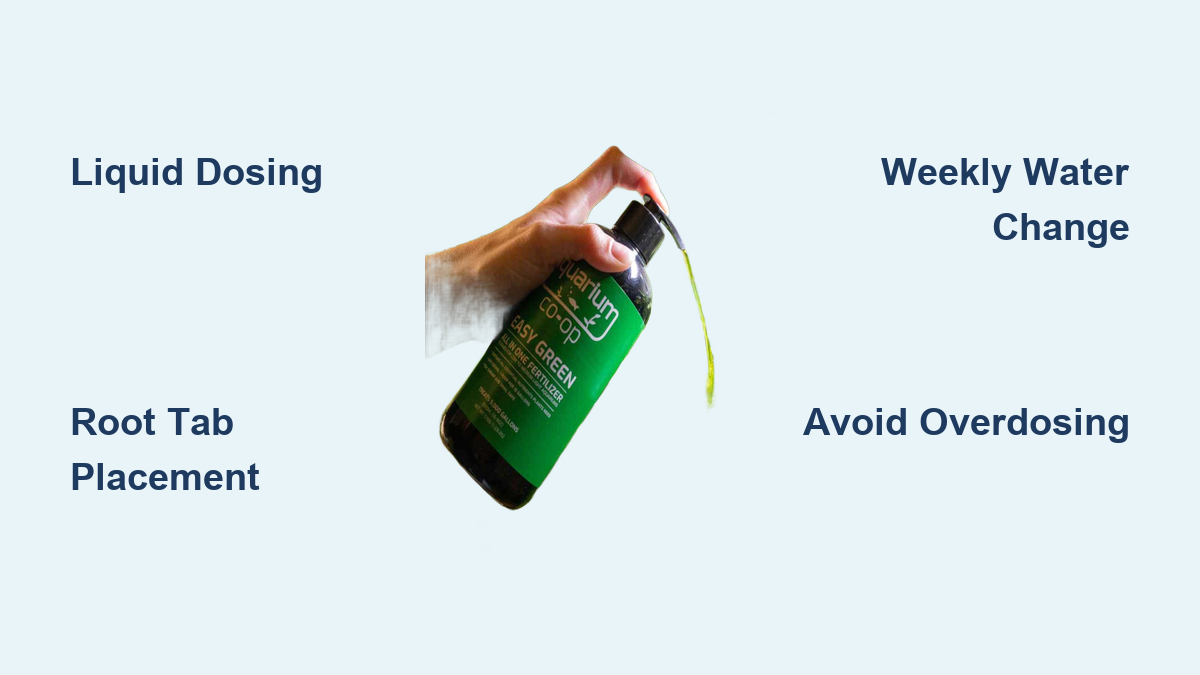
Epiphytic plants like Anubias, Java Fern, and Bucephalandra absorb nutrients primarily through their leaves, making liquid fertilizers essential. Use this precise technique: After your weekly water change, add all-in-one liquid fertilizer (like Seachem Flourish or Aquarium Co-op Easy Green) directly into the filter outflow stream. For a 20-gallon tank, dose 2ml—never more. Overdosing causes algae on these slow-growing plants. For best results, dose once weekly rather than daily to prevent nutrient spikes.
The Exact Placement Technique for Root Tabs Under Amazon Swords
Heavy root feeders like Amazon Swords, Cryptocorynes, and Vallisneria require nutrients delivered directly to their root zones. Here’s the professional method: Using planting tweezers, insert Seachem Flourish Tabs or Osmocote Plus capsules 2-3 inches deep into the substrate, positioned 1 inch away from the plant base. For a 20-gallon tank with 3 sword plants, place one tab per plant. Replace every 3-4 months—signs it’s time include slowed growth and yellowing lower leaves. Never place tabs directly against roots to avoid burn.
Step-by-Step: How to Add Fertilizer to Aquarium Plants in 5 Minutes
Adding fertilizer to aquarium plants becomes effortless when you follow this streamlined process. The key is consistency and precision—random dosing causes more problems than it solves. With the right tools and timing, you’ll spend less than 5 minutes weekly maintaining perfect nutrient levels.
Measure First: Why a 1ml Syringe Beats Guessing with Capfuls
Always measure precisely using a 1ml syringe—not the cap that comes with your fertilizer bottle. Most liquid fertilizers require doses measured in milliliters, and eyeballing leads to dangerous overdosing. For a standard 20-gallon tank, liquid all-in-one fertilizers typically need 2ml weekly. Draw the exact amount into your syringe, then dispense slowly near your filter outflow for even distribution. This simple step prevents 90% of algae problems caused by inconsistent dosing.
Timing Matters: When to Add Fertilizer After Water Changes
The critical timing rule: Always dose fertilizers immediately after your water change. This resets nutrient levels and prevents dangerous buildup. For low-tech tanks (no CO₂), dose once weekly after a 25-30% water change. High-tech tanks with CO₂ injection require more frequent dosing—3x weekly after 30% water changes. Never dose before water changes, as this concentrates nutrients and triggers algae. Set phone reminders to build this habit until it becomes automatic.
Avoid These 3 Critical Fertilizing Mistakes That Cause Algae
Most algae outbreaks stem from three preventable fertilizing errors. Fixing these alone will transform your tank’s health more than any other single change you can make when learning how to add fertilizer to aquarium plants.
Why Your Green Water Exploded After Adding Fertilizer

Green water blooms occur when nitrogen and phosphorus spike without sufficient plant mass to absorb them. The instant fix: Perform a 50% water change immediately, then reduce your next fertilizer dose by half. For ongoing prevention, ensure your tank has enough fast-growing plants like Hornwort or Rotala that consume excess nutrients. Never add fertilizer to a new tank with sparse plant coverage—wait until plants establish root systems first.
The Over-Fertilization Emergency Protocol: 50% Water Change First
If you accidentally overdose, act immediately: Perform a 50% water change before doing anything else. Then add activated carbon to your filter to absorb excess nutrients. Stop all fertilization for 7-10 days while monitoring plant health. When you resume, dose at 25% of your normal amount and increase gradually. Never try to “fix” an overdose by adding more of another nutrient—that creates dangerous imbalances.
How to Create a Foolproof Weekly Fertilizing Schedule
Your fertilizing schedule should match your tank’s specific demands—not someone else’s recommendation. The right routine depends on your lighting, CO₂, and plant types. Follow this tailored approach to add fertilizer to aquarium plants with confidence.
Low-Tech Tank Formula: One Dose Per Week for 20-Gallon Tanks
For non-CO₂ tanks with moderate lighting (6-8 hours daily), use this simple schedule: After your weekly 25% water change, dose 1ml of all-in-one liquid fertilizer per 10 gallons. Add root tabs every 3 months for heavy root feeders. This minimal approach prevents nutrient spikes while providing essential elements. Test nitrate levels monthly—ideal range is 10-20 ppm. If algae appears, reduce dose by 25% rather than skipping doses entirely.
High-Tech Tank Routine: Daily Dosing Without Nutrient Spikes
CO₂-injected tanks require more frequent dosing to match accelerated plant growth. Use this professional method: Dose liquid all-in-one fertilizer daily after lights-on, splitting your weekly dose into 6 equal portions. For a 20-gallon high-tech tank, this means 0.33ml daily instead of 2ml weekly. Pair this with root tabs every 2 months for root feeders. Test nitrate and phosphate levels weekly, adjusting doses to maintain 10-20 ppm NO₃ and 0.5-1.0 ppm PO₄.
Troubleshooting Guide: What Your Plants Are Telling You
Your plants constantly communicate their nutrient status through visual cues. Learning this language transforms how you add fertilizer to aquarium plants from guesswork to precision science.
Yellow Edges and Brown Spots: Fixing Potassium Deficiency in 7 Days
When leaf edges turn yellow with brown spots developing inward, potassium deficiency is the culprit. Immediate action: Dose potassium sulfate (K₂SO₄) at 1/4 teaspoon per 50 gallons. Within 3 days, yellowing should stop spreading. For ongoing prevention, include potassium in your regular dosing routine—most all-in-one fertilizers contain potassium, but high-tech tanks often need supplemental dosing. Check your plants weekly; potassium deficiency progresses rapidly and weakens entire plants.
Final Note: Consistent, measured fertilization transforms struggling plants into a vibrant underwater garden. Start with minimal doses, observe plant responses for two weeks, then adjust gradually. Remember that stability matters more than perfection—plants thrive on consistent nutrient levels rather than chasing ideal parameters. Keep a simple log of your dosing schedule and plant responses to refine your approach over time. With this precise method for how to add fertilizer to aquarium plants, you’ll achieve lush growth without the algae battles that frustrate most beginners.