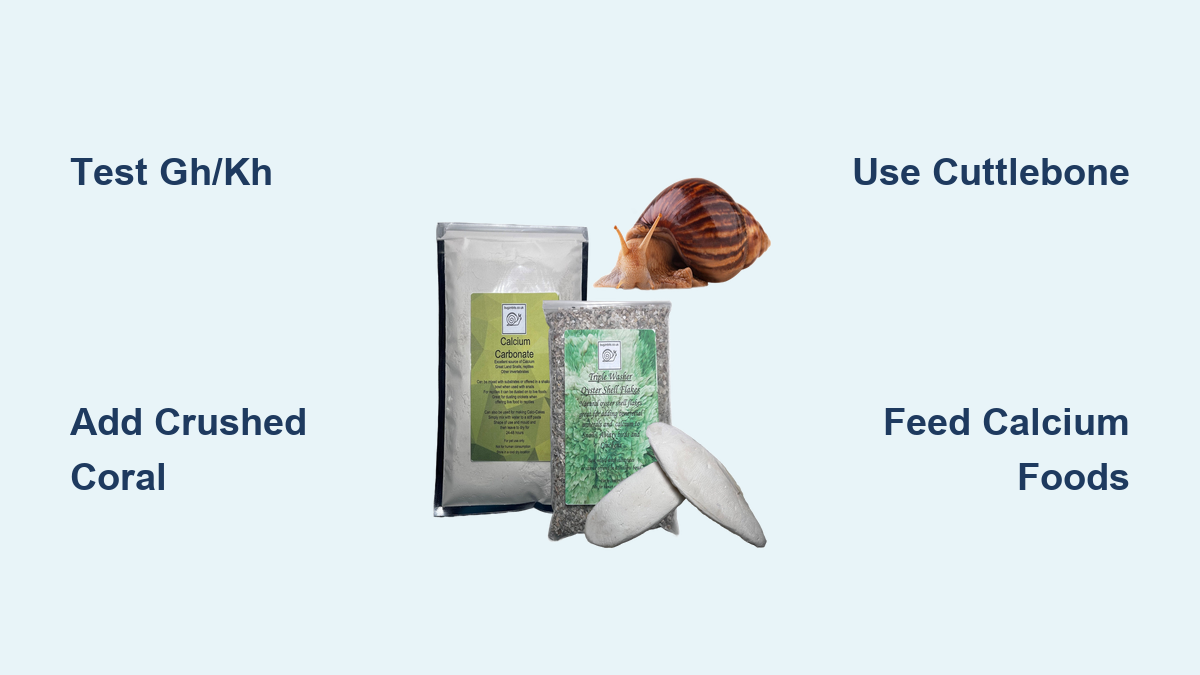
How to Add Calcium to Aquarium for Snails
Your mystery snail’s shell looks chalky and pitted, with thin, flaky new growth barely covering its body. This isn’t normal wear—it’s a calcium emergency. Without immediate intervention, your snail faces shell collapse, impaired mobility, and shortened lifespan. Knowing how to add calcium to aquarium for snails is critical because shells consist of 95-99.9% calcium carbonate, and deficiency directly causes deterioration. This guide cuts through misinformation to deliver tested methods that restore shell integrity within 48 hours. You’ll learn precisely which supplements work (and which reef products to avoid), how to test water for actual calcium availability, and why dietary calcium matters as much as water parameters.
Ignoring calcium needs risks irreversible damage. Hypocalcemia weakens shells so severely that snails can’t retract fully, leaving them vulnerable to injury. But here’s the good news: with the right approach, you’ll see smooth new shell growth within days. Let’s fix this—starting today.
Spotting Calcium Deficiency: Pitted Shells and Swollen Bodies
Don’t wait for catastrophic shell damage. Early detection prevents suffering. Watch for these visual red flags:
- Chalky white pits or holes appearing on the shell surface (not algae)
- Translucent or paper-thin new growth near the shell opening
- Flaky, peeling edges where the shell should be smooth
- Body swelling protruding abnormally from the shell opening
Severe cases show cracked shells or exposed mantle tissue. If you notice pitting, act immediately—shell repair takes 2-3 weeks even with aggressive supplementation. Crucially, test water parameters before assuming deficiency. Some snails like nerites naturally have textured shells, while mystery snails should be glass-smooth. Confuse this with normal variation, and you’ll miss the window for intervention.
Why Water Hardness Determines Calcium Availability
Calcium alone won’t fix shells if your water chemistry blocks absorption. General Hardness (GH) and Carbonate Hardness (KH) are the gatekeepers:
- GH below 8 dGH means insufficient calcium/magnesium ions—shells can’t form properly
- KH under 4 dKH causes pH crashes that lock away available calcium
- Ideal range: 8-12 dGH GH with KH above 4 dKH (pH 7.2-7.8)
Test tap water and tank water with a liquid kit (not strips). If your tap water tests below 5 dGH GH, you’re starting from a deficit. Bottled spring water often lacks adequate minerals—always verify before using in water changes.
Crushed Coral Substrate: Dual-Purpose Calcium and pH Stabilization
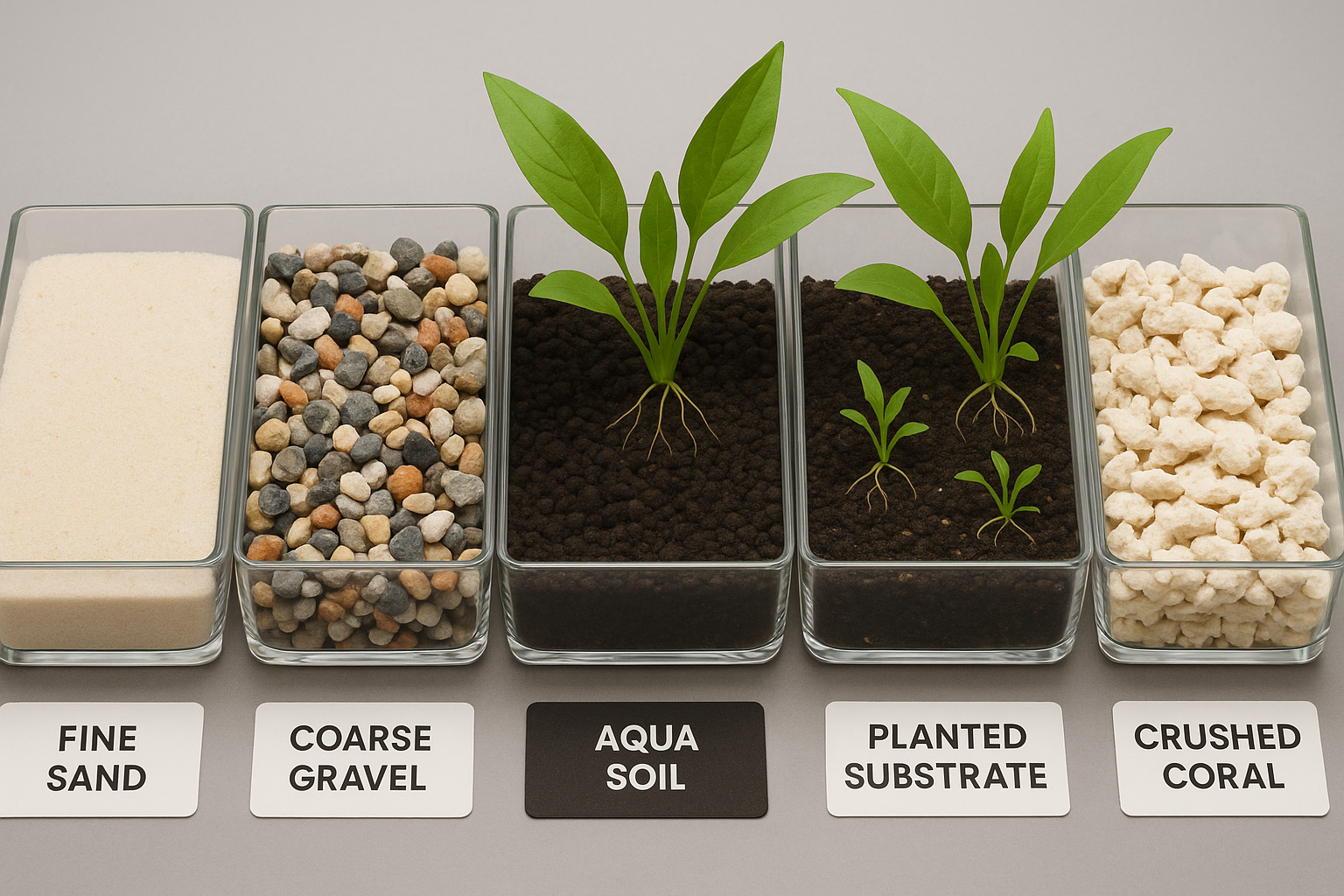
Forget temporary fixes. Crushed coral transforms your tank into a self-sustaining calcium reservoir while preventing deadly pH swings. Its calcium carbonate composition slowly dissolves, releasing bioavailable calcium and carbonates that buffer KH. This is non-negotiable for soft water areas or tanks with frequent pH crashes.
How to Install Crushed Coral for Maximum Impact
For new tanks: Mix 1 part crushed coral with 2 parts gravel as your base substrate (1-2 inch depth). Avoid pure coral—it’s too aggressive for sensitive fish.
For established tanks: Place 1 cup per 20 gallons in a filter media bag inside your canister or HOB filter. Position it where water flow maximizes dissolution.
Pro tip: Rinse coral thoroughly to remove dust, but skip boiling—it destroys beneficial bacteria colonizing the surface. Expect GH to rise 1-2 dGH every 48 hours. Test daily until GH hits 8 dGH, then weekly.
Cuttlebone Power: Floating Pieces vs. Concentrated Calcium Water
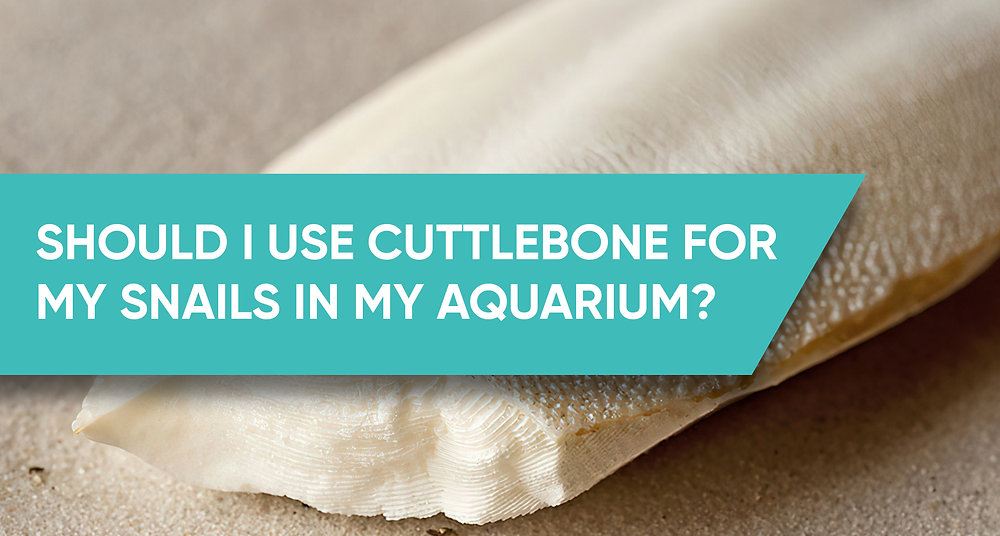
Cuttlebone is the snail keeper’s secret weapon—cheap, accessible, and instantly recognizable to snails. They’ll rasp directly on it, combining water and dietary calcium uptake. But placement matters:
- Direct tank addition: Drop a 3-inch piece (size of your thumb) on the substrate. It floats for 24 hours before sinking—secure it with a rock if needed. Lasts 6+ months.
- Filter boost: Break into coin-sized chunks inside a media bag in your filter compartment. Doubles dissolution rate.
- Emergency solution: Soak a 2-inch piece in 1 liter dechlorinated water for 7 days (shake daily). Dose 1 tsp per 5 gallons of tank water for instant calcium spikes during crises.
Critical check: Ensure cuttlebone is 100% natural (no dyes/additives). Rinse under tap water before use. Discard if slimy or discolored.
Liquid Calcium Dosing: When to Use It (and Reef Product Dangers)
Liquid additives like Seachem Replenish deliver rapid calcium boosts during acute deficiency—but misuse causes mineral “snow” and equipment coating. Reserve them for emergencies when shells are actively deteriorating.
Safe Freshwater Liquid Calcium Protocol
- Never use marine products like kalkwasser—designed for saltwater, they cause lethal pH spikes in freshwater.
- Dose at 50% strength: Add 1/2 cap per 10 gallons during water changes (follow product instructions).
- Wait 48 hours before retesting GH. Never dose consecutively.
If white crust forms on heater glass or decorations, you’ve overdosed. Do a 30% water change immediately with pre-tested water. Liquid calcium is a band-aid—not a long-term solution. Pair it with crushed coral for sustained results.
Calcium-Rich Snail Diets: Snello Recipe and Vegetable Hacks
Water supplementation alone fails if snails can’t ingest calcium internally. This is why dietary sources are equally critical for shell repair.
Make Snello in 10 Minutes: The Ultimate Calcium Gel
Combine:
– 1 cup blanched kale (high in bioavailable calcium)
– 1 tbsp cuttlebone powder (grind dry cuttlebone in coffee grinder)
– 1 tsp unflavored gelatin
– 1/2 cup distilled water
Blend until smooth, heat gently until gelatin dissolves, then chill. Freeze in cubes. Pro tip: Add a pinch of calcium carbonate powder for severe deficiency cases.
Top 3 fast-absorption foods:
1. Canned green beans (no salt added)—snails devour them within hours
2. Blanched spinach (soak 2 mins in boiling water first)
3. Zucchini slices (pierced with toothpick to sink faster)
Avoid calcium binders like oxalates in raw beet greens—they block absorption.
5-Day Calcium Correction Plan: No Water Shock Guaranteed
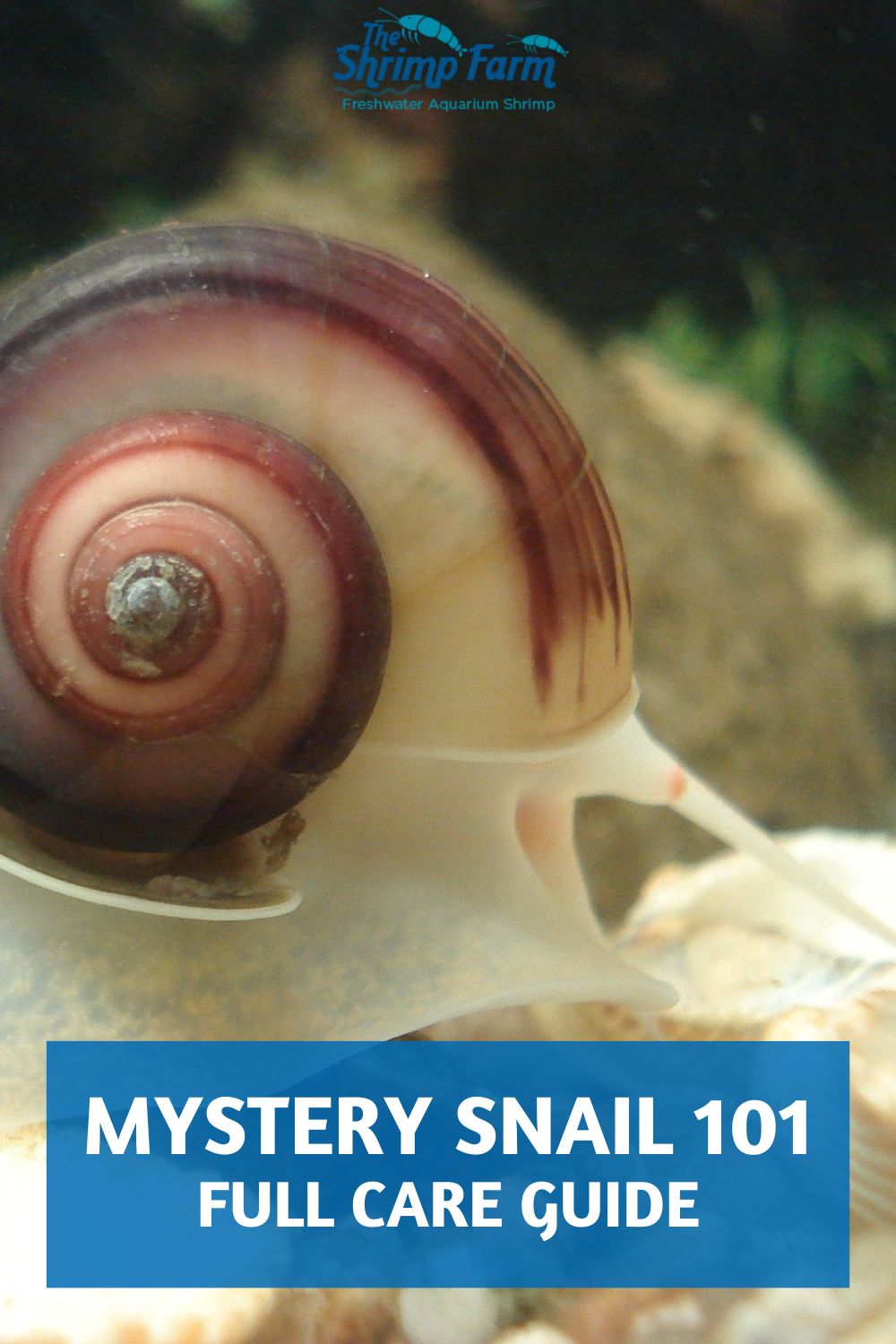
Follow this step-by-step sequence when shells show active pitting:
Day 1: Test GH/KH. Add 1 cup crushed coral to filter + 3-inch cuttlebone to tank.
Day 2: Dose liquid calcium at 50% strength during water change (match temp/pH!).
Day 3: Offer Snello or canned green beans. Test GH—should rise 1-2 dGH.
Day 4: Repeat Day 2 dose only if GH < 8 dGH.
Day 5: Observe snails—new shell growth should appear smoother.
Never change >25% water during correction. Always pre-mix new water with Seachem Equilibrium to match tank GH. Sudden parameter shifts cause more harm than low calcium.
4 Deadly Calcium Mistakes That Kill Snails Faster
Avoid these critical errors that turn supplementation into a death sentence:
- “More is better” dosing: Adding crushed coral and liquid calcium and cuttlebone simultaneously spikes GH >20 dGH. Result? White mineral crusts suffocate snails. Fix: Introduce one method every 72 hours.
- Using marine additives: Reef calcium reactors cause pH to rocket past 8.5 overnight. Snails suffocate as CO2 converts to toxic carbonic acid. Fix: Triple-check product labels—must say “freshwater.”
- Ignoring KH: Boosting GH without KH above 4 dKH leads to pH crashes. Calcium becomes unavailable, and shells keep deteriorating. Fix: Add crushed coral before liquid calcium.
- Skipping baseline tests: Adding calcium to already-hard water (GH >15 dGH) causes osmotic shock. Fix: Test tap water before setting up any tank.
Daily Calcium Health Checks: What Thriving Snails Look Like
Your snails are living calcium meters. Monitor these daily:
- New shell growth should be thick, glossy, and seamlessly attached to older shell
- Full retraction into shell when disturbed (no body bulging)
- Active grazing on cuttlebone within 24 hours of addition
- Clear shell color—no chalky patches or translucency
If growth remains thin after 10 days, test KH again. Low carbonate hardness is the silent killer of calcium uptake.
Long-Term Calcium Stability: The 5-Minute Weekly Routine
Calcium management isn’t a one-time fix. Lock in results with this sustainable system:
- Every water change: Pre-treat new water with Seachem Equilibrium to match tank GH
- Weekly: Test GH/KH—adjust crushed coral quantity if GH drifts below 8 dGH
- Monthly: Replace cuttlebone if heavily rasped (snails stop eating it when saturated)
- Biweekly: Offer calcium-rich food (Snello or green beans)
Pro maintenance tip: Place a small piece of limestone rock in the tank. It dissolves slower than crushed coral, providing emergency calcium during filter failures. Test with vinegar first—it should fizz vigorously.
Final Note: Weak snail shells demand immediate, precise action—but the solution is simpler than you think. By combining crushed coral for stability, cuttlebone for direct access, and calcium-rich foods for internal repair, you’ll see shell recovery within days. Remember: test before you supplement, avoid reef products at all costs, and prioritize water stability over perfect numbers. Your snails’ smooth, robust shells will be your ultimate success metric. Start today—because every hour counts when shells are crumbling.