How to Anchor Hornwort in Aquarium: Easy Tips
Hornwort’s lush green fronds create stunning underwater forests, but its rootless nature turns many aquascapes into floating chaos. Without proper anchoring, this fast-growing plant clogs filters, blocks light, and transforms your carefully designed tank into an overgrown mess within days. Learning how to anchor hornwort in aquarium environments is essential for maintaining both plant health and tank aesthetics. This guide reveals the exact anchoring techniques that keep hornwort securely positioned while promoting vigorous growth—no more chasing floating strands during water changes.
Unlike traditional rooted plants, hornwort (Ceratophyllum demersum) absorbs nutrients directly through its stems and needles. This biological quirk means you’re not planting roots but securing a stem that naturally wants to drift. The right anchoring method prevents frustration while harnessing hornwort’s benefits: oxygenating water, providing fish shelter, and outcompeting algae. You’ll discover which techniques work for your specific tank setup, avoid common mistakes that damage delicate stems, and transform this free-floating plant into a stable, beautiful centerpiece—all without complicated equipment.
Why Hornwort Won’t Stay Put Without Proper Anchoring
Hornwort’s lack of true roots creates unique anchoring challenges. Its stems contain air pockets that provide natural buoyancy, causing even weighted sections to slowly rise toward the surface. Water currents from filters or fish movement easily dislodge loosely secured plants, while nutrient-seeking growth pushes stems upward through substrate. Understanding these forces helps you choose the right countermeasures for your tank’s specific conditions.
Water Flow Impact on Hornwort Stability
Moderate water movement actually benefits anchored hornwort by delivering nutrients and preventing debris buildup. However, strong currents from canister filters or powerheads will constantly tug at anchor points. Position hornwort away from direct flow paths or use rocks to create sheltered zones. In high-flow tanks, double your anchor weight or use multiple attachment points to prevent constant repositioning. Test your setup by observing hornwort behavior during peak filter operation—significant movement means your anchors need reinforcement.
Critical Pre-Anchoring Checks You Must Perform
Before securing a single stem, verify your tank conditions match hornwort’s preferences. This plant thrives in cooler water (59°F-75°F/15°C-24°C) and neutral pH (6.0-7.5). Temperatures above 82°F (28°C) cause rapid needle shedding that weakens anchor points. Test water parameters first—unstable conditions lead to plant stress that mimics anchoring failure. Also, examine stem health: discard any yellowing or brittle sections, as these won’t hold anchors effectively. Healthy hornwort has firm, vibrant green stems that readily accept securing methods.
Heavy-Duty Physical Anchoring Solutions
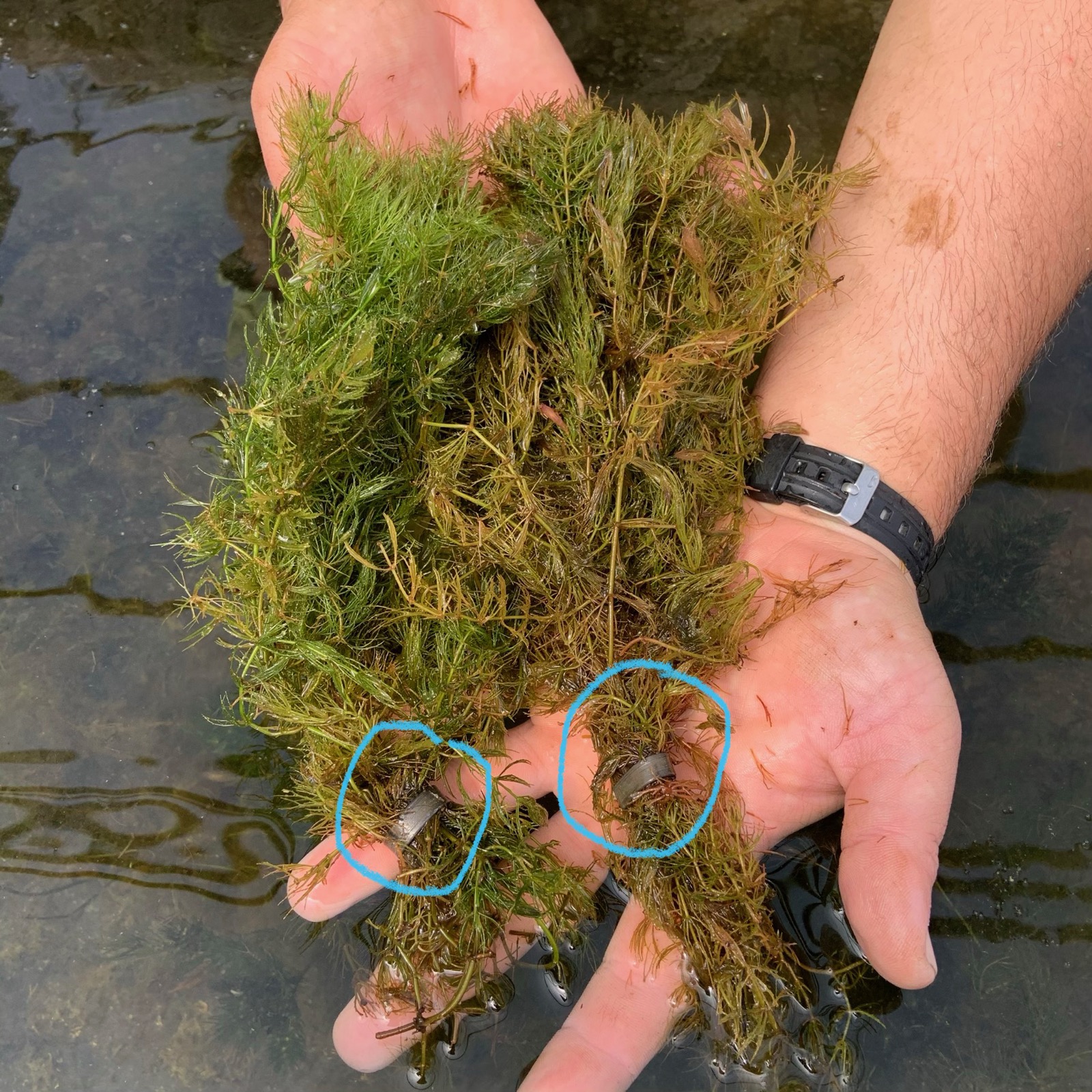
When simplicity matters most, physical weights provide instant results without waiting for natural attachment. These methods work immediately after installation, making them ideal for tanks with active fish that disturb other anchoring techniques.
Commercial Plant Weights: The Beginner’s Secret Weapon
Pre-made plant weights solve anchoring in seconds. Choose lead-free, soft metal strips that won’t slice delicate stems. Gently wrap the weight 1-2 inches from the stem base, creating a loose coil that allows water circulation. For best results, anchor 3-5 stems together to distribute weight. Warning: Avoid twisting weights too tightly—this constricts nutrient flow and causes stem rot within days. These weights are nearly invisible in dark substrates and handle moderate currents, though they require occasional tightening as plants grow.
Fishing Weights: The Budget Anchor That Outperforms
Small split-shot sinkers ($2 at any tackle shop) beat expensive solutions when used correctly. Select sizes matching your stem thickness—tiny #8 weights for slender stems, larger #4 for mature growth. Pinch weights gently around bundled stems using needle-nose pliers, applying just enough pressure to hold without crushing tissue. Pro Tip: Slide weights down to the very base where stems meet, creating a lower center of gravity that resists floating. In tanks with digging cichlids, double the weight count and bury them 0.5 inches under substrate surface.
Potting Method: Create a Self-Contained Hornwort Oasis
This technique creates instant stability while allowing natural growth patterns. Use small pots (2-3 inch diameter) with drainage holes filled with fine aquarium sand. Bury stem bases 1-2 inches deep, then place a smooth river stone on top to prevent displacement. For show tanks, sink pots completely into main substrate and arrange driftwood around the rim. The pot acts as a growth accelerator—hornwort develops thicker stems within weeks as nutrients concentrate in the confined space. In turtle or goldfish tanks, weight pots with ceramic pavers to prevent tipping.
Precision Attachment Techniques for Hardscape Integration
Securing hornwort to driftwood or rocks creates natural-looking aquascapes but demands gentle handling. These methods preserve stem integrity while delivering professional results.
Fishing Line Method: The Natural Bonding Technique
This time-tested approach mimics nature’s attachment process. Gather 5-7 healthy stems and position them against your hardscape. Use dark cotton thread (not synthetic) to wrap stems to the surface in a figure-eight pattern—this distributes pressure evenly. Critical step: Leave wraps slightly loose; overtightening causes stem necrosis within 48 hours. Within 10-14 days, hornwort develops natural grip points as new shoots weave through hardscape textures. By week 3, the thread decomposes harmlessly while the plant holds firm. Works best on porous lava rock or textured driftwood.
Super Glue Gel: Instant Attachment Without Damage
Cyanoacrylate gel (not liquid) creates bonds that cure underwater without harming plants. First, dry the attachment area on your rock using a paper towel—moisture prevents bonding. Apply a pea-sized glue dot, then press the stem base firmly for 30 seconds. Never submerge immediately—wait 60 seconds for initial set. Gel formulas won’t run into tank water, and within days, new growth covers the tiny glue spot. Ideal for attaching to smooth surfaces like slate where thread fails. Avoid contact with fish—cured glue is safe, but uncured fumes irritate gills.
Substrate Planting Systems That Prevent Uprooting

Planting directly into substrate creates the most natural appearance but requires technique adjustments for hornwort’s unique biology.
Gravel/Sand Planting: The Rootless “Planting” Technique
True planting is impossible, but substrate burial mimics it effectively. Trim 1 inch of needles from stem bases to expose clean tissue. Using planting tweezers, insert stems vertically 1.5 inches deep into fine substrate (avoid coarse gravel). Immediately place a 0.5-inch pebble against each stem to prevent floatation. Key insight: Plant stems 1 inch apart—they’ll interlock as they grow, creating mutual support against currents. In high-tech tanks, add root tabs beneath the pebble for explosive growth. Check daily for the first week; gently reseat any stems showing upward movement.
Pot-in-Substrate System: Ultimate Stability for Problem Tanks
For tanks with burrowing fish or strong currents, this dual-layer method is unbeatable. Place a small mesh pot (like those for aquatic plant starters) into your main substrate. Fill with nutrient-rich soil, then plant hornwort stems through the mesh bottom. Cover the pot’s top with 0.5 inches of main substrate to hide it. The mesh allows roots to seek nutrients while containing stems. Pro upgrade: Place a flat stone over the pot opening—this prevents fish from digging while permitting light penetration. Replant every 3 months as stems thicken.
Troubleshooting Anchoring Failures in 24 Hours

When hornwort escapes anchors, these targeted fixes restore stability before algae takes over.
Immediate Fixes for Floating Hornwort
- Symptom: Stems rising despite anchors
Solution: Add secondary weight—attach a second split shot 2 inches above the base stem. The dual-anchor system counters buoyancy at multiple points. - Symptom: Stems breaking at attachment points
Solution: Replace constricting materials with soft cotton thread. Wrap in loose loops that slide slightly rather than pinch tissue. - Symptom: Needle shedding after anchoring
Solution: Check water temperature—hornwort above 77°F (25°C) sheds needles regardless of anchoring. Perform a 30% water change with cooler water immediately.
Algae Prevention on Anchored Hornwort
Anchored hornwort attracts algae if growth slows. Combat this by:
1. Trimming top 3 inches weekly to maintain rapid growth
2. Positioning near CO2 diffusers (if used) for accelerated growth
3. Adding 2-3 Amano shrimp per 10 gallons to patrol anchor points
Healthy hornwort outgrows algae within days when nutrient flow is optimized at anchor sites.
Tank-Specific Anchoring Selection Guide
Match your method to your aquarium’s unique challenges using this decision framework:
| Tank Type | Best Method | Why It Works | Setup Time |
|---|---|---|---|
| Shrimp/Dwarf Cichlid | Pot-in-Substrate | Protects delicate stems from nibbling | 5 minutes |
| Turtle Tank | Double Fishing Weights | Withstands digging and flipping | 3 minutes |
| High-Tech Planted | Substrate Planting | Maximizes nutrient uptake | 8 minutes |
| Breeder Tank | Floating Method | Allows quick removal for fry access | 1 minute |
For community tanks with mixed fish, combine methods: use fishing weights for front-scene plants and floating sections in the back. Always anchor new growth toward tank center—mature outer stems naturally lean toward light, creating balanced growth.
Maintenance Protocol for Permanent Anchoring
Hornwort requires active management even after successful anchoring. Inspect anchor points every 3 days during the first month, looking for:
– Stem discoloration (yellow/brown at base = too tight)
– Weight displacement (common after water changes)
– Algae buildup on slow-growing sections
During weekly maintenance, gently shake anchored clusters to dislodge debris. Every 2 weeks, lift weights slightly and add liquid fertilizer directly to the base—hornwort absorbs 80% of nutrients through lower stems. When trimming, replant the top 4-inch cuttings immediately; they establish faster than new stems.
With these techniques, your hornwort transitions from floating nuisance to anchored masterpiece within two weeks. The key is matching the method to your tank’s specific challenges—whether battling burrowing cichlids or creating a show-tank aquascape. Start with one technique today, observe results for 72 hours, and adjust as needed. Within a month, you’ll have lush, stable hornwort that enhances your tank’s ecosystem while eliminating daily frustration. Remember: proper anchoring isn’t about restraining the plant, but working with its natural growth to create harmony in your underwater world.