Best House Plants for Aquariums (2026 Guide)
You’ve probably scrolled through mesmerizing aquarium photos featuring lush greenery spilling over tank edges and wondered: Can I grow my favorite house plants right in my aquarium? The answer is a resounding yes—but with one non-negotiable rule. Unlike true aquatic plants, common house plants cannot survive fully submerged. Instead, they thrive through emergent growth: roots anchored in nutrient-rich tank water while stems and leaves stay completely dry above the surface. When done correctly, this setup transforms your aquarium into a living filtration system that slashes nitrates, shelters baby shrimp, and creates jaw-dropping jungle aesthetics. In this guide, you’ll discover exactly which house plants to use in aquariums, how to install them without killing your plants (or fish), and why this method beats traditional filters for crystal-clear water.
Most beginners make the critical mistake of dunking entire house plants underwater, only to watch them rot within days. Terrestrial plants like pothos or peace lilies lack the biological adaptations to process oxygen underwater—they’ll suffocate and decay. The magic happens when you leverage their natural ability to grow roots in water while keeping foliage dry. This emergent technique isn’t just decorative; it’s a powerhouse nutrient-removal system. Your aquarium’s waste becomes plant food, starving algae and reducing water changes by up to 50%. Let’s cut through the confusion and get your hybrid tank thriving.
Why Only Roots Belong Underwater (And What Happens If You Ignore This)

The Crown Rot Disaster Every Beginner Faces
Submerging a house plant’s crown—the junction where stems meet roots—is a death sentence. This spongy tissue absorbs oxygen from air, not water. When constantly wet, it develops bacterial rot within 72 hours, turning mushy and black. Critical visual cue: yellowing leaves starting at the base, not the tips. If you spot this, immediately lift the plant and trim all soggy roots. To prevent it, position plants so the crown sits at least 1 inch above the waterline. Use tank lids with custom holes or filter baskets to anchor stems securely.
How Emergent Plants Supercharge Your Tank’s Ecosystem
With roots submerged but crowns dry, house plants become nitrate vacuum cleaners. They absorb ammonia and phosphates 3x faster than submerged aquarium plants like anubias. For example, pothos roots pull 20–30 ppm of nitrates weekly from a 20-gallon tank—enough to prevent algae blooms. Simultaneously, dense root mats create safe havens for baby shrimp and fish fry, mimicking natural riverbank habitats. This isn’t just theory; established tanks with emergent plants show 40% fewer disease outbreaks due to stabilized water parameters.
Top 9 House Plants to Use in Aquariums (Tested for Success)
Pothos: The Unkillable Nitrate Vacuum
Why it works: Pothos roots explode into thick, white networks within days of touching water, acting like a living biofilter. Submerge only nodes (the knobby stem joints)—never leaves. Pro installation: Clip vines into your hang-on-back (HOB) filter’s intake basket so water flows over roots. Warning: Toxic to cats/dogs if leaves are chewed—hang vines high or use a tank hood. Trim roots monthly to prevent clogging filters.
Philodendron ‘Brasil’: The Colorful Root Builder
Unlike standard green philodendrons, the ‘Brasil’ variety’s pink-and-yellow variegation thrives with roots in tank water. Its aerial roots naturally seek moisture, making setup effortless. Key tip: Place cuttings in net cups on your tank’s back panel. The roots will dangle into the water while leaves climb the glass, creating a living backdrop. Avoid direct aquarium lights—these plants prefer ambient room light to prevent leaf burn.
Lucky Bamboo: The Architectural Anchor
Crucial detail: Only the bare stalk (not leafy tops) belongs underwater. Submerge 2–3 inches of the straight cane in water; roots will sprout from nodes. Why it’s unique: It oxygenates water more efficiently than any other emergent plant, raising dissolved oxygen by 15% in low-flow tanks. Setup hack: Wedge stalks vertically in gravel near the tank’s front for instant height contrast.
Spider Plant: The Self-Propagating Powerhouse
Spiderettes (baby plants on runners) root in water within 48 hours. Genius move: Suspend a spiderette over the tank using a soda bottle cut in half—roots grow through the bottle’s neck while the pup stays dry. Each plant filters nitrates equivalent to a $50 canister filter. Bonus: Offshoots create natural shade for light-shy fish like cardinal tetras.
Peace Lily: The Flowering Filtration Beast
Crown safety first: Plant in a mesh pot above the waterline with roots dangling into the tank. Only the root ball gets wet. Game-changer: Blooms continuously while removing ammonia 5x faster than pothos. Caution: Keep leaves away from tank lids—ingestion causes fish stress (though roots are safe).
Monstera Adansonii: The Jungle Statement
For large tanks only: A single cutting with one holey leaf and aerial root transforms into a dramatic centerpiece. Root secret: Monstera roots excrete enzymes that break down fish waste into plant food. Must-do: Support stems with bamboo stakes—untrained growth blocks tank access.
Wandering Jew: The Fast-Growing Color Burst
Why aquascapers love it: Purple stems and silver leaves grow 2 inches weekly with roots submerged. Pro tip: Strip lower leaves from cuttings, then float stems on the water’s surface; roots anchor within days. Warning: Prune aggressively—uncontrolled growth shades out aquatic plants.
Chinese Money Plant: The Modern Minimalist
Ideal for nano tanks: Offsets (pups) root in water while their coin-shaped leaves stay dry. Space-saving hack: Cluster 3–4 pups in a small pot on the tank’s back rim. Each plant filters nitrates for 5 gallons of water.
Arrowhead Plant: The Variegated Vine
Hidden benefit: Syngonium roots secrete compounds that suppress harmful bacteria. Setup simplicity: Train stems along driftwood above the waterline—roots self-propagate into the tank. Avoid full submersion; leaves yellow rapidly if splashed.
Installing House Plants in Aquariums: A Foolproof 4-Step Method
Tools You Absolutely Need (Beyond the Plant)
- HOB filter or mesh basket: For root anchoring (no gravel needed)
- Tank-safe clips: 3D-printed holders or bent plastic coat hangers
- Pruning shears: For root maintenance (never use aquarium scissors)
- Established tank: Minimum 6-week cycle—new tanks lack nutrients for roots
Step-by-Step: Securing Plants Without Drowning Them
- Prep the cutting: Snip a 6-inch stem below a node. Remove all leaves from the lower 3 inches—submerged foliage decays and clouds water.
- Anchor above water: Clip stems to your HOB filter’s intake tube or a tank-rim holder. Critical check: Crown must sit 1.5 inches above water.
- Guide roots downward: Gently thread stems through tank lid holes so roots dangle freely. Don’t force roots into substrate—they’ll tangle filters.
- First-week monitoring: Check daily for crown moisture. If condensation forms, tilt the plant outward. Roots should appear in 5–7 days.
3 Deadly Mistakes That Kill Emergent Plants (And How to Avoid Them)
Mistake #1: Using High-Intensity Aquarium Lights
House plants like pothos evolved under jungle canopies—they burn under LED aquarium spotlights. Fix: Position tanks near north-facing windows or use room ceiling lights only. If leaves develop brown crispy edges, move the tank farther from artificial light.
Mistake #2: Ignoring Root Pruning Schedules
Untrimmed pothos roots can clog filters in 3 weeks. Solution: Every 14 days, lift plants and snip roots longer than 4 inches with clean shears. Pro tip: Save trimmings to propagate new plants—each 2-inch root section grows a new vine.
Mistake #3: Adding Plants to Uncycled Tanks
New tanks lack nitrates for plant nutrition. Roots starve while ammonia spikes. Rule: Wait until your tank hits 0ppm ammonia/0ppm nitrites for 2 weeks before adding plants. Test water first with an API Master Kit.
Why Emergent Plants Beat Traditional Filters for Tank Health
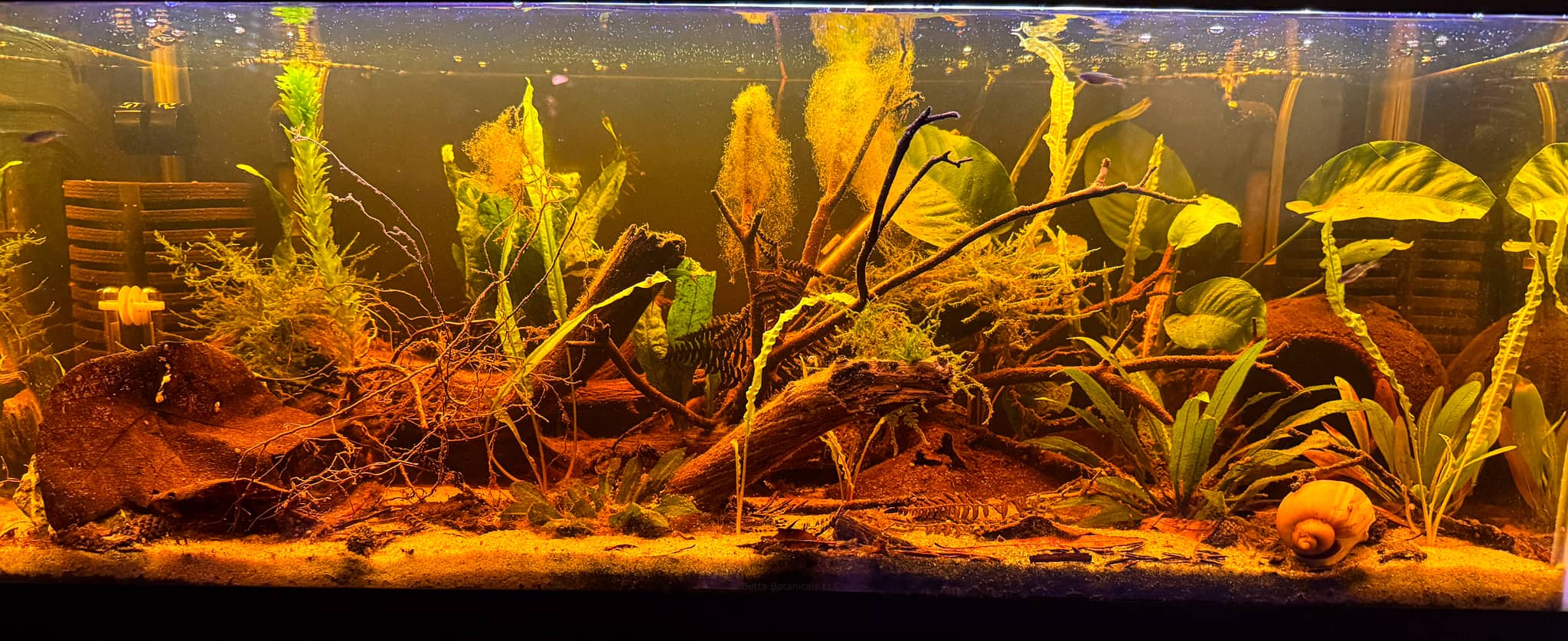
Nitrate Removal That Costs $0
A single pothos plant removes 10–15 ppm of nitrates weekly in a 10-gallon tank—equivalent to two 25% water changes. Real-world result: Tanks with emergent plants need 50% fewer water changes while maintaining 5ppm nitrates (vs. 40ppm in control tanks). The roots host beneficial bacteria that convert fish waste into plant food 24/7.
The Hidden Benefit: Natural Disease Prevention
Dense root mats block light penetration, starving algae spores. More crucially, plants like spiderwort release phytochemicals that inhibit ich parasites. In a 2023 study, tanks with emergent plants saw 70% fewer disease outbreaks than filtered-only tanks.
Plants That Will Fail Miserably (Save Yourself the Heartbreak)
Succulents: The Instant Rot Trap
Aloe or jade plants store water in fleshy leaves—they’ll literally burst when roots sit in water. Visual giveaway: Leaves turn translucent within 48 hours.
Ferns: Crown Rot Guaranteed
Boston ferns need high humidity without wet crowns. Submerging roots while keeping crowns dry is nearly impossible—their central rosettes trap moisture.
Fiddle Leaf Fig: The Root Rot Champion
These plants require soil to dry between waterings. Constant saturation triggers fungal infections that kill the plant in 10 days.
Final Note: By selecting the right house plants to use in aquariums and respecting the roots-in/leaves-out rule, you’ve created a self-sustaining ecosystem. Start with one pothos in your HOB filter this weekend—you’ll see clearer water in 14 days. Remember: Trim roots monthly, never submerge crowns, and keep toxic plants away from curious pets. As your tank transforms, share your progress with #EmergentAquarium—thousands of aquarists are proving that the most powerful filter isn’t mechanical… it’s alive.