How to Use Aquarium Salt for Goldfish: Safe Dosage Tips
When your goldfish clamps its fins, scrapes against decorations, or loses interest in food, panic sets in. You might reach for expensive medications or scour forums for miracle cures—but 95% of goldfish health issues require a simpler solution. The most effective first response isn’t complicated chemistry; it’s a proven two-step protocol: a targeted water change followed by precise aquarium salt dosing. This approach tackles the root cause—water quality stress—that triggers most illnesses in goldfish, from delicate Ranchus to hardy commons. By supporting their osmoregulatory system and disrupting pathogens, salt creates the stable environment your fish needs to heal.
Think of aquarium salt as emergency therapy, not medication. Goldfish, especially fancy varieties, struggle with osmotic stress when water parameters shift. Ammonia spikes, nitrate buildup, or pH swings force them to expend excessive energy just maintaining internal balance. This weakens their immune system, making them vulnerable to ich, fungus, or bacterial infections. A strategic salt treatment eases this burden, redirecting energy toward recovery while a water change removes toxins. In my 27 years of goldfish care—including managing retail stores and service clients—I’ve seen this protocol resolve issues that antibiotics couldn’t touch.
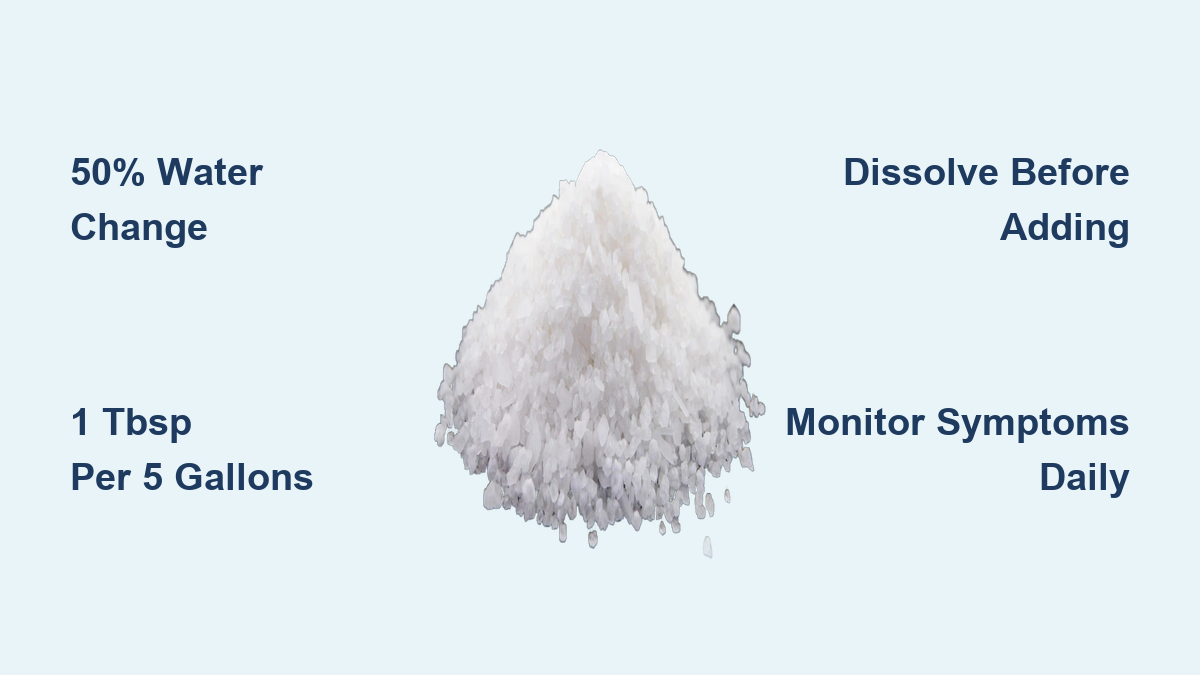
Skip the guesswork: If your goldfish shows ANY abnormal behavior, immediately perform a 50% water change and dose with 1 tablespoon of aquarium salt per 5 gallons of tank volume. This isn’t a last resort—it’s your first, best action.
Why Water Changes and Salt Beat Medications for Goldfish
Goldfish owners often mistake “hardy” for “indestructible,” especially with fancy breeds like Orandas or Ranchus. These fish have compressed bodies and weak immune systems, making them hyper-sensitive to poor water conditions. When ammonia or nitrites rise—even slightly—your fish enters survival mode. It stops eating, clamps fins to conserve energy, and becomes prone to secondary infections. Medications often fail because they don’t address this underlying stress.
Salt therapy works where drugs fall short by targeting osmoregulation. In freshwater, goldfish constantly battle water influx through their gills and skin. Poor water quality worsens this struggle, forcing them to use 30–50% more energy just to stay balanced. Adding salt (sodium chloride) reduces the osmotic gradient, so your fish expends less energy managing fluids. This frees up resources to:
– Neutralize external parasites like ich
– Repair damaged gills or fins
– Fight bacterial infections
– Regain normal feeding behavior
Unlike antibiotics, salt won’t disrupt your tank’s beneficial bacteria. It’s equally effective for pond goldfish and sensitive fancy varieties—but only when paired with aggressive water changes. Skipping the water change is like mopping a flooded floor without turning off the tap.
How Water Quality Triggers Common Goldfish Symptoms
| Symptom | Likely Water Quality Cause | Salt/Water Change Impact |
|---|---|---|
| Clamped fins | Ammonia >0.25 ppm | Reduces osmotic stress in 24 hours |
| White spots (ich) | Nitrite spikes | Disrupts parasite lifecycle |
| Fuzzy growths | High nitrates (>40 ppm) | Inhibits fungal/bacterial growth |
| Lethargy | Sudden pH shift | Stabilizes internal fluid balance |
Step-by-Step Goldfish Salt Treatment Protocol

When your goldfish shows distress signs—flashing against gravel, floating listlessly, or developing white patches—act immediately. Delaying treatment by 24 hours can turn a minor issue fatal. This protocol works for tanks of any size, from 10-gallon bowls to 150-gallon ponds.
Prepare Your Water Change Correctly
Never dump salt directly into the tank or use untreated tap water. Start by gathering:
– A dedicated 5-gallon bucket (never used for chemicals)
– Gravel vacuum for debris removal
– Liquid dechlorinator that neutralizes chlorine AND chloramine
– Aquarium thermometer
Critical mistake to avoid: Using water that’s even 2°F different from tank temperature. Sudden shifts cause shock that worsens stress. Fill your bucket with tap water, add dechlorinator per bottle instructions, then float the thermometer inside. Adjust temperature by adding small amounts of hot/cold water until it matches your tank (check with a second thermometer for accuracy).
Execute the 50% Water Change Safely
For a 30-gallon tank:
1. Siphon 15 gallons into your prepared bucket, vacuuming debris from the substrate as you go
2. Stop siphoning when water level drops to 15 gallons—never drain more than 50% at once
3. Slowly add your temperature-matched new water over 10 minutes to prevent disturbing the fish
Why not 80%? Goldfish thrive on stability. A massive water change alters pH, hardness, and bacterial balance faster than they can adapt. If you normally do 30% changes, jump to 40–50% max—never double your routine amount.
Dose Aquarium Salt Precisely
After the water change, dissolve salt in a cup of tank water before adding it:
– Standard dose: 1 tablespoon per 5 gallons of TOTAL tank volume
– 10-gallon tank: 2 tbsp
– 30-gallon tank: 6 tbsp
– 150-gallon tank: 30 tbsp (1.875 cups)
Never guess with salt. Use a measuring spoon—tablespoons vary by 20% between brands. Dissolving in tank water prevents salt granules from burning the fish’s gills. Add the solution slowly over the surface while the filter runs.
Maintain the Treatment Schedule
For active illness:
– Days 1–3: 50% water change + full salt dose for new water added
– Days 4–7: 40% water change + salt for new water volume
– Days 8–14: 30% water change + salt for new water volume
Example for a 50-gallon tank with clamped fins:
– Day 1: Change 25 gallons → add salt for 25 gallons (5 tbsp)
– Day 3: Change 20 gallons → add salt for 20 gallons (4 tbsp)
– Day 7: Change 15 gallons → add salt for 15 gallons (3 tbsp)
Stop treatment when symptoms vanish for 7 consecutive days. Then gradually reduce salt over 10 days with 20% water changes (no salt added).
When to Start Salt Treatment Immediately
Begin this protocol at the first sign of:
– Flashing or rubbing (fish scraping on rocks/gravel) → Indicates parasites or gill irritation
– Clamped fins held tight to the body → Early stress response before visible symptoms
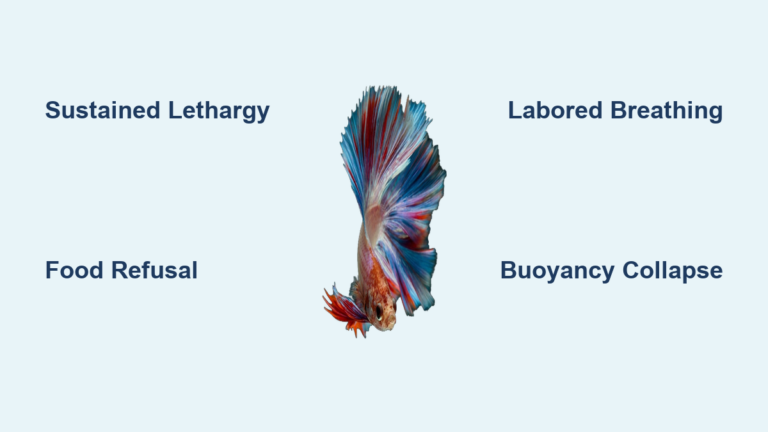
– Lethargy with loss of appetite → Osmotic stress weakening the fish
– White spots or cottony growths → Ich or fungal infection
Pro tip: If you notice one symptom, assume others are developing. Salt won’t harm healthy fish but gives sick ones critical support. For severe cases (bloody fins, gasping at surface), combine this with a vet-approved antibiotic—but salt must come first to reduce stress.
Choosing the Right Salt (And Avoiding Dangerous Substitutes)
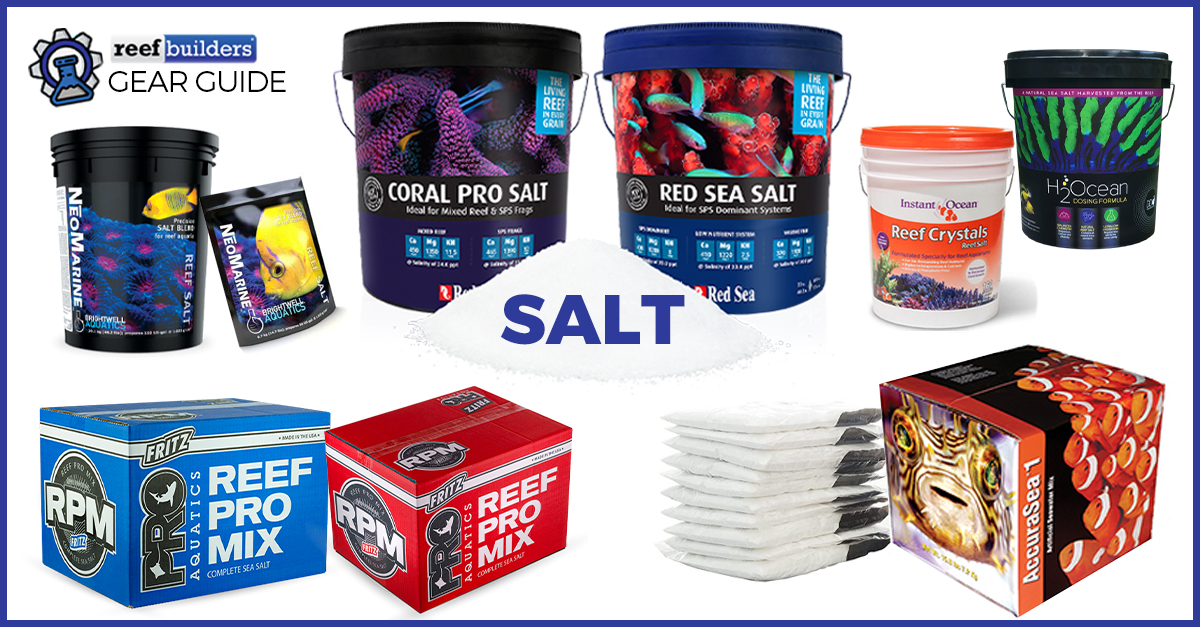
Use ONLY:
– Pure aquarium salt (sodium chloride)
– Non-iodized food-grade salt (e.g., pickling salt)
NEVER use:
– Table salt (contains iodine + anti-caking agents that kill fish)
– Marine salt mixes (adds calcium/magnesium that alters pH)
– “Therapeutic” blends with copper (toxic to goldfish)
Visual check: True aquarium salt dissolves completely in water with no residue. If you see cloudy water or sediment after adding salt, you’ve used the wrong product—do an immediate 50% water change.
Critical Cautions for Planted Tanks and Sensitive Species
Salt at 1 tbsp/5 gallons rarely harms common aquarium plants. In 27 years of treating planted tanks, I’ve seen zero issues with:
– Anubias
– Java fern
– Vallisneria
– Hornwort
But avoid salt if you have:
– Mosses (Christmas moss, java moss)
– Cryptocorynes (may melt)
– Shrimp or snails (salt is lethal to invertebrates)
If in doubt: Quarantine the sick fish in a bare 10-gallon hospital tank. Add 1 tsp aquarium salt per gallon + an airstone. Treat for 10 days while monitoring main tank water parameters.
Why Moving Fish Isn’t Always Best
Many owners rush to isolate sick goldfish—but this often causes fatal stress. Fancy goldfish panic in small, empty tanks, worsening their condition. Only use a hospital tank if:
– You have shrimp/snails in the main tank
– The fish can’t compete for food
– Secondary infections are spreading
Otherwise, treat in place. Your established tank has better bacteria and less stress than a bare quarantine.
What to Do When Salt Isn’t Enough
Salt resolves 95% of cases—but if symptoms persist after 7 days:
1. Test for ammonia/nitrite—levels above 0.25 ppm require daily 30% water changes until zero
2. Check for physical injuries—torn fins may need antiseptic gel
3. Consult a vet for bacterial infections (e.g., fin rot with red streaks)
Never combine salt with formalin-based medications—this creates toxic compounds. If using antibiotics, pause salt for 48 hours before and after dosing.
Final Note: Salt isn’t a cure-all—it’s the foundation of goldfish first aid. By pairing precise dosing with strategic water changes, you address the true culprit behind most illnesses: osmotic stress from poor water quality. This simple protocol has saved thousands of goldfish in tanks from 5 to 150 gallons. Remember, your fish doesn’t need expensive meds—it needs stability. When in doubt, do the water change and add salt. Your goldfish’s recovery depends on it.