How to Remove Nitrites from Aquarium Water
Your Glo Tetras gasping at the surface, gills flaring desperately—that’s the terrifying reality of a nitrite spike. When your API test kit shows 2.0–5.0 ppm nitrite (far above the safe 0.0 ppm), your fish are suffering from “brown blood disease.” Nitrite hijacks oxygen transport in their blood, causing suffocation even in oxygen-rich water. This crisis hits hardest in new tanks—like your 10-gallon setup only two weeks old—but it’s fixable today. Stop testing strips (they’re unreliable!) and follow this battle-tested plan to slash nitrite levels within 24 hours while rebuilding your tank’s biology.
Confirm Your Nitrite Emergency with Liquid Testing
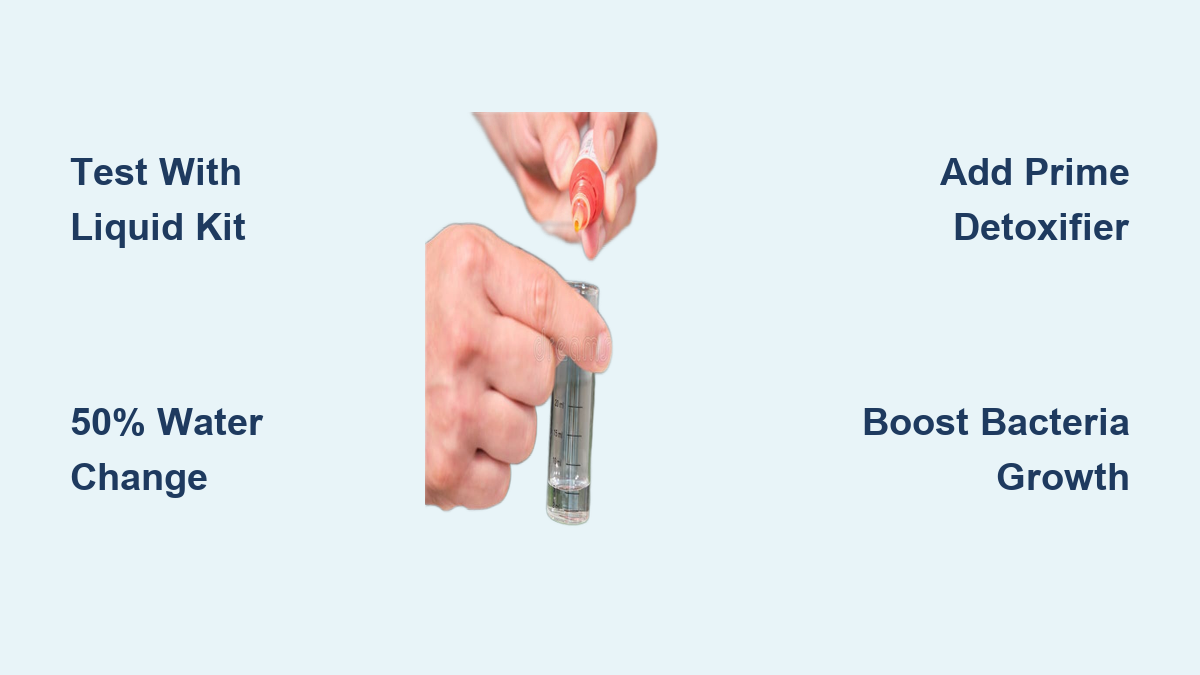
Don’t gamble with test strips when fish are gasping. Your API Freshwater Master Test Kit is your lifeline—shake that nitrite vial vigorously for 5 full seconds to avoid false lows. A reading between 2.0–5.0 ppm means immediate danger: at 1.0 ppm, fish lose 50% oxygen-carrying capacity. Watch for these red flags:
– Lethargic fish lying on the substrate
– Rapid gill movement (over 100 flaps/minute)
– Brownish gills instead of vibrant red
Critical: Retest tap water before water changes. If your source water shows nitrite (rare but possible), switch to bottled spring water immediately.
Execute Emergency 50% Water Changes (With Detoxifying Conditioner)

This isn’t a routine water change—it’s a nitrite detox mission. Skip small 10-20% swaps; you need 50% volume replacement to instantly dilute toxicity. Here’s the exact protocol:
- Prep water FIRST: Fill a clean bucket with tap water, add Seachem Prime at 5x dose (e.g., 10ml for 10 gallons), and match tank temperature (±1°F). Prime’s nitrite-binding power kicks in within 2 minutes.
- Remove dirty water: Use a gravel vacuum to extract 50% of tank water, focusing on waste pockets near decorations. Never siphon below 1 inch of substrate.
- Add treated water SLOWLY: Pour new water over a saucer to avoid disturbing substrate. Rushing causes temperature shock that compounds nitrite stress.
- Re-test in 30 minutes: Target: under 1.0 ppm. Repeat every 12 hours until below 0.5 ppm.
Pro Tip: Prime detoxifies nitrite for 48 hours—dose full tank volume (not just new water) after each change. For your 10-gallon tank with 5.0 ppm nitrite, use 10ml Prime immediately, then 5ml every 24 hours.
Supercharge Bacteria Growth With Targeted Supplements

Your tank’s stalled at the nitrite-to-nitrate conversion phase—the slowest part of cycling. While Nitrosomonas (ammonia eaters) thrived, Nitrospira (nitrite processors) lag behind. Jumpstart them:
- Dose Seachem Stability (1 cap per 10 gallons) after each water change. Unlike “instant cycle” scams, this introduces live Nitrospira that colonize filter media within hours.
- Preserve existing bacteria: Rinse your Fluval Edge sponge only in removed tank water—not tap water! Chlorine kills the very bacteria saving your fish.
- Boost surface area: Add a $3 ceramic ring bag to your Aqua Clear filter. More real estate = faster bacterial growth.
Avoid: Bottled bacteria labeled “ammonia remover”—they often lack Nitrospira needed for nitrite conversion.
Stop Feeding Fish Immediately During Nitrite Crisis
Overfeeding is the #1 cause of nitrite surges in new tanks. Those uneaten flakes feeding your Glo Tetras become ammonia within hours. Here’s your feeding lockdown:
- Zero food for 48 hours: Healthy fish survive weeks without eating. Digesting food increases their ammonia output, worsening the crisis.
- After crisis: Feed once daily only what fish eat in 30 seconds. For 5 Glo Tetras in 10 gallons, that’s 2–3 micro pellets.
- Vacuum leftovers: Use your gravel siphon to remove any uneaten food before it decays.
Warning: Don’t add more fish to “form a school” until nitrite reads 0.0 ppm for 72 hours. Adding 3 more tetras now could trigger mass die-off.
Add Chloride Shield for Instant Fish Protection
Salt isn’t a cure—but it is a nitrite antidote for freshwater tanks. Chloride ions block nitrite absorption through gills:
- Dissolve 1 tablespoon non-iodized aquarium salt per 5 gallons in pre-treated water.
- Add slowly during water changes (max 3 tsp per 5 gallons total).
- Critical exceptions: Skip salt if keeping Corydoras, Plecos, or other scaleless fish.
Science note: This buys 24–48 hours for bacteria to catch up. Pair it with Prime for dual protection—salt blocks gill absorption while Prime detoxifies water.
Install Emergency Aeration Within 10 Minutes
Nitrite-stricken fish suffocate internally. Counteract this by doubling surface agitation:
- Clip an air stone to your filter outflow
- Lower your filter’s flow rate to create surface ripples (not deep currents)
- Remove decorative hoods blocking gas exchange
Check: Watch for tiny bubbles breaking the surface continuously. If gills are still flaring after 30 minutes, add a second airstone.
Prevent Future Nitrite Spikes With These Cycling Hacks
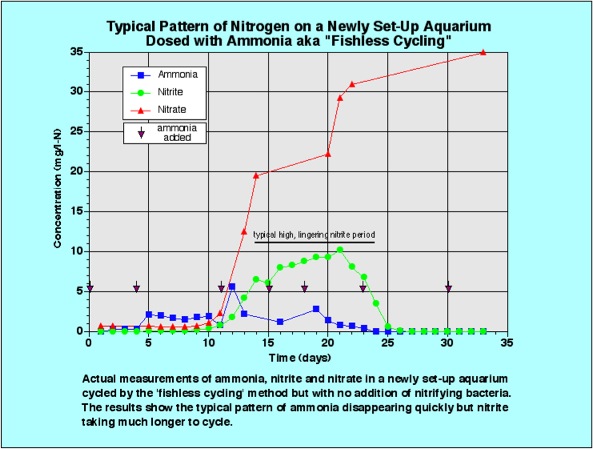
Your tank’s immature biology caused this—but it won’t happen again if you:
Never Add Fish Before Completing the Nitrogen Cycle
- Fishless cycle first: Dose 3ppm ammonia for 4–6 weeks until nitrite→nitrate conversion happens without fish.
- If cycling with fish: Start with just 2 fish in your 10-gallon tank. Add 1 fish weekly only after nitrite hits 0.0 ppm.
Test Water Like a Pro (Not a Panic Buyer)
- Daily during cycling: Test nitrite and ammonia at the same time each morning.
- Track trends: Log results in an app like Aqua Manager. Spikes followed by crashes mean bacteria are multiplying.
Upgrade Your Filter Media Strategically
- Replace half your Aqua Clear foam with bio-media like Seachem Matrix.
- Nest sponge inside filter: Place the Fluval Edge pre-filter between mechanical and biological media to trap waste before it rots.
Your 72-Hour Nitrite Elimination Timeline
| Hour | Action | Target Result |
|---|---|---|
| 0 | 50% water change + 5x Prime dose | Nitrite ≤2.0 ppm |
| 12 | 30% water change + regular Prime dose | Nitrite ≤1.0 ppm |
| 24 | Vacuum substrate + Stability dose | Nitrite ≤0.5 ppm |
| 48 | 25% water change + salt (if safe) | Nitrite ≤0.25 ppm |
| 72 | Zero water change (test only) | Nitrite 0.0 ppm |
If nitrite rebounds after Hour 48: Reduce feeding further and add 1 cup of established filter media from a healthy tank.
When to Call an Aquarium ER (Rare but Critical)
Seek professional help if:
– Fish show spinal deformities or bloody gills after 24 hours of treatment
– Nitrite remains >1.0 ppm despite daily 50% water changes for 3 days
– Your tank has cichlids or goldfish (they produce 3x more waste than tetras)
Otherwise, trust the process: Your Glo Tetras’ recovery within 72 hours proves the fix works. One aquarist with identical 10-gallon conditions eliminated 4.0 ppm nitrite in 3 days using only Prime, water changes, and salt—no fish lost.
Final Note: Nitrite spikes aren’t your fault—they’re your tank’s biology screaming for help. By combining immediate water detox (Prime + salt), aggressive dilution (50% changes), and bacterial boosting (Stability + media upgrades), you transform crisis into stability. Within a week, your API tests will show 0.0 ppm nitrite and rising nitrates—proof your ecosystem is thriving. Remember: The goal isn’t just fixing today’s spike, but building a self-sustaining tank where your Glo Tetras school happily for years. Start your next water change now—your fish are counting on you.