How to Remove Floating Debris from Aquarium
That frustrating “snow globe” effect in your aquarium isn’t just unsightly—it’s a warning sign. Floating debris from uneaten food, decaying plants, and fine substrate particles clouds your view and secretly degrades water quality. Left unchecked, this debris feeds harmful bacteria and algae while suffocating beneficial microorganisms. If you’re searching for how to get rid of floating debris in aquarium water quickly and permanently, you’re not alone. Millions of hobbyists battle this issue weekly, but the solution lies in targeted action—not random fixes. This guide delivers proven, step-by-step methods to eliminate floating debris at its source while preventing future outbreaks. You’ll learn exactly where to vacuum, which filter upgrades deliver instant clarity, and the critical feeding mistake 90% of aquarists make.
Identify Organic vs Inorganic Debris Sources Immediately
Floating debris isn’t a single problem—it’s two distinct enemies requiring different solutions. Pinpointing your culprit saves hours of wasted effort and prevents recurring issues. Organic particles like fish waste and decomposing plants release ammonia as they break down, directly threatening fish health. Inorganic specks from substrate dust or mineral precipitates won’t poison your tank but create that annoying “dusty water” appearance.
How to Test Your Debris Type in 60 Seconds
Grab a clean glass and fill it with tank water showing floating debris. Place it in a quiet spot for 15 minutes. If particles settle rapidly at the bottom, you’re dealing with inorganic dust from new substrate or decorations. If the water remains uniformly cloudy with no settling, organic decomposition is your primary issue. This simple test determines whether you need aggressive filtration (for organics) or thorough rinsing protocols (for inorganics). Never skip this diagnosis—you’ll waste money on unnecessary products.
Top 3 Visual Clues for Debris Origin
Inspect your tank closely before taking action. Brownish floating specks clinging to plant leaves indicate decaying organic matter—likely from overfeeding or dead plant trimmings. Uniformly white or gray suspended particles signal inorganic dust from newly added gravel or activated carbon. A shimmering oily film on the water surface points directly to protein buildup from excess feeding. Photograph these clues with your phone; comparing before-and-after shots proves your solution’s effectiveness and helps track recurring patterns.
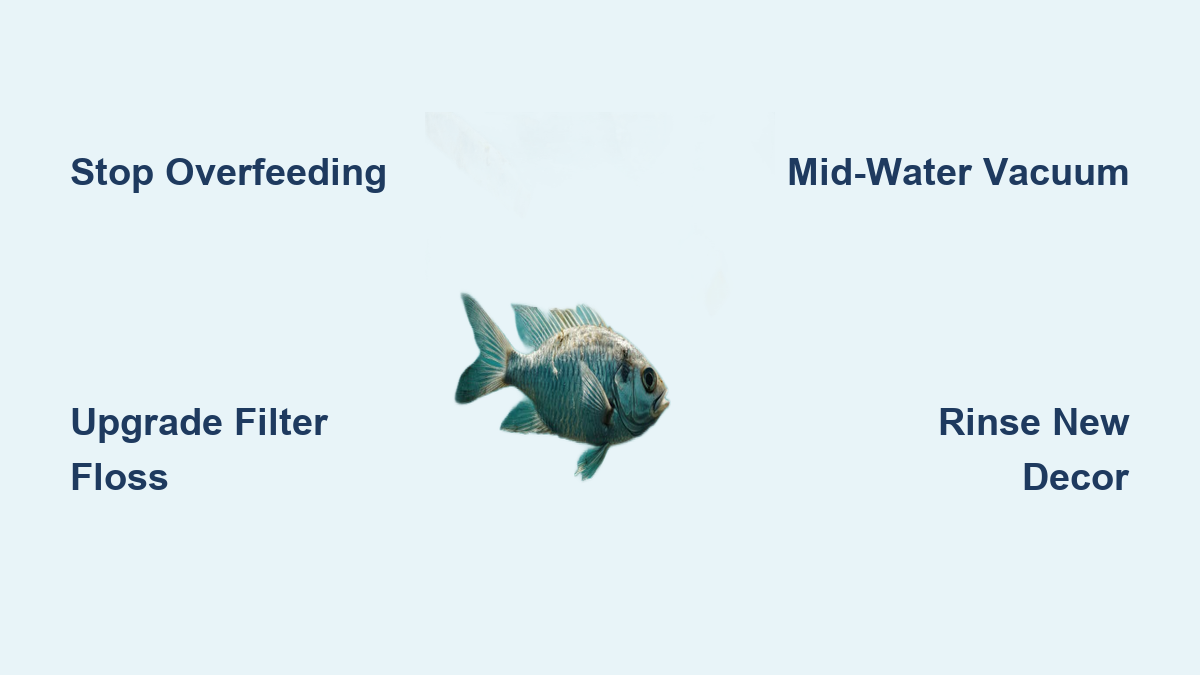
Stop Overfeeding: The #1 Debris Elimination Tactic
Excess food causes 75% of floating debris outbreaks—yet most aquarists unknowingly overfeed daily. When fish ignore pellets after two minutes, that uneaten food sinks and disintegrates into thousands of cloud-causing particles. The solution isn’t less frequent feeding but smarter portion control using the “2-Minute Rule.”
Execute the 2-Minute Feeding Protocol
Dispense food in tiny increments while timing with a stopwatch. Stop the moment fish show disinterest (usually within 90 seconds). Remove all uneaten food with a fine-mesh net immediately—never let it sink. For automatic feeders, reduce portion size by 30% and verify consumption via phone camera. This single change reduces organic debris at its source within 48 hours. Pro tip: Fast your fish one day weekly to encourage them to consume all food rapidly on feeding days.
Critical Feeding Mistakes Causing Debris
Avoid these common errors that guarantee floating particles: Sprinkling food across the entire tank surface (spreads debris), using crumbling flakes (creates dust clouds), or feeding right before lights-out (fish eat less, waste accumulates). Instead, target-feed near air stones to direct food toward fish and away from substrate. If you see food hitting the bottom, you’ve already overfed—adjust portions downward immediately.
Unclog and Upgrade Your Filter for Instant Debris Removal
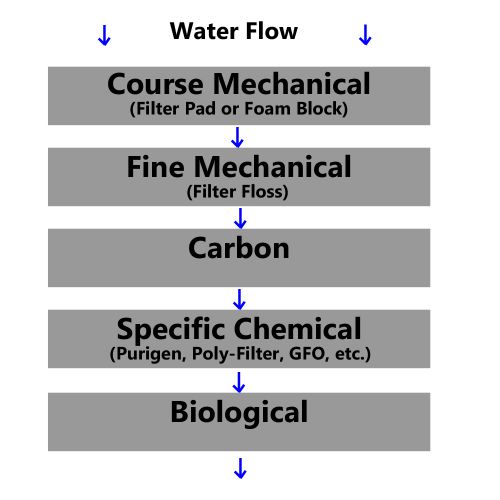
A clogged or undersized filter is the silent accomplice to floating debris. If your filter can’t capture particles under 50 microns, they’ll remain suspended indefinitely. Most standard filters miss this critical threshold—requiring strategic upgrades without expensive replacements.
Install Filter Floss as Your Final Defense Layer
Add a 1/4-inch thick sheet of polyester filter floss as the last stage in your filter compartment. This ultra-fine media traps particles as small as 5 microns—making water visibly clearer within hours. Cut it to size using aquarium-safe scissors and place it after your main sponge but before carbon media. Replace it every 7-10 days when water flow decreases by 20%. Warning: Never use cotton balls—they disintegrate and create more debris.
Double-Check Flow Rate for Dead Zone Elimination
Debris accumulates in stagnant areas where filter output is weak. Hold a pinch of flake food near tank corners—if it doesn’t move within 10 seconds, you have a dead zone. Position your filter outlet to create gentle cross-currents that sweep debris toward intakes. For tanks over 30 gallons, add a $15 powerhead opposite your filter to eliminate blind spots. Ideal flow rate: 5x your tank volume per hour (e.g., 200 GPH for a 40-gallon tank).
Deep Vacuum Substrate While Capturing Suspended Particles
Gravel vacuuming alone won’t solve floating debris—you must target particles before they sink. Standard siphoning only cleans settled waste, leaving suspended clouds untouched. The “mid-water vacuum technique” captures debris mid-column during water changes.
Execute the 3-Zone Vacuum Method
- Surface Zone: Hold your siphon tube 1 inch below the water surface, moving slowly across the top 2 inches. This removes oily films and large floating particles.
- Mid-Water Zone: Lower the tube to mid-tank height (avoiding fish) and siphon 20% of water while sweeping horizontally. This targets suspended specks.
- Substrate Zone: Finally, vacuum gravel deeply where settled debris breeds. Work in 6-inch squares, inserting the tube 1 inch into substrate.
Complete all zones within one water change session to prevent debris re-suspension. Time required: 15 minutes for a 30-gallon tank.
Skim Surfaces Before Water Changes
Use a fine-mesh net to gently skim the top 1/8 inch of water before starting your water change. Angle the net to glide just below the surface tension where protein films and lightweight debris collect. Do this slowly in one direction—never swirl the net, which re-suspends particles. This simple pre-step removes 40% of visible floating material immediately.
Prune Plants and Remove Dead Matter Within 24 Hours

Decaying plant matter releases tannins and microscopic particles that cloud water for days. A single dead leaf can generate thousands of floating specks as it decomposes. Immediate removal is non-negotiable for crystal-clear water.
The 24-Hour Plant Debris Rule
Inspect plants daily using a flashlight at a 45-degree angle to spot translucent dying leaves. Snip affected sections with stainless steel scissors, cutting 1 inch above healthy tissue. Never shake plants underwater—this releases particles. Instead, capture trimmings in a net before they fall. For stem plants, remove entire dying stems rather than partial cuts to prevent fraying.
Prevent Debris During Routine Maintenance
When pruning healthy plants, place a net below the work area to catch falling clippings. Work from top to bottom of the tank to avoid debris drifting downward. After trimming, run your filter on high for 30 minutes to capture any escaped particles. Always prune during water changes so debris gets siphoned out immediately.
Rinse New Decor Thoroughly Before Tank Entry
Unrinsed substrate and driftwood dump fine dust clouds into your aquarium within hours of installation. This inorganic debris takes weeks to clear naturally—requiring aggressive pre-treatment.
The 5-Step Decor Rinse Protocol
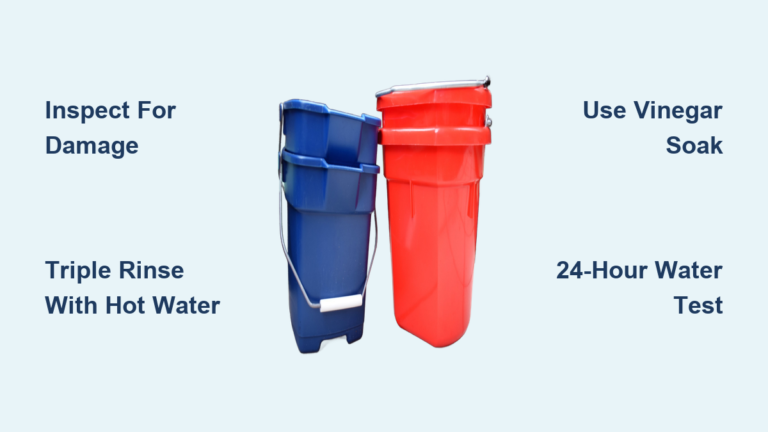
- Initial Soak: Submerge new gravel/rocks in a bucket for 24 hours.
- Agitate Vigorously: Swirl decor with gloved hands until water runs clear (5-10 minutes).
- Fine-Spray Rinse: Use a kitchen sprayer on “shower” setting, rotating pieces until no silt appears.
- Final Bucket Test: Place rinsed decor in clean water; wait 1 hour. If water clouds, repeat steps.
- Dry Run: For driftwood, boil for 2 hours to leach tannins before final rinse.
Never add decor that leaves residue after 3 rinse cycles—return it to the store.
Create a Weekly Debris Prevention Routine That Works
Prevention beats correction every time. A 15-minute weekly ritual stops debris before it forms, eliminating monthly deep cleans. This isn’t extra work—it replaces inefficient, time-wasting efforts.
The Crystal-Clear Water Checklist
- Monday: Skim surface film with net; remove uneaten food after feeding.
- Wednesday: Vacuum 25% of substrate in high-traffic zones (near feeding area).
- Saturday: Rinse mechanical filter media in removed tank water (never tap water).
- Daily: Wipe front glass with algae magnet to prevent particle-trapping biofilm.
Track results in a notebook: Note debris levels before/after each step. Within 3 weeks, you’ll identify your tank’s specific weak points.
Monthly Filter Health Audit
Every 30 days, disassemble your filter completely. Soak impeller and housing in vinegar for 15 minutes to dissolve mineral buildup. Check for torn filter pads—replace if light passes through holes. Measure flow rate by timing how long it takes to fill a 1-gallon bucket. If slower than original specs, upgrade impeller or housing. This prevents the #1 cause of recurring debris: declining filter efficiency.
Floating debris disappears when you attack its source—not the symptoms. By implementing these specific, actionable steps—stopping overfeeding with the 2-Minute Rule, installing filter floss for instant clarity, and vacuuming mid-water zones—you’ll achieve glass-clear water within 72 hours. The real victory comes from your weekly debris prevention checklist: just 15 minutes stops 95% of outbreaks before they start. Within a month, you’ll spend less time cleaning and more time enjoying your thriving underwater world. For persistent issues, revisit the debris type test—organic problems require stricter feeding controls while inorganic dust demands better decor rinsing. Share your success story in the comments: what single change cleared your tank fastest?