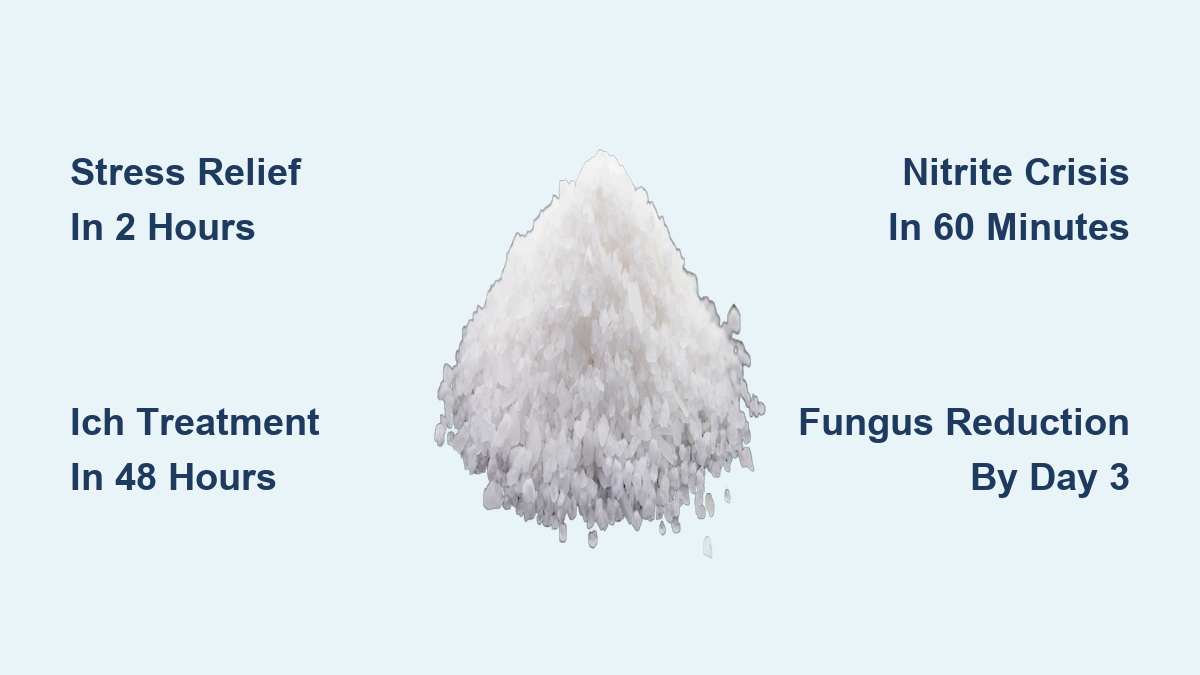
How Long Does Aquarium Salt Take to Work: Quick Guide
You added aquarium salt to your tank an hour ago, but your fish are still flashing against decorations. When will you actually see results? If you’re anxiously watching for white spots to vanish or waiting for gasping fish to breathe easier, you’re not alone. The truth is how long aquarium salt takes to work depends entirely on why you added it—and skipping this critical detail wastes precious time during emergencies. Unlike medications with fixed schedules, salt’s effectiveness operates on three distinct timelines based on your goal: stress relief, parasite treatment, or nitrite crisis intervention. This guide cuts through the confusion with exact hour-by-hour expectations so you know whether to wait or escalate treatment.
Most beginners expect instant fixes, but salt works through biological shifts, not magic. It dissolves immediately, yet visible improvements hinge on your fish’s physiology and the problem’s severity. For osmoregulation support, changes happen within hours; for ich, you’ll track progress over days; during nitrite spikes, protection kicks in minutes—but the underlying crisis remains. Understanding these timelines prevents dangerous mistakes like premature salt removal or overdose panic. Let’s break down precisely when to expect results for your specific situation.
Why Aquarium Salt Isn’t Table Salt and How It Changes Treatment Speed
Using kitchen salt risks killing your fish with iodine or anti-caking agents. True aquarium salt is pure sodium chloride with zero additives, making it safe for osmotic regulation. Crucially, it never evaporates—only water changes remove it. This permanence directly impacts how long aquarium salt takes to work because residual salt continues acting long after dosing. If you add salt during a water change without accounting for existing levels, you risk accidental overdose. Always dissolve new doses in a cup of tank water first; dumping granules directly burns sensitive gills and delays healing by causing immediate stress.
Immediate Dissolution vs. Biological Effects: Why Time Matters
Salt crystals vanish within 30 seconds of proper mixing, but biological effects require fish exposure time. For osmoregulation, chloride ions start competing with toxins at the gill membrane within minutes. Yet visible signs like relaxed fins take 1-2 hours because fish must physiologically adjust their ion pumps. During ich treatment, salt dehydrates parasites on contact, but trophonts (the visible white spots) remain embedded for 24-48 hours until their life cycle completes. Never mistake instant dissolution for instant results—your fish’s response time dictates the real timeline.
Osmoregulation Relief: Notice Calmer Fish Within 1-2 Hours
When fish struggle with osmoregulation—losing salts through gills in freshwater—they expend 30% more energy just maintaining balance. A tonic dose (1 tablespoon per 5 gallons) reduces this strain by lowering the osmotic gradient between their blood and tank water. How long does aquarium salt take to work here? You’ll see effects faster than any other use.
Signs It’s Working: Relaxed Fins and Normal Breathing in Under 2 Hours
Within 60 minutes, watch for these visual cues:
– Clamped fins slowly unfurl as stress eases
– Gill movements slow from rapid gasps to steady rhythm
– Reduced flashing or scratching against gravel
– Darker, richer coloration returning as slime coat thickens
These changes confirm salt is aiding ion regulation. If no improvement occurs by hour 3, test for hidden issues like ammonia spikes—salt won’t fix poor water quality alone.
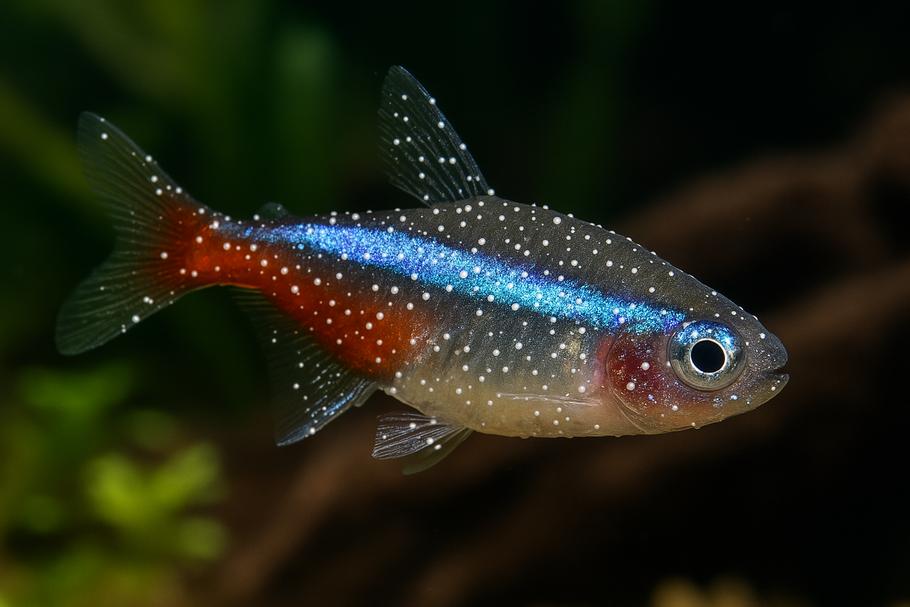
Treating Ich: Spotting the First Results in 24-48 Hours

Salt disrupts ich by dehydrating theronts (free-swimming parasites) and strengthening the fish’s slime barrier. But timing hinges on water temperature. At 78-80°F, the ich life cycle speeds up, making salt more effective.
Why White Spots Disappear After 48 Hours at 78-80°F
Salt doesn’t instantly kill embedded trophonts—it prevents new generations. Expect this sequence:
– Hour 0-24: Fish stop flashing as salt irritates free-swimming parasites
– Hour 24-48: Existing white spots shrink and detach (trophonts drop off to reproduce)
– Day 3-5: No new spots appear if treatment continues
Stop too early, and ich rebounds. The critical 7-10 day rule isn’t arbitrary: it covers the full parasite life cycle. Even after spots vanish, maintain salt for 7 days to kill cysts in the substrate.
Fungal and Parasite Treatment: Visible Improvement by Day 3
:strip_icc()/3078038127_1f2f37e7f7_o-26eab24e1ed6462f8968bea7c684bc61.jpg)
For fungal infections like cotton wool disease or flukes, salt works by drawing moisture from pathogens. Unlike ich, results show faster because fungi lack protective cysts.
When to Expect Fungus Reduction Without False Hope
By hour 48, look for:
– Fuzzy growths turning opaque instead of milky white
– Smaller affected areas as edges recede
– Fish resuming normal feeding
If fuzz spreads after 72 hours, salt alone is insufficient—you need antifungal medication. Salt only manages early-stage fungus; advanced cases require targeted treatment.
Emergency Nitrite Poisoning: Fish Breathe Easier Within 60 Minutes
High nitrites cause “brown blood disease,” blocking oxygen transport. Salt’s chloride ions compete with nitrites at the gills, acting as a temporary shield. This is the only use where how long aquarium salt takes to work is measured in minutes, not days.
Why Immediate Action Requires Immediate Dosing
Add emergency salt (1-2 teaspoons per 5 gallons) dissolved in tank water:
– Within 10 minutes: Salt circulates fully through the tank
– By 30 minutes: Fish stop gasping at the surface
– At 60 minutes: Gill color shifts from brown to pink as oxygen flow restores
This buys time—but doesn’t fix the root cause. While salt works instantly, you must simultaneously address the nitrite source (e.g., overfeeding, filter crash). Without water changes, protection fades as new nitrites form.
Your Aquarium Salt Treatment Timetable: Hour 1 to Day 10
| Condition | First Visible Change | Full Effect Timeline | Critical Deadline |
|---|---|---|---|
| Stress Relief (Tonic dose) | 1-2 hours | Immediate osmotic support | Remove after 2 weeks |
| Ich Treatment | 24 hours (reduced flashing) | 7-10 days after spots vanish | Never exceed 14 days |
| Fungal Infection | 48 hours (fuzz receding) | 5-7 days | Stop if no Day 3 improvement |
| Nitrite Crisis | 30 minutes (less gasping) | Temporary protection only | Fix water within 24 hours |
Overdosing Dangers: How Too Much Salt Slows Healing
Excess salt backfires by increasing osmotic stress instead of reducing it. A therapeutic dose (1 tbsp per 1-3 gallons) for scaleless fish like Corydoras causes rapid gill damage—you’ll see lethargy within 15 minutes. Plants suffer too: Amazon swords yellow within 24 hours at high doses. Always dose based on actual water volume (not tank size), and never guess measurements. Use a digital scale for accuracy—overdosing by 20% delays results by days.
Scaleless Fish Damage: Symptoms in Minutes, Not Hours
If treating sensitive species:
– Minute 5-10: Erratic swimming as gills burn
– Minute 20: Mucus overproduction creating stringy trails
– Hour 1: Lethargy or hiding
Immediately perform a 50% water change with dechlorinated freshwater. Salt won’t help these fish—it harms them.
Correct Dosage for Fast Results: Tonic vs. Therapeutic
Dosing errors are the #1 reason salt “doesn’t work.” Too little has no effect; too much stresses fish. Match your dose to the goal:
Tonic Dose (1 Tbsp/5 Gallons): Stress Relief in 2 Hours
Ideal for transport recovery or new tank syndrome. Dissolve in a cup first, then pour slowly near the filter outflow. Effects begin within 60 minutes, but maintain for 2 weeks max. Afterward, remove via 25% daily water changes over 7 days—abrupt removal shocks fish.
Therapeutic Dose (1 Tbsp/1-3 Gallons): Parasite Knockout in 3 Days
Use only for confirmed ich or flukes. Start at 1 tbsp per 3 gallons, then increase to 1 tbsp per 1.5 gallons after 48 hours if no improvement. Never exceed 10 days—you’ll damage beneficial bacteria. Track progress daily: if spots grow after Day 3, switch to copper-based medication.
Removing Salt After Treatment: The 7-Day Water Change Protocol
Salt lingers after treatment ends, causing long-term stress. To remove it safely:
1. Day 1: 25% water change with freshwater
2. Days 2-7: Repeat 25% changes daily
3. Test conductivity on Day 7—should match pre-treatment levels
Skipping this step invites algae blooms and plant die-off. Always test with a conductivity meter; “clear water” doesn’t mean salt-free.
Why Salt Fails Against Bacterial Infections: When to Switch Medications
Salt won’t cure fin rot or columnaris—it only reduces secondary stress. If you see these signs after 72 hours of salt treatment, escalate immediately:
– Red streaks in fins (bacterial infection)
– Torn fins with white edges (advanced decay)
– Clamped fins despite salt (systemic illness)
Switch to antibiotics like Kanamycin within 24 hours. Salt can coexist with medications, but don’t waste critical days waiting for it to work on bacteria.
Final Note: Aquarium salt delivers results on three distinct timelines: stress relief in hours, parasite reduction in days, and nitrite protection in minutes—but only when dosed correctly for your specific crisis. Track visible changes hourly for emergencies and daily for infections, and always remove salt via gradual water changes after treatment. If fish show no improvement within the expected window for your condition, suspect hidden water quality issues or misdiagnosis. Salt is a powerful ally, but knowing exactly how long aquarium salt takes to work prevents dangerous delays when every minute counts. For persistent issues, consult an aquatic veterinarian—your fish’s recovery timeline depends on it.