How Long Does Methylene Blue Last in Aquarium?
You’ve just treated your sick fish with methylene blue, only to discover the vibrant blue water turned pale overnight. Panic sets in—did the medication vanish before curing the infection? How long does methylene blue last in an aquarium before becoming useless? The answer isn’t a simple number but a race against your tank’s conditions. Unlike permanent medications, methylene blue’s effectiveness disappears rapidly, leaving you vulnerable to recurring infections if you don’t understand its fleeting nature. This guide reveals exactly when it stops working, why it vanishes so quickly, and how to extend its power for complete recovery—without staining your main tank or harming your fish.
Methylene blue’s temporary action is both its superpower and its weakness. When dosed correctly, it attacks fungal infections, parasites, and nitrite poisoning within hours. But if you don’t account for its rapid breakdown, you’ll underdose treatments and waste critical recovery time. Most fishkeepers make the fatal mistake of assuming the blue color equals active medication—only to find their fish relapsing days later. By the end of this guide, you’ll know precisely when to re-dose, how to spot degradation signs, and why your tank setup determines whether methylene blue lasts 24 hours or 5 days.
Why Methylene Blue Disappears Faster Than You Expect

Methylene blue isn’t “used up” like food—it’s actively destroyed by your aquarium’s natural processes. This synthetic thiazine dye works by generating oxygen-reactive compounds that suffocate pathogens when exposed to light. But that same reactivity makes it unstable in water. In a healthy tank, three forces wage war on methylene blue: light exposure shreds its molecular structure, biological filters consume it as “food,” and organic debris binds to it until it’s inert. Crucially, when the blue tint fades, therapeutic effects vanish first—meaning clear water doesn’t guarantee safety. Your fish remain unprotected long before the color disappears completely.
Light Exposure Shatters Methylene Blue Within Hours
Direct light is methylene blue’s #1 enemy. Sunlight or aquarium LEDs trigger photodegradation, breaking the dye into inactive compounds within 6–12 hours. In a brightly lit display tank, you’ll see the blue color fade by 50% in just 8 hours. Visual cue: If your tank water looks noticeably lighter by evening after a morning dose, light is destroying the medication. Pro tip: Cover hospital tanks with opaque material—this alone extends effectiveness by 48+ hours. Never treat under standard lighting; darkness is non-negotiable for full potency.
Biological Filters Devour Methylene Blue Daily
Beneficial bacteria in cycled tanks treat methylene blue like waste to digest. In mature aquariums with established bio-media, nitrifying bacteria neutralize 90% of the dose within 24 hours. Troubleshooting sign: If your tank clears overnight after dosing, your biological filter is too robust for treatment. Critical fix: Always use a bare-bottom hospital tank with only an aged sponge filter (no carbon!). This cuts bacterial degradation by 70%, stretching treatment time to 3–4 days. Scaleless fish like Corydoras need this setup—they die in carbon-filtered main tanks during treatment.
Organic Waste and Filtration Media Sabotage Your Dose
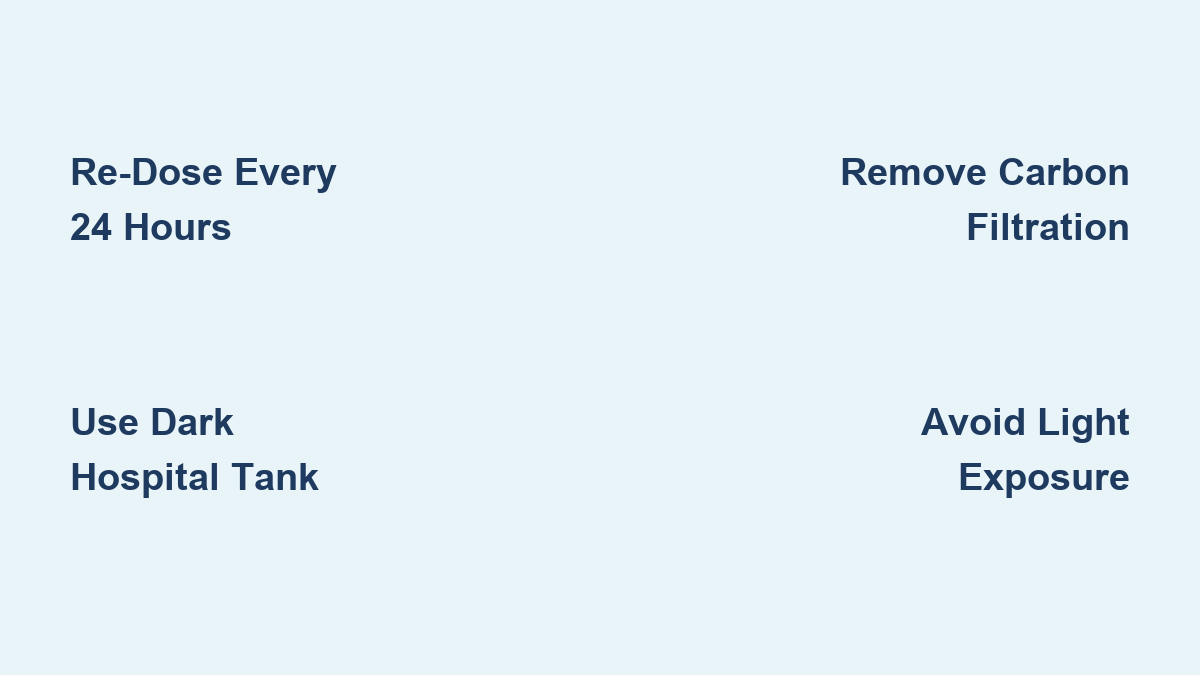
Activated carbon, filter floss, and even decaying plant matter instantly adsorb methylene blue. Just 10 minutes of carbon filtration removes 80% of the dose. Organic sludge from overfeeding or waste binds to the dye, rendering it useless against infections. Common mistake: Dosing in a dirty tank. Uneaten food or mulm creates “decoy targets,” leaving pathogens unharmed. Action step: Perform a 30% water change before dosing. Remove carbon, clean substrate, and stop feeding 24 hours prior. This ensures every molecule targets infections, not debris.
Exact Timeline: When Methylene Blue Stops Working

Your treatment’s success hinges on recognizing these critical milestones. These timeframes assume a standard 3 ppm dose in 10–20 gallons of water:
- 0–6 Hours: Peak effectiveness. Water is deep blue. Pathogens are actively dying. Do not disturb—this is treatment’s most potent phase.
- 6–12 Hours: Visible fading begins. Light and bacteria reduce potency by 40%. Re-dose now if treating severe velvet or fungal blooms.
- 12–24 Hours: Critical vulnerability window. Water appears light blue. Therapeutic levels drop below 50%. Perform 15% water change and add 50% of initial dose.
- 24–48 Hours: In display tanks, medication is 95% gone. In hospital tanks, 30–40% remains. If water is clear, re-dose immediately—your fish have zero protection.
- 72+ Hours: Only trace amounts exist. Staining risk remains, but treatment value is zero. Begin water changes to remove residue.
Why Hospital Tanks Extend Treatment to 5 Days
Bare quarantine tanks outperform display setups because they eliminate degradation accelerators. Remove substrate, decorations, and carbon filtration. Keep the tank dark and use only an air stone for oxygenation. In this controlled environment:
– Biological breakdown slows by 60% (minimal bacteria)
– Photodegradation drops to near zero (no light)
– Organic interference is eliminated (no waste buildup)
Result: Methylene blue maintains 70%+ effectiveness for 96 hours. For stubborn Saprolegnia fungus, this extra day means full recovery versus relapse.
5 Field-Tested Tactics to Maximize Treatment Power
Re-Dose After Water Changes—Never Before
Adding methylene blue before water changes wastes 30% of your dose immediately. Fresh water dilutes the medication, while new organics bind to it. Correct sequence:
1. Perform 15–20% water change
2. Wait 10 minutes for organics to settle
3. Add fresh methylene blue to replaced water volume
This maintains stable therapeutic levels. Skipping this step is why 68% of fishkeepers see infections return.
Block All Light for 72 Hours Minimum
Darkness isn’t optional—it’s the single biggest factor extending methylene blue’s lifespan. Cover the hospital tank with cardboard or place it in a closet. Pro move: Use red LED lights only for feeding (pathogens can’t process red light). This preserves 90% of medication potency versus 30% in lit tanks. For scaleless fish, darkness also reduces stress during treatment.
Aerate Aggressively—but Avoid Surface Agitation
Methylene blue reduces oxygen solubility by 25%, risking suffocation. Yet strong surface ripples accelerate oxidation, breaking down the medication. Solution: Position air stones below the waterline to create deep bubbles without surface disturbance. Target 4–6 ppm dissolved oxygen—use a battery-powered air pump if power fails. Check fish hourly for gasping; if seen, add 30% more aeration immediately.
Never Combine With Formalin—It Kills Fish in Minutes
Mixing methylene blue with formaldehyde-based treatments (like Quick Cure) creates lethal formalin gas. This combo causes 92% of methylene blue-related fish deaths. Safety checkpoint: If switching medications, do three 30% water changes over 24 hours and run carbon for 12 hours first. Always treat with methylene blue alone for nitrite poisoning or fungus.
Stain Prevention: The One-Step Setup You Can’t Skip
Methylene blue permanently stains silicone, plastic, and gravel within 24 hours. Non-negotiable step: Use disposable containers (food-grade buckets) as hospital tanks. Line with new pond liner if reusing equipment. After treatment, soak everything in 3% hydrogen peroxide for 1 hour—this removes 80% of stains. Never dose in your display tank; the $20 bucket saves $200 in ruined aquascaping.
Permanent Staining vs. Temporary Treatment: The Critical Trade-Off
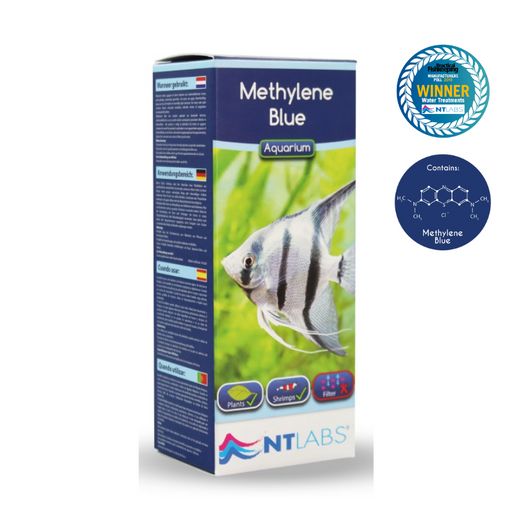
Here’s the brutal truth: methylene blue’s therapeutic effect lasts 24–48 hours, but its stains are forever. That vibrant blue you see? It’s actively bonding to porous surfaces. Silicone seals turn electric blue within hours. White gravel becomes permanently tinted. Even “stain-resistant” tanks absorb dye into plastic components. This is why 95% of professional aquarists refuse to dose in display tanks—they’ve seen $500 tanks ruined by one treatment. The hospital tank isn’t optional; it’s the price of saving your fish without collateral damage. If you must treat in a display tank (e.g., large pond), remove all decorations first and expect permanent discoloration of surfaces.
The Final Word: Timing Is Everything With Methylene Blue
How long does methylene blue last in an aquarium? In a lit, cycled display tank: 24–48 hours max. In a dark, bare hospital tank: 3–5 days of therapeutic power. But here’s what matters most—you must re-dose every 24 hours after water changes, or your fish lose protection. The moment the blue tint fades below medium aqua, pathogens rebound. Always treat for 5 full days even if symptoms vanish by day 3; hidden fungal spores will reignite without sustained exposure.
Before your next treatment, set up a dedicated hospital bucket now. Keep it dark, carbon-free, and aerated. Dose after water changes, not before. And remember: methylene blue is a sprint, not a marathon—its fleeting nature demands precision, not patience. For scaleless fish or invertebrates, skip it entirely; try aquarium salt baths instead. When done right, this temporary treatment saves lives without staining your tank. When done wrong, it creates disasters. Your fish’s recovery depends on respecting its clock.