Best Filtration for 125 Gallon Aquarium (2026 Guide)
Your 125-gallon aquarium’s crystal-clear water and thriving fish depend entirely on one critical element: a filtration system powerful enough to handle nearly 500 gallons of water movement. When standard filters fail in these large tanks, you’ll face toxic ammonia spikes, persistent algae blooms, and dangerous dead zones where debris accumulates. This guide reveals exactly how to select, configure, and maintain professional-grade filtration that keeps your 6-foot tank pristine—without breaking the bank. You’ll learn why dual canister setups outperform single units, how to eliminate stagnant corners, and the precise maintenance schedule that prevents catastrophic failures.
Why Standard Filters Fail in 125-Gallon Aquariums
Most beginner filters max out at 75 gallons, creating dangerous conditions in your 125-gallon tank. These undersized systems can’t achieve the 4-5x hourly water turnover (500-625 gallons per hour) required to process waste from even a moderately stocked tank. You’ll notice cloudy water within days as uneaten food and fish waste accumulate in dead zones—especially at the far ends of your 6-foot tank. Without sufficient biological media surface area, beneficial bacteria colonies collapse during maintenance, causing deadly ammonia spikes. The moment your filter struggles to pull water through clogged media, you’re on the clock before fish gasp at the surface.
Calculating Minimum Flow Rate Requirements
Your filter must move at least 500 GPH for a 125-gallon aquarium. Here’s how to verify:
– Multiply tank volume (125) by 4 = 500 GPH minimum
– Add 20% buffer for decorations/plants = 600 GPH ideal
– Single filter option: Requires 600+ GPH capacity
– Dual filter solution: Two 300-350 GPH units (recommended)
Critical Signs of Undersized Filtration
Watch for these urgent red flags:
– Surface film forming within 48 hours after cleaning
– Debris piles accumulating behind decorations or in tank corners
– Fish gasping near filter outflow (low oxygen from poor surface agitation)
– Persistent cloudiness that won’t clear after water changes
Selecting the Best Canister Filter for 125-Gallon Tanks

Forget hang-on-back filters—they lack the media capacity and flow rate for 125-gallon systems. Canister filters are non-negotiable here, but choosing the right model prevents costly mistakes. Your unit must be rated for at least 150-200 gallons to handle real-world bioload. The Fluval FX6 (600+ GPH) is the gold standard but carries a $400+ price tag. For most hobbyists, a dual-filter strategy delivers superior reliability.
Dual Canister Setup: The Professional’s Choice
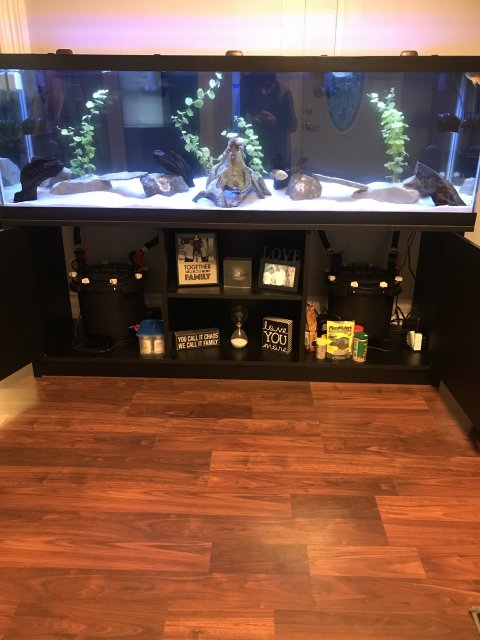
Using two medium canisters beats a single oversized unit for three critical reasons:
– Zero downtime maintenance: Clean one filter while the other maintains 100% biological filtration
– Dead zone elimination: Position intakes at opposite ends of your 6-foot tank to create cross-current flow
– Failure-proof operation: If one canister leaks or clogs, the other keeps ammonia in check
Top dual-filter combinations:
| Filter Model | GPH per Unit | Total GPH | Best For |
|————–|————-|———–|———-|
| Fluval 407 x 2 | 350 | 700 | Reef-ready clarity |
| Eheim Classic 350 x 2 | 350 | 700 | Budget reliability |
| Oase Biomaster 350 x 2 | 350 | 700 | Quiet operation |
Budget-Friendly Filtration Options for 125-Gallon Tanks
You don’t need new premium gear to achieve pro results. Savvy aquarists save 50-70% by sourcing high-end used filters—a strategy validated by community forums and marketplace data. The key is verifying functionality before purchase.
How to Score Reliable Used Canister Filters
Where to look:
– Facebook Aquarium Groups: Search “Fluval FX6 near me” for local pickup
– Reef2Reef Classifieds: Vetted sellers with aquarium-specific knowledge
– Craigslist “Free” section: Often lists “too heavy to move” filters
Critical pre-purchase checks:
1. Test impeller rotation (no grinding sounds)
2. Verify O-rings are supple (not cracked or brittle)
3. Confirm all hoses connect without leaks
4. Inspect media baskets for warping
Budget new alternatives:
– Fluval 607 ($220): 420 GPH with self-priming system
– SunSun HW-703B ($180): 525 GPH with UV sterilizer port
– Eheim Pro 3 600 ($299): Industry-leading durability
Optimizing Your Canister Filter Media for 125-Gallon Tanks
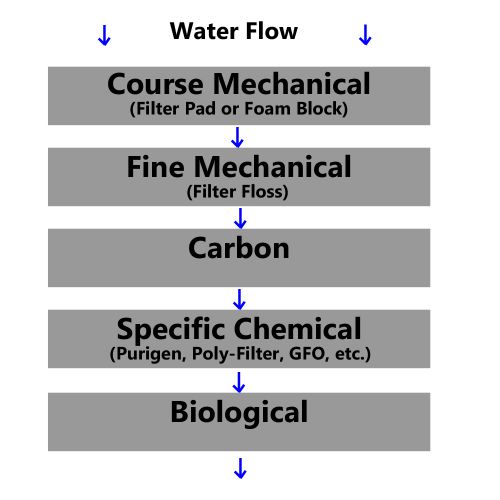
How you layer media determines whether your filter sustains life or creates toxic sludge. Never dump random pads into baskets—follow this battle-tested sequence used by public aquariums. Your biological media must provide at least 100 square feet of surface area for beneficial bacteria.
Step-by-Step Media Loading Sequence
Bottom tray (mechanical):
– Coarse sponge (10 PPI): Traps large debris without clogging
– Pro tip: Cut sponge into 1-inch strips to increase surface area
Middle tray (biological):
– Seachem Matrix (fill 70%): 750+ ft² surface area per cup
– MarinePure spheres (fill 30%): Porous ceramic for anaerobic bacteria
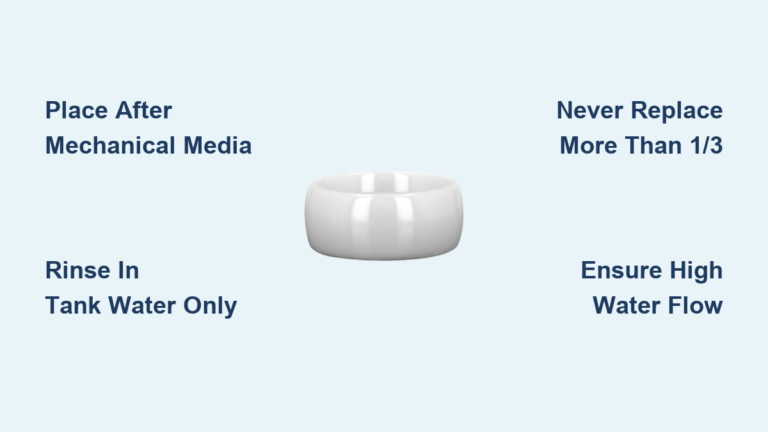
– Never rinse in tap water—swish in bucket of tank water during water changes
Top tray (chemical/polishing):
– Purigen in mesh bag: Removes yellowing compounds
– Carbon (optional): Only during medication cycles
Eliminating Dead Zones with a Wavemaker in 125-Gallon Tanks
Even top-tier canisters create stagnant corners in 6-foot tanks. Without supplemental flow, detritus piles up behind rockwork while fish avoid “dead zone” areas. A single wavemaker solves this by creating river-like currents that sweep waste toward filter intakes.
Wavemaker Sizing and Placement Guide
Your circulation pump needs at least 1,000 GPH for a 125-gallon tank. Install it where you see debris accumulation:
– Position: Mount vertically on back wall, 6 inches from substrate
– Direction: Angle toward opposite front corner to create circular flow
– Power setting: 30-40% intensity (strong enough to move sand, not scatter plants)
Top budget models:
– Hygger 1650 GPH ($35): Silent operation, magnetic mounting
– Jebao DCS-8000 ($42): App-controlled flow patterns
– Avoid cheap Chinese pumps—they vibrate excessively in large tanks
Weekly and Monthly Maintenance for 125-Gallon Aquarium Filtration
Skipping maintenance in 125-gallon tanks causes cascading failures. Unlike smaller systems, you won’t notice problems until ammonia hits lethal levels. This schedule preserves bacterial colonies while preventing clogs.
Critical Maintenance Timeline
Every 7 days:
– Clean pre-filter sponge in bucket of tank water
– Vacuum substrate near filter intakes (focus on debris traps)
– Wipe viewing panels to monitor biofilm buildup
Every 14 days:
– Perform 30% water change using gravel vacuum
– Rinse mechanical media in old tank water
– Check wavemaker for algae buildup
Every 30 days:
– Service one canister filter (alternate monthly)
– Clean impeller shaft with vinegar soak
– Lubricate O-rings with silicone grease
Never replace all media at once—this crashes your nitrogen cycle.
Fixing Low Flow and Cloudy Water in 125-Gallon Tanks
When your filter struggles, immediate action prevents fish kills. These field-tested fixes target the root causes rather than symptoms.
Low Flow Emergency Protocol
Step 1: Check for kinked hoses (common behind 6-foot tanks)
Step 2: Remove intake tube and clear clogs with turkey baster
Step 3: Disassemble impeller housing—soak in vinegar for 10 minutes
If flow doesn’t restore: Replace impeller ($8 part)
Bacterial Bloom Solutions
Cloudy water means beneficial bacteria are overwhelmed. Do NOT do water changes—that removes good bacteria. Instead:
1. Reduce feeding by 50% for 3 days
2. Add 1 cup of old filter media to new media
3. Increase surface agitation with spray bar adjustment
4. Only if persistent: Install UV sterilizer (15W for 125 gal)
Your 125-Gallon Tank Filtration Setup Checklist
Before adding fish, verify these non-negotiable elements. A single missed component risks tank failure within weeks.
Must-have components:
– [ ] Two canister filters (300+ GPH each) OR one 600+ GPH unit
– [ ] Wavemaker positioned to eliminate dead zones
– [ ] Spray bars on filter returns (not straight pipes)
– [ ] Mechanical media pre-filter on all intakes
– [ ] Biological media filling 70% of middle baskets
Final verification steps:
1. Run empty system for 24 hours to check leaks
2. Confirm surface ripple covers entire waterline
3. Test flow pattern with food coloring (should disperse in <10 sec)
4. Prime filters using “wet start” method to avoid dry running
Proper filtration transforms your 125-gallon aquarium from a maintenance nightmare into a self-sustaining ecosystem. By implementing dual canister filters with optimized media, adding targeted circulation, and following the precise maintenance schedule, you’ll achieve glass-clear water and thriving fish for years. Remember: the real cost isn’t the initial equipment—it’s the hours spent battling algae and ammonia from undersized systems. Start strong with this proven setup, and your 6-foot tank will become the stunning centerpiece it deserves to be. For immediate next steps, download our free 125-gallon stocking calculator to match fish load with your filtration capacity.