How to Cycle a Saltwater Aquarium: Quick Steps
Your brand-new saltwater tank looks stunning—pristine sand, glowing lights, perfect aquascape. But if you add fish too soon, you’ll watch them gasp at the surface within days. Why? Because without completing the saltwater aquarium cycle, toxic ammonia builds up faster than your fish can survive. This biological process isn’t optional—it’s the invisible shield that turns deadly waste into safe water. In this guide, you’ll learn exactly how to cycle your tank in 1-2 weeks (not months) using proven methods, avoid the #1 mistake that crashes new tanks, and know precisely when it’s safe to add fish. Skip this step, and you’re gambling with lives. Do it right, and you’ll build a thriving ecosystem that lasts years.
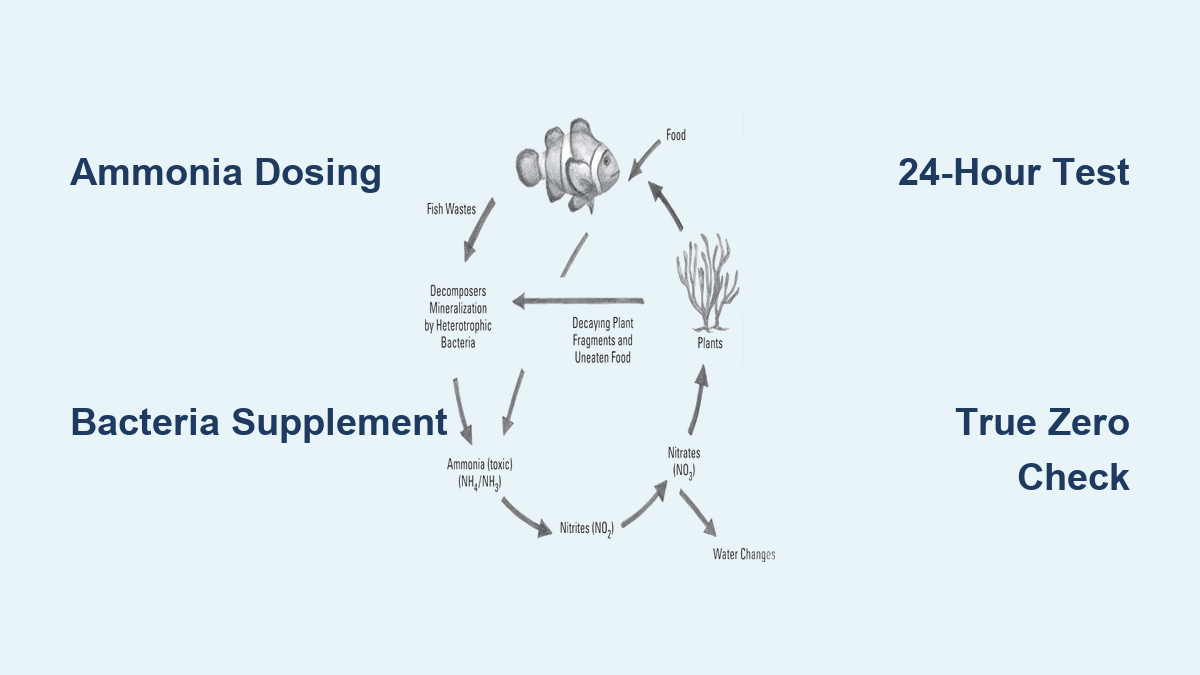
Fishless Cycling With Ammonia Dosing: The 10-Day Method
Forget waiting 8 weeks—modern bacterial supplements slash cycling time dramatically. This method eliminates fish stress entirely while establishing robust bacteria colonies. You’ll actively control ammonia levels instead of guessing, giving you clear milestones for success.
Why Pure Ammonia Beats Raw Shrimp Every Time
Using raw shrimp or fish food creates chaotic ammonia spikes that overwhelm nascent bacteria. As one expert warns: “Raw shrimp causes phosphate explosions that trigger algae outbreaks for months.” Pure ammonium chloride (like Dr. Tim’s Aquatics) delivers precise 2-3 ppm doses without contaminants. Your test kit will show clean conversion patterns instead of erratic spikes.
Step-by-Step: Cycling in 10 Days With Bacteria Supplements
-
Prime Your Tank Setup
Fill your Fluval Evo 13.5 or similar system with RO/DI water mixed to 1.026 salinity. Install all equipment—powerheads must run 24/7 to oxygenate water where bacteria thrive. Add base rock (not live rock yet) and substrate. Critical visual cue: Bubbles should break the surface actively—dead zones stall cycling. -
Dose Ammonia and Seed Bacteria
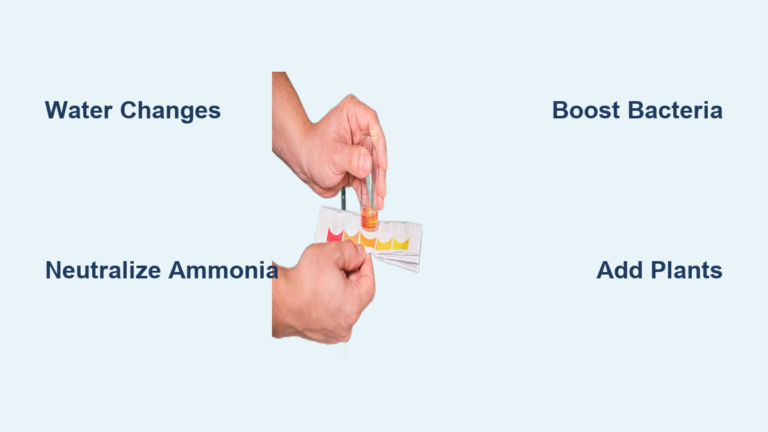
Add ammonium chloride to hit exactly 2 ppm (use API Saltwater Master Test Kit). Immediately dose Dr. Tim’s One & Only or FritzZyme Turbo according to bottle instructions. Pro tip: Add bacteria at night—many strains are light-sensitive. -
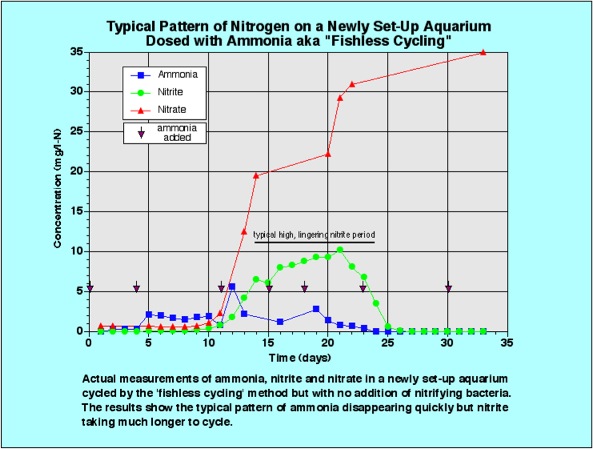
Maintain Ammonia Levels for 7 Days
Test daily. When ammonia drops below 1 ppm, redose to 2 ppm. Never let it hit zero—bacteria starve. Keep temperature at 79°F (26°C) using your heater’s thermostat. Warning: Skipping redosing resets your timeline by 3+ days. -
Confirm Completion With the 24-Hour Test
Once nitrites appear then vanish, perform the critical test: Dose 2 ppm ammonia. If levels hit zero within 24 hours with nitrates rising, your tank is cycled. This single test prevents 90% of “false cycle” disasters.
Live Rock Cycling: The $8/Pound Shortcut
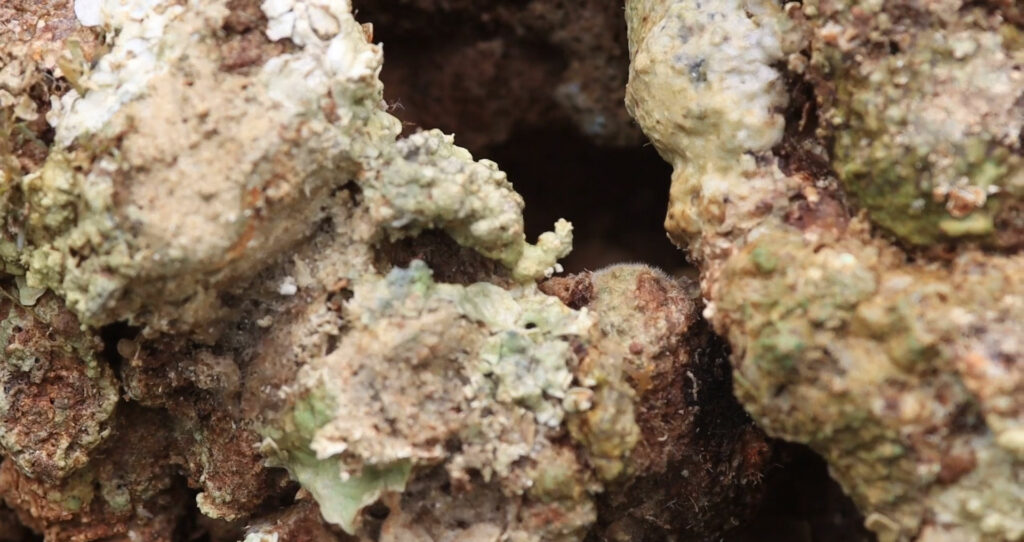
Cycled live rock from an established tank delivers instant bacteria colonies—no ammonia dosing needed. Local fish stores often sell it for $7.99/lb, making this cost-effective for small systems like your 13.5-gallon tank. But timing is everything.
How to Verify “Truly Cycled” Live Rock
Ask your LFS: “Has this rock been in a mature, fish-free tank for 6+ months?” True cycled rock shows zero ammonia when tested in a bucket overnight. Avoid “freshly cured” rock—it’s still cycling and will stall your timeline. Red flag: Rock smelling of rotten eggs indicates dead organisms.
Accelerated Rock Cycling Protocol
- Place 1.5 lbs of live rock per gallon in your tank
- Add a Seachem Ammonia Alert badge to monitor spikes
- Run protein skimmer at 50% capacity to avoid stripping bacteria
- Test water daily for 7 days—ammonia and nitrite must stay at zero
Note: Never add cocktail shrimp to rock-cycled tanks—it causes phosphate crashes.
Critical Testing Protocol: What Your Kit Won’t Tell You

Most beginners misread test results because they ignore three hidden factors. Your API Master Test Kit shows numbers, but without context, you’ll misjudge cycle completion.
The Nitrite-to-Nitrate Lag Trap
When nitrites suddenly vanish but nitrates don’t appear, bacteria are still establishing. Wait 72 hours after nitrites hit zero before declaring victory. Rushing here causes “silent crashes” where ammonia spikes after fish addition.
Hidden Danger: False Zero Readings
Test kits show “0” ammonia when levels are actually 0.25-0.5 ppm—still lethal to fish. Use Seachem Ammonia Alert badges for true 0.0 detection. Pro move: Dip two test strips simultaneously—one as backup if color matching is unclear.
Stocking Your Cycled Tank: Clownfish Pairs Beat Singles
Your Fluval Evo 13.5 can safely hold one pair of ocellaris clownfish after cycling—but never a single clown. As veteran hobbyists confirm: “A lone clown becomes territorial and stressed, hiding constantly.” Pairs establish natural hierarchies and thrive in compact tanks.
The Tailspot Blenny Addition Timeline
Wait 4 weeks after adding clownfish before introducing your blenny. This allows:
– Biofilm to establish for grazing
– Stable nitrate levels below 10 ppm
– Copod populations to grow (add Tigger Pods after week 2)
Critical mistake: Adding blennies too soon starves them of algae.
3 Deadly Cycling Mistakes That Wipe Out New Tanks
Ignoring Temperature Control
Bacteria multiply 3x faster at 79°F vs. 72°F. If your heater fluctuates below 75°F, cycling stalls for weeks. Fix: Use a temperature controller like Inkbird with a backup thermometer.
Overcleaning Filter Media
Rinsing filter pads in tap water destroys bacteria with chlorine. Only rinse media in tank water during water changes. Never replace media until it’s disintegrating—bacteria live deep in the fibers.
Adding Corals Before Fish
New tanks lack the microfauna corals need. Wait 8 weeks post-cycling with fish before adding soft corals. Exception: Add 1-2 frags of mushroom corals during week 4—they tolerate instability.
When to Add Fish: The 24-Hour Safety Window
Your tank isn’t “safe” just because ammonia is zero. Perform this final test:
1. Dose 1 ppm ammonia
2. Retest after 12 hours
3. If ammonia = 0 and nitrite ≤ 0.25 ppm, add fish within 24 hours
Why? Bacteria colonies shrink without food—delaying stocking causes crash cycles.
Maintenance After Cycling: Prevent Month 2 Crashes
New tanks often fail in week 6-8 when nitrates spike. Avoid this with:
– Weekly 10% water changes starting at week 3 (use pre-mixed saltwater)
– Dosing Reef Snow at 1ml/20 gal weekly to feed bacteria
– Testing nitrates every 3 days until stable below 20 ppm
Pro tip: Keep a spare bottle of Dr. Tim’s bacteria refrigerated for emergency dosing.
Final Verification Checklist Before Adding Fish
Don’t guess—confirm these 4 signs:
✅ Ammonia and nitrite at true zero (verified by Seachem badge)
✅ Nitrates steadily rising (5-10 ppm minimum)
✅ 24-hour ammonia test passed with 0 ppm residual
✅ Tank running minimum 14 days post-cycle completion
Adding fish before hitting all four points risks ammonia poisoning—even in “cycled” tanks. When you do add your clown pair, feed lightly for 3 days to avoid bioload shock. Within a month, you’ll see copepods swarming the glass and algae grazing blennies—signs of a truly mature ecosystem. Remember: The saltwater aquarium cycle isn’t a hurdle to rush through. It’s the foundation that turns your tank from a death trap into a living ocean slice. Do it right once, and you’ll skip the heartbreak of dead fish while building a tank that thrives for years. Now fire up that heater—your underwater world awaits.