How to Make Aquarium Fish Net at Home
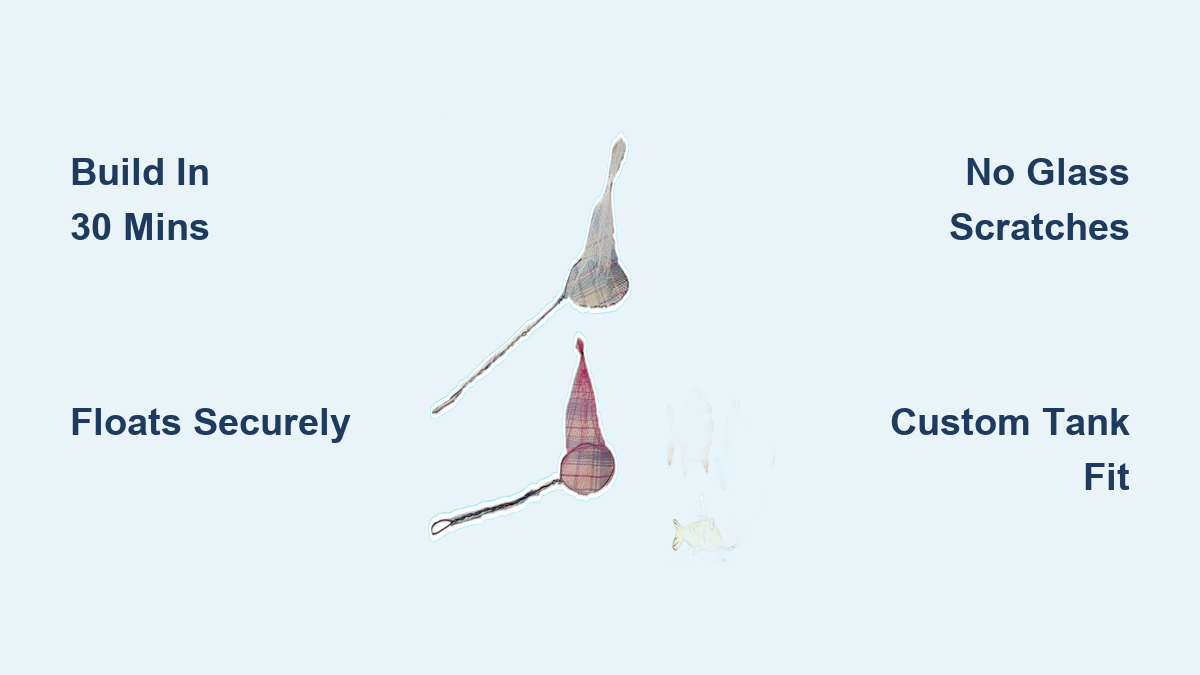
Morning-of auction chaos leaves fish stressed and nets tangled in planted tanks. Instead of fumbling with flimsy store-bought nets while your prized Electric Blue Jack Dempsey darts into java fern, build a custom floating containment net in 30 minutes. This how to make aquarium fish net at home solution creates a secure in-tank holding pen using aquarium-safe materials you likely already have. Forget expensive breeder boxes—this reusable system keeps fish calm before transport, isolates breeders, and prevents scratches on glass tanks. You’ll learn to craft a buoyant, size-specific net that floats securely without rocks or heavy frames.
Skip Breeder Boxes: Why Your Tank Needs a Custom Floating Net
Commercial breeder boxes cramp fish in cramped corners and limit water flow. A DIY floating net solves three critical problems: reducing fish stress during transport prep, preventing tank damage from weighted nets, and eliminating morning-of auction panic. When you place fish in this net 12–24 hours before an event, they acclimate to confinement while staying in established tank conditions. Unlike rigid breeder boxes, this design floats freely without scratching glass—a major concern for hobbyists using rock-heavy setups. One user reported switching from coolers with sponge filters to this net after fish injuries during tank transfers. The result? Calmer fish, fewer injuries, and no more last-minute net chases through dense plantings.
Gather These 5 Aquarium-Safe Materials Before Starting
Skip expensive specialty stores—every item fits in your palm and costs under $10. Verify all materials are aquarium-safe to avoid chemical leaching.
Where to Find Free Styrofoam Frames (Fish Stores Often Discard Them)
Visit your local fish store (LFS) and ask for discarded styrofoam shipping frames. These buoyant white rectangles (typically 1–2 inches thick) come from fish transport boxes and are often given away free. If unavailable, cut pool noodles into rectangles and zip-tie them into a frame. Never use packing peanuts or foam with printed labels—they contain toxic dyes.
Plastic Canvas Selection: Avoid These Mesh Mistakes
Choose rigid plastic canvas (sold as “Darice mesh” in craft stores), not fabric needlepoint canvas. The plastic version holds shape underwater and won’t fray. Opt for 5mm–7mm mesh holes—small enough to contain neon tetras but large enough for water flow. Avoid metal-edged mesh; it corrodes and scratches fish. Craft stores like Michaels sell 9″x12″ sheets for $2.50.
Why Zip Ties Beat Fishing Line for Secure Assembly
Small black zip ties (4–6 inch) create smoother edges than fishing line. As one builder noted: “My fingers fumbled with the line so much I got irritated.” The plastic canvas grips zip ties securely without sharp needle holes. Keep medium ties handy for reinforcing corners. Critical: Trim all ends flush—protruding tips injure fish during entry/exit.
Build Your Floating Net in 4 Foolproof Steps

Complete this project while your coffee cools. Total time: 25 minutes. Difficulty: Beginner (no tools beyond scissors).
Step 1: Cut Mesh to Your Tank’s Exact Dimensions
Measure your tank’s width where you’ll place the net. Cut a plastic canvas base 1 inch smaller than this width (e.g., 11″ for a 12″ tank) to prevent scraping. For wall height: 6 inches works for most community tanks; go to 8 inches for jump-prone fish like hatchetfish. Cut one base piece and one long strip equal to the base’s perimeter + 2 inches (for overlap). Pro Tip: Dip scissors in vinegar first—plastic canvas cuts cleaner without melting edges.
Step 2: Assemble Walls Without Sagging Corners
Lay the base flat. Position the long strip vertically around the edge, mesh facing inward. Start at one corner: thread a small zip tie through matching holes in base and wall strip. Pull just tight enough to eliminate gaps—overtightening warps the mesh. Space ties every 3rd hole (≈1 inch apart). At corners, add an extra tie to prevent bowing. Warning: If walls lean inward, your fish will rub against edges causing scale damage.
Step 3: Attach the Floating Frame for Rock-Safe Buoyancy
Slide the styrofoam frame over the top edge of your mesh walls. The frame should sit ½ inch below the mesh top—this creates a “lip” preventing escapes. Secure it by zip-tying through mesh holes into the foam every 2 inches. Do not skip this: loose frames submerge under fish weight. Test buoyancy in a bucket first—if it tilts, add zip ties to the low side.
Step 4: Final Trim & Safety Check Before Tank Entry
Trim all zip tie ends with nail clippers (scissors leave sharp points). Run your finger along every edge—no snags should catch skin. Soak the net in dechlorinated water for 1 hour to remove manufacturing residues. Critical Check: Place it in your tank empty for 24 hours. If the styrofoam sheds white particles, replace it—this indicates low-quality foam that degrades in water.
Troubleshoot These 3 Common Net Failures Immediately

“Fish Jumped Out Overnight!” – Fix the Escape Gap
If fish breach the net, the mesh extends less than ½ inch above the styrofoam frame. Disassemble and reposition the frame lower, ensuring mesh overhangs the top edge. For extreme jumpers (like killifish), add a second zip-tied mesh ring 1 inch above the frame.
“Net Sinks to the Bottom!” – Reinforce Buoyancy Without Rocks
Styrofoam absorbs water over time, causing sinking. Solution: Replace the frame with dry floral foam (available at craft stores)—it’s more water-resistant. If immediate fix needed, slide pool noodle segments vertically between mesh corners and zip-tie them to the frame. Never add rocks—they scratch glass and destabilize the net.
“Walls Collapsed When Fish Entered” – Strengthen Weak Joints
This happens when zip ties space too far apart (>1.5 inches). Disassemble and reattach walls with ties every 2nd mesh hole. For large nets (over 12″), add a horizontal zip-tie “belt” 2 inches below the frame.
4 Unexpected Uses Beyond Auction Prep
Quarantine New Arrivals Without Tank Clutter
Place the net in your main tank instead of a bare hospital tank. New fish observe established tank mates through the mesh, reducing stress while you monitor for disease. Unlike breeder boxes, this allows full water parameter stability.
Protect Fry From Parents in Community Tanks
For egg-scatterers like danios, position the net over spawning sites. Adults can’t reach fry inside, but water flow and food enter freely. One user successfully raised Jack Dempsey fry this way—no more “massive hoards” in breeder boxes!
Create Temporary Territory Dividers
Separate aggressive fish during tank rearrangements without moving them. Place the net between territories for 24–48 hours while decor settles. Works better than acrylic dividers since water circulates fully.
Transport Fish Without Coolers or Buckets
Float the net in a shallow container (like a plastic tote) with tank water. The frame keeps it upright during transport—no more fish flopping on car seats. Add an air stone inside for trips over 30 minutes.
Maintenance Checklist: Keep Your Net Safe for Years
- Weekly: Rinse with tank water during water changes. Never use soap—it strips beneficial bacteria.
- Monthly: Soak in 1:10 vinegar-water solution for 15 minutes to dissolve algae. Scrub mesh gently with an old toothbrush.
- Before Reuse: Inspect for brittle mesh (replace if cracks appear) and re-trim zip ties.
- Storage: Dry completely in shade—sunlight degrades plastic canvas. Store flat to prevent warping.
Why This Beats Every Store-Bought Alternative

Commercial nets cost $15–$40 for one-size-fits-all designs that tip over or scrape glass. Your DIY version:
✅ Custom-fit to any tank size (no more “almost fits” frustration)
✅ Zero glass contact (unlike weighted breeder boxes)
✅ Reusable for years (vs. flimsy plastic nets that tear)
✅ Prevents stress-induced deaths (fish stay in established water)
When auction day arrives, simply lift the net with your hand—not a net—and pour fish directly into transport bags. No more chasing, no more damaged plants, and no more panic. Your fish arrive calm, healthy, and ready for their new homes. Build yours tonight—your tank (and fish) will thank you tomorrow.