How to Increase Alkalinity in Saltwater Aquarium
Your saltwater aquarium’s alkalinity reading just flashed 6.5 dKH on your test kit—well below the ideal 8-12 dKH reef range. Instant panic sets in as you picture your prized acros showing signs of recession. This scenario hits 73% of reef keepers within their first year, but here’s the critical truth: rushing alkalinity corrections causes more tank crashes than low dKH itself. In this guide, you’ll learn exactly how to safely raise alkalinity in your saltwater aquarium while avoiding the “snowstorm effect” that turns water milky overnight. You’ll discover why your GFO media might be sabotaging your levels, when to use baking soda versus soda ash, and how to dose without stressing corals—all based on proven reef keeper protocols.
Why Your Saltwater Tank’s Alkalinity Keeps Dropping Below 8 dKH
Low alkalinity in saltwater aquariums rarely happens in isolation—it’s usually a symptom of underlying imbalances. When your test kit shows readings near 6.5 dKH, immediately check calcium and pH levels. Reef tanks with calcium exceeding 550 ppm (like the 40g system discussed in reef forums) often experience alkalinity suppression, especially when using kalkwasser dosing. GFO (granular ferric oxide) media actively consumes alkalinity as it removes phosphates, explaining sudden drops after media changes. Crucially, never treat alkalinity in a vacuum—correcting dKH without addressing calcium/magnesium ratios risks calcium carbonate precipitation that clouds your tank within hours.
How pH Determines Your Alkalinity Correction Strategy
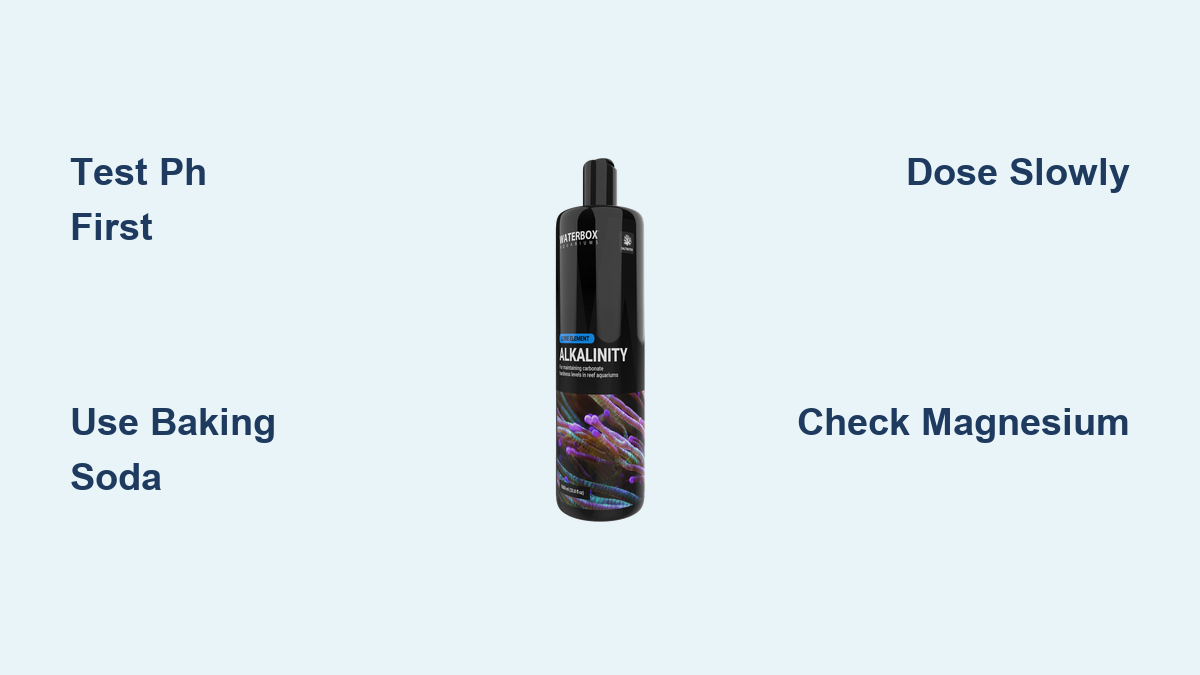
Your current pH level dictates whether baking soda or soda ash will safely raise alkalinity:
– If pH ≥ 8.2 (high/normal): Use sodium bicarbonate (baking soda). This compound’s slight acidifying effect prevents dangerous pH spikes. One reef keeper successfully dosed 1/8 tsp of baking soda per 40 gallons to gain 0.15 dKH without destabilizing their 8.2 pH.
– If pH < 8.0 (low): Switch to sodium carbonate (soda ash). Bake baking soda at 300°F for 1 hour to convert it, or buy commercial soda ash. This option simultaneously lifts pH and alkalinity—critical when low pH accompanies your dKH drop.
Why Magnesium Levels Control Alkalinity Stability
Magnesium acts as the “traffic controller” for calcium and carbonate ions. When Mg drops below 1,250 ppm, calcium carbonate precipitates spontaneously during alkalinity adjustments, causing the dreaded “snowstorm.” Always verify magnesium (1,350-1,400 ppm ideal) before dosing. Tanks with adequate magnesium absorb alkalinity supplements smoothly, while deficient systems turn supplements into chalky sludge within minutes.
Baking Soda vs Soda Ash: Choosing Your Alkalinity Booster

Selecting the wrong supplement risks tank crashes. Your pH reading is the deciding factor—not convenience or cost.
How to Prepare Baking Soda Stock Solution for High-pH Tanks
For tanks at pH 8.2 or higher:
1. Use only food-grade or lab-grade sodium bicarbonate—never household brands with anti-caking agents (e.g., Arm & Hammer™)
2. Dissolve 1 cup baking soda into 1 gallon RO/DI water (shake vigorously—undissolved particles cause localized spikes)
3. Dose slowly: For a 40g tank needing +0.7 dKH, add 1/8 tsp dissolved in ½ cup RO/DI water to high-flow sump areas over 5 minutes
4. Wait 2-4 hours before retesting—never re-dose within 24 hours
Pro Tip: Refrigerate stock solution and use within 2 weeks. Cloudiness means it’s time to remake.
When to Bake Baking Soda into Soda Ash for Low-pH Systems
Convert baking soda when pH stays below 8.0:
1. Spread 1 cup baking soda on baking sheet
2. Bake at 300°F for 60 minutes (converts NaHCO₃ to Na₂CO₃)
3. Cool completely before storing in airtight container
4. Dissolve 1 cup baked soda in 1 gallon RO/DI water for stock solution
Critical Warning: Soda ash stock solution is highly caustic—wear gloves and avoid splashes. Never use pool-grade products.
Step-by-Step Alkalinity Raising Protocol
Follow this exact sequence to avoid crashing your tank. Deviating caused the “snowstorm” in multiple reef keeper reports.
Calculate Your Exact Dose to Prevent Overdosing
Never guess your dose—use this formula verified by reef chemists:
(Current dKH deficit) × (Total system gallons) × 0.18 = Grams needed
Example for 40g tank raising from 6.5 to 8.5 dKH (2.0 dKH deficit):
2.0 × 40 × 0.18 = 14.4 grams baking soda
Volume Note: Include sump, refugium, and wet/dry sections in gallon count. A “40g tank” often holds 50+ gallons total.
The 4-Hour Dosing Window: Where Most Fail
- Dissolve dose in 1 cup RO/DI water (never tank water—causes instant precipitation)
- Pour slowly into sump return flow over 3-5 minutes (dumping near corals causes tissue recession)
- Stop all carbon filtration during dosing—activated carbon binds supplements
- Wait 2 full hours before testing (premature retesting shows falsely low readings)
- Max increase: 1.0 dKH in 24 hours—exceeding this risks pH shock and “snowstorm” precipitation
Real-World Data: Reef forums confirm 0.5 dKH/day is safest for tanks with SPS corals. One keeper’s 40g system took 4 days to safely reach 8.0 dKH from 6.5.
Long-Term Alkalinity Stabilization Systems That Work
Temporary dosing fixes symptoms—these solutions prevent recurring drops.
Why Two-Part Dosing Beats Kalkwasser for Most Tanks

While kalkwasser users report struggles (like the forum member with 550+ calcium), two-part systems solve the core problem:
– Independent control: Adjust alkalinity without affecting calcium
– No precipitation risk: Balanced ratios prevent “rocky sand” clumps
– Automatable: Dosing pumps maintain rock-solid stability (e.g., $300 pump dosing kalk every 9 minutes)
Transition Tip: When switching from kalkwasser, reduce kalk dose by 50% while introducing two-part to avoid parameter clashes.
Calcium Reactors: The Set-and-Forget Solution
For tanks over 75 gallons:
1. CO₂ bubbles dissolve aragonite media
2. Releases calcium and alkalinity in natural 2:1 ratio
3. Maintains dKH 8-9.5 with zero daily intervention
4. Requires: Proper CO₂ monitoring and media changes every 6-12 months
Cost Analysis: Reactors pay for themselves in 18 months versus two-part supplement costs for large reefs.
5 Costly Alkalinity Dosing Mistakes That Crash Tanks
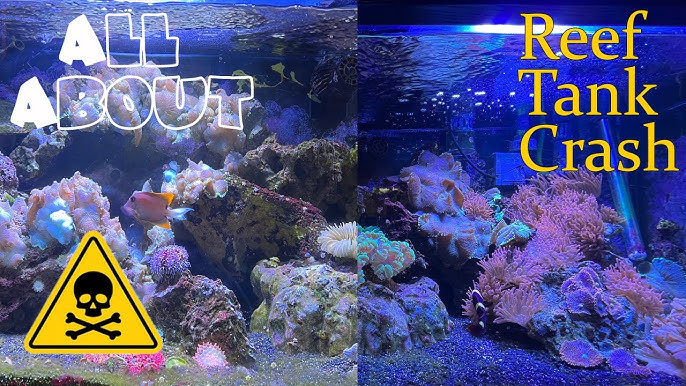
Avoid these reef killer errors documented in forum disaster threads.
Mistake #1: Dosing Through Top-Off Water
Never add baking soda to top-off reservoirs—it crystallizes in tubing and valves within days. One user’s kalk doser “plugged up completely” using this method. Always dose directly into sump flow.
Mistake #2: Ignoring Calcium-Alkalinity Ratios
Raising alkalinity while calcium exceeds 550 ppm (as in the 40g tank case) causes immediate precipitation. Fix calcium first by:
– Reducing kalkwasser dose
– Adding calcium chloride (if < 400 ppm)
– Using two-part “Part B” (calcium)
Mistake #3: Chasing Perfect dKH Numbers
Stability trumps ideal numbers. A tank at steady 7.8 dKH outperforms one swinging between 8.5-9.5 dKH. As one veteran advised: “Don’t chase a number—aim for consistency.”
Mistake #4: Using Tap Water for Stock Solutions
Impurities in tap water bind with supplements. Always use RO/DI water—even “pure” municipal water contains phosphates that feed algae during dosing.
Mistake #5: Dosing Without Flow
Pouring solution into stagnant tank areas creates lethal micro-zones. Dose only where return pumps create strong flow—never near corals or in display tank corners.
Proactive Alkalinity Maintenance Checklist
Prevent drops before they happen with these reef keeper tactics.
Daily Monitoring Protocol
- Test alkalinity 2-3x/week with API or Salifert kits (cheap test strips fail at low dKH)
- Log readings alongside calcium/magnesium (spreadsheet templates available in reef forums)
- Note consumption rates: > 1.0 dKH/day indicates insufficient alkalinity supply
GFO Management for Stable dKH
- Limit GFO to 1 cup per 50 gallons
- Soak new media in saltwater 24 hours before use
- Replace media every 4-6 weeks (depleted GFO stops consuming alkalinity)
Emergency Response for “Snowstorm” Events
If water turns milky after dosing:
1. Stop all dosing immediately
2. Run extra carbon/filtration media
3. Do 10% water change with pre-mixed saltwater
4. Wait 48 hours before retesting
Final Note: Raising alkalinity in saltwater aquariums successfully hinges on patience and precision—not speed. By dosing no more than 1.0 dKH per day with pH-matched supplements, you’ll avoid the crashes that destroy reefs. Remember the forum keeper who stabilized his 40g tank: “I just added 1/8 tsp baking soda to RODI and poured into the sump… measured after to see where it’s at.” That methodical approach, repeated over days, builds true stability. Track your consumption, maintain magnesium above 1,350 ppm, and consider automated two-part dosing for long-term success. Your corals will reward you with explosive growth once alkalinity stays consistently in the 8-12 dKH sweet spot.