How to Fix Aquarium Water Pump Issues
That ominous silence when your aquarium water pump stops is every fish keeper’s nightmare. Within hours, oxygen levels plummet, waste accumulates, and your entire aquatic ecosystem teeters toward collapse. Whether you’re facing a completely dead filter or a frustrating trickle from your outflow, this guide delivers the precise steps to diagnose and repair your aquarium water pump—no guesswork required. You’ll learn how to revive a clogged impeller in under 15 minutes, eliminate stubborn air locks, and implement a maintenance routine that prevents 90% of failures. Most critical repairs take less than 30 minutes with basic tools, saving you costly replacements and protecting your fish while you sleep.
Immediate Power Failure: Why Your Aquarium Pump Won’t Start
When your pump goes silent overnight, rule out simple electrical issues before disassembling anything. This step alone solves half of “dead pump” emergencies and takes under two minutes. Always unplug the unit first—never work on live aquarium equipment.
Verify Outlet Functionality and Cord Integrity
Plug a lamp or phone charger into the same outlet to confirm power. If dead, check your circuit breaker for tripped switches or GFCI outlets that may have shut off. Next, inspect the entire power cord for kinks, frayed wires, or chew marks (common with curious pets). A single exposed copper strand can cause failure. For pumps with thermal overload protection—a small red or black reset button near the cord entry—unplug the unit, wait 30 minutes for cooling, then press the button firmly before retesting. This safety feature triggers when pumps overheat due to clogs or low water levels.
Diagnose Internal Electrical Faults
If power reaches the pump but it remains silent, internal components may have failed. Gently shake the unplugged pump near your ear; a loose rattle indicates broken internal parts. Smell the motor housing—if you detect burnt plastic or ozone, the motor windings have shorted. In this case, replacement is inevitable. Never attempt electrical repairs on submersible pumps; moisture damage compromises insulation, creating electrocution risks. Always prioritize safety: if you’re unsure about electrical diagnostics, skip to replacement.
Reviving a Clogged Impeller: The #1 Pump Killer
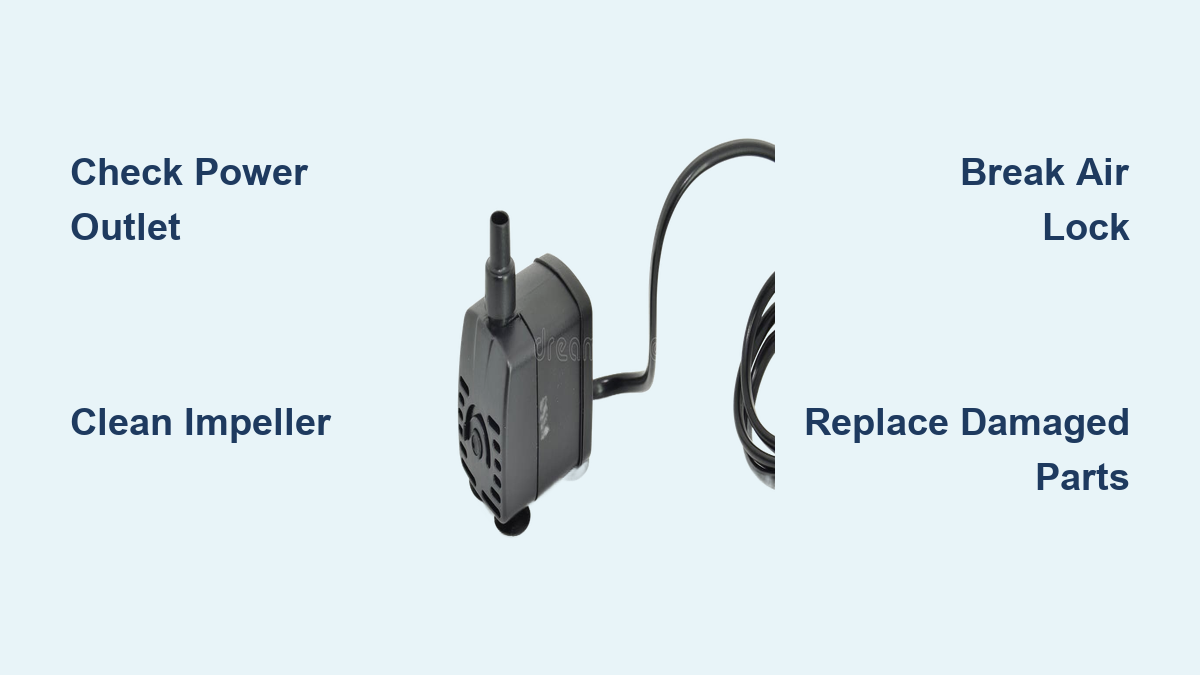
Eighty percent of aquarium pump failures trace back to a jammed impeller—the magnet-driven propeller that circulates water. When hair, plant debris, or snail shells lock this component, motors strain and overheat. The good news? Impeller cleaning takes 10 minutes with no special tools and works 9 times out of 10. Never run a dry impeller—this causes irreversible damage in seconds.
Step-by-Step Impeller Unclogging Procedure
- Unplug and remove the pump from your aquarium. Place it on a towel in a shallow basin—expect water spillage.
- Locate the impeller housing, typically a circular cover plate secured by 1-2 screws (often Phillips-head). Some models snap off; consult your manual if unsure.
- Extract the impeller assembly by pulling straight up. It may resist due to magnetism. Inspect for cracked blades, bent shafts, or debris wedged between vanes. Common culprits include hair algae strands, fish food pellets, and baby snail shells.
- Clean meticulously: Rinse the impeller under lukewarm tap water while gently rotating it. Use a soft toothbrush to dislodge stubborn gunk from blade crevices. For mineral deposits, soak in white vinegar for 5 minutes—never use soap or chemicals that could poison your tank.
- Lubricate the shaft: Apply one drop of silicone-based lubricant (aquarium-safe only) to the ceramic pin where the impeller rotates. Excess lubricant attracts debris.
- Reassemble and test: Reinsert the impeller until it clicks into place. Hold the pump fully submerged in a bucket before plugging in. Listen for smooth operation—no grinding or hesitation.
Pro Tip: Keep spare impellers on hand—they’re the most replaceable part. If yours is cracked or warped during cleaning, install the new one immediately. Most manufacturers sell them for under $10.
Breaking Air Locks That Stifle Water Flow

When your pump hums but delivers weak or no flow, trapped air is likely choking the impeller chamber. This “air lock” commonly occurs after filter maintenance or if water levels drop below the intake. Unlike clogs, air locks require physical disruption—not disassembly—to resolve.
Two-Step Air Lock Elimination
- Unplug the pump and submerge it completely in your aquarium or a bucket. Tilt it at 45-degree angles while rotating slowly. Tap the housing firmly with your knuckle near the impeller housing—you’ll hear a distinct “glug” as air bubbles escape.
- Force prime the system: For canister filters, fill the output hose completely with water using a turkey baster through the self-priming port. For submersible pumps, hold the unit upside down underwater and squeeze the intake tube to purge remaining air pockets. Restart only when water flows steadily from all outlets.
Critical Mistake to Avoid: Never leave an air-locked pump running for more than 30 seconds. The motor overheats rapidly without water cooling, potentially burning out windings. If flow doesn’t restore after three priming attempts, check for hidden clogs in intake tubes.
When Repair Fails: Recognizing Irreparable Pump Damage

Not every pump deserves repair efforts. Knowing when to replace saves wasted hours and prevents tank crashes. Burnt motors and cracked housings compromise safety and efficiency—continuing to troubleshoot risks electrocution or catastrophic leaks.
Red Flags That Demand Replacement
- Burning smells or smoke during operation indicate melted insulation—unplug immediately and discard the unit.
- Visible water inside the motor housing means seal failure; moisture corrodes electronics within days.
- Grinding or screeching noises after impeller cleaning suggest bearing collapse or magnet detachment.
- Leaks around seams that persist after O-ring replacement signal housing cracks.
Cost Reality Check: Labor for professional pump repair often exceeds 70% of a new unit’s price. For pumps under $50, replacement is always more economical. When shopping, match flow rates (GPH) precisely to your tank size—oversized pumps stress fish, while undersized units fail at filtration.
Prevent Catastrophic Failures With This Maintenance Schedule

Proactive care extends pump life by 2-3 years and prevents 90% of emergencies. Dedicate 15 minutes monthly to avoid midnight repair marathons. Always unplug before maintenance—water and electricity are lethal partners.
Essential Monthly Maintenance Routine
- Weekly: Rinse intake screens in old tank water (never tap water—chlorine kills beneficial bacteria).
- Monthly: Soak impeller housing in vinegar solution for 10 minutes to dissolve mineral buildup. Replace cracked O-rings with identical silicone versions.
- Quarterly: Disassemble the entire pump housing. Inspect motor shafts for wobble (indicates bearing wear). Lubricate all moving parts with food-grade silicone grease.
- Biannually: Test flow rate against manufacturer specs; a 25% drop signals impending failure.
Pro Tip: Keep a “pump emergency kit” with spare impellers, O-rings, and lubricant. During disasters, you’ll fix issues 3x faster without frantic part searches.
Quick-Reference Troubleshooting Cheat Sheet
| Symptom | Likely Cause | Fix Time | Critical Action |
|---|---|---|---|
| Complete silence | Power failure/reset button | 2 min | Test outlet; press thermal reset after cooling |
| Humming with no flow | Air lock | 5 min | Submerge and tilt pump to dislodge air bubble |
| Weak flow | Partial impeller clog | 10 min | Clean impeller blades with soft brush |
| Grinding noise | Worn bearings | N/A | Replace pump—internal damage is irreversible |
| Water leakage | Failed O-ring | 8 min | Replace seal; apply silicone grease to new ring |
Final Diagnostic Checklist Before Replacement
Before abandoning repair efforts, run this 60-second verification sequence. Many “dead” pumps revive with one overlooked step:
- Power path: Confirm outlet works with another device (not just a multimeter—some GFCIs fail partially).
- Impeller freedom: Spin impeller manually—it must rotate 3+ full turns without resistance.
- Intake clearance: Ensure no gravel or decorations block the intake tube within 2 inches.
- Priming status: Submerge entire pump body for 1 minute before restarting.
- Cool-down period: Wait 45 minutes if motor overheated—thermal cut-offs need full reset time.
If all checks pass but the pump remains dead, internal motor failure is confirmed. Invest in a new energy-efficient model with magnetic drive technology—it reduces future clogs by 40%. Meanwhile, temporarily place an air stone connected to your backup air pump to maintain oxygen levels until replacement.
By mastering these targeted fixes, you transform from a panicked hobbyist into a confident aquarium engineer. Most critical pump failures resolve with impeller cleaning or air lock removal—skills that take under 15 minutes once mastered. Implement the quarterly maintenance ritual, and your pump will deliver silent, reliable service for years. Remember: the true cost of pump failure isn’t the repair—it’s the irreplaceable fish lost to stagnant water. Take action now, and your aquatic world will thrive. For persistent issues, consult your pump’s manufacturer—they often provide free impeller replacement kits for registered models.